To save content items to your account,
please confirm that you agree to abide by our usage policies.
If this is the first time you use this feature, you will be asked to authorise Cambridge Core to connect with your account.
Find out more about saving content to .
To save content items to your Kindle, first ensure no-reply@cambridge.org
is added to your Approved Personal Document E-mail List under your Personal Document Settings
on the Manage Your Content and Devices page of your Amazon account. Then enter the ‘name’ part
of your Kindle email address below.
Find out more about saving to your Kindle.
Note you can select to save to either the @free.kindle.com or @kindle.com variations.
‘@free.kindle.com’ emails are free but can only be saved to your device when it is connected to wi-fi.
‘@kindle.com’ emails can be delivered even when you are not connected to wi-fi, but note that service fees apply.
This chapter discusses Arrian’s characterization of Alexander the Great. Beginning from a brief history of scholarship on Arrian and his unusually large role in shaping modern understandings of Alexander, it approaches Arrian as an active creator of historical knowledge. Using examples from the Anabasis, it demonstrates that Arrian observed a shift in Alexander’s behaviour arising from the increasingly complex political and personal circumstances of his life. He described this change overtly at times, but more often by setting Alexander into a literary framework based on Herodotus’ portraits of despotic Persian kings and tweaked to reflect philosophical and moral concerns contemporary in Arrian’s own lifetime. The Anabasis forms the core of the discussion but the Discourses of Epictetus and the Indica provide complementary readings and show consistency in Arrian’s approach to his favourite subject.
We consider changes (Persianizing one) that Alexander made to his court from mid-330 BCE onwards, as well as opposition to it (and him) in the form of conspiracies and other clashes. Discussion is framed by a brief look at changes introduced by previous kings, as well as at new evidence from archaeology in north Greece that alters our understanding of early Macedon. It also takes into account the Greco-Roman literary topoi that overlay our sources, particularly with regard to major conspiracies, conflict, and the ‘mutiny’ at Opis – all in an effort to excavate the original underlying Macedonian perspective, insofar as we can.
The reason for Alexander’s life and work simply put was conquest and the quest for everlasting glory. He was a young man dead before his thirty-third birthday, the conqueror of the old adversary Persia, having led the most proficient army the world had to this time ever seen to victory after victory. His desire for fame and triumph at the time of his death had not been fulfilled. He had plans for further conquests in Arabia and across the western Mediterranean. Only his death ended his pursuit of these driving forces in his life.
The so-called Alexander Romance is the most widely read text about Alexander from the ancient world. An unknown author composed this fantastical piece of Greek historical fiction, which narrates Alexander’s entire life, deeds, and death in an extraordinary fashion. The three books of inventive prose narrative, embedded with about 280 lines of verse, are bookended by stories of the king’s conception (1.1–14) and funeral (3.34). Here the text is appreciated in its ancient context, with the provision of an overview of its central issues, potential solutions to them, and possible future directions for study. Several significant matters are focused on: the constitution of the original Greek text of the Alexander Romance; its problematic dating; its contents and structure; its various sources; its characterization of Alexander; its generic classification; and the possible contexts for its original composition.
This chapter deals with the main issues bearing upon Clitarchus and his work, moving beyond the usual division between Testimonia and Fragmenta and giving attention to the context and the agenda of each writer that mentioned him. Attention is given to his popularity as an Alexander historian and as a fine writer, as well as to the real significance of the narrative material attributed to him. This evidence can be combined with his few known biographical details in the evaluation of his chronology, which remains uncertain. The last two sections, dealing with his chronology and with the presentation of Alexander in his work, end with a question mark and invite the reader’s own reflections.
The Alexander most visible to us today is one who was created and recreated in the Roman period. While Alexander’s presence in literature is strong enough that we can reasonably describe the trajectory of intellectual interest in Alexander during the Roman period, more difficult to pin down is the degree to which powerful Romans engaged in conscious imitatio or aemulatio Alexandri, which generally involves squaring literary hints with material evidence that does not always speak to us as directly as we would like it to. Without dismissing the world of ways in which various aspects of Alexander-myth may have been subtly exploited by powerful Romans, this paper charts a path between overly credulous and overly sceptical conclusions concerning individual Romans by taking an overview approach of imperial interest and tightening our definitions of ‘imitation’ or ‘emulation’ in the context of Romans and Alexander. I conclude that both imitatio and aemulatio look quite different at Rome than they do in the provincial east.
This chapter reviews the fragmentary evidence for the five first historians and histories of Alexander: Callisthenes of Olynthus, Chares of Mytilene, Nearchus of Crete, Onesicritus of Astypalea and the royal diaries of the king, perhaps compiled by Eumenes of Cardia. These Greek authors took part of the Asiatic expedition and enjoyed a unique vantage point from which to report on the central events of the campaign. Nevertheless, they often resort to literary convention or even invention along the lines of other great Greek literature, especially Homer and Herodotus. Moreover, they all purport to have had some kind of personal access to the king, and the evidence suggests that they sought to magnify that link in various ways during Alexander’s lifetime and after his death. The chapter is structured around a biographical sketch of each author or, in the case of the Royal Journal, text, and a guide to the content, form and function of each history is supplied.
This major new reference work presents an accessible and innovative survey of the latest developments in the study of early modern Japan. The period from about 1580 to 1877 saw the reunification of Japan after a long period of civil war, followed by two and a half centuries of peace and stability under the Tokugawa shogunate, and closing with the Meiji Restoration of 1868, which laid the foundation for a modern nation-state. With essays from leading international scholars, this volume emphasizes Japan's place in global history and pays close attention to gender and environmental history. It introduces readers to recent scholarship in fields including social history, the history of science and technology, intellectual history, and book history. Drawing on original research, each chapter situates its primary source material and novel arguments in the context of close engagement with secondary scholarship in a range of languages. The volume underlines the importance of Japan in the global early modern world.
Covering the precolonial period to the present, The Cambridge History of Latin American Law in Global Perspective provides a comprehensive overview of Latin American law, revealing the vast commonalities and differences within the continent as well as entanglements with countries around the world. Bringing together experts from across the Americas and Europe, this innovative treatment of Latin American law explains how law operated in different historical settings, introduces a wide variety of sources of legal knowledge, and focuses on law as a social practice. It sheds light on topics such as the history of indigenous peoples' laws, the significance of religion in law, Latin American independences, national constitutions and codifications, human rights, dictatorships, transitional justice and legal pluralism, and a broad panorama of key aspects of the history of statehood and law. This title is also available as Open Access on Cambridge Core.
This wide-ranging new history of European Romantic Literature presents a pan-European phenomenon which transcended national borders and contributed to a new sense of European cultural identity across the continent. Conceived in the same spirit as Madame de Staël's cultural and political agenda at a time when her 'generous idea' of Europe is being challenged on all sides, the volume pays close attention to the period's circulation of people, ideas, and texts. It proposes to rethink the period comparatively, focusing on various forms of cultural mediation and transfer, and on productive tensions, synchronicities, and interactions within and across borders. Organized chronologically, its twenty chapters address over five hundred works, proposing a coherent historical narrative without completely erasing individual nations' specificities. By showcasing in particular the place of Britain within continental culture, the volume hopes to reactivate critical examinations of Romanticism from a historicised European perspective.
The Cambridge Companion to the American Graphic Novel explores the important role of the graphic novel in reflecting American society and in the shaping of the American imagination. Using key examples, this volume reviews the historical development of various subgenres within the graphic novel tradition and examines how graphic novelists have created multiple and different accounts of the American experience, including that of African American, Asian American, Jewish, Latinx, and LGBTQ+ communities. Reading the American graphic novel opens a debate on how major works have changed the idea of America from that once found in the quintessential action or superhero comics to show new, different, intimate accounts of historical change as well as social and individual, personal experience. It guides readers through the theoretical text-image scholarship to explain the meaning of the complex borderlines between graphic novels, comics, newspaper strips, caricature, literature, and art.
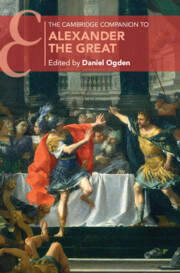
Has any ancient figure captivated the imagination of people over the centuries so much as Alexander the Great? In less than a decade he created an empire stretching across much of the Near East as far as India, which led to Greek culture becoming dominant in much of this region for a millennium. Here, an international team of experts clearly explains the life and career of one of the most significant figures in world history. They introduce key themes of his campaign as well as describing aspects of his court and government and exploring the very different natures of his engagements with the various peoples he encountered and their responses to him. The reader is also introduced to the key sources, including the more important fragmentary historians, especially Ptolemy, Aristobulus and Clitarchus, with their different perspectives. The book closes by considering how Alexander's image was manipulated in antiquity itself.
In the thirteenth and fourteenth centuries Chinggis Khan and his progeny ruled over two-thirds of Eurasia. Connecting East, West, North and South, the Mongols integrated most of the Old World, promoting unprecedented cross-cultural contacts and triggering the reshuffle of religious, ethnic, and geopolitical identities. The Cambridge History of the Mongol Empire studies the Empire holistically in its full Eurasian context, putting the Mongols and their nomadic culture at the center. Written by an international team of more than forty leading scholars, this two-volume set provides an authoritative and multifaceted history of 'the Mongol Moment' (1206–1368) in world history and includes an unprecedented survey of the various sources for its study, textual (written in sisteen languages), archaeological, and visual. This groundbreaking Cambridge History sets a new standard for future study of the Empire. It will serve as the fundamental reference work for those interested in Mongol, Eurasian, and world history.
The Classical Greek sophists – Protagoras, Gorgias, Prodicus, Hippias, and Antiphon, among others – are some of the most important figures in the flourishing of linguistic, historical, and philosophical reflection at the time of Socrates. They are also some of the most controversial: what makes the sophists distinctive, and what they contributed to fifth-century intellectual culture, has been hotly debated since the time of Plato. They have often been derided as reactionaries, relativists or cynically superficial thinkers, or as mere opportunists, making money from wealthy democrats eager for public repute. This volume takes a fresh perspective on the sophists – who really counted as one; how distinctive they were; and what kind of sense later thinkers made of them. In three sections, contributors address the sophists' predecessors and historical and professional context; their major intellectual themes, including language, ethics, society, and religion; and their reception from the fourth century BCE to modernity.
Chapter 5 discusses how Ratzinger’s understanding of revelation, which was significantly influenced by his study of Bonaventure, shaped Vatican II’s constitution Dei Verbum.
Chapter 7 explores the Church Fathers, especially Augustine of Hippo, as an important source for Ratzinger’s thought as well as the place of the Fathers in theology today.