To save content items to your account,
please confirm that you agree to abide by our usage policies.
If this is the first time you use this feature, you will be asked to authorise Cambridge Core to connect with your account.
Find out more about saving content to .
To save content items to your Kindle, first ensure no-reply@cambridge.org
is added to your Approved Personal Document E-mail List under your Personal Document Settings
on the Manage Your Content and Devices page of your Amazon account. Then enter the ‘name’ part
of your Kindle email address below.
Find out more about saving to your Kindle.
Note you can select to save to either the @free.kindle.com or @kindle.com variations.
‘@free.kindle.com’ emails are free but can only be saved to your device when it is connected to wi-fi.
‘@kindle.com’ emails can be delivered even when you are not connected to wi-fi, but note that service fees apply.
This chapter begins with the little magazines of the late nineteenth and early twentieth centuries and ends with contemporary online literary magazines, highlighting the radical changes that have taken place as print yielded to digital culture. Motivated by the contrarian personalities of their founding editors against commercial tastes, small-circulation periodicals prioritized aesthetic experimentation and established themselves as an avant-garde force in the arts. During the twentieth century, literary magazines would become institutionalized and relinquish their financial and intellectual independence. Their avant-garde status, once represented by a collectively upheld editorial persona, would become overshadowed by individual cults of personality around popular writers. Magazines’ social programs would become watered down, and instead writers would make themselves into social actors. The arrival of New Journalism in the 1960s and ’70s radically changed long-form journalism, rendering it more literary. The chapter ends with the contemporary literary magazine ecosystem, showing that what magazines have lost in materiality, they have gained in generic hybridity and global access.
This chapter focuses on the essayistic contribution of women writers before the American Civil War. Antebellum women exploited the essay’s openness to write in formats that conformed approximately to conventions of men’s writings but that took shape in host genres, frequently letters, or in generic hybrids as they negotiated gender prescriptions. Conduct manuals, schooling, and published lecture-essays advised on composing essays yet encouraged cultivation in cognate genres of conversation and the familiar letter, social “accomplishments” ceded as the sole literary “arts” in which women might excel. Conversational culture also spawned associations in which women circulated manuscripts and could offer access to periodical publishers in need of materials for audiences growing as literacy spread. Publishing compositions became almost a rite of passage for middle-class white women. Poverty and racist practices posed obstacles to education, publication, and fame for other women who nonetheless composed essays and published outside mainstream venues. They figure among those who produced an extensive body of essays whose range, merit, and impact remain inadequately acknowledged.
The essay film in the United States has not been thoroughly investigated, even if it has existed in the US cinematic landscape from the earliest years throughout the twentieth century and into the twenty-first century. Beginning with early theories of the essay film that emerged from Europe, the chapter explores the relationships between American essay film and bordering forms like documentary, art film, and experimental cinema. The final pages of the chapter analyze the contributions of filmmakers belonging to the LA Rebellion and influenced by Third Cinema and conclude with a mention of newer forms like the video essay and desktop documentary.
Focused on twentieth-century art criticism, this chapter shows how critics and essayists such as Clement Greenberg, Rosalind Krauss, Susan Sontag, and Michael Fried addressed the problems of medium and abstraction. The rise in the prominence of the essay on visual art during this period corresponds with the ascendancy of abstract representational painting and sculpture. It is as if the retreat from figuration opened a breach through which language – in the form of the essay – took up the role of advance guard. The essay enacted the experience of visual art rather than merely describing and judging it. In parallel with the proliferation of abstraction, writing on art turned away from representing the art object and toward the production of a self-sufficient experience. Pointing to nothing outside itself, the autonomous abstract work was matched by the essay attempting to become a wholly independent force of intellectual creation. The chapter traces how essayists responded to modernist and abstract art, and elucidates the role this writing played in settings such as art schools, magazines, museums, and other institutions that funded, displayed, and popularized the art of the day.
This chapter begins with varying definitions of the Anthropocene and articulates the ways in which essayists have responded to the environmental destruction, contamination, reshaping of the earth’s surface, and exhaustion of shared resources represented by this new geological epoch. In these types of essays, science writing meets nature writing, activism meets lyricism. The essay has always been a space for ethical reflection, and those essays featured in this chapter – by writers such as Robin Wall Kimmerer, Barry Lopez, Camille Dungy, Donna Harraway, Fred Moten, and Christina Nichol – ponder the ethics of the violence that is part of our new environmental status quo. The chapter also investigates the relationship between the Anthropocene and various bleak contemporary and historical realities: the trans-Atlantic slave trade, colonization, appropriation of land, extraction of resources, genocide, and dispossession.
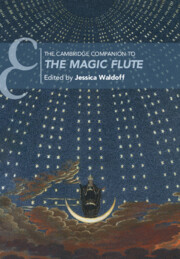
Since its premiere in 1791, The Magic Flute has been staged continuously and remains, to this day, Mozart's most-performed opera worldwide. This comprehensive, user-friendly, up-to-date critical guide considers the opera in a variety of contexts to provide a fresh look at a work that has continued to fascinate audiences from Mozart's time to ours. It serves both as an introduction for those encountering the opera for the first time and as a treasury of recent scholarship for those who know it very well. Containing twenty-one essays by leading scholars, and drawing on recent research and commentary, this Companion presents original insights on music, dialogue, and spectacle, and offers a range of new perspectives on key issues, including the opera's representation of exoticism, race, and gender. Organized in four sections – historical context, musical analysis, critical approaches, and reception – it provides an essential framework for understanding The Magic Flute and its extraordinary afterlife.
This chapter surveys Japan’s era of civilization and enlightenment (bunmei kaika), roughly the first decade of the Meiji era (1868–1912). It interprets bunmei kaika as a revolutionary attempt at Westernization intended to overcome the disruption wrought by the globalizing effects of Western imperialism. The chapter covers four categories: first, politics and war, including the Iwakura Mission, the political crisis of 1873, the movement for freedom and peoples’ rights, the invasion of Taiwan, the Saga Rebellion, the incident at Kanghwa Island, the Shinpūren Rebellion, and the civil war of 1877; second, thought, including intellectual societies, the ideas of civilization and the nation, religion, language, and the public sphere; third, society, including household registration, taxes and allowances, the military, education, gender, and law enforcement; and fourth, culture, including the emperor, clothes, food, transportation, and time. It stresses disorder as integral to these transformations of the 1870s.
Japan between 1573 and 1651 underwent massive political and social transformation. The warlord Oda Nobunaga began the process of reunifying the archipelago after nearly a century of civil war, a process that was completed by his junior ally Toyotomi Hideyoshi. More conflict, both domestic and international, led to a third warlord, Tokugawa Ieyasu, positioning himself and his family as the new dynasty of military leaders who ruled a thoroughly pacified Japan beginning in 1603. His son, the second shogun Tokugawa Hidetada, and grandson, the third shogun Tokugawa Iemitsu, successively overcame diverse barriers to Tokugawa hegemony and incrementally established the early modern system that is often anachronistically assumed to have begun with Ieyasu. Their emphasis on pageantry, political immobility, strict control of borders, persecution of independent religion, and the constant threat of violence defined Tokugawa rule and allowed a fragile peace to persist until the mid-nineteenth century.
This chapter surveys the history of labor in the Edo period. It begins by analyzing how merchant, samurai, and peasant households organized and mobilized working people, including shop clerks, building superintendents, apprentices, maidservants, sumo wrestlers, samurai retainers, wet nurses, and farmhands. It then moves to consider groups that mobilized labor outside the household, such as boardinghouses and gangster organizations. Along the way, it considers gendered divisions of labor, as well as the relationship between productive and reproductive labor, which could be paid or unpaid, pursued inside or outside kinship structures. Overall, the chapter argues that although households continued to be important in consolidating and deploying labor, an older form in which labor was controlled chiefly by samurai overlords working through status groups gradually gave way to a more diverse, specialized, and highly mobile labor market.
The Tokugawa period saw a transformation in the systematic inquiry into nature. In the seventeenth century scholars were engaging in discrete fields of study, such as astronomy or medicine. But over the course of the next two centuries the fields that initially seemed distant and unrelated gradually converged into one enterprise that we now call “science.” Although Japanese scholars were not isolated from European science, it was not the outside influence that caused this transformation. Rather, the new conceptualization of science came from within, as different scholars came to align themselves along different lines. What brought them together was no longer social status, practical goals, or even their respective disciplines, but the kind of questions they asked, the kind of evidence they considered acceptable, and the sources they deemed authoritative. Together, they now engaged in Science, with a capital S, that was greater than the sum of its parts.
The early modern Japanese city, in the paradigmatic form of the castle town (jōkamachi), gave spatial form to the social distinctions of status group (mibun), and it evolved through complex negotiations between multiple status communities, each with its own social logics and visions of urban life. This chapter sketches these spatial structures and social processes through a study of the shogunal capital of Edo, focusing on the triangular negotiation between three sets of agents: the shogunal administration, the propertied townspeople, and the diffuse occupational collectives of the unpropertied urban margins. This triangular negotiation is illuminated through a historical survey of the Edo firefighting system, revealing the ways in which the early modern city was shaped by competing interests and claims over space. Particular attention is given to the diverse forms of social agency that interacted in the urban process, complicating a binary model of governmental authority and popular subversion.
This chapter describes the development of the Tokugawa economy, illustrating how its patterns and shifts were experienced by producers and consumers in a particular place and time. In outlining the framing features of the Tokugawa economic world, we draw attention to how the proportion occupied by manufacturing industries and distribution mechanisms increased steadily in tandem with expansion of the economy’s overall volume. Diverse factors accompanied and further spurred these trends: urbanization (in cities and country towns), greater social mobility, expanding trade and communication networks, rising income, the labor of women as producers for the market, and a popular consciousness increasingly oriented toward ordinary consumption. This economic development can be described in either positive or negative terms. Economic historians in recent decades have pointed more to the positive aspects that raised the standard of living for many, whereas many social historians note the groups who lost out in the commercialization process, such as low-ranking samurai and landless commoners. Evidence can be given for both perspectives, underlining the complexity of what we call economy.
This chapter situates in the social context of Tokugawa Japan the emergence of a class of scholars who engaged in the production of texts and in practices that aimed at developing authoritative inquiries on the nature of reality and the laws that govern it (metaphysics); the motivations, norms, and aims of moral life (ethics); the function and rules of language (philology and linguistics); the principles of good government (politics); and the legitimation of cognitive claims (epistemology), among others. Operating within different institutional frameworks and through texts circulating in a variety of formats (manuscript and printed commentaries, treatises, glossaries, dictionaries, collected lecture notes, etc.), these scholars (generically known as jusha) developed a philosophical archive that should be regarded as a qualitatively and quantitatively unprecedented event in Japanese history outside Buddhist institutions.