To save content items to your account,
please confirm that you agree to abide by our usage policies.
If this is the first time you use this feature, you will be asked to authorise Cambridge Core to connect with your account.
Find out more about saving content to .
To save content items to your Kindle, first ensure no-reply@cambridge.org
is added to your Approved Personal Document E-mail List under your Personal Document Settings
on the Manage Your Content and Devices page of your Amazon account. Then enter the ‘name’ part
of your Kindle email address below.
Find out more about saving to your Kindle.
Note you can select to save to either the @free.kindle.com or @kindle.com variations.
‘@free.kindle.com’ emails are free but can only be saved to your device when it is connected to wi-fi.
‘@kindle.com’ emails can be delivered even when you are not connected to wi-fi, but note that service fees apply.
This chapter examines the literary left over the course of the twentieth century. Beginning with an analysis of key nineteenth-century literary antecedents to later socialist and communist novels, it then focuses on early twentieth-century leftist novels drawn from realism, naturalism, and utopian socialism. The chapter pays special attention to influential fictional works by Upton Sinclair, notably The Jungle, and the many subsequent leftist novels spawned by Sinclair’s success. It surveys unique contributions to the literary left made by Black novelists such as Claude McKay and Richard Wright and by feminist writers such as Ursula K. Le Guin. The chapter ends with a brief analysis of post-1960s leftist writers such as Kim Stanley Robinson, who harnessed science fiction for revolutionary ends.
The Catholic Church of the early modern period struggled to accommodate to the changing world of the sixteenth century. Three developments in particular challenged Catholic theologians, philosophers, and political writers: the European discovery of lands across the sea, especially in the Americas; the rise of the state; and the Reformation. Their responses were various. Three leading Scholastic philosopher-theologians stand out: the Spanish Dominican Francisco de Vitoria (ca. 1483–1546), whose most significant contributions came while he was teaching at the University of Salamanca;
On August 3, 1492 three ships commanded by Admiral Cristóbal Colón (Christopher Columbus) departed from the port of Palos. On October 12, 1492 Columbus touched American soil on a small island of the archipelago of the Bahamas, called Guanahaniand, and renamed it San Salvador. The second voyage departed from Cadiz on September 25, 1493, reaching American soil at the beginning of November, with a fleet of 17 ships and 1,200 men, among whom was the first papal vicar for the Indies, Fray Bernardo Boyl. Another vicar was the Hieronymite hermit Ramón Pané, who was the first missionary to begin evangelizing the indigenous Taíno people.
Leslie Marmon Silko’s Ceremony is an anglophone novel that aspires to heal the effects of conquest and colonization through a decolonial politics that accepts hybridity, recognizes the sensitive work involved in transitions, and embraces Indigenous knowledge. Even as Silko celebrates hybridization, transitions, and boundary-crossing, she recognizes that these processes have a dangerous side – specifically, the potentially world-destroying effects of the nuclear arms race. The novel shows that settler colonialism is one aspect of an unfolding pattern that denies limits and boundaries; with the invention of nuclear weapons, it threatens to destroy the world. Silko’s message echoes Vine Deloria, Jr.’s 1974 essay “Non-Violence in American Society,” commenting on the era’s social justice movements. Giving narrative form to Deloria’s message, in Ceremony the multiple strands of Silko’s political thought – the Native American Renaissance and decolonization, environmentalism, feminism, antiwar and anti-nuclear activism – are woven together in a story that is also a healing ceremony for readers. Ceremony aims to create a world where indigeneity emerges as the dominant force for a world at risk that is also a world in transition.
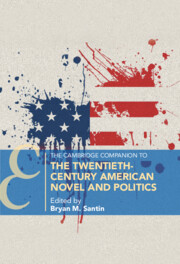
Surveying the relationship between American politics and the twentieth-century novel, this volume analyzes how political movements, ideas, and events shaped the American novel. It also shows how those political phenomena were shaped in turn by long-form prose fiction. The book is made up of three major sections. The first section considers philosophical ideologies and broad political movements that were both politically and literarily significant in the twentieth-century United States, including progressive liberalism, conservatism, socialism and communism, feminism, and Black liberation movements. The second section analyzes the evolving political valences of key popular genres and literary forms in the twentieth-century American novel, focusing on crime fiction, science fiction, postmodern metafiction and immigrant fiction. The third section examines ten diverse politically-minded novels that serve as exemplary case studies across the century. Combining detailed literary analysis with innovative political theory, this Companion provides a groundbreaking study of the politics of twentieth-century American fiction.
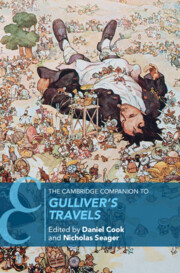
Jonathan Swift's satirical masterpiece, Gulliver's Travels, has shocked and delighted readers worldwide since its publication in 1726. At turns a humorous and harrowing indictment of human behaviour, it has been endlessly reinterpreted by critics and adapted across media by other artists. The Cambridge Companion to Gulliver's Travels comprises 17 original chapters by leading scholars, written in a theoretically-informed but accessible style. As well as providing detailed close readings of each part of the narrative, this Companion relates Gulliver's Travels to the political, religious, scientific, colonial, and intellectual debates in which Swift was engaged, and it assesses the form of the book as a novel, travel book, philosophical treatise, and satire. Finally, it explores the Travels' rich and varied afterlives: the controversies it has fuelled, the films and artworks it has inspired, and the enduring need authors have felt to 'write back' to Swift's original, disturbing, and challenging story.
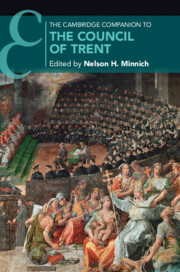
The Council of Trent was a major event in the history of Christianity. It shaped Roman Catholicism's doctrine and practice for the next four hundred years and continues to do so today. The literature on the Council is vast and in numerous languages. This Companion, written by an international group of leading researchers, brings together the latest scholarship on the principal issues treated at the Council: the relationship between Scripture and Tradition, original sin, justification, the sacraments (Baptism, Penance, Confirmation, Eucharist, Holy Orders, Marriage, and the Annointing of the Sick), sacred images, sacred music, and its reform of religious orders, the training of the clergy, the provision of pastoral care in the parish setting, and the implementation of its decrees. The volume demonstrates that the Council unwittingly furthered the papal centralization of authority by allowing the interpretation of its decrees to be the exclusive prerogative of the Holy See, and entrusting it with their implementation.
This chapter studies the developments of autobiography as a literary genre in the graphic novel production since the 1960s. It analyzes the formal connections between author, narrator, and character, paying attention to the pragmatic aspects of the contract between author and reader, whose commitment to authenticity distinguishes autobiography from autofiction or semi-autobiography. The chapter starts with a historical overview of the genre, absent in comics for a long time, then rapidly coming to prominence in the graphic novel. It emphasizes the role of underground comix and engages in a close reading of two works: Justin Green’s Binky Brown Meets the Holy Virgin (1972) and Craig Thompson’s Blankets (2001). Although both share a similar (critical) concern with the role of religion, their stylistic and narrative features and context are widely divergent. Green’s work is a clear example of countercultural transgression, whereas Blankets exemplifies the growing overlap between the graphic novel and young adult literature.
This chapter deals with two long-form narratives that can be considered forerunners of the graphic novel: Milt Gross’s He Done Her Wrong (1930) and Drake Waller, Matt Baker, and Ray Osrin’s It Rhymes with Lust (1950). It stresses the originality of these proto-graphic novels and offers a close reading of both works, while reexamining their connections with other visual forms, namely, slapstick comedy, the woodcut novel, and film noir. To propel his dynamic story forward, Gross developed new ways of experimenting with the shape of panels, their size (as defined by the frames that delimit them), and their site (their particular placement within the space of the page). The chapter also addresses issues of gender and studies the critical treatment of male and female stereotypes. Finally, it studies the representation of graphic violence, reading It Rhymes with Lust as an example of “soft noir.”
This chapter deals with the idiosyncratic works of two key authors from the Mad magazine generation: Harvey Kurtzman and Jules Feiffer. It addresses more specifically the distinctive satirical styles of both authors, who criticized and reconfigured, from a leftist and Jewish immigrant background, the standard signifiers of American mainstream culture. Although both authors contributed equally to the tradition of American cartooning, their work in the graphic novel field is highly divergent. Kurtzman started at EC in the war comics subgenre, but rapidly turned to humor magazines, before introducing an important stand-alone comics paperback with original material, Harvey Kurtzman’s Jungle Book, whose incongruous humor relied on clever, repetitive panel layouts. Like Kurtzman, Feiffer is adept at transmedial appropriation, but his work, which started under Will Eisner’s tutelage, is less focused on citational humor and both more personal and more political. Instead, Feiffer developed singular forms of graphic narratives targeting conformism. The chapter offers close readings of Kurtzman’s Jungle Book and Feiffer’s noir trilogy: Kill My Mother, Cousin Joseph, and The Ghost Script (all from the 2010s).
This chapter studies the expression of queerness, gender and sexual identity, and diversity in comics and graphic novels. It identifies several stages in the history of the medium, from earlier coded or implicit representations of queer identities designed to circumvent the Comics Code Authority to increasingly and openly acknowledged visualizations of non-heteronormative subject matters in contemporary works. The chapter offers close readings of various coming-out narratives that use the graphic memoir form as a space for self-excavation and self-disclosure, drawing connections with a wider social of familial context (Howard Cruse, David Wojnarowicz, and especially Alison Bechdel, whose Fun Home catapulted queer graphic novels into the mainstream). It also contrasts the “normalization” approach of mainstream publishers, who focus on diversity and support equality by featuring queer characters in ensemble casts, albeit at the risk of presenting a superficial image of queerness, and the more exclusive focus of alternative publishers and individually produced comics-zines, more centered on personal experiences.
This chapter addresses the graphic novel as a new form of the “Great American Novel” (GAN). This possibility is seen as the result of two interacting processes: canon formation (Which are the graphic novels that can gain inclusion into the mainstream canon?), and literary validation (Can graphic novels be judged with the same criteria as literary novels?). The chapter discusses the critical debates on the recognition of comics as a form of literature and the role of academia and other institutions in the making of a graphic novel canon. It studies the progressive literarification of comics and graphic novels, before focusing on the notion of the GAN, a label that refers to works picturing the ordinary emotions and manners of American existence (J. W. DeForrest), preferably with a high degree of realism. The chapter critically discusses this notion and concludes with a close reading of four graphic novels that constitute good candidates for the title of GAN: Ghost World, Fun Home, American Born Chinese, and Asterios Polyp.
The Cambridge Companion to the American Graphic Novel provides students and scholars with a state-of-the-art collection of essays from experts in the field who are working on contemporary publications as well as the history of the medium. Through the pages of this book, they provide a series of new and original readings of the graphic novel. By focusing attention exclusively on the “American graphic novel,” one is able to explore critically and in depth how – since at least the 1970s – writers and artists have worked to provide a range of new content and style of cartooning to tell long-length stories, conduct journalism, interpret history, narrate autobiography, and develop original works of fiction. Graphic novelists and their work are today an established and important part of the cultural-literary landscape; they are honored by prestigious literary prizes, as well as play a part in mirroring American society back to their readers. Here, one thinks immediately of Art Spiegelman’s In the Shadow of No Towers (2004), dedicated to the 9/11 attacks and the American response thereto, which was selected as one of the ten most important works on the subject at the time of the tenth anniversary of the atrocity. Equally noteworthy are Alison Bechdel’s ground-breaking analyses of gay and lesbian experiences in times of changing values and attitudes in her memoir Fun Home (2006), and through her subsequent Are You My Mother? (2012) and The Secret of Superhuman Strength (2021). Just as important, and different again, are examples of works from Asian American and African American graphic novelists that offer autobiographical narratives on their specific lives and historical circumstances: to note one recent example, Thi Bui’s The Best We Could Do (2017) is a remarkable personal testimony on the history of America and Vietnam and the migrant experience of the author and her family. So, if American comics are filled with action-packed genre materials that provide excitement and spectacle, then one can equally generalize to say that the American graphic novel, in all its diverse forms, is proving to be a sounding board for highly personal, democratic, identity-based, and informed, often autobiographically slanted, representations of the state of the nation. The graphic novel (supported by mainstream corporate literary-oriented publishers, such as Abrams, Pantheon, and Penguin Random House) has developed to provide a key cultural space for broadly liberal values to be espoused through sometimes complex, sometimes deliberately simple, text and image, panel grids, and page layouts. While this is a still relatively young form of graphic narrative, one can say that in the last forty years, it has become more and more important for American literature per se. There is no longer any need to assert the genre’s legitimacy or spend pages defending the choice to study our subject.
A large number of artists with Jewish American backgrounds have been deeply influential to the development of comics (notably of the superhero variety), social and political cartoons, and graphic novels. This chapter examines the recurrence of trauma and grief in the works of several Jewish authors, both as core motifs and as narrative/visual devices. It follows the career of graphic pioneer Will Eisner, who moved from realistically drawn crime and adventure fiction (with The Spirit, an early example of long-form comic appealing to adult readers) to more personal themes such as family history and loss in A Contract with God, the first US publication self-labeled as a “graphic novel.” Art Spiegelman’s work (Maus, 1986 and 1991; In the Shadow of No Towers, 2004) confronts similar themes grounded in trauma, suffering, and transgenerational testimony, where the artist’s memorialization of the past and experience with the present construct a graphic negotiation with grief. The chapter finds echoes of this approach in more recent works from Jewish graphic novelists such as Roz Chast and Ken Krimstein.
This chapter examines how people of the Black diaspora in the United States have articulated their histories and experiences in comics and graphic novels, and how they have developed singular aesthetic strategies to counter a white comics imaginary and its stereotyped depiction of Black bodies and culture, in order to construct more accurate images of themselves. This includes revisiting American history – particularly enslavement and Civil Rights activism – through a Black lens and with Black readers in mind. This historical rewriting engages with the social, political, and cultural contributions of Black people, filling voids and questioning occlusions. The chapter studies groundbreaking works of this nature by authors such as Kyle Baker, Roland and Taneisha Laird, and Joel Christian Gill. It also highlights the importance of graphic novels depicting the Black communal experience in the context of resistance to violence and the fight for social justice. Finally, it discusses the importance of Black embodiment and the embracing of Black culture, from early works such as Jackie Ormes’s strips in the 1950s to contemporary graphic novels like Ebony Flowers’s Hot Comb (2019).