To save content items to your account,
please confirm that you agree to abide by our usage policies.
If this is the first time you use this feature, you will be asked to authorise Cambridge Core to connect with your account.
Find out more about saving content to .
To save content items to your Kindle, first ensure no-reply@cambridge.org
is added to your Approved Personal Document E-mail List under your Personal Document Settings
on the Manage Your Content and Devices page of your Amazon account. Then enter the ‘name’ part
of your Kindle email address below.
Find out more about saving to your Kindle.
Note you can select to save to either the @free.kindle.com or @kindle.com variations.
‘@free.kindle.com’ emails are free but can only be saved to your device when it is connected to wi-fi.
‘@kindle.com’ emails can be delivered even when you are not connected to wi-fi, but note that service fees apply.
In the earliest period of the Christian movements, resurrection meant many things to many people. Claims that resurrection is unique to Christian discourse or unattested in Greco-Roman thought are based on overly determined understandings that respect neither the diversity of early Christian conceptions nor the breadth of Greco-Roman lore.1 The explosion of research on resurrection forbids a comprehensive survey. In this essay, the focus will be on ontology – what resurrection meant for the body, a body different from yet in continuity with the celestial and deathless body it becomes. From this discussion follows an inquiry as to what resurrection meant with regard to human identity: Do resurrected individuals remain human, or do they transcend humanity to become a higher entity?
When was the first history of ancient Christianity written? The answer of course is not so simple. For instance, one may think of Eusebius’s Historia ecclesiastica (c.324) as the first account of ancient Christian history, covering the time of Christ up until the time of Constantine. However, the term historia in Eusebius’s title implies “narrative” more than a modern notion of “what happened.”1 In other words, much depends on what is meant by the category of ancient Christian history, and so debate ensues about the nature of studying this subject.
The condition of being a slave in antiquity, marked by “social death” and “the permanent, violent domination of natally alienated and generally dishonored persons,”1 was so miserable as to be excluded from the ancient ideal of happiness (εὐδαιμονία): “How can a man be happy when he must serve someone as a slave [δουλεύειν]?” says Callicles to Socrates (Plato, Gorg. 491E). Families in the Greco-Roman world often included slaves,2 although manumission in the Roman world was more frequent than once thought.3
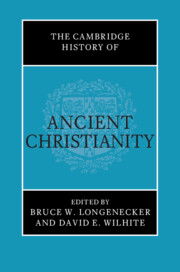
The first three hundred years of the common era witnessed critical developments that would become foundational for Christianity itself, as well as for the societies and later history that emerged thereafter. The concept of 'ancient Christianity,' however, along with the content that the category represents, has raised much debate. This is, in part, because within this category lie multiple forms of devotion to Jesus Christ, multiple phenomena, and multiple permutations in the formative period of Christian history. Within those multiples lie numerous contests, as varieties of Christian identity laid claim to authority and authenticity in different ways. The Cambridge History of Ancient Christianity addresses these contested areas with both nuance and clarity by reviewing, synthesizing, and critically engaging recent scholarly developments. The 27 thematic chapters, specially commissioned for this volume from an international team of scholars, also offer constructive ways forward for future research.
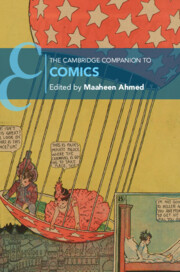
The Cambridge Companion to Comics presents comics as a multifaceted prism, generating productive and insightful dialogues with the most salient issues concerning the humanities at large. This volume provides readers with the histories and theories necessary for studying comics. It consists of three sections: Forms maps the most significant comics forms, including material formats and techniques. Readings brings together a selection of tools to equip readers with a critical understanding of comics. Uses examines the roles accorded to comics in museums, galleries, and education. Chapters explore comics through several key aspects, including drawing, serialities, adaptation, transmedia storytelling, issues of stereotyping and representation, and the lives of comics in institutional and social settings. This volume emphasizes the relationship between comics and other media and modes of expression. It offers close readings of vital works, covering more than a century of comics production and extending across visual, literary and cultural disciplines.
The British constitution is typically seen as not only a unique, but a uniquely conservative, set of political arrangements among the constitutions of the world. This characterisation stems from the constitution’s pre-modern origins and continuity over time, and its unwritten, traditional, and organic nature. This historical experience has been far from free of crises, fundamental changes (and reversals), or violent conflict. But the distinguishing feature of British constitutional history is the absence of a modern moment of revolutionary rupture, marking the shift of the state’s foundations from traditional rule to constitutional modernity and documentary constitutionalism.
Under the Ilkhanate (1260–1335), the Mongol state in West Asia, a number of cities and buildings were newly constructed. While some Islamic religious buildings such as mosques and tombs of religious figures have survived as functioning buildings or as ruins above ground, the capital cities and secular buildings established by the Ilkhans have been almost entirely lost, despite extensive contemporaneous information on them. Nevertheless, the remarkable progress in archaeological research since the twentieth century has unearthed several of them, as well as rock-cut structures. Such sites include the observatory in Maragha; three rock-cut structures in western Iran; the Ilkhanid summer quarters at Takht-i Sulaymān; the eighth Ilkhan Öljeitü’s capital city, Sultaniyya; and the charitable foundation called Rabʿ-i Rashīdī founded by Rashīd al-Dīn in the eastern suburb of Tabriz.
The phenomenon of Parisian haute couture fascinated, inspired, and on occasion troubled nineteenth-century observers, who witnessed its evolution from a specialist form of dressmaking specific to that city into an international business sensation. Couture’s rise was unstoppable following the astounding success of its originator, Englishman Charles Frederick Worth (1825–1895), and that of the grand couturiers – both men and women – who followed in his footsteps, drawn to the ‘capital’ of fashion with its network of skilled artisans and material luxury. The House of Worth, like many that followed, was named after its founder and had its own distinctive sensibility, although all operated under a similar business model whereby unique seasonal designs would be created by the head of the house, or auteur, and made to order for clients by in-house ateliers. By the late nineteenth century, couture houses had begun to expand their reach, opening proto-boutiques in French resorts such as Deauville, Biarritz, and Cannes.
The terminology of an ‘economic constitution’ is little used in the UK, and coverage of the constitutional aspects of economic management finds only limited (and diminishing) space in the standard constitutional law texts. This is in marked contrast to other European jurisdictions, where the economic constitution is a familiar analytical concept for both domestic and EU law.
Southeast Asia has an exceptionally rich textile history, and weaving has developed into a high art form in the wider region. The imagination and creativity that one finds reflected in the making of cloth, its detailed patterning and overall design, is equal in aesthetic quality to artistic forms that usually are associated with the more conventionally recognized visual arts of a culture, such as painting and sculpture. Cloth was and is first of all used to dress the human body. For this reason, it is also evident that textile production and design connect to a long history of change: what one may call a history of fashion. But textiles also have an unusually deep cultural significance in the region. They play an essential part in many ceremonies and rituals, either as ostentatious displays or as part of offerings, and they often are essential in gift exchanges that establish and emphasize social relationships. Southeast Asia as a region has been on the crossroad of exchanges between West and East for millennia, with direct connections between South and East Asia resulting in a particularly fruitful mixture of Indigenous and outside social and religious ideas.
The Liberal Democrats, at the time of writing, have only fourteen MPs. Yet the significance of Liberalism in the history of the Constitutional History of the United Kingdom does not lie in the immediate present: this is a story that stretches deep into the past; covering not merely the giants of the historic Liberal Party in the nineteenth century, but the Whig inheritance from seventeenth- and eighteenth-century constitutional disputes. Hence, while this chapter will conclude with reference to the modern Liberal Party – an alliance, from 1981, between historic Liberalism and the Social Democratic Party; fusing formally in 1988 – it will primarily consider the longer history of Liberalism and the British Constitution.
Ireland’s history within the United Kingdom is, not to put too fine a point upon it, complicated. The question of the shared constitutional history of Ireland and Great Britain is more complicated again by the uncodified nature of the constitution of the United Kingdom. This chapter explores the constitutional links between Ireland and the United Kingdom after 1800. It does so by examining both the experience of constitutionalism in Ireland, and the manner in which this experience was understood and how it influenced constitutional development in the United Kingdom.
By the second quarter of the fourteenth century, England had developed many attributes of a ‘constitutional monarchy’: one that would later expand and contract, in cycles, across the British Isles. This constitutional monarchy has been subject to many minor recalibrations; more major recalibrations have occurred between 1640 and 1690, and also between 1820 and 1870. To focus on the function and form of this hereditary institution of governance, it can be seen operating in accordance to rules and conventions within three separate if overlapping spheres: that is, the parliamentary, the personal and conciliar, and the judicial.
Even the humblest item of clothing can be imbued with critical meanings. This is the case with the Chinese coolie hat, headwear linked to the mass migration of indentured labour, populations whose toil shaped colonial societies and cultures globally. Central to this chapter is understanding how indentured labourers’ clothing – the clothing of servitude – was created and disseminated beyond borders, how it interacted with production and consumption, and what agency and impact it had. This chapter is also an endeavour to see how the very essence of forced and bonded labour – the forcefulness and social segregation – interplayed with clothing.
4000 embroidered qabā’s, 4000 ridā’s of silk lined with sable, mink and other furs, 10000 qamīses and ghilālas, 10000 khaftāns, 2000 pair of sirwal of different kinds, 4000 imāmas, 1000 hoods, 1000 capes of different kinds, 5000 kerchiefs of different kinds, 1000 special suits of armour, 50000 ordinary suits of armour, 10000 helmets, 4000 pair of khuff, most lined with sable, mink, and other furs, 4000 pair of jawrab.1
A garment covers, decorates, and renders its wearer distinct. This chapter focuses on this last function of clothing: distinction. I reflect on this characteristic by analysing changes in wardrobes of men and women during the European middle ages and the early modern period. I concentrate on the fourteenth to sixteenth centuries, a period in which some sort of ‘philosophy’ of distinction – based on garments and accessories – affirmed itself. Yet this chapter highlights the existence of at least four different types of distinction: it starts with social distinction, perhaps the best-known meaning of the term; it continues with a consideration of distinction as applied to the body; and follows with a consideration of geographical distinction; the final part reflects on another well-known meaning of distinction that is still with us today – dress as a form of economic distinction.1