To save content items to your account,
please confirm that you agree to abide by our usage policies.
If this is the first time you use this feature, you will be asked to authorise Cambridge Core to connect with your account.
Find out more about saving content to .
To save content items to your Kindle, first ensure no-reply@cambridge.org
is added to your Approved Personal Document E-mail List under your Personal Document Settings
on the Manage Your Content and Devices page of your Amazon account. Then enter the ‘name’ part
of your Kindle email address below.
Find out more about saving to your Kindle.
Note you can select to save to either the @free.kindle.com or @kindle.com variations.
‘@free.kindle.com’ emails are free but can only be saved to your device when it is connected to wi-fi.
‘@kindle.com’ emails can be delivered even when you are not connected to wi-fi, but note that service fees apply.
This chapter considers the popularity of the genre of the short story in the late nineteenth and early twentieth centuries. It explores, in particular, a class of magazine stories for which the terms of approval followed the lines of reading for amusement and entertainment. Surveying critical accounts of the short story, and the burgeoning interest in anthologies and handbooks for aspiring writers, the chapter considers what follows if we not only accept but accentuate the notion of the genre as an artistic commodity in a gendered marketplace defined by overabundance. Special consideration is given to the subgenre of “storiettes” published alongside a column covering “the latest fads” in Munsey’s magazine. The essay argues that the style of the period’s short story developed in tandem with ideas about it as a fashionable and consumable commodity, and even as something of a fad.
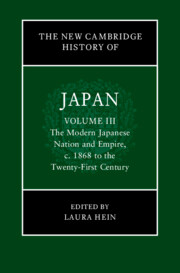
This major new volume presents innovative recent scholarship on Japan's modern history, including its imperial past and transregional entanglements. An international team of leading scholars offer accessible and thought-provoking essays that present an expansive global vision of the archipelago's history from c. 1868 to the twenty-first century. Japan was the first non-Western society to become a modern nation and empire, to industrialize, and to deliver a high standard of living to virtually all its citizens, capturing international attention ever since. These Japanese efforts to reshape global hierarchies powered a variety of debates and conflicts, both at home and with people and places beyond Japan's shores. Drawing on the latest Japanese and English-language scholarship, this volume highlights Japan's distinctive and fast-changing history.
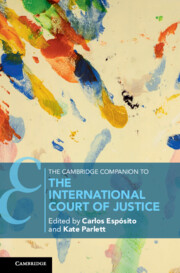
As international law has become more present in global policy-making, the International Court of Justice (ICJ) has come to occupy an essential and increasingly visible role in international relations. This collection explores substantive developments within the ICJ and offers critical perspectives on its historical and contemporary role. It also examines the growing role of the ICJ in the settlement of international disputes and assesses the impact of the ICJ's jurisprudence on the major areas of international law, from the territorial delimitation to human rights. With contributions from a diverse range of scholars and practitioners, the collection's contents combine a legal perspective with institutional and sociological insights on the functions of the ICJ. By considering the ICJ's character, jurisdiction and effectiveness, this collection offers a varied and holistic account of the International Court of Justice, an institution whose significance and influence only increase by the day.
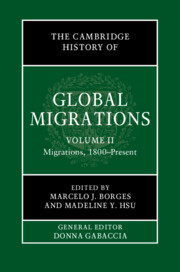
Volume II presents an authoritative overview of the various continuities and changes in migration and globalization from the 1800s to the present day. Despite revolutionary changes in communication technologies, the growing accessibility of long-distance travel, and globalization across major economies, the rise of nation-states empowered immigration regulation and bureaucratic capacities for enforcement that curtailed migration. One major theme worldwide across the post-1800 centuries was the differentiation between 'skilled' and 'unskilled' workers, often considered through a racialized lens; it emerged as the primary divide between greater rights of immigration and citizenship for the former, and confinement to temporary or unauthorized migrant status for the latter. Through thirty-one chapters, this volume further evaluates the long global history of migration; and it shows that despite the increased disciplinary systems, the primacy of migration remains and continues to shape political, economic, and social landscapes around the world.
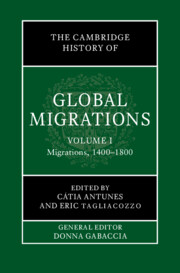
Volume I documents the lives and experiences of everyday people through the lens of human movement and mobility from 1400–1800. Focusing on the most important typologies of pre-industrial global migrations, this volume reveals how these movements transformed global paths of mobility, the impacts of which we still see in societies today. Case studies include those that arose from the demand of free, forced and unfree labour, long and short distance trade, rural/urban displacement, religious mobility and the rise of the number of refugees worldwide. With thirty chapters from leading experts in the field, this authoritative volume is an essential and detailed study of how migration shaped the nature of global human interactions before the age of modern globalization.
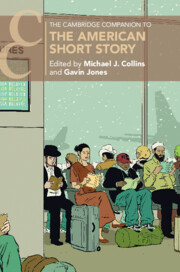
This Companion offers students and scholars a comprehensive introduction to the development and the diversity of the American short story as a literary form from its origins in the eighteenth century to the present day. Rather than define what the short story is as a genre, or defend its importance in comparison with the novel, this Companion seeks to understand what the short story does – how it moves through national space, how it is always related to other genres and media, and how its inherent mobility responds to the literary marketplace and resonates with key critical themes in contemporary literary studies. The chapters offer authoritative introductions and reinterpretations of a literary form that has re-emerged as a major force in the twenty-first-century public sphere dominated by the Internet.
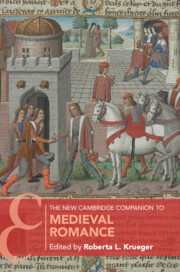
This new Companion provides a broad and perceptive overview of the most important vernacular literary genre of the Middle Ages. Freshly commissioned, original chapters from seventeen leading scholars introduce students and general readers to the form's poetics, narrative voice and manuscript contexts, as well as its relationship to the Mediterranean world, race, gender and the emotions, among many other topics. Providing fresh perspectives on the first pan-European literary movement, essays range across a broad geographical area, including England, France, Italy, Germany and the Iberian Peninsula, as well as a varied linguistic spectrum, including Arabic, Hebrew and Yiddish. Exploring the celebration of chivalric ideals and courtly refinements, the volume excavates the tensions and traumas lying beneath decorous surface appearances. An introduction, bibliography of texts and translations as well as chapter-by-chapter reading lists complete this essential guide.
Polar history can be seen through four different temporal lenses. There is Deep Time with its geological timescales against which to interpret and understand change. There is the ‘golden age’ of polar history, approximately 1800 to 1930, which orients the significance of the poles through the perspective of colonial exploration. There is the Anthropocene, our post-Holocene human-dominated epoch, which scholars have dated (not without controversy) to the 1950s and after. The Anthropocene is part of the geological timescale, but in the polar regions it corresponds to a temporality traditionally rooted in geopolitics: the Cold War era of militarization and intensified scientific interest in the polar regions.
Of all the north circumpolar lands, only Greenland extends farther towards the top of the globe than the uppermost reaches of the Arctic Archipelago. Politicians and media commentators regularly extol Canada’s identity as a northern nation, yet this area’s official name since 1954 – the Queen Elizabeth Islands – is not widely known or often used, and most citizens’ knowledge of High Arctic geography is rather vague. Only the military station at Alert on the north coast of Ellesmere Island, about 800 km from the pole, stands out clearly amid the general blur.
The High Arctic region’s southern boundary is Parry Channel, the major east–west waterway through the archipelago, in latitude 74° north. Parry Channel also divides the islands where Indigenous people have lived continuously for millennia from those that were abandoned during the harsh climatic conditions of the Little Ice Age (which lasted roughly from 1300 to 1850 ad).
Compared with many other regions of the world, the polar regions have not been areas with much industry. The few exceptions, both north and south, have mostly been associated with resource exploitation: fur-hunting, sealing, whaling, mining – and also tourism. Therefore, in economic-geographical publications, the polar regions have usually been described as Resource Frontier Regions.1 Considering both the Arctic and the Antarctic, whaling stands out in terms of the very long time period in which it has continuously been undertaken – and in terms of its scale.
George Angohiatok (pronounced ‘ano-HI-tok’) is a keen observer of Arctic landscapes, animals, and peoples. Raised on the land by his parents and grandparents in the western Canadian Arctic, George talks easily about his deep appreciation for the land and his significant concerns for the future of the Arctic and Inuit. George shares his observations of changes to the physical and social environments – changes he calls overwhelming – through richly detailed personal narratives. In the conversations presented in this chapter, George deftly weaves together changes to both settings, and illustrates the importance of considering our two worlds holistically. George’s story and words are transcribed here with minimal interruption from the other authors. Conventional academic reflections on methodology and literature are found within George’s story and afterwards.
While the warriors of India through the centuries have been primarily male, the great deities of war have been female. This chapter examines two of the most important war goddesses of India: Durga and Kali.
This chapter examines the evolution of attitudes to war in religious Zionism, beginning with the moderate approach to war in religious Zionism before the creation of the state of Israel and proceeding to the more radical approach that developed after the Six-Day War in 1967. It also examines the roots of these approaches in medieval Jewish sources, particularly those of Maimonides and Nahmanides.
There is a problem fermenting in the frigid waters of the Beaufort Sea, a portion of the Arctic Ocean north of Canada and the United States. The trouble has its roots in an 1825 treaty signed between Great Britain and Russia, which divided their North American territories into what are now Alaska and Yukon. In that treaty, the two empires drew a north–south boundary along the ‘Meridian Line of the 141st degree’ that ‘in its prolongation as far as the Frozen Ocean, shall form the limit between the Russian and British Possessions’.1 Nearly 200 years later the inheritors of this agreement, the United States and Canada, are interpreting the phrase ‘as far as the Frozen Ocean’ in contrasting ways. Canada understands this sentence to mean that the boundary between the two nations extends past the shoreline and into the Beaufort Sea, while the United States argues that the border ends at the coastline where the ‘Frozen Ocean’ begins.