To save content items to your account,
please confirm that you agree to abide by our usage policies.
If this is the first time you use this feature, you will be asked to authorise Cambridge Core to connect with your account.
Find out more about saving content to .
To save content items to your Kindle, first ensure no-reply@cambridge.org
is added to your Approved Personal Document E-mail List under your Personal Document Settings
on the Manage Your Content and Devices page of your Amazon account. Then enter the ‘name’ part
of your Kindle email address below.
Find out more about saving to your Kindle.
Note you can select to save to either the @free.kindle.com or @kindle.com variations.
‘@free.kindle.com’ emails are free but can only be saved to your device when it is connected to wi-fi.
‘@kindle.com’ emails can be delivered even when you are not connected to wi-fi, but note that service fees apply.
While Henry V is alive with religious echoes, its moral direction seems incoherent or unstable. Accordingly, the focus of this account is the way the play’s use of religion paradoxically intensifies and legitimates the pleasures of war. The chapter aims to explain not only how the sacral monarchy of England’s Plantagenet kings lives on in Shakespeare’s play but more importantly how in instrumentalizing it and its complex political theology, the prince outdoes his royal predecessors and the play aestheticizes war. It does this by enabling Henry to appropriate the dynamism and sheer agency imagined in Scripture’s representation of God’s freedom. The king comes out of a whirlwind and his army appears as Leviathan – all apparently in the service of the new national community. While Henry V is insistently skeptical about the value of war, its delight in the king’s virtù or violent agency complicates the irony and so denies the play any clear-cut moral critique.
It is striking how many of Shakespeare’s erotic plays have war either as their setting or are born out of a recent state of violent conflict. Troilus and Cressida and Antony and Cleopatra fall most clearly into the former camp, but think also of comedies like Much Ado About Nothing and A Midsummer Night’s Dream, where eros emerges from a newly forged peace only to constitute a new battleground of its own. This chapter probes the conjunction of war and eros that appears in almost half of Shakespeare’s plays, first through a broad survey of his corpus and then through studies of The Two Noble Kinsmen, Troilus and Cressida, and Romeo and Juliet. It argues that, far from merely contingent, theatrical conjunctions, Shakespeare provides us a deep conceptual study of the connection between eros and violence, both the potential violence of sexuality and the unsettling underlying sexuality of war.
This chapter considers the contemporary social and military context of the composition of Coriolanus including civil unrest, governance, education, the influence of the classical world, and later conjecture that Shakespeare himself was a soldier. In considering the performance of the play and its afterlives, attention is paid to stage directions, sound, character, and the subsequent adaptation and appropriation of Coriolanus and his mother in other media – art, poetry, film – that focus on the military, civil, personal, and political conflicts at the heart of the play.
From his two historical tetralogies to his great tragedies, civil and dynastic conflict is a near-constant presence in Shakespeare’s plays. This chapter sweeps across his career to explore the political ferment against which he developed his nuanced depictions of civil discord. It begins with the political contexts that shaped the rise of the English history play in the 1590s and extends through the bitter dynastic rivalries that mark Shakespeare’s depictions of Greek and Roman history, his tragedies, and the full body of his plays. It finds that, while Shakespeare studiously avoided taking sides in the warring factions he depicts, he embraced the opportunity to study the genesis of civil strife – its causes, personal motivations, and means by which it is intermittently brought under control. Civil and dynastic conflict serves Shakespeare brilliantly as essential to his craft as playwright, with implications about civil discord at all times and in all places.
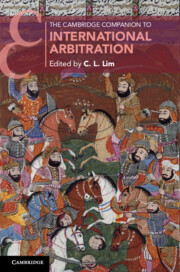
This Cambridge Companion explores the main senses of the term 'international arbitration'; including the arbitration of private commercial disputes, disputes between a State and a foreign investor, disputes between States and also between a State and its parts. It treats these various forms as being inter-related, if not always conceptually, then as a matter of history, rather than as collective victims of imprecise language. The book touches not only on current debates but also more foundational aspects, such as the tension between party autonomy and State authority, and the pacifist roots of modern international arbitration. Thus, it aims to offer a concise survey of the history, the main issues as well as the latest developments in a single, handy volume. It will be an invaluable introduction to the subject for students studying international arbitration, commercial law and international law, and also lawyers and the general reader.
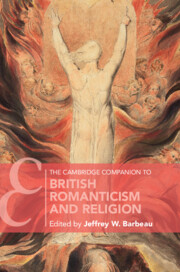
The Cambridge Companion to British Romanticism and Religion provides the first scholarly survey of the connections between literature, religion, and intellectual life during the British Romantic period (1780s–1832). Part I, 'Historical Developments,' examines diverse religious communities, texts, and figures that shaped British Romantic culture, investigating the influence of Christianity, Judaism, Islam, Hinduism, and atheism on the literature of the times. Part II, 'Literary Forms,' considers British Romanticism and religion through attention to major genres such as poetry, the novel, drama, sermons and lectures, and life writing. Part III, 'Disciplinary Connections,' explores links between religion, literature, and other areas of intellectual life during the period, including philosophy, science, politics, music, and painting.
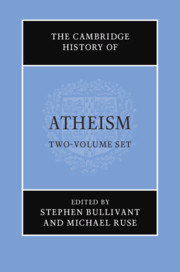
The two-volume Cambridge History of Atheism offers an authoritative and up to date account of a subject of contemporary interest. Comprised of sixty essays by an international team of scholars, this History is comprehensive in scope. The essays are written from a variety of disciplinary perspectives, including religious studies, philosophy, sociology, and classics. Offering a global overview of the subject, from antiquity to the present, the volumes examine the phenomenon of unbelief in the context of Christian, Islamic, Buddhist, Hindu, and Jewish societies. They explore atheism and the early modern Scientific Revolution, as well as the development of Charles Darwin's theory of evolution and its continuing implications. The History also includes general survey essays on the impact of scepticism, agnosticism and atheism, as well as contemporary assessments of thinking. Providing essential information on the nature and history of atheism, The Cambridge History of Atheism will be indispensable for both scholarship and teaching, at all levels.
Histories of dissolving high/low culture divides inform Katalin Orbán’s discussion of contemporary graphic fiction, as she posits the critical and popular emergence of long-form, verbal-visual works that push narrative conventions in new directions, such as spatial-temporal experiments (e.g., by Chris Ware and Richard McGuire), the use of visual metaphors and other conventionally linguistic literary devices, and genre blurring distinctive to the drawn medium.
David James takes on the formal challenges posed by contemporary authors, the permeable boundary between modes of literary realism and experimentalism. Marking a shift away from postmodern inaccessibility, irony, and detachment, he argues that twenty-first century novelists have infused narrative innovation with what he calls “alternative ways of seeing and sensing the world.” Delineating a spectrum of literary experimentalism that includes works by Jennifer Egan, Ben Marcus, Cormac McCarthy, Ottessa Moshfegh, Merritt Tierce, Marilynne Robinson, Joy Williams, and Colson Whitehead, among others, James argues that recent novels engage social, economic, and political change and precarity through distinctive modes of aesthetic and formal mimeticism that reflect twenty-first century contexts.
The second section foregrounds methodological approaches to twenty-first century fiction, starting with Candice Jenkins’s examination of Afro-Futurism and Afro-Pessimism as conceptual frameworks within which contemporary African American fiction has represented the past and present during “the Black Lives Matter era.” Discerning an inherently speculative quality to the two separate bodies of thought, Jenkins argues they share a “a certain radicalism–one inclined towards both building and destroying worlds.” This speculative radicality infuses the work of a remarkably broad range of writers, including N. K. Jemisin, Jesmyn Ward, Colson Whitehead, with the generatively imagined restructured societies derived not from utopianism, but the negative affects of intractable historical racism.
Mark Bould’s chapter on “Speculative Fiction” begins with Jonathan Lethem’s literary critical counterfactual in which the genre border between science fiction and mainstream literature never existed and all novels about science were considered one group. As Bould points out, the very term slipstream itself was coined by Bruce Sterling to refer to the disconcerting works of science fiction that played across the edges of varied genre definitions. Heady mixtures of literary conventions have informed all regions of fiction since then, as speculative fiction draws on and critiques archaic and futurist literary movements representing empire, environmentalism, disability, illness, violence, as well as racial, gendered and sexual alterities.
Julia Lee identifies temporal, spatial, and affective innovation in 21st century transpacific fiction. Locating formally innovative contemporary Asian American writing in the post-1965 contexts of migration, global economies of labor, environmental anxiety, language difference, and racialized violence, Lee shows how writers have represented new technologies of immediate communication across oceanic flows of migrants, commodities, information, and waste in disjointed, parallel, and non-sequential narrative structures. Childhood trauma lingers across time and geography in a story about a Filipino nurse by Mia Alvar, while novels by Min Jin Lee, Ruth Ozeki, and Thi Bui layer Asian and American modernities, postmodernities, and contemporary present-tenses.
The material properties of platform and medium figure prominently in Scott Rettberg’s examination of digital fiction as literary engagements with computer code, video gaming, hypertext, audio and visual plug-ins, and virtual reality. Narratives with multiple or interactive pathways, role-playing and perspectival shifts, and mass authorship reconceptualize postmodern and contemporary literary themes and techniques within digital textualities.
In her analysis of the rising prominence of recent short and flash fiction, Angela Naimou considers narrative brevity as an opening to geopolitical and temporal expansiveness in her chapter on “Short, Micro, and Flash Fiction.” Measured in major prize awards, sales, or downloads, short and short-short fiction have paradoxically thrived during the spatial and temporal conceptual expansions of, for example, globalization and the Anthropocene. Naimou identifies the techniques of short fiction representing planetary stories of migration, climate crisis, and evolutionary history in works by Teju Cole, Edwidge Danticat, Rachel B. Glaser, Viet Thanh Nguyen, and George Saunders.