To save content items to your account,
please confirm that you agree to abide by our usage policies.
If this is the first time you use this feature, you will be asked to authorise Cambridge Core to connect with your account.
Find out more about saving content to .
To save content items to your Kindle, first ensure no-reply@cambridge.org
is added to your Approved Personal Document E-mail List under your Personal Document Settings
on the Manage Your Content and Devices page of your Amazon account. Then enter the ‘name’ part
of your Kindle email address below.
Find out more about saving to your Kindle.
Note you can select to save to either the @free.kindle.com or @kindle.com variations.
‘@free.kindle.com’ emails are free but can only be saved to your device when it is connected to wi-fi.
‘@kindle.com’ emails can be delivered even when you are not connected to wi-fi, but note that service fees apply.
This chapter explores the historical relationship between Heidegger and Gadamer. It points out several surprises and disappointments that Gadamer experienced with Heidegger. More importantly, the chapter considers the phenomenological character of Gadamer’s philosophical hermeneutics. Gadamer rejects many of the basic characteristics of Husserl’s phenomenology, but he is also indebted deeply to other aspects of Husserl’s phenomenology. These aspects he also shares with Heidegger–the concepts of horizon and lifeworld, the account of temporality, and the rejection of a representational epistemology. The chapter points out the distinctiveness of Gadamer’s philosophical hermeneutics in relation to Heidegger’s. Gadamer’s hermeneutics is more dialogical, embraces the antinomy of beginnings, and embraces Plato and Aristotle.
Democracy and the rule of law are both “essentially contested concepts” in common use; indeed both are hurrah terms to which virtually everyone these days seeks to lay claim. In this brief chapter, rather than survey contestants I opt for stipulation. My stipulations are intended to be fairly undemanding, indeed deliberately unoriginal. They might well exclude legitimate contenders and not be uncontroversial, but they are intended to reflect not only my own preferences but central themes in long traditions of thought about these matters.1
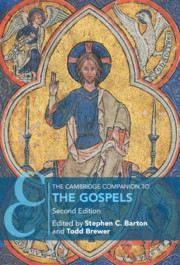
Throughout the history of Christianity, the four canonical gospels have proven to be vital resources for Christian thought and practice, and an inspiration for humanistic culture generally. Indeed, the gospels and their interpretation have had a profound impact on theology, philosophy, the sciences, ethics, worship, architecture, and the creative arts. Building on the strengths of the first edition, The Cambridge Companion to the Gospels, 2nd edition, takes account of new directions in gospels research, notably: the milieu in which the gospels were read, copied, and circulated alongside non-canonical gospels; renewed debates about the sources of the gospels and their interrelations; how central gospel themes are illuminated by a variety of critical approaches and theological readings; the reception of the gospels over time and in various media; and how the gospels give insight into the human condition.
This Companion presents a new understanding of the relationship between music and culture in and around the nineteenth century, and encourages readers to explore what Romanticism in music might mean today. Challenging the view that musical 'romanticism' is confined to a particular style or period, it reveals instead the multiple intersections between the phenomenon of Romanticism and music. Drawing on a variety of disciplinary approaches, and reflecting current scholarly debates across the humanities, it places music at the heart of a nexus of Romantic themes and concerns. Written by a dynamic team of leading younger scholars and established authorities, it gives a state-of-the-art yet accessible overview of current thinking on this popular topic.
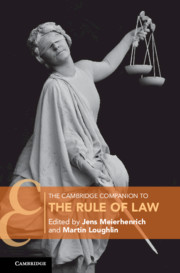
The Cambridge Companion to the Rule of Law introduces students, scholars, and practitioners to the theory and history of the rule of law, one of the most frequently invoked-and least understood-ideas of legal and political thought and policy practice. It offers a comprehensive re-assessment by leading scholars of one of the world's most cherished traditions. This high-profile collection provides the first global and interdisciplinary account of the histories, moralities, pathologies and trajectories of the rule of law. Unique in conception, and critical in its approach, it evaluates, breaks down, and subverts conventional wisdom about the rule of law for the twenty-first century.
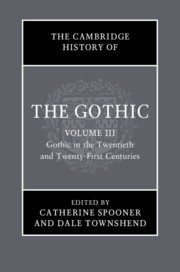
The third volume of The Cambridge History of the Gothic is the first book to provide an in-depth history of Gothic literature, film, television and culture in the twentieth and twenty-first centuries (c. 1896-present). Identifying key historical shifts from the birth of film to the threat of apocalypse, leading international scholars offer comprehensive coverage of the ideas, events, movements and contexts that shaped the Gothic as it entered a dynamic period of diversification across all forms of media. Twenty-three chapters plus an extended introduction provide in-depth accounts of topics including Modernism, war, postcolonialism, psychoanalysis, counterculture, feminism, AIDS, neo-liberalism, globalisation, multiculturalism, the war on terror and environmental crisis. Provocative and cutting edge, this will be an essential reference volume for anyone studying modern and contemporary Gothic culture.
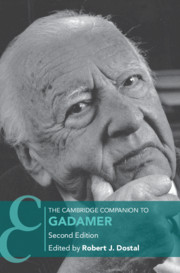
Hans-Georg Gadamer (1900–2002) is widely recognized as the leading exponent of philosophical hermeneutics. The essays in this volume examine Gadamer's biography, the core of hermeneutical theory, and the significance of his work for ethics, aesthetics, the social sciences, and theology. There is full consideration of Gadamer's appropriation of Hegel, Heidegger and the Greeks, as well as his relation to modernity, critical theory and poststructuralism. This revised edition includes several new chapters on aspects of Gadamer's work, as well as updated chapters from the first edition and the most comprehensive bibliography of works by and about Gadamer available in the English language.
The Anthropocene is a proposed geological epoch marking humanity's alteration of the Earth: its rock structure, environments, atmosphere. The Cambridge Companion to Literature and the Anthropocene offers the most comprehensive survey yet of how literature can address the social, cultural, and philosophical questions posed by the Anthropocene. This volume addresses the old and new literary forms - from novels, plays, poetry, and essays to exciting and evolving genres such as 'cli-fi', experimental poetry, interspecies design, gaming, weird, ecotopian and petro-fiction, and 'new' nature writing. Studies range from the United States to India, from Palestine to Scotland, while addressing numerous global signifiers or consequences of the Anthropocene: catastrophe, extinction, 'fossil capital', warming, politics, ethics, interspecies relations, deep time, and Earth. This unique Companion offers a compelling account of how to read literature through the Anthropocene and of how literature might yet help us imagine a better world.
Civil disobedience presupposes a state, a legitimate authority that governs a territorial community through binding law. Yet it is often noted that two of the three canonical inspirations for civil disobedience, with whom the practice is said to have begun and to whom nearly all discussions refer, did not grant this premise. Far from accepting the legitimacy of the authorities against which they protested, Henry David Thoreau and Mohandas K. Gandhi expressly rejected them, not only in their current but in any imminently achievable form. The literature on civil disobedience tends to deal with this by treating them as precursors rather than models, mustered alongside figures such as Antigone, Socrates, or Jesus into expansive prehistories of the practice. While they may be exemplars of morally motivated, nonviolent resistance to unjust authority, they did not practice civil disobedience, strictly speaking.1
This chapter explores whether civil disobedience can be not just morally justifiable, but also legally defensible and, if it can be, how states should respond to it. The key question is whether states act legitimately when they punish civil disobedients and, if they do act legitimately, on what grounds. Philosophers have advanced numerous grounds to justify state punishment in general, including retribution or just deserts, deterrence, incapacitation, communicating society’s censure, vindicating victims, and easing political and social tensions. The question is whether any of these grounds can justify states in punishing people who engage in civil disobedience. If states act illegitimately in punishing civil disobedients, which seems likely in many cases, then what distinguishes civil disobedients from other lawbreakers? We discuss various defenses that civil disobedients might make in a court of law to differentiate their conduct from ordinary offenses.
Henry David Thoreau’s essay on civil disobedience is said to have influenced Mohandas K. Gandhi’s nonviolent campaign for Indian rights in South Africa, and subsequent drive for Indian independence, which in turn is thought to have inspired Martin Luther King, Jr.’s direction of the American Civil Rights Movement. In this chapter I reverse that genealogy, showing that King construed elements of satyagraha in ways that served the political agenda of the Civil Rights Movement in the United States, while playing down aspects of satyagraha that did not fit the American case or even clashed with Judeo-Christian themes that were important within the American movement.
Civil disobedience is typically characterized as morally principled, deliberate, and publicly enacted violation of law by individuals, who do not then seek to evade arrest. It is framed as a “civil” way for citizens to challenge possibly unjust laws or policies: one that is in broad fidelity to their domestic rule of law and good citizenship, even when it involves the refusal to obey some specific law.1 Similarly, a number of commentators have sought to show that some acts which cross state territorial or citizenship boundaries should be understood as trans-state or global civil disobedience. They have focused on deliberate, principled violations of a state’s law by non-citizen activists, asylum seekers, and unauthorized migrants, among others.2
This chapter details a conceptual framework of global citizenship within which such principled lawbreaking beyond the state can be situated. It also highlights a significant underlying distinction between domestic and suprastate civil disobedience which has received relatively little attention in the recent literature.
In the popular imagination of civil disobedience, few figures loom as large as Martin Luther King, Jr. His “Letter from a Birmingham Jail” is considered essential reading for any student of civil disobedience; it regularly features on high school and college syllabi covering the topic. Whenever new civil disobedience erupts, particularly in the United States, journalists and political commentators routinely reach for King and the familiar refrains contained within the “Letter” in order to interpret (and sometimes scold) rising movements and their tactics.1 Yet, much like the broader reception of King within political philosophy, his centrality to civil disobedience obscures the fact that, until quite recently, his political thought was strikingly marginal to academic philosophizing about civil disobedience. Scholarly debates too often have rested on a combination of what Brandon Terry and Tommie Shelby call “ritual celebration” and “intellectual marginalization” that served to diminish King’s contributions as “derivative of long-standing American ideals.”2 To be sure, King and the “Letter” make regular appearances in theories of civil disobedience from the 1960s onward, as they do in popular discourse.
Contemporary debates on civil disobedience often turn on the question of what’s living and what’s dead in nonviolence. When protestors smash security cameras to hide their identities, hurl tear gas canisters back at police lines, or block highways to urge action from elected officials, they refuse the demand that disobedience be strictly nonviolent. The diversity of tactics embraced by recent protest movements around the globe raises questions about the continuing adequacy of the very idea of nonviolent civil disobedience for conceptualizing dissent. Some scholars have responded with calls for a more minimalist definition of civil disobedience that better encompasses these confrontational tactics.1 Others, such as Candice Delmas in her contribution to this volume, argue for abandoning the concept altogether in favor of theorizing this wider terrain as “uncivil” disobedience.