To save content items to your account,
please confirm that you agree to abide by our usage policies.
If this is the first time you use this feature, you will be asked to authorise Cambridge Core to connect with your account.
Find out more about saving content to .
To save content items to your Kindle, first ensure no-reply@cambridge.org
is added to your Approved Personal Document E-mail List under your Personal Document Settings
on the Manage Your Content and Devices page of your Amazon account. Then enter the ‘name’ part
of your Kindle email address below.
Find out more about saving to your Kindle.
Note you can select to save to either the @free.kindle.com or @kindle.com variations.
‘@free.kindle.com’ emails are free but can only be saved to your device when it is connected to wi-fi.
‘@kindle.com’ emails can be delivered even when you are not connected to wi-fi, but note that service fees apply.
Volume II charts European urbanism between 700 and 1850, the millennium during which Europe became the world’s most urbanised region. Featuring thirty-six chapters from leading scholars working on all the major linguistic areas of Europe, the volume offers a state-of-the-art survey that explores and explains this transformation, how similar or different such processes were across Europe, and how far it is possible to discern traits that characterise European urbanism in this period. The first half of the volume offers overviews on the urban history of Mediterranean Europe, Atlantic and North Sea Europe, Central and Eastern Europe, and European urbanisms around the world. The second half explores major themes, from the conceptualisation of cities and their material fabric to continuities and changes in the social, political, economic, religious and cultural histories of cities and towns.
While later medieval England enjoyed an increasingly sophisticated array of governmental institutions that helped kings to rule, kingship itself remained a fundamentally personal and personality-driven enterprise. Consequently, space was needed where the ‘personal side’ of politics could take place and where each monarch’s domestic needs could be met. It was the royal court and household that provided space for both of these things. Despite the importance of each, defining them, and their relationship to one another, is not easy. The royal court (not to be confused with the courts of law, discussed in Chapter 6) has proven particularly problematic to historians because it lacked a clear structure or boundaries.
This chapter examines the relationship between the king and his ‘ordinary’ subjects and asks whether such a thing as ‘public opinion’ evolved over the period to play a role in politics. For medieval historians, ‘the public’ used to be synonymous with the nobility and gentry. They were the section of the population that had some formal role in governance and had time outside of the demands of labour to devote to political questions. However, recent scholarship has emphasised that most if not all people in later medieval England had access to texts, could hear them read aloud and discuss their contents. This has led to a reappraisal of the later medieval public, towards an expansionist view that includes people below the ranks of the gentry as politically aware and engaged.
In the summer of 1943, instead of a far-reaching offensive on the Eastern Front, the Germans planned only a limited attack at Kursk, which was nevertheless intended to decisively weaken the Red Army. Hitler then wanted to move the most powerful units to the west in order to repel the expected Allied invasion. However, the Soviets turned the front salient around the city of Kursk into a fortress and amassed huge reserves there. After repulsing the German attack, these were to launch an offensive of their own and advance to the borders of the German Reich in 1943. When the German attack began on 5 July 1943, it did not lead to a short and victorious annihilating strike, as Hitler had hoped, but instead initiated the largest battle of the Second World War. It lasted 50 days, led to the clash of around 3.5 million soldiers, 13,000 tanks and self-propelled guns, as well as 8,000 aircraft, and ended with a decisive Soviet victory. Although the Red Army was unable to achieve its strategic objectives in 1943 due to its huge losses, the Wehrmacht was so weakened after the Battle of Kursk that it never regained the initiative on the Eastern Front.
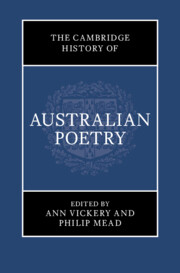
The Cambridge History of Australian Poetry offers an authoritative and comprehensive engagement with poetries that range from some of the world's oldest to significant innovations of the twenty-first century. Bringing together insights from First Nations experts, internationally renowned scholars, distinguished practitioners, and future critical leaders, this volume analyses the role of poetry in the multiple cultural imaginaries of Australia within local, regional, and global contexts. Chapters consider the role of poetry as both shaping and critiquing settler-colonial, national, and identity formations; Aboriginal writing, song, and cultural leadership; children's poetry; the poetry of war and conflict; engagement with print, film, and the digital; major aesthetic movements; geographies of the city, region, Asia, the South, and Antarctica; diasporic movements; and environmentalism. The volume includes analyses of the archive, ballads and folk poetry, performance poetries, conceptual and concrete poetries, canon formation and diversification, and current perspectives on major authors.
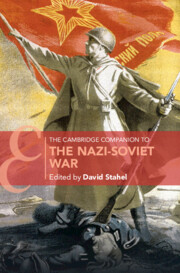
The Nazi-Soviet War was the largest and most brutal theatre of the Second World War, fought between two of the most ruthless states ever to exist. Bringing together twenty-four of the most accomplished authors in both German and Soviet history, this Cambridge Companion provides the most authoritative, and yet highly accessible, guide to the conflict. Each chapter examines a key aspect of the war from war planning, the opposing forces and the campaigns to criminality and occupation, alliances, the home fronts and postwar legacies and myth-making. The authors demonstrate that the Nazi-Soviet war was both a conventional clash of arms in which millions of soldiers fought in titanic battles, but also a non-conventional war in which soldiers and security forces murdered countless non-combatants. It was a war of resources, industry, mobilisation, administration, and popular support, with implications that still drive European security debates today.
For over a hundred years scholars have written about late medieval kingship, and a vast body of published work now exists on the subject. However, in all this rich coverage, no accessible introduction to the subject exists. The Cambridge Companion to Late Medieval Kingship addresses this need by bringing together, within a single volume, a series of themed chapters which consider key aspects of the workings of the English monarchy between 1200 and 1500. Featuring leading experts in the field, each chapter provides a concise and accessible guide, offering insights, synthesis and explanation to help readers understand not only how kings ruled, but also what made their rule more – or less – effective. By adopting a holistic approach to kingship, the contributors also consider how kingship impacted on the king's subjects, thereby illuminating the complex interplay of cooperation and conflict that shaped both the monarchy and the wider polity in late medieval England.
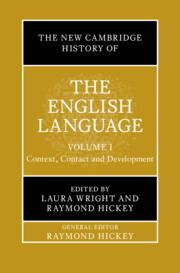
This volume investigates the Indo-European and Germanic background to the English language, looking at how inherited elements of phonology and morphology survived into the Old English period. It then considers various kinds of contact between the first speakers of English and speakers of Celtic, Latin and Scandinavian, under different sociolinguistic circumstances. The manner in which initial standardisation of English took place, with considerable code-switching, and the structural changes which the language underwent in this early period are discussed. The various analytical methods used to examine the available data are considered in a dedicated chapter on philology. The volume also contains a set of longer chapters. These take a detailed look at various levels of language from phonology, morphology, syntax through to semantics and pragmatics, and include reviews of historical sociolinguistics and onomastics.
Using the library of eighteenth-century attorney and legal historian Frances Hargrave as a starting point, this chapter considers the place of law, property, and state formation in the causes and results of the American Revolution. Focusing on three related themes to the place of laws in independence – the influence and break from English legal culture, the pluralism of legal practice within North America, and the place of legal institutions in either maintaining or changing the status quo – this chapter considers how both different forms of property and the different individuals and communities involved with it played a central role in the creation of an independent United States. The governments that emerged from the Revolution each relied heavily on these varied legal threads.
This chapter has several major themes. It begins by documenting how historians are rethinking the origins of the United States, emphasizing its contingent nature as a union of sovereign states rather than a nation, and the roots of that novel confederation in the complexities of the British imperial system. In that context, it then traces the fluidity and contingency of rights available to the citizens of the United States after the Revolution. Finally, it examines how, following the victory of the Jeffersonian coalition in 1800, those rights became structured and limited along racial lines, creating a “patchwork nation” of distinct racial orders.
This chapter explores the ways in which British imperial reforms were part of broader imperial rivalries and interconnections; the racial, gender, and political limits of Enlightenment reforms; the perceptions and bargaining that shaped reforms; and the relationship between reform and Revolution. It questions teleological approaches that cast British imperial reforms in the 1760s and 1770s as having led to Revolution in the thirteen colonies. In a global and Enlightenment context, British reformers did not pursue particularly radical reforms until the Intolerable Acts of 1774. These Acts were reactionary punishments intended to reform colonial thinking and behavior. They foreclosed the previously vital bargaining process between the imperial government and the colonists, and the colonists saw dire parallels with the monopolistic and tyrannical East India Company. The government’s attempt to use non-negotiable punishment to reform colonial thinking and behavior, rather than reforms to imperial tax and trade policies, most directly stimulated Revolution.
Between June 1774 and June 1775, radical factions in the thirteen colonies launched an armed uprising that arguably did more than the Declaration of Independence to wrest the colonies from Great Britain. Ordinary people pushed their leaders to take bold new steps, and the rebels developed tools of popular mobilization that turned resistance into armed insurgency. They formed new political bodies such as the Continental Congress and hundreds of local committees, while drawing on longstanding community institutions. There were plenty of uncertain or hostile people in America who were unready to consider independence, and so local crowds menaced Loyalists and sometimes perpetrated shocking acts of violence. These crucial months of insurgency were peppered by tense “alarms” that mobilized the population. These incidents culminated in the Battles of Lexington and Concord and Bunker Hill, releasing the violence that characterized the Revolutionary era.