To save content items to your account,
please confirm that you agree to abide by our usage policies.
If this is the first time you use this feature, you will be asked to authorise Cambridge Core to connect with your account.
Find out more about saving content to .
To save content items to your Kindle, first ensure no-reply@cambridge.org
is added to your Approved Personal Document E-mail List under your Personal Document Settings
on the Manage Your Content and Devices page of your Amazon account. Then enter the ‘name’ part
of your Kindle email address below.
Find out more about saving to your Kindle.
Note you can select to save to either the @free.kindle.com or @kindle.com variations.
‘@free.kindle.com’ emails are free but can only be saved to your device when it is connected to wi-fi.
‘@kindle.com’ emails can be delivered even when you are not connected to wi-fi, but note that service fees apply.
The Real Pain of Punishment explores the true pains of incarceration using insights from empirical sciences and people with lived prison experiences. The book highlights the concept of 'belonging' as an unprecedented lens for critically interrogating the legitimacy of incarceration across penal theory, sentencing practice, and human rights frameworks. The chapters chart pathways for bridging the gap between the normative idea of punishment and the stark realities of prison life. The final chapter, written with scholars currently and formerly incarcerated in a New York State facility, reflects on how embracing belonging within penal approaches can inform responses to harm grounded in humanization, proximity, empowerment, and collaboration. With this chapter and more, the book, advances a call for deeper epistemic dialogue within legal discourse on crime, punishment, and justice. This title is part of the Flip it Open Programme and may also be available open access. Check our website Cambridge Core for details.
This book presents a selection of original texts of Scottish witchcraft trial records, with historical commentary. These are the essential sources for understanding the intensity of witch-hunting in Scotland.
Witchcraft was a statutory offence in Scotland between 1563 and 1736, and the authorities held many trials and executions for witchcraft in this period. This book presents a representative selection of original records of these trials, with historical commentary. The documents are selected mainly from the records of local kirk sessions, presbyteries and burghs, and the central justiciary court. Some records include statements by neighbours about alleged bewitchment; these narrate quarrels, illness and healing, and misfortunes in everyday life. In other records, the accused witches themselves are interrogated about alleged dealings with the Devil; the resulting confessions can include fantastical accounts of visionary experiences and encounters with fairies. Each case has its own uniqueness; these are all individual human stories, often tragic ones. The records show the local church authorities, and the criminal courts, investigating and unwittingly creating an impossible crime.
"The leading academic vehicle for scholarly publication in the field of medieval warfare." Medieval Warfare
This volume examines the diverse ways in which medieval European cities, towns, and other urban communities engaged with warfare. For northern Europe, articles consider how subterfuge and betrayal were deployed to capture strongholds, the role of urban communities (large and small) in English warfare in the eleventh through the thirteenth centuries, how morale was maintained (or undermined) during a siege, how Scottish cities and towns supported efforts to resist English invasion, the military agreements with magnates used by Rhineland cities to promote peace, and what economic evidence can show us about the contribution of French cities to war efforts in the later Middle Ages.
Moving south, essays explore the nature of warfare in twelfth and thirteenth century Lombardy, the actions of the Angevin royal family in Tuscan urban warfare and politics, the composition of Italian armies (gleaned from cavalry musters from Bologna), the importance of the city of Murcia during the War of the Two Pedros, and the creation of chivalric spaces out of Andalucian cities.
Captures in unprecedented depth the cultural significance of the designed landscape and its relationship with Bluestocking philosophy.
Situated within the broader context of eighteenth-century intellectual and cultural history, this collection redefines the role of the Bluestocking circle in shaping Britain's landscapes and social ideals. Against the backdrop of Whiggish notions of "improvement"-encompassing agricultural innovation, aesthetic refinement, and moral progress-it explores how women such as Elizabeth Montagu, Mary Delany, and Elizabeth Carter navigated the intersections of polite sociability, intellectual production, and estate management. Their contributions reveal a dynamic interplay between cultural critique and practical reform, positioning them as active participants in the period's debates on land, labour, and national identity.
Drawing on insights from the Elizabeth Montagu's Correspondence Online (EMCO) project, these essays uncover the creative and social tensions embedded in iconic estates such as Montagu's Sandleford and Lord Lyttelton's Hagley Hall. They delve into the poetic and philosophical musings of James Woodhouse, the sociable artistry of Mary Delany, and the symbolic landscapes of Wrest Park. By examining correspondence, poetry, visual arts, and cartography, this volume offers an unprecedented exploration of the ways Bluestocking women engaged with and redefined the designed landscape as a site of intellectual and environmental innovation.
This interdisciplinary collection reshapes the historiography of gender, environment, and cultural progress, offering fresh insights into the enduring significance of eighteenth-century landscapes and the intellectual communities that shaped them.
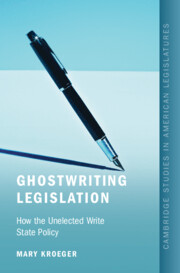
State legislators introduce more than 100,000 bills per year and the resulting statutes that become law govern every aspect of life and business in those states. But who exactly writes these laws? In Ghostwriting Legislation, Mary Kroeger delves into the central and often-overlooked role that interest groups, think tanks, companies, and bureaucrats play in writing state law. While legislators are not expected to draft and pass legislation without the input of outside actors, Kroeger argues that a democratic defect may arise if elected officials must rely substantially on non-legislators to craft high-quality bills. Ghostwriting Legislation explores the disconnect between legislative power and legislative capacity, providing key data and insights for those who care about democracy and the separation-of-power dynamics in state legislatures.
Explores the commemoration and memorialisation of the Canterbury martyr in visual and material culture.
In life, and especially in death, Thomas Becket was nothing short of a medieval celebrity, whose significance spanned the European high Middle Ages in to the sixteenth-century. Henry VIII's suppression of his cult in 1536 only served to enhance his popularity elsewhere. Visual depictions of his life, high-profile careers, spectacular demise, and posthumous legacies, are numerous. These images document both the extent, and the efficacy, of his invocation across religious, political and civic agendas. Becket remains the stuff of literature and legend, art, drama and cultural commodification.
This volume explores Becket imagery, both in such traditional media as stained glass and illuminated manuscripts, and less common objects: toys, baptismal fonts, and vernacular almanacs. Its essays provide new interpretations of the archaeological, iconographic, and historiographic spectrum of Becket imagery by, for example, deconstructing religious-secular binaries in the study of pilgrim badges and revising long-established interpretations of Canterbury stained glass. They also expand the Becket visual canon into broader geographic and temporal contexts, from medieval Denmark and Spain to eighteenth- and nineteenth-century Britain and twenty-first-century Boston. Meanwhile, contributions which look at the appropriation and use of Becket imagery in the aftermath of the English Reformation break new ground in scrutinizing a subject well traversed in text, but that has only begun to be explored in visual and material culture.
Was Franco's Spain really a pariah in the Anglosphere?
This book examines pro-Francoism and the significant influence of a "Spanish lobby" in shaping US and British policy towards Spain during the Second World War and the years leading up to the Pact of Madrid in 1953. This lobby included not only pressure groups but also legislators and members of the executive as well as the armed forces, who shared economic and strategic interests and ideological sympathies in the growing anti-Communist atmosphere of the First Cold War.
The first two chapters provide the historical background to this rapprochement, examining monetary and credit policies in the United States and Spain during the 1930s and 40s, focusing in particular on the key roles played by American financial and business sectors, including Chase National Bank, to further the clandestine economic activities of US state companies and agencies in Spain during the Second World War. The book then turns to the role of the Spanish lobby in post-war US-Spanish diplomatic relations, looking at American individuals directly courted by the Spanish embassy in Washington as well as pro-Francoist congressmen who favored a closer relationship with Spain. The next chapter moves from Washington and New York to the West Coast to analyze local Spanish consular efforts to 'normalize' Spain in the eyes of the United States. Finally, the book turns to British relations with Spain during and after the Second World War and shows how the government's dependency on the US led to Britain becoming the junior partner in the formulation of Western policy towards Franco.
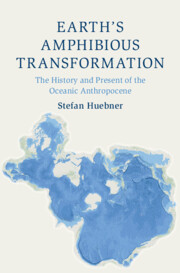
In the first history of the oceanic Anthropocene, Stefan Huebner explores the twentieth-century extension of human habitats into oceanic spaces. He shows how the effects of this amphibious transformation have followed a very different trajectory from human-driven change on land, in terms of both socioeconomic development and environmental degradation. The extension of the human habitat through artificial islands such as seabed-fixed and floating structures has granted vertical access to Earth's different spatial layers, from the fossil fuels beneath the seabed to outer space. Huebner asks why this transformation occurred; how it has been shaped by political, economic, and environmental factors; and how it has altered marine environments. A deeper understanding of Earth's amphibious transformation compels us to reconsider the history and future of climate change, sea level rise, energy transitions, human–marine species interactions, globalization, and even urbanization, including floating cities. This title is also available as open access on Cambridge Core.
Traces the position, experiences and reception of women in Irish traditional music through detailed ethnographic and statistical findings.
This book is the first of its kind to engage with the larger subject of women in commercial Irish traditional music. It considers the experiences of performers in the various commercial arenas of the tradition, while also engaging in critical discussions of choice, agency, feminism and sexualisation. It reveals how the commercial music industry and Celtic music label continues to place women within a stereotypical idealised role or occupation.
The book provides new insight into the legacy of women-led bands and compilations as well as their impact on Irish traditional music over five decades. Its findings on commercial dance shows are equally significant. While these shows had a positive impact on performers, at the same time they enforced gendered, racial and heteronormative expectations.
Drawing on extensive ethnographic and statistical research, the book finds strong evidence that women and other marginalised practitioners continue to face greater challenges and different expectations when maintaining a professional career and participating in Irish traditional music. It also uncovers characteristics and dynamics related to the recreational and commercial spaces of the Irish traditional music and Irish dance scene that enable harmful and predatory behaviour.
The author's findings support understandings and aid future legislation for creating a safe, inclusive and equitable performance space for all.
A history of the annual British and Irish state and religious anniversaries and occasions of special worship from the sixteenth century to the present.
Since the sixteenth century, the governments and established churches of Britain and Ireland have summoned their nations to special acts of public worship during crises, wars and times of celebration, or for annual days of commemoration and remembrance. These special prayers, special days of worship and religious anniversaries were national events, reaching into every parish. They had considerable religious, ecclesiastical, political, ideological, moral and social significance, and they produced important texts: proclamations, council orders, addresses and - in England and Wales, and in Ireland - prayers or complete liturgies which temporarily supplemented or replaced the services in the Book of Common Prayer, and most recently in Common Worship. National Prayers. Special Worship since the Reformation in four volumes, provides the edited texts, commentaries and source notes for over 900 occasions of special worship and for each of the annual commemorations.
The final volume, Anniversary Commemorations, Additional Material and Indices, 1533-2023, describes the orders and services for the nine early modern state anniversaries, including Accession day, Gowrie day, Gunpowder Treason day, Restoration day, and commemoration of Charles I's execution and the Great Fire of London, and for the modern state anniversaries of Armistice day and Remembrance Sunday. It includes materials on particular occasions of special worship for 2016-23, including the Covid pandemic, commemoration of Prince Philip, platinum jubilee and funeral of Elizabeth II, and coronation of Charles III. Appendices provide supplementary material for the whole period of the edition, including extensive additions to the list of particular occasions of special worship observed from 1533 to 1660. An index of biblical references and a general index are provided for all four volumes of the edition.
First complete English translation of Mann's uncannily insightful wartime anti-Nazi radio addresses, once again urgently topical in the context of the current worldwide rise of anti-democratic movements.
Upon Hitler's rise to power in 1933, the great German writer Thomas Mann, 1929 Nobel Prize laureate on the strength of his monumental novels Buddenbrooks and The Magic Mountain, chose exile, eventually moving to the United States in 1938. An early critic of National Socialism, he gave over 150 public lectures with titles such as "The Coming Victory of Democracy." From 1940 to 1945, he authored and narrated a series of anti-Nazi radio addresses that were broadcast to Germany by the BBC; German listeners risked severe punishment.
Mann's radio addresses constitute his most sustained contribution to the Allied war effort. In them, he comments on the progress of the war, contrasts fascism with democracy, measures Hitler against Roosevelt, and counters German propaganda with international consensus, lies with facts. After initially encouraging the Germans to resist the Nazi regime, Mann prepares them for the consequences of defeat, but also instills hope in them for future reconciliation with the community of nations.
Today, when democracy is again endangered in much of the world, Mann's antifascist radio addresses have once again acquired urgency. This edition presents for the first time English translations of all of Mann's 58 radio addresses, with a foreword by Mann's grandson Frido Mann, an introduction by leading Mann scholar Hans Rudolf Vaget, careful annotations and a selection of photographs.
A bold reappraisal of Enlightenment legacies this volume uncovers the fractured, global, and contested nature of modern Europe's most influential intellectual transformation.
Emerging from the intellectual upheavals of the seventeenth and eighteenth centuries, the Enlightenment has long served as both a foundational moment and a battleground for narratives of Western modernity. Once anchored in the writings of Spinoza, Kant, Diderot, and D'Alembert, its genealogy is now understood to stretch from the rhetorical afterlives of Renaissance humanism and the polemics of the Querelle des Anciens et des Modernes, through the religious pluralism of the Dutch Republic and the confessional fractures of the Holy Roman Empire, to the text-critical methods of orthodox theologians and the radical secularism of the philosophes.
This volume rethinks the Enlightenment as a dynamic espace de débat-a field of contested meanings shaped by transnational circulation, institutional conflict, and historiographical reinvention. Drawing on debates around the "Enlightenment project", "radical" and "religious" Enlightenment, and the tensions between cosmopolitan ideals and national traditions, it engages with the works of Jonathan Israel, Dan Edelstein, and Jeffrey Burson, amongst others, to explore longue durée patterns of intellectual exchange and secularisation.
Rich in case studies from Paris, London, Amsterdam, Leipzig, and beyond, the collection speaks directly to those navigating the plural legacies of Enlightenment historiography in an era increasingly shaped by digital tools, global frameworks, and postcolonial critique.
Richly illustrated venture into book production in Cambridge.
William Dyngley (Peterhouse, 1393-1441), known for his personal library of at least 29 manuscripts, was primarily an editor. In the second decade of the fifteenth century, he began a major patristic project that ultimately comprised eight volumes of Augustine of Hippo, anthologies of Origin, Ambrose and Jerome, and a patristic miscellany. Dyngley also constructed thirty-five indexes for Augustine's works, which he copied in tandem with his primary text writer, the so called "Fish Scribe".
This richly illustrated monograph considers the people who made the books, the network of Cambridge scribes who copied the texts, the limners who decorated them and the remarkable man behind the project. Dyngley, placed here in the context of contemporary life in a Cambridge college, is shown to be in charge at every stage of production, acquiring exemplars, correcting scribal errors, storing incomplete quires, reassigning texts from one volume, copying and revising tables of content and tallying expenses. The volume also examines the constituent features of the manuscripts themselves, non-verbal cues as well as content. Overall, it sheds considerable new light on manuscript production in the period more generally.
Offers a historical context in which to understand how Brahms's three most intensely political and nationalistic works interact with questions of German patriotism, liberalism and nationalism.
Johannes Brahms rarely composed music that engaged the national-political issues of the day. Three of his works, though, do precisely this: the Fünf Lieder für Männerchor; the Triumphlied for eight-part chorus and orchestra; and the Fest- und Gedenksprüche for eight-part chorus a cappella. In Brahms Patriotic and Political, David Brodbeck challenges notions that Brahms's political music evinces embarrassing anticipations of later Prussian militarism and German chauvinism. Instead, he provides a thick historical context in which to read these works and offers a more nuanced understanding of the intersections of Brahms's music and questions of German patriotism, liberalism, and nationalism than has been customary in the field of historical musicology.
In particular, Brodbeck relates the Männerchor-Lieder to the debate over how and in what form a German nation-state might be achieved; he relates the Triumphlied to the euphoria but also the solemnity that attended the foundation of the German Reich; and he relates the Fest- und Gedenksprüche to the necessary work of instilling in the diverse German people a genuine sense of national belonging. At the same time, he traces Brahms's changing attitude toward Otto von Bismarck, the "Blacksmith of the Reich," whom he originally loathed but, in time, came to venerate.
Brahms Patriotic and Political will appeal to readers with interests in both nineteenth-century German music and Central European history.
"This innovative, wide-ranging and erudite book illuminates the sophistication of artistic exchange at this time and place." Costanza Beltrami, Stockholm University.
Sculptors and painters produced exceptional, and sometimes eccentric works of art in the middle decades of the twelfth century in Iberia. The high-level artistic expertise needed to produce such works could be gifted, loaned, and even stolen in the same way as other precious items. It could be moved, like a commodity, across networks forged by reforming churchmen and rulers that traversed the Pyrenees and the Peninsula. Much of this sculpture and wall-painting shows an ability to play with the different repertoires that emerged from these established routes of exchange.
The pilgrimage roads of the Codex Calixtinus have had a strong imaginative pull and even been invoked to explain such artistic production. By contrast, this book argues that the more playful and satirical aspects of that manuscript - the pseudonyms, exaggerated claims, and pointed selections - resonate not only with a wider culture of forged charters and re-invented institutional histories but also with the imaginative, eclectic, and sometimes ludic art of these decades. This art encompasses sculpted church façades, painted interiors, illuminated missals and cartularies, as well as carved Atlas figures that encapsulate the complex status of the artists who made them.
Newest research into drama and performance from the Middle Ages and the Tudor period.
Medieval English Theatre is the premier journal in early theatre studies. Its name belies its wide range of interest: it publishes articles on theatre and pageantry from across the British Isles up to the opening of the London playhouses and the suppression of the civic religious plays, and also includes contributions on European and Latin drama, together with analyses of modern survivals or equivalents, and of research productions of medieval plays.
This volume is testament to the lively range of current research across the field of medieval theatre. It investigates different traditions of performance, through a variety of theatrical, theological, and material approaches. It opens with an analysis of a fascinating Dutch rhetoricians play-text, revealing how its engagingly disruptive female character, "Everyday Chitchat", proves central to a serious discussion of censorship - in a play which was itself censored. Although no play-text survives from medieval Beverley, the next contribution shows how local records of its Corpus Christi plays offer rich details of a range of pageants and organisation not dissimilar from its more famous neighbour, York. The two following articles investigate theological issues. A nuanced re-reading of The Treatise of Miracles Playing considers how priestly involvement in performance raised anxieties about the role and authority of priests, including at the Mass. Attitudes to "dread", revealed through the taxonomies of fear developed by medieval theologians, then illuminate the didactic role of fear, engendered in the protagonists and audiences of the Macro morality plays. The volume closes with the second part of an investigation into "John Blanke's Hat". Following the first part's demonstration, in the previous volume of METh, that the Black trumpeter's headgear was not a marker of his faith, this uncovers the true identity of the hat, asking how far it can offer evidence for his history. The present volume thus throws new light on familiar texts and questions, offering important contributions to newly developing fields of study.
Shows how poetic recitation and the interweaving of music and poetry contributed to the advent of a German identity in late eighteenth- and early nineteenth-century Europe.
The art of reciting a text out loud, known as Vortragskunst, be it in a private circle or in a concert hall, originated in German-speaking countries in the 1760s, and by the nineteenth century had become a well-established practice subjected to an artistic blossoming unparalleled in the rest of Europe.
In this book Jacqueline Waeber explains and examines how and why this happened, focusing on the origins of poetic recitation and its development during the late eighteenth and early nineteenth centuries, a period essential to the development of modern German literature and theatre, bookended by the two main figures who contributed to the theoretical and aesthetical tenets of poetic recitation, the poet Friedrich Gottlieb Klopstock (1724-1803) and Johann Wolfgang von Goethe (1749-1832).
Poetic recitation quickly gained attraction for the Lied and the musical melodrama, both musical genres that were driven by a search for new declamatory styles. As a result, poetic recitation became increasingly 'musicalized' by the frequent addition of a musical accompaniment. As the book shows, this intertwining of music and poetry made a huge contribution to the advent of German identity through the reappraisal of its language.
Offers insights into sources and inspirations, authorship and authorial style, and patterns of separation and convergence across versions of the Anglo-Saxon Chronicles.
The Anglo-Saxon Chronicle is one of the most important documents to survive from early medieval England. Written in Old English, it was first created during the reign of King Alfred the Great (871-899). Up to Alfred's reign, and then in multiple continuations extending into the twelfth century, the Chronicle versions often provide a unique record of events, at times reported in the barest style, at others with passionate commentary.
This book is the first to tell the story of how the Chronicles came to be, providing a clear but detailed account of the development of its various versions. It starts with an examination of the textual and manuscript evidence, then explores the work of the two chroniclers first responsible for the Anglo-Saxon Chronicle's creation in the late ninth century, arguing that the first made a set of annals from disparate sources. The author then contends that a later reviser aligned with the Alfredian political programme wrote the annals for Alfred's reign, and at the same time also revised earlier entries, including the famous story of Cynewulf and Cyneheard. This book also sheds new light on the annals of Æthelred the Unready, arguing that Archbishop Wulfstan of York is likely to have authored some of these, together with some tenth-century annals. Its final chapter provides the first comprehensive study of all the Chronicles' poetry.
The first full examination of a fascinating manuscript, Brogyntyn ii.1, a Middle English miscellany with a little Latin, compiled in the 1460s for an audience of low-ranking gentry.
Its 57 texts include the romance Sir Gawain and the Carl of Carlisle, practical information, almost every genre of verse, and many items in prose, two of which were adapted from poetic versions by their scribes. More than half of these items are either unique to this manuscript or have been uniquely altered from their sources and analogues.
The essays here offer both a comprehensive and foundational understanding of the manuscript. They consider the intended readers' social class, analyse the scribal handwriting, and for the first time identify the dialectal provenance of all the scribes who wrote in English. Further chapters consider specific texts (The Siege of Jerusalem in Prose and a life of St. Katherine of Alexandria), while four others look closely at the variety of lyrics, different kinds of practical texts and their parodies, and sequences of poems with thematic connections. It also includes editions of four previously unpublished items.
This year's volume features special sections on gambling in the Age of Goethe and on Goethe and music, as well as book reviews, a translation of Lenz's "Zerbin" and other essays on the period.
The Goethe Yearbook is a publication of the Goethe Society of North America, showcasing North American and international scholarship on Goethe and other authors and aspects of German literature and culture of the late eighteenth and early nineteenth centuries. In volume 32, Joanna Raisbeck analyzes two recently discovered sonnets by Karoline von Günderrode, uncovering an a priori pessimism that anticipates nineteenth-century thinkers. This is followed by Brian Donarski's scholarly introduction to and translation of Lenz's Zerbin, or Recent Philosophy-the first time this text has appeared in English. Ethan Blass reads surprising similarities in staging and visual language between Goethe's Die natürliche Tochter and Hitchcock's film Marnie, arguing that Goethe's theatrical innovations are protocinematic. The next four articles, by Claire Baldwin, Austen Hinkley, Jürgen Overhoff, and William H. Carter, offer an exploration of the theme "Gambling in the Age of Goethe." These essays touch on both canonical and forgotten figures to illuminate a rich discourse around chance, coincidence, risk management, and play that connects with key aspects of historical discourse and literary representation in the eighteenth and early nineteenth centuries. The final two pieces, by Jonathan Guez and Matthew Poon, treat musical responses to Goethe's works by Franz Schubert and Robert Schumann. A collection of book reviews that offer a comprehensive view of new work in the wider field closes the volume.