To save content items to your account,
please confirm that you agree to abide by our usage policies.
If this is the first time you use this feature, you will be asked to authorise Cambridge Core to connect with your account.
Find out more about saving content to .
To save content items to your Kindle, first ensure no-reply@cambridge.org
is added to your Approved Personal Document E-mail List under your Personal Document Settings
on the Manage Your Content and Devices page of your Amazon account. Then enter the ‘name’ part
of your Kindle email address below.
Find out more about saving to your Kindle.
Note you can select to save to either the @free.kindle.com or @kindle.com variations.
‘@free.kindle.com’ emails are free but can only be saved to your device when it is connected to wi-fi.
‘@kindle.com’ emails can be delivered even when you are not connected to wi-fi, but note that service fees apply.
The story of the Iron Age Greeks in the western Mediterranean is currently under revision. The still dominant story is that Greeks migrated there in search of better land and greater economic opportunities unavailable in their homeland and encountered peoples who were backward in terms of their cultural, social, political, economic, and technological development. Through this interaction, the region’s cultural development was brought into line with these more sophisticated Greek newcomers. In the last fifteen years, however, a new picture challenging this traditional story has emerged, thanks to growing and better-interpreted archaeological data particularly from Etruria and Sardinia in Italy. This new picture has included significant changes to absolute chronologies, which have established that Italian developments are earlier than previously thought and are hardly describable as backward. Scholarship remains polarized between these two competing narratives. This chapter seeks to bridge these polarized divides and to take a more nuanced approach to the current block thinking. It argues that Etruria and Sardinia were indeed important regions in the Early Iron Age, capable of attracting Greeks westwards, and that Greeks had the greatest impact on those areas of Italy where they founded city-states.
This chapter examines Allen Ginsberg’s life-long relationship to education through an exploration of his formative years in both high school and at Columbia University in New York, his founding of the Jack Kerouac School at Naropa University in Boulder, Colorado, with Anne Waldman as well as his work teaching at Brooklyn College, and finally the legacy of his writing as it continues to be taught. Ginsberg always had a scholarly disposition, and thus it comes as little surprise that he was an award-winning student in high school. This success continued into his Columbia years, though his education expanded outside the classroom to include a “Beat” underworld that introduced him to illicit substances and clandestine texts. While he left the university to pursue poetry, he reentered it later in life to teach, with Buddhism being a key component of his pedagogy, especially at Naropa. While not everyone was a fan of Ginsberg’s pedagogy, most found his heartfelt attempt to share his own thoughts, feelings, and ideas on his own favorite poets in the classroom to have been enlightening. This chapter concludes with a discussion of the problems and potential Ginsberg still holds as his controversial work enters the classroom today.
This chapter explores Egypt’s interactions with Greeks and Greek culture during the Iron Age, particularly from 1000 to the early sixth century BCE. These interactions stemmed from Egypt’s integration (or lack thereof) into broader Mediterranean and Near Eastern trade and political networks. While evidence of Greek presence in Egypt before the seventh century BCE is limited, Egyptian or Egyptianizing goods were widely circulated in the Aegean, suggesting indirect contact through intermediaries like Phoenician traders. The Third Intermediate Period (1069–664 BCE) was marked by political fragmentation and foreign dynasties, leading to an internal focus and limited engagement with Greek material culture. However, by the early Saite Period (664–332 BCE), foreign mercenaries and traders began settling in Egypt, culminating in the Greek emporion at Naukratis under Psamtik I. Archaeological evidence, including imported Greek pottery and Egyptian bronzes found in Greek sanctuaries, underscores the shifting dynamics of these interactions. The Saite rulers embraced foreign goods and influences as strategic tools for consolidating power, in stark contrast to their predecessors. This study emphasizes the role of archaeological data over Greek literary sources, offering insights into the evolving relationship between Egypt and Greece and the broader implications for Mediterranean trade and cultural exchange.
Edited by
Rosa Andújar, Barnard College, Columbia University,Elena Giusti, University of Cambridge,Jackie Murray, State University of New York, Buffalo
This chapter discusses the relationship between WTO law and other public international law (PIL), focusing on the interpretation of WTO law through the lens of the Vienna Convention on the Law of Treaties (VCLT). It examines how WTO dispute settlement bodies have approached non-WTO law, particularly in the context of treaty interpretation and potential conflicts between legal regimes. The chapter argues that while the VCLT provides a framework for interpretation, it has limitations in addressing conflicts between different agreements, as illustrated by the interaction between the Paris Agreement and the WTO. The authors contend that legislative solutions within the WTO are necessary to address these conflicts and ensure the WTO’s continued relevance in the face of global challenges like climate change.
Quantitative easing (QE) is a relatively new form of monetary policy whereby a central bank buys up government bonds and other financial assets to stimulate economic activity. It came to prominence in the aftermath of the Global Financial Crisis of 2007-11 when standard monetary policy tools were unavailable to central banks due to low inflation levels. Quantitative tightening (QT) is the opposite whereby central banks sell off bonds and assets to reduce the size of their balance sheets. Quantitative Easing and Tightening brings together leading academics and practitioners to assess the legacy of quantitative easing and look at where new quantitative tightening measures may take us. It examines three of the most important actors in the QE/QT story: the Bank of England, the European Central Bank and the US Federal Reserve to provide an overview of the effectiveness, governance, and fiscal costs of quantitative easing and tightening.
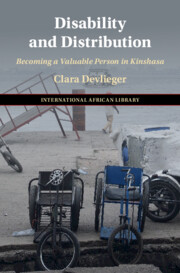
Set in the postcolonial city of Kinshasa (DR Congo), this ethnography explores how people with disabilities navigate debates about the just distribution of resources where there is little state organised welfare, and public perception of disability swings between the 'deserving' and 'undeserving'. Tracing a historic increase of disability due to polio and its long-term effects, this book examines two controversial livelihood activities that serve as informal alternatives to state support: a specialized form of international border brokerage across the Congo River, and a unique practice of bureaucratized begging that imitates state tax collection and humanitarian fundraising. Clara Devlieger examines how such activities shape ways that disabled people conceive the idea of becoming 'valuable people' in local terms: by supporting loved ones, many achieve high esteem against expectations, while adapting exclusionary models of urban personhood to include disability. Devlieger offers a new understanding of the complex dynamic between the imagined role of the state, international discourses of rights, and local experiences of disability.
Popular music and football rank among the most globally widespread and culturally significant practices in contemporary society. While neither defines the other, their intersections reveal a rich site of musical interaction. This Element investigates how and why popular music and football interact within the context of elite-level national league matches. Grounded in observations from several European case matches over the past decade, the Element examines these interactions as they unfold in stadium environments, focusing on three primary modes: intra-type music interactions, inter-type music interactions, and music–match interactions. In doing so, it engages with one of the most pervasive, multi-layered, and contested arenas for the distribution and significance of popular music in everyday life. Particular attention is given to emotionally charged, identity-infused mega-performances by musical amateurs – many of whom may be otherwise musically inactive and overlooked but embrace the stadium as a space for emotional release and collective expression.
This Element is about language, water and power. It challenges the terracentric bias of much scholarship in language studies, suggesting instead that oceans and rivers should be central in investigations of language, history, culture, society and politics. Working through different engagements with water – swimming, surfing, sailing and diving – this Element explores how thinking in and with water can transform our understandings of justice, power and language. By taking water seriously as both a social and material category, hydrosocial perspectives draw attention to the ways modern water and language are controlled, restricted, standardized and contained. A hydrocolonial lens focuses on the centrality of water in colonial regimes, the oceanic origins of creoles and the need to decolonize control and conceptions of water. For critical hydrosocial language studies language is entangled in an inequitable watery world, and language study from below is a form of spiritual, material and embodied engagement.
Immigration to Western nations has risen sharply, fueling political backlash and the ascent of far-right, nativist policymakers who favor restrictive migration policies. Yet such restrictions are unlikely to succeed over the long term because they fail to address the root causes that drive people to seek better lives abroad. Foreign aid has long been viewed as a tool for tackling these underlying causes, though its effectiveness in shaping migration remains contested. The recent curtailment of aid by the same governments advancing migration restrictions creates a pivotal moment to reconsider the role and design of aid programs. This volume contributes to that effort by offering a systematic assessment of the intersections between aid and international migration. It identifies four distinct pathways through which aid affects migration and a fifth feedback pathway through which migration influences the allocation of aid, providing a comprehensive framework for future research and policymaking.
The Element reconstructs economic developments in the crucial phase of State formation in Mesopotamia, from the 4th to early 3rd millennium BCE, trying to understand how interrelating environmental, social, economic, and political factors in the two main areas of Mesopotamia profoundly changed the structures of societies and transformed the relations between social components, giving rise to increasing inequality and strengthening political institutions. The interrelation between economic changes and state formation and urbanization is analyzed. Mesopotamia represents a foundational case study to understand the processes that transformed the function of economy from being an instrument to satisfy community needs to become a means of producing “wealth” for privileged categories. These processes varied in characteristics and timescales depending on environmental conditions and organizational forms. But wherever they took place, far-reaching changes occurred resulting in emergent hierarchies and new political systems. Reflecting on these changes highlights phenomena still affecting our societies today.
This Element explores a range of conceptions of politically relevant merit found in the philosophical texts of pre-Qin China (before 221BCE). It demonstrates both that the role accorded to political merit was substantial and that the ideas of what constituted politically relevant merit were heavily contested. Through a focus on four texts, the Xunzi, the Mozi, the Laozi, and the Han Feizi, it sketches out a long-standing debate over questions including the appropriate source of merit, the relationship between political merit and moral merit, and how merit should be nurtured and directed in the political arena. In doing so, it hopes to show why contemporary discussions of Asian-inspired political meritocracy, its promise, and its perils, are impoverished if they limit themselves to 'Confucian' notions of meritocracy rather than exploring more fully the wider variety on offer.
This Element seeks to unpack the varied modalities of democratic erosion in Latin America by proposing a novel analytical framework that breaks down backsliding episodes into their constituent parts: (1) the actors that promote autocratization and those that resist it, (2) the strategies that autocratizers and oppositions employ, (3) the arenas of contention in which they struggle over democratic norms and institutions, and (4) the objectives that these different actors pursue in the promotion of or resistance to democratic erosion. This framework is applied to five contemporary cases that reflect a new, diversified wave of democratic erosion, including El Salvador, Mexico, Peru, Guatemala, and Honduras. Through comparative analysis, we derive preliminary insights on the kinds of strategies pursued by different constellations of autocratizers and opposition actors, in hopes of stimulating future avenues of research and contributing to scholar and practitioner efforts to reverse alarming autocratic trends in the region.
Efficient market theory has made an important contribution to economic and financial analysis, but markets do not always behave according to the theory's predictions. The behavioral finance approach advocated in this Element is a complement to efficient market theory. The Element stresses the effects of perverse incentives, complexity, and uncertainty, as well as the roles of mental models or narrative and behavioral biases. It emphasizes limits to arbitrage, suggesting that international capital mobility is often far from perfect. It reviews popular models and considers alternatives in areas such as currency crises, exchange rates and the balance of payments, the international monetary trilemma, capital flow surges and sudden stops, and the discipline effects of international financial markets. The behavioral approach of the Element also helps to explain why governments often fail to undertake necessary policy adjustments in time to head off currency and financial crises.
This Element critically examines the claim that United States economic sanctions on Venezuela constituted 'collective punishment' of the Venezuelan population, contributing significantly to the country's economic collapse and humanitarian crisis. Through comprehensive analysis of economic, developmental, and welfare indicators from 2013 to 2023, it demonstrates that the bulk of Venezuela's economic devastation - including 52 percent of GDP losses and 98 percent of import declines - largely occurred before financial sanctions were imposed in August 2017. Key welfare indicators such as infant mortality, undernourishment, and life expectancy had deteriorated substantially by 2017 and subsequently stabilized or improved following sanctions implementation, contradicting narratives that attribute Venezuela's collapse primarily to external economic pressure. The Element provides a timeline of Venezuelan economic and political events around sanctions and a critical review of the literature on their economic effects. This title is also available as Open Access on Cambridge Core.
In this landmark contribution to the study of modern China, Steve Smith examines the paradox of 'supernatural politics'. He shows that we cannot understand the meaning of the Communist revolution to the Han Chinese without exploring their belief in gods, ghosts and ancestors. China was a religious society when the Communist Party took power in 1949, and it sought to erode the influence of the minority religions of Buddhism, Daoism, Catholicism and Protestantism. However, it was the folk religion of the great majority that seemed to symbolize China's backwardness. Smith explores the Party's efforts to eliminate belief in supernatural entities and cosmic forces through propaganda campaigns and popularizing science. Yet he also shows how the Party engaged in 'supernatural politics' to expand its support, utilizing imagery, metaphors and values that resonated with folk religion and Confucianism. Folk religion is thus essential to understanding the transformative experience of revolution.
How can we advance our understanding of emotion through a socio-cultural lens? How do we overcome decade-long debates on universality versus culture-specificity? This book engages with these challenges by documenting rich empirical evidence of similarity as well as cultural variation in how emotions are conceptualised, experienced, expressed, and regulated. Examples include how emotions unfold in romantic relationships and are linked to well-being and distress. With nuance and rigour, it includes diverse theoretical and methodological approaches and examples on numerous specific emotions across varied cultural contexts. The volume also explores how culture–emotion dynamics unfold in multicultural societies, shedding light on emotional acculturation, intergroup relations, and macro-level cultural change under societal threat. Bringing together leading experts worldwide, each chapter outlines promising directions for future research, inviting scholars, practitioners and students across cultural psychology, clinical science, applied linguistics, and relationship research to reimagine emotion as a culturally embedded and socially enacted phenomenon.
This is a contemporary treatment of composition operators on Banach spaces of analytic functions in one complex variable. It provides a step-by-step introduction, starting with a review (including full proofs) of the key tools needed, and building the theory with a focus on Hardy and Bergman spaces. Several proofs of operator boundedness (Littlewood's principle) are given, and the authors discuss approaches to compactness issues and essential norm estimates (Shapiro's theorem) using different tools such as Carleson measures and Nevanlinna counting functions. Membership of composition operators in various ideal classes (Schatten classes for instance) and their singular numbers are studied. This framework is extended to Hardy-Orlicz and Bergman-Orlicz spaces and finally, weighted Hardy spaces are introduced, with a full characterization of those weights for which all composition operators are bounded. This will be a valuable resource for researchers and graduate students working in functional analysis, operator theory, or complex analysis.