To save content items to your account,
please confirm that you agree to abide by our usage policies.
If this is the first time you use this feature, you will be asked to authorise Cambridge Core to connect with your account.
Find out more about saving content to .
To save content items to your Kindle, first ensure no-reply@cambridge.org
is added to your Approved Personal Document E-mail List under your Personal Document Settings
on the Manage Your Content and Devices page of your Amazon account. Then enter the ‘name’ part
of your Kindle email address below.
Find out more about saving to your Kindle.
Note you can select to save to either the @free.kindle.com or @kindle.com variations.
‘@free.kindle.com’ emails are free but can only be saved to your device when it is connected to wi-fi.
‘@kindle.com’ emails can be delivered even when you are not connected to wi-fi, but note that service fees apply.
An investigation into the metaphysics of the logical properties. Textbooks define logical truth and logical consequence in terms of models. But what are models, and why is invoking them a good way to define these properties? The answers take us through questions about the bearers of logical truth, the distinction between logical and non-logical expressions, and, ultimately, to an account of what logic is.
This Element is an introduction to classical computability theory and scientific efforts to use computability-theoretic notions to explain empirical phenomena. It is written for advanced undergraduates and graduate students in philosophy, assuming no prior exposure to computability theory. Its goals are threefold: (1) to introduce some important theoretical tools and results from classical computability theory; (2) to survey some of the ways these have been used to support explanatory projects in computer and cognitive science; and (3) to outline a few of the more prominent philosophical debates surrounding these projects.
How should we explain differences in religious belief and practice? Philippe Borgeaud's ambitious intellectual history tells the story of how reflection on religious phenomena emerged, throughout the centuries, in European consciousness and scholarship. Christianity in particular, as Borgeaud shows, long wrestled with how to understand polytheistic cultures versus its own belief in a single omnipotent God. The Church Fathers, the author argues, sought to inherit the core of Graeco-Roman culture while rejecting its deities and religious practices; and patristic ideas were later adopted when Europeans travelling and colonising the world encountered ever more varied polytheistic traditions. At times detached, at times enchanted, these travellers' reflections provided the basis for the modern study of 'religions', and have since conditioned the mindset of anyone brought up in a European culture. The book concludes by arguing for the importance of liberation from these assumptions and instead considering religion as a form of 'play'.
This Element explores the developmental implications of Southeast Asia's participation in global value chains (GVCs), focusing on the coffee, textile and clothing, and automotive sectors. While GVC integration has supported industrialisation, exports, and employment, the benefits are not guaranteed. Southeast Asian countries, except for a few cases, remain confined to low-value-added activities, with limited innovation, weak support for small and medium-sized enterprises (SMEs), and persistent inequality. Sectoral case studies reveal barriers to upgrading: smallholder coffee farmers face institutional and coordination challenges; textile and clothing producers in Cambodia and Myanmar are stuck in low-skill roles; and domestic automotive firms struggle to move beyond assembly. The Element calls for a shift from passive participation to active upgrading through stronger innovation systems, SME support, social and environmental standards, and deeper regional cooperation. It concludes that GVCs can promote inclusive and sustainable growth-but only when embedded in deliberate national and regional strategies.
This Element documents the life trajectories of Cambodian English users from rural, low socioeconomic backgrounds, and their experiences with the English language in a variety of contexts. Studies on English in Cambodia have, to date, focused primarily on elite users in urban contexts, largely overlooking the use of English at the grassroots level, such as among the lower and working classes, despite the fact that English has appeared to make inroads across all levels of Cambodian society in recent decades. The stories of individuals whose voices tend to be excluded from mainstream academic discourse are thus featured in this Element, providing a fresh glimpse into the sociolinguistic realities at the Cambodian grassroots – and the significant impact that English has had on the lives of such individuals.
The analysis of newly or recently emerged grammatical and lexical forms in Colloquial Singapore English is the main objective of this Element. Using corpus, survey, and interview data from different age groups, we shed light on the spread of language change across generations and ethnicities. Existing descriptions of CSE as a high-contact L1 variety of English in the late stages of endonormative stabilisation do not fully capture Singapore's continued multilingual ecology: source languages remain in active use alongside CSE, enabling ongoing cross-linguistic influence. Innovative uses resulting from contact can be observed in apparent and real time. In this volume, we use a range of sources to look at recent changes in the lexicon and grammar of CSE, pointing to a dynamic variety that is difficult to fully capture with existing models of variation. This title is also available as Open Access on Cambridge Core.
In the social media era, people and organizations increasingly fight over the public's attention. This competition is especially intense in American presidential campaigns. As someone who used attention-grabbing strategies throughout his career, Donald Trump's communication skills were well suited to this environment. His campaigns illustrate the power and limits of attention-grabbing campaign tactics. While he successfully dominated the public's attention in his presidential campaigns, people consistently consumed more negative than positive information about him. Additionally, in this era, the campaign media system and the public continue to focus on incumbent performance, resisting efforts to change the subject. Finally, the editorial decisions that prestigious news outlets make about what to cover still seem to shape which stories people hear about in the crucial final weeks of the campaign. This title is also available as Open Access on Cambridge Core.
This book offers a wholly new way of thinking about the ideas, struggles and practices that constituted the 'historical' Cold War. In particular, it seeks to redescribe and defamiliarise what we might think of as Cold War international law in order to bring out a rich but now obscured plurality of law and legal forms during the period and to make visible the ways in which we live and work in the aftermath of this legal order. This book challenges the dominant myths about the history of the Cold War, arguing that far from being defined only by ideologically rivalry, the US and the Soviet Union were engaged in a conjoint project of world ordering.
Women who prepared food for enslaved people, rather than enslavers, have been neglected in historical scholarship. Their labor within the quarters has been marginalized, belittled, and even ignored, because it fell within the remit of gendered care and nurture. In this book, Emily West illustrates how these mostly older women performed vital roles in slaveholding sites, as their enslavers increasingly tried to regulate food distribution, preparation, and consumption. Enslavers attempted to impose highly efficient, communal food regimes to minimize waste and time lost from work elsewhere. They routinely tasked older women with the feeding and care of infants, but also deployed them to prepare food for children and enslaved adults to eat collectively. Conversely, in the relative privacy of the quarters, where enslaved people preferred to eat, cooking became both a form of gendered exploitation, and an expression of love, empowerment, and pleasure.
Shakespeare and Blended Learning charts a distinctive perspective in Shakespeare pedagogy that connects best practices of in-classroom activity to those of online learning. A blended approach to Shakespeare, we argue, stands to make his works more engaging, accessible, and relevant to students in the digital age. Drawing on established evidence-based research and best practices in blended pedagogy, course design, and assessment, and applying them to a range of plays including Hamlet, King Lear, The Winter's Tale, Twelfth Night, and 1 Henry 4, we contend that teaching Shakespeare does not demand a choice between in-person and online learning but rather maximizes engaged student learning by combining the two. This book will appeal to readers who wish to update an extant course with dynamic digital approaches or who seek more formalized, sustained training on how to teach Shakespeare with technology.
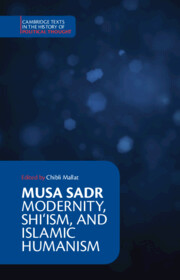
Musa Sadr was a leading force in Lebanese politics from the early 1960s until his disappearance in Libya in 1978. Like now, this was a time of turmoil, violence, and change in the Middle East. Sadr has been portrayed as primarily a charismatic man of action whose inspirational qualities led Lebanon's Shia Muslims to the centre of the political stage. This book also reflects his position as a thinker whose actions were firmly rooted in universal ethical and religious values, and for whom Islam was social philosophy as well as faith. With twelve texts taken from lectures or talks given by Sadr between 1966-1977, an introduction, and a chronology of Sadr's life, the book situates Sadr within currents of humanist intellectual thought. Detailed contextualising footnotes accompany the translations, highlighting the enduring relevance and topicality of Sadr's ideas.
The mathematisation of economics took place in three different ways, each based on an image of mathematics that was endorsed by a practice of mathematisation and which remained the dominant image until another image became dominant. The first dominant image was that of mathematics as a science of forms, which was embraced in the 1920s by the early econometric programme of scientisation. The resulting methodology was the modelling style developed at MIT in the 1940s and 1950s. The next dominant image was that of mathematics as a science of structure. It was introduced into economics by von Neumann and opened the door for Bourbaki mathematics which set the standards for mathematical rigour. The image of algorithms entered economics through research into decision making under uncertainty. By turning the decisionmaker into a 'representative agent' who takes decisions at a macro-level, this approach reshaped macroeconomic analysis in the 1970s and 1980s.
How did writers reimagine self and nation in the postcolonial moment? After the brutalities of partition and the triumph of Independence, decolonization in South Asia unfolded in a dramatic sense of disillusion and alienation. In this transnational study, Toral Gajarawala explores the cultural afterlife of decolonization in India, Pakistan and Bangladesh and its profound moment of existential reckoning. In new genres and forms, artists registered a growing sense of estrangement from nation and nationalism, and crafted a new aesthetic landscape. This book reconsiders modernism in the subcontinent, charting the unlikely affiliations and aesthetic experiments it generated. Each chapter discusses a distinct artistic experiment- Hindi novels set in snow and ice, and a Pakistani painter's Paris moment; the existential novel of Bengal, and absurdist plays on famine and extinction- in light of key philosophical concepts of the moment: askesis, responsibility, commitment. The result is an illuminating microanalysis of the 1960s that reshapes our understanding of postcolonial aesthetics.
This book explores the nexus between ecological research and restoration through the long-term Mulligans Flat – Goorooyarroo Woodland Experiment. It synthesises 20 years of collaboration between researchers, government decision-makers, and conservation practitioners, offering valuable insights into the challenges, successes, and best practices of ecological restoration.Designed for researchers, policymakers, and restoration practitioners, this book is an essential guide to establishing long-term restoration projects with multiple partner organisations. Challenges and successes are discussed throughout, with chapter summaries highlighting key takeaways, making it a practical resource for both practitioners and academics. A dedicated chapter on Synthesis for Ecological Teaching distils insights from the Recovering Threatened Species and Ecosystems course developed at The Australian National University, providing an invaluable case study for undergraduate, graduate, and professional education. The book concludes with reflections from land managers and a vision for future directions to guide to the integration of research and restoration for lasting ecological impact.
Cancer is increasingly recognized as a complex, multidimensional social experience rather than purely a physical or biological disease. This, in turn, highlights the role of communication in cancer-related 'work' such as seeking and receiving a diagnosis, managing disclosure, and incorporating treatment and recovery into everyday life. Although an extensive body of work examining cancer and communication has investigated some of this complexity, the experiences of migrant women in Asia are currently underexplored. In this Element, I argue that the complexity of cancer diagnosis and disclosure for this group can be usefully examined from a perspective of intercultural communication. To support this argument, I investigate instances of intercultural communication that unfolded in a series of focus groups with Filipino migrant domestic workers diagnosed with cancer in Hong Kong.
Existing perspectives suggest that waves of rural unrest arise as responses to economic and environmental shocks. We propose an integrated framework, grounded in the literature on interest group politics and state-society relations, to explain the dynamics of rural protests by commercial farmers and peasants in democracies during periods of disruptive and rapid change. Focusing empirically on South America during the 2000s agricultural boom, we argue that contentious collective action under democratic rule during shocks is a costly political strategy shaped by access to connections in formal policymaking arenas and the cohesiveness of organizations representing farmer and peasant interests. To substantiate our argument, we conduct within- and cross-case comparisons of Argentina and Paraguay, employing a mix of primary and secondary evidence, and incorporating shadow cases from Brazil and Bolivia.
Judging Through Narrative explores the normative frames, or judicial narratives, that non-Muslim courts construct when adjudicating Muslim Family Law disputes. The book examines how these narratives shape the rule of law, gender reform, and public trust in the justice system. Drawing on over 400 interviews with judges, lawyers, and litigants, and an analysis of nearly 3,000 judicial decisions from Ghana, India, Israel, and Greece, the book reveals how coherence and fragmentation in judicial storytelling influences legal legitimacy and reform. Introducing the concept of 'narratival (in)cohesion', this work offers a new framework for understanding how courts mediate between religion, rights, and state authority. Bridging law, political science, and socio-legal studies, it is an essential resource for scholars, policymakers, and practitioners seeking to understand how judicial narratives shape the lived experience of law in diverse, multi-religious societies.
Over a career spanning fifteen novels, two short story collections, and eight volumes of nonfiction, Sir Martin Amis helped to define his era. Through his published work and public commentaries, his voice featured prominently in the important socio-literary debates of his time. His work contributes to literary discussions about realism, postmodernism, satire, and comedy, and his core themes range across the Holocaust, nuclear anxiety, apocalyptic millennialism and, more recently, the war on terror. His words were rarely without controversy. This Companion identifies the essential elements of Amis's work and then evaluates their potential for longevity. From his earliest publications in the 1970's to his death as one of England's most well-known writers in 2023, Amis was an outspoken critic of social myopia: how societies – and their citizens – continually choose selfishness over altruism, fatalism over improvement, and blindness over enlightenment.
Can interviews or a focus group improve the causal inferences drawn from experiments? Can quantitative text analysis help develop workflows as a qualitative scholar? Can we learn from a single case in a way that helps us with a statistical model? There is much to learn from the careful use of all these methodological combinations. The Practice of Multi-Method Research is aimed at practical researchers: from undergraduates preparing for an honors thesis, to graduate students designing a dissertation, through to seasoned scholars considering a new approach for their next set of studies. It offers a hands-on, practical guide to combining research across various methodological traditions: qualitative, machine learning, and quantitative approaches to concepts and measurement, adding quantitative and data-science components to process-tracing designs and to qualitative case studies in general, how qualitative research can strengthen regression-type designs, and how to mix qualitative elements with experiments..
This new scholarly edition presents Henry James's breakthrough work, 'Daisy Miller', in the context of his remarkable output as a short-story writer in the five years from 1874 to 1879. The collection includes several little-known and rarely republished tales, which show the surprising breadth of James's writing practice during this period. Spanning a variety of American and European settings and encompassing a range of narrative modes from Hawthornesque romance to photographic realism, these tales offer fascinating insights into the thematic and stylistic development of James's mature work. The volume includes a substantial Introduction which discusses the stories' composition, publication and contemporary reception, as well as their 'afterlives' on stage and screen. Detailed annotations offer unparalleled insights into the historical and cultural contexts of the works, while a complete textual apparatus displays variants between different published and manuscript versions of the texts.