To save content items to your account,
please confirm that you agree to abide by our usage policies.
If this is the first time you use this feature, you will be asked to authorise Cambridge Core to connect with your account.
Find out more about saving content to .
To save content items to your Kindle, first ensure no-reply@cambridge.org
is added to your Approved Personal Document E-mail List under your Personal Document Settings
on the Manage Your Content and Devices page of your Amazon account. Then enter the ‘name’ part
of your Kindle email address below.
Find out more about saving to your Kindle.
Note you can select to save to either the @free.kindle.com or @kindle.com variations.
‘@free.kindle.com’ emails are free but can only be saved to your device when it is connected to wi-fi.
‘@kindle.com’ emails can be delivered even when you are not connected to wi-fi, but note that service fees apply.
As a close aide to Michel Barnier, Stefaan De Rynck had a front row seat in the Brexit negotiations. In this frank and uncompromising account, De Rynck tells the EU's side of the story and seeks to dispel some of the myths and spin that have become indelibly linked to the Brexit process. From the mood in the room to the technical discussions, he gives an unvarnished account of the deliberations and obstacles that shaped the final deal.
De Rynck demonstrates how the EU-27's unity held firm throughout, while the UK vacillated, changed negotiators, changed prime ministers and changed their aims and tactics. Attempts by the UK to run down the clock and issue ultimatums to force the EU to acquiesce are shown to have had no effect on the course of events. Instead Barnier's team was successful in protecting EU interests, in fulfilling the mandate defined by 27 national governments while still agreeing different forms of Brexit with two UK prime ministers.
For the EU, Brexit was not, as some UK commentators and politicians liked to portray it, a fight with the UK. It was a fight to get a deal that worked for the EU.
Finance has long been an integral part of the capitalist economy, yet since the 1970s the realm of finance has burgeoned, reaching well beyond its traditional funding roles. Finance now reaches into all aspects of economic life from the everyday activity of the individual, to the behaviour of corporations and the decisions made for society as a whole. The power and fragility of the financial sector are seen by the simple fact that when things go wrong, it can bring down banks, currencies, and governments, plunging countries into generations of debt and hardship.
Malcolm Sawyer offers a comprehensive survey of the impact of financialization on economic growth and society. The book draws on and distills a remarkable range of research to provide readers with a guide to current thinking about the place of finance in the wider macroeconomy and considers the prospects for definancialization and a future role that is less pervasive.
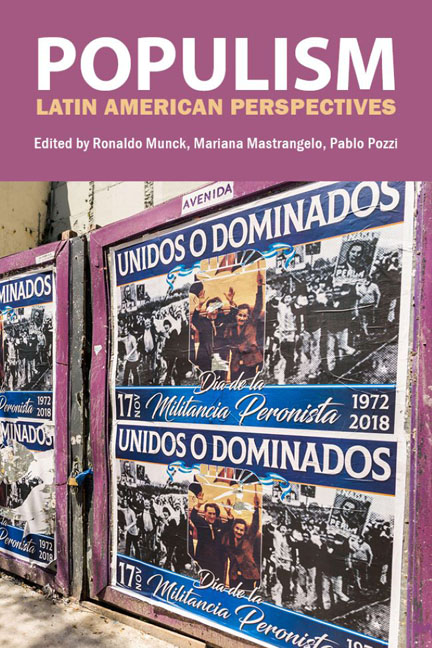
Populism has become one of the most overused terms in political discourse today. It can embrace authoritarian and nativist right-wing politicians but also those on the left who appeal for popular support for transformation. In its dominant usage it is seen as inimical to the values of liberal democracy. Yet others see it as part of the construction of a people-centred project that can realize true democracy.
What is clear is that much of the debate around populism has been from the perspective of the global North and the voice of the South has been largely missing. This volume addresses this absence and provides a Latin American perspective to the global study of populism.
It argues that Latin America in its rich and early experience of populism is a valuable laboratory to further our understanding and to address the question of whether populism now goes beyond the dichotomy of left and right and is a new political phenomenon.
The book presents a series of case studies with cross-cutting overview chapters that highlight the lessons to be learned from new research. Each chapter is set within a tight conceptual framework in order to better understand contemporary Latin American politics 'after the pink tide' and to enrich the international debate on populism from a Latin American perspective.
The ancient Greek philosopher Plotinus insisted that philosophy should be concerned with nothing less than 'what matters most'. This collection of philosophical conversations seeks to honour Plotinus' vision by addressing questions related to the art of living.
Much has been written about the 'art of living' and it typically conjures up ideas of therapy, meditation, peace, happiness, and so on. But what about the art of living in the midst of all the spectacular messiness generated by an aggressive, anxiety-ridden, acquisitive and lustful species? The conversations that make up this book explore the questions that matter most to us as citizens of increasingly fractious societies and inhabitants of an increasingly fractured planet. They invite us to think anew about the complexities and challenges involved in living a good life in a world characterized by uncertainty and change.
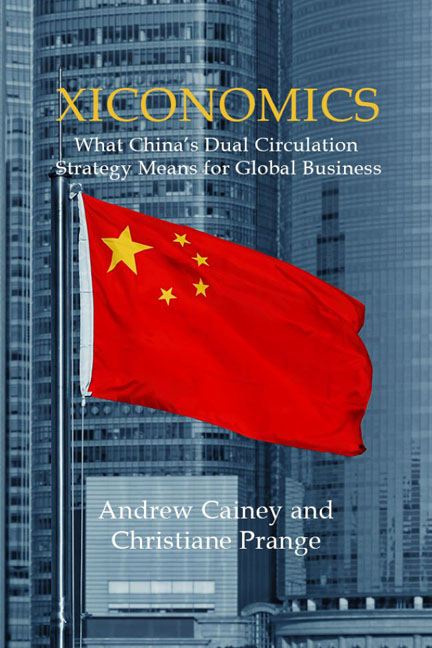
Matters of ideology and security have become deeply entwined in China's economic and business environment. The context is more politicized, more uncertain. At the heart of Xiconomics is the Dual Circulation Strategy, which marks out clear dividing lines between China's domestic economy and the rest of the world. It sets out how China seeks to manage the links between the two just when western countries are also focusing on decoupling and 'friendshoring'. In order to prosper, business leaders and policy-makers need to understand these new international dynamics.
In this concise and incisive analysis, Andrew Cainey and Christiane Prange explain what is happening in China and how this affects its relations with other countries. They identify what foreign companies need to do, how strategies need to change, and what this all means for managing the China business as part of a global portfolio, under a range of geopolitical scenarios.
Margaret Thatcher, prime minister between 1979 and 1990, was and continues to be a hugely divisive figure in Britain. Her influence on British politics has long outlived her, with the Conservative Party becoming steadily more Thatcherite than it was under her leadership, especially on economic issues. Policies that support privatization, curbs on trade unions and employment rights (to promote further labour market flexibility), reduction in welfare provision, the replacement of collectivism with individualism, and the marketization of public services, including the NHS and education, are all Thatcherism in practice, and still continue today.
Peter Dorey offers a lively analysis of how Thatcherism became an ideology for politics to conjure with, its relationship with its eponymous leader and with the Conservative Party, as well as the long-term implications for the British people. He argues that the radical modernization of Britain that started under Thatcher's leadership in the 1980s has created the conditions that have led to the polarization of British society today; a process that was profoundly unconservative in its values and approach, destabilizing institutions which Conservatives once deemed sacrosanct, and replacing continuity and solidity with constant change and competition.
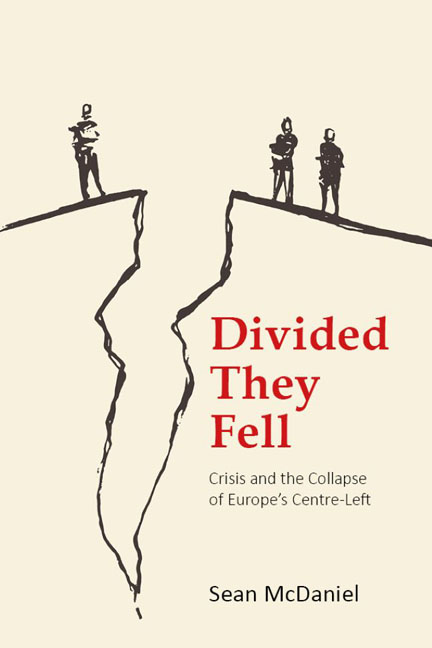
Why has Europe's centre-left failed to respond to the crisis of neoliberalism in Europe? Rather than opening up a moment in political time for the centre-left to puncture the dominance of neoliberalism, the multitude of crises in Europe since 2008 have consolidated its difficulties and contributed to the rise of radical and populist alternatives.
Divided They Fell examines the failures of mainstream politics, and in particular the inability of the centre-left to respond to the global financial crisis more effectively. By exploring the cases of the UK Labour Party and France's Parti Socialiste, the book investigates the role of, and interplay between, institutional intra-party dynamics, the parties' ideational landscapes and the wider political economy in shaping their responses to the crisis.
Important reputational, ideational and strategic path dependencies in both parties, it is shown, constrained the flow of fresh ideas and entrenched their internal organizational divisions, leaving them unable to offer an effective post-neoliberal economic alternative. Ultimately, this fractured the parties and sparked a crisis of centre-left identity that opened the door to emergent alternative parties and movements in both cases.
Divided They Fell helps to diagnose what has gone wrong for the centre-left in Europe and forces us to consider whether such parties are, in the context of new and emerging crises, still fit for purpose.
Robert Walker provides a critical examination of the promise and reality of SDG1, the United Nations' Social Development Goal designed, among other things, to eradicate extreme poverty by 2030. The author's message is stark: there is little chance of success. Although the need for a collective and coordinated response is clear, global and national systems of governance are currently incapable of an adequate response.
While the critique is formidable, the book seeks to identify reforms necessary to meaningfully increase the likelihood of meeting SDG1's goals. These include reshaping international institutions so that they give greater voice to governments in the developing world, facilitating enhanced modes of participatory governance, and increasing democratic accountability at a global level. Evidence is drawn throughout from a systematic review of international best practice supplemented by more detailed strategic case-studies, including from China.
The UK's decision to leave the EU has opened up huge existential questions for Northern Ireland as it marks its centenary. Constitutional conflict in Northern Ireland had been regarded as largely resolved and settled, but Brexit has altered the wider constitutional framework within which the 1998 Good Friday Agreement is situated. With the question of Irish unity gaining renewed and sustained traction, and with trade, relationships and politics across 'these islands' in a state of flux, Northern Ireland approaches a constitutional moment.
Murphy and Evershed examine the factors, actors and dynamics that are most likely to be influential, and potentially transformative, in determining Northern Ireland's constitutional future. This book offers an assessment of how Brexit and its fallout may lead to constitutional upheaval, and a cautionary warning about the need to prepare for it.
Caring is a central aspect of our being. Without it, we would just float along in the world, attaching ourselves superficially to one activity after another as they came up. Caring anchors us to the world and to each other. And yet, understanding what caring is and how it operates in our lives is a challenge. Todd May meets that challenge, canvassing various approaches to care and offering an overview of the key role it plays in our lives.
With wit and insight, May addresses the difficulties between understanding care as a reflective attitude and as an emotion, between care and love, between caring for humans and for non-human animals, between self-care and concern for others, and between care and vulnerability.
Women across the world experience gender-based violence and harassment in the workplace. In the context of globalization and neoliberalism, work plays an important role in constructing and maintaining the economic, social and cultural systems of oppression that women face. Women in insecure, precarious employment and women not protected by trade unions are the most at risk of violence and as the #MeToo movement has shown, it stretches across societies rich and poor.
In June 2019, the International Labour Organization adopted a ground-breaking global treaty on eliminating violence and harassment in the world of work. This historic vote was the result of more than a decade of campaigning and lobbying by women trade union leaders and their allies across the world. Chidi King, Robin Runge and Jane Pillinger played a key role in the campaign and the negotiation of the Convention. Combining both their activist and academic backgrounds, this book documents their unique insights into and experience of the campaign and its landmark achievement in international labour law, global policy and the cross-movement building of workers' and women's rights, which has reignited the role of trade unions, and particularly women in trade unions, in global advocacy.
Inflation, hyperinflation and deflation have all had profound effects on societies, especially during periods of war and crisis. Today's approach to managing inflation has been shaped by these episodes and informed by debates between different schools of economic thought from Fisher and Hayek to Keynes and the monetarists. This accessible and authoritative overview explores the role of inflation in the modern economy, from its place in monetary policy and in money supply to its effects on everyday business.
In a compelling analysis, the book shows that since the financial crisis in 2008-09, inflation rates have remained persistently higher than interest rates worldwide, which is the inverse of our basic understanding of how inflation normally affects markets. The result of this inversion has been that the effective real return on investment has become negative, and consequently, the investment rate has dropped across western economies. At a time when inflation once again challenges the world's leading economies, the book offers valuable insight into the monetary policy of central banks.
Credit rating agencies (CRAs) assess the creditworthiness of debt issuers on financial markets. They are private companies and the ratings they issue are judgements about the prospect of repayment of debt by an issuer in time and in full. A rating is not an investment recommendation, but it is an opinion about the creditworthiness of a financial product or an issuing bank, government, supra- or sub-national institution.
In recent years CRAs have gained an authority in bond markets that far surpasses their original design. The financial crisis of 2008 thrust the CRAs into the spotlight as their highly rated financial products turned out to be toxic assets. CRAs were blamed not only for their excessively optimistic ratings, but also for their complicity in creating them.
This short book introduces and explores the complex world of the credit rating industry: how it works, how it has evolved, the role it played in the financial crisis, and how it is regulated. Giulia Mennillo shows, as constitutive actors of global financial capitalism, CRAs have a social and political relevance that reaches well beyond finance into areas of transport, infrastructure, education and health and their impact is emblematic of the increasing financialization of our world.
There has been a recent resurgence in interest in the theorization of labour regimes in various disciplines. This has taken the form of a concern to understand the role that labour regimes play in the structuring, organization and dynamics of global systems of production and reproduction. The concept has a long heritage that can be traced back to the 1970s and the contributions to this book seek to develop further this emerging field.
The book traces the intellectual development of labour regime concepts across various disciplines, notably political economy, development studies, sociology and geography. Building on these foundations it considers conceptual debates around labour regimes and global production relating to issues of scale, informality, gender, race, social reproduction, ecology and migration, and offers new insights into the work conditions of global production chains from Amazon's warehouses in the United States, to industrial production networks in the Global South, and to the dormitory towns of migrant workers in Czechia. It also explores recent mobilizations of labour regime analysis in relation to methods, theory and research practice.
Political Racism conceptualizes a distinctive form of racism - intentional, organized hostility mobilized by political actors - and examines its role in the Brexit conflict and in the rise of a new nationalist politics in the UK.
In a compelling analysis the book argues that Powellite anti-immigrant racism, reinterpreted in numerical terms, was combined with anti-East European and anti-Muslim hostility to inform the Vote Leave victory. This type of racism, which has a special significance in societies where racism has been delegitimized, is shown to have further shaped the form of EU withdrawal and also the government's post-Brexit policies.
Although the asset management industry has come under increasing scrutiny since the financial crisis it still remains poorly understood and investment scandals continue to headline in the financial press. Whereas most literature on the industry focuses on the technical end - how managers invest and what tips others can glean - this book explores the way these businesses operate as businesses and how they make their money.
The book explains how the industry is organized, how firms generate revenues through various types of fund, fees and charges and what cost pressures they face. It investigates the nature of their client relationships, the role played by star investors and the requirement for firms to integrate non-financial considerations into their investment process. The inherent tensions and potential conflicts of interest within asset managers that seek to keep both clients and shareholders happy is also examined. The book concludes by considering how the industry is evolving, the role of regulation and where it is struggling to change.
Suitable for students of business and finance, those working in allied areas of the finance sector, and for anyone with a general interest in how financial institutions and markets operate, the book offers readers a balanced and incisive guide to the economics of an industry that globally controls more than $100 trillion of financial assets and a critical appraisal of the sector's future.
In the 1990s, the 'knowledge economy' was hailed by policy-makers in developed democracies as an antidote to the anxieties arising from the era of market liberalization - an era characterized by the decline of skilled blue-collar work, increasing levels of social exclusion and widening regional inequality. The shift to knowledge-driven growth appeared to offer policymakers a way of harnessing technological progress and global economic integration for progressive purposes, and justifying progressive policies in terms of the economic benefits that they would produce.
Nick O'Donovan tells the story of how the techno-optimism once associated with the rise of the knowledge economy came to be supplanted by widespread anxiety about technological progress, and how the political consensus that formed around a knowledge-driven growth agenda has unravelled, paving the way for the electoral upheavals experienced by many developed democracies in recent years. By examining the rhetoric and reality of knowledge-driven growth over the last three decades, the book highlights the flawed assumptions underpinning this policy agenda, showing how its economic shortcomings map on to patterns of political discontent evident today. It assesses whether there is scope for rebooting this policy agenda in the wake of the Covid-19 pandemic, or whether politicians will need to reach beyond it if they are to deliver inclusive prosperity and equitable growth in the future.
This clear and rigorous examination of the international efforts to combat the financing of terrorism is suitable for a range of courses in international relations, politics and global political economy. It provides a comprehensive examination of the post-9/11 efforts to counter financial support for terrorist actors, including the more recent challenges of non-cash payment technologies as well as how to combat the financing of terrorism in regimes where territories and populations are controlled, as in the case of Islamic State.
As one of the fastest growing cities in Europe, London has become a mass generator of employment and a magnet for inward migration. Yet London is also a divided city, whose expansion has generated many planning challenges.
This book explores the tensions, complexities and difficulties in mobilizing policy agendas in London, but it also argues that public policy still matters and makes a significant difference to outcomes. The authors show how the market-led development of London has meant that the state supports more private-sector-led governance and this has given rise to widespread privatization of the city's decision-making processes and policy implementation. As a key command and control centre in the global economy, London's privatized model has become one for other megacities to emulate.
Regional issues are increasingly debated across the social sciences. In an age of globalization, the region has come to matter perhaps more than before. In business, companies orient themselves to engage in regional environments to build capabilities and create critical mass in their vicinity. In the world of policy, almost one-third of the EU budget is spent on regional policy. Yet in spite of this the differences between regions that do well and those that do not are increasing in both Europe and the United States.
In recent years, evolutionary economic geography has done much to create a framework to inform regional policy and academic work. Using its insights, Martin Henning explores why economic growth and transformation is an essentially regionally based and spatially dependent process. The book offers an accessible introduction to the core ideas involved in understanding the dynamics of regional economies and draws on case studies to illuminate these ideas in practice.