To save content items to your account,
please confirm that you agree to abide by our usage policies.
If this is the first time you use this feature, you will be asked to authorise Cambridge Core to connect with your account.
Find out more about saving content to .
To save content items to your Kindle, first ensure no-reply@cambridge.org
is added to your Approved Personal Document E-mail List under your Personal Document Settings
on the Manage Your Content and Devices page of your Amazon account. Then enter the ‘name’ part
of your Kindle email address below.
Find out more about saving to your Kindle.
Note you can select to save to either the @free.kindle.com or @kindle.com variations.
‘@free.kindle.com’ emails are free but can only be saved to your device when it is connected to wi-fi.
‘@kindle.com’ emails can be delivered even when you are not connected to wi-fi, but note that service fees apply.
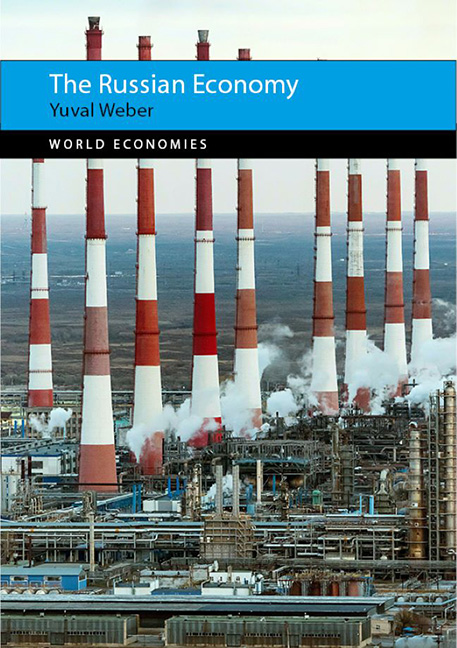
Since Tsarist times, Russia's leaders, rather than pursue economic growth for its own sake, have sought control over economic activity as a means to manage their own support base, respond to perceived security threats and to facilitate their wider geopolitical ambitions. Balancing the needs of an authoritarian state with the tentative and inconsistent use of the market has defined Russia's modern economic history from the nineteenth-century Stolypin reforms to Lenin's New Economic Policy through to the high Soviet years, Gorbachev's perestroika, and Yeltsin and Gaidar's shock therapy. And it is no more evident today than in Putin's management of Russia's natural resource-based economy.
Yuval Weber provides a concise economic history of modern Russia, which explains how its economy works both at an economic level but also strategically serving its elites' personal and political agendas. At a time when the global importance of Russia's oil and gas reserves is in full view, the book examines the Russian Petrostate and considers the long-term challenges for an economy reliant on natural resources for its resilience. The country's regional imbalances, the demands of its huge military-industrial complex and the legacy of centralization are considered alongside the rising consumerism of its citizens, and other human factors, such as ethnicity, health and demography.
The book offers readers seeking to understand Russia's economic resilience in an increasingly fractured global economy, an illuminating historical perspective on Russia's political economy and the power structures underpinning Putin's governance.
The European welfare systems, established after the Second World War, have been under sustained attack since the late 1970s from the neoliberal drive towards a small state and from the market as the foremost instrument for the efficient allocation of scarce resources. After the 2008 financial crash, Europe's high tax and generous benefits welfare states were, once again, blamed for economic stagnation and political immobilism. If anything, however, the long decade of the Great Recession proved that the welfare state remained a fundamental asset in hard times, stabilizing the economy, protecting households and individuals from poverty, reconciling gendered work and family life, while improving the skills and competences needed in Europe's knowledge economy and ageing society. Finally, the spread of the Covid-19 pandemic has, unsurprisingly, brought back into the limelight the productive role of welfare systems in guaranteeing basic security, human capabilities, economic opportunities, and democratic freedoms.
In this important contribution, Anton Hemerijck and Robin Huguenot-Noël examine the nature of European welfare provision and the untruths that surround it. They evaluate the impact of the austerity measures that followed the Great Recession, and consider its future design to better equip European societies to face social change, from global competition to accelerated demographic ageing, the digitalization of work and climate change.
Mexico is the sixteenth largest economy in the world and Latin America's biggest exporter and importer. Despite the country's relative macroeconomic stability, there are two Mexicos: one more prosperous, advanced and modern, the other poor, isolated and disadvantaged, and this polarization characterizes much of the country's recent economic development.
Enrique Cárdenas provides a concise survey of Mexico's recent economic history and examines its attempts to address the economic challenges thrown up by regional disparities, low productivity and an export-fuelled economy overwhelmingly dependent on demand from its largest neighbour. The book investigates the relative robustness of the macroeconomic fundamentals alongside specific industry-level economic trends, especially those sectors dependent on free trade agreements. Demographic trends, in particular migration to the north, urbanization, poor labour relations, organized crime and entrenched corruption are all shown to have impacted the economic path Mexico has taken.
The book offers an up-to-date analysis of Mexico's economic development, social reform programmes and political economy suitable for a range of courses in Latin American studies and development studies.
British society is increasingly divided into the haves and the have-nots. Housing epitomizes this division with spiralling rents, exorbitant prices, lack of council provision, poorly maintained stock, and polluted cities with ever decreasing green space. Daniel Renwick and Robbie Shilliam provide a recent history of squalor culminating in the Grenfell Tower fire. In doing so they reveal a profound political failure to provide fair and just solutions to shelter - the most basic of human needs. Renwick and Shilliam argue that agents of change exist within those populations presently damned by a racist and class-riven system of housing provision.
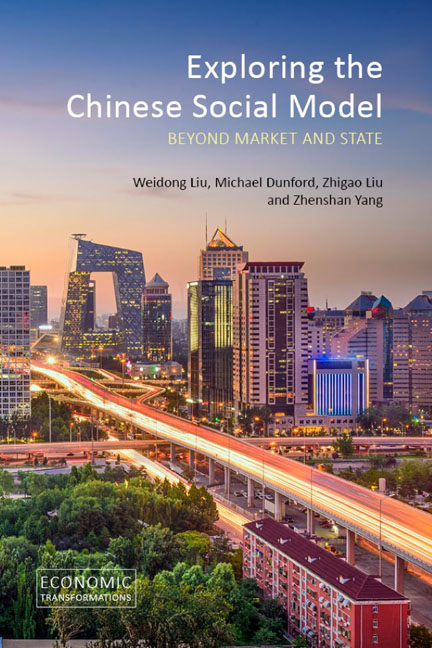
The people of China and its (widely differing) regions have not all benefited equally from the country's rapid increase in prosperity, and the speed and timing of increases have varied across time and space. However, China has managed to help those left behind to catch up. These outcomes reflect a specific social model embedded in China's cultural and political milieu. Exploring the Chinese Social Model presents new analysis and fresh research on how China deals with unequal development and inequality in the context of its surging economic growth.
The book sheds new light on the workings of China's social model, going beyond binary notions of market and state, and considers the new facets of its socialist market economy. In exploring these questions, the authors consider what is special about China and what the Chinese model is all about.
Almost everyone agrees on the need to transition the global economy to net zero. But how do we do it? And how do we do it faster? If you feel demoralized, depressed or confused about the climate crisis this book will provide answers - and ones that don't involve punishing lifestyle changes, the end of capitalism, or a much higher tax bill.
Supercharge Me is grounded in relentless realism about how governments, businesses and individuals actually behave. It draws lessons from what has worked so far: extreme positive incentives and smart regulations. Through a series of fast-paced dialogues, the authors introduce practical ideas for change that will embolden activists, reinvigorate the disheartened, and reframe the climate crisis as an opportunity.
UK workers are stuck in a low-pay, low-productivity rut, with far too many people working in poor quality, insecure jobs, with little training or chance of getting on. Katy Jones and Ashwin Kumar question the mantra that 'work is the best way out of poverty' and examine the in-work poverty that now defines employment for many.
The state's engagement with people out of work is shown to ignore the needs of lone parents and disabled people, and has little concern for skills and career progression. When coupled with the degradation of social infrastructure, such as child care and transport, the barriers to quality work can become insurmountable. Jones and Kumar's insightful analysis reveals the need to move away from positioning unemployment as a 'behavioural problem' to be corrected by coercive labour market policies to one that considers the wider obstacles to better paid, quality jobs.
Corruption takes many different forms and the systems that enable it are complex and challenging. To best understand corruption, one needs to examine how it operates in practice. Understanding Corruption tells the story of how corruption happens in the real world, illustrated through detailed case studies of the many different types of corruption that span the globe. Each case study follows a tried and tested analytical approach that provides key insights into the workings of corruption and the measures best used to tackle it. The case studies examined include examples of corporate bribery, political corruption, facilitation payments, cronyism, state capture, kleptocracy, asset recovery, offshore secrecy, reputation laundering and unexplained wealth, and actors include businesses, governments, politicians, governing bodies and public servants.
Poverty in modern-day Britain looks different to the form it took in Beveridge's day but it has not disappeared. For 14 million people across the UK the lack of access to the goods and services necessary to live a decent life and to participate fully in society remains a grim reality. Despite rising standards of living, social and economic structures continue to trap those at the bottom in constant job insecurity, ill-health, overcrowded housing and educational disadvantage. Helen Barnard considers what it might take to finally slay the giant of poverty in Britain. She examines how we might build a fairer, more equal society, and what a modern welfare state should aim to achieve, including an honest appraisal of the trade-offs and choices involved in creating it.
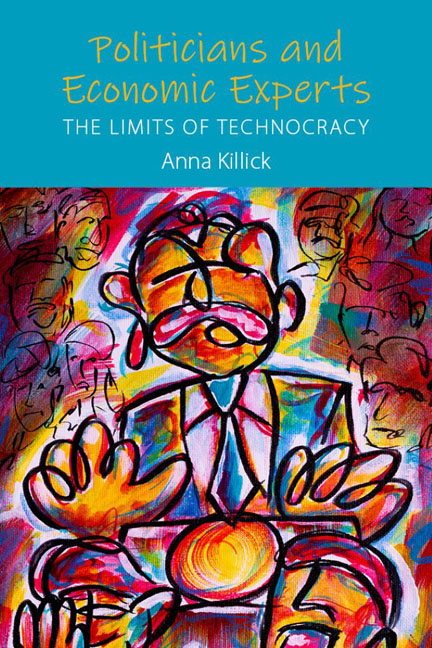
In recent years politics has seen an increasing role in economic policymaking for a technocracy of experts. How do politicians feel about this and how do they balance their political and ethical aims with economic expertise? Anna Killick offers an in-depth study of how politicians engage with economists and economic opinion. Based on interviews with politicians from the main parties in France, Germany, Denmark, the UK and USA, the book highlights the role economic opinion plays in politics and the tension that can arise between democracy and technocracy. Deferring to the experts is shown to be neither viable nor desirable, and that we should trust politicians to take the lead role in solving economic problems.
South Korea has the tenth largest economy in the world and is one of only two Asian members of the OECD. It has achieved this remarkable level of economic development since its independence from Japan in 1945. Indeed, it has achieved this transformation, exceptional for any postcolonial state, despite one of the most brutal fratricidal conflicts fought since the Second World War. Sunil Kim and Jonson Porteux chart this astonishing economic and political development and explain the puzzle that is the South Korean economy.
The authors examine how South Korea has developed a highly innovative economy based on advanced technologies and infrastructure - counter-intuitively, given its postcolonial legacy of military leaders and lack of fully developed free markets. The longstanding family-owned and run industrial conglomerates - the chaebol - characteristic of the Korean economy are shown to have been behind the shift to high-tech industrialization, albeit under the strict influence of the state. The challenges of increased global interconnectedness, the precarious and fragile relationship with North Korea, the slowdown of domestic demand, recent assaults on the chaebol and their families, together with the impact of the Covid-19 pandemic, are furthermore addressed.
The book offers new insights and frameworks for understanding the fascinating history and future trajectory of South Korea's political economy as well as the causes and consequences of industrialization and democratization more generally.
As a universal experience school provokes strongly-held opinions. The views of teachers, parents, pupils compete with those of educational theorists, social engineers and ideologues. Although undoubtedly much improved since the time of Beveridge, the provision of education remains beset with challenges. Sally Tomlinson's engaging, and at times personal, journey through Britain's postwar experience of schooling and education reform draws on her many years of working in the sector. She explains how legacies of different systems and countless policy initiatives have led to the persistence of social inequalities, entrenching them in society and perpetuated by the power dynamics that they create between class, race and gender. Furthermore, she shows how the increasing mania for testing, targets, choice and competition, which has made schools into a marketplace and young people into consumers, threatens to undermine schools as a place where citizens can share learning and the democratic values that are needed as much today as they were in Beveridge's time.
Competition between democratic and authoritarian systems is playing out in global cities, where real property rights influence regime legitimacy and economic performance. Two questions inspire debate. Why does the property-owning middle class, which was integral to democratic development in the West, support illiberal governments? Do differences between political systems affect the success of global cities?
Marsha McGraw Olive unravels these questions by comparing urban land governance in Europe and Eurasia. Democracies largely, but not exclusively, perform better than hybrid or authoritarian regimes on real property rights, land-related regulations, and citizen engagement in urban planning. Case studies of Moscow and Istanbul show that urban real property is fundamental to regime stability, bringing wealth to average citizens and favoured elites. This formula, perfected by President Putin, bestows economic but not political benefits to middle-class property owners.
The book argues that all cities need to improve land governance to cope with twenty-first century urban challenges. Cities that respect property rights and put citizens at the centre of urban planning achieve better outcomes. In contrast, illiberal leaders who rely on opaque property deals are inciting public backlash and slowing economic growth. In the global political competition, real property rights are a chink in the authoritarian armour.
New York became the world's first megacity in the 1930s. Since then it has remained the largest city in North America but, globally, it has been surpassed in size by the younger cities of Asia. Nevertheless its metropolitan area is home to 20 million people and it continues to be America's premier city.
The authors examine the New York metropolis through the lens of a series of twenty-first century pressures related to demography, economic growth, urban development, governance, immigration, leadership and globalization. How New York's institutions and policies have either risen to meet these challenges, stagnated in the face of them, or simply failed to resolve them is the focus of the book. In particular, the authors examine the municipality of New York City and how it navigates the increasingly complex battles with higher levels of government over rights to the city and resource needs.
The book examines the shifting tides of corporate centered development, particularly the vibrant financial sector, and how it has leveraged its powerful geopolitical position in the global economy to continue to grow. The question of governance is explored along with the growing reliance on public-private partnerships to manage megacity problems. Mayoral control and leadership are fundamental to meeting the needs of the residential population along with the demands of business. With over three million immigrants, New York is the most diverse city in North America, but it is also among the most segregated. The authors investigate the positive and negative outcomes that such diversity brings.
The Belt and Road Initiative (BRI) is one of the most talked about yet little understood policy initiatives of the People's Republic of China. This book offers a comprehensive, balanced and policy-oriented assessment of the BRI's first ten years and what it has meant for the world's businesses, polities and societies. The authors explore China's role as a globally significant source of development finance and investment capital, and examine the political, economic, normative, environmental and social implications of its increased presence in the world.
Aimed at researchers and academics, business professionals and policy analysts, as well as informed readers, the book seeks to answer some of the most pressing questions that China's rising economic presence in global markets poses: how is the BRI organized? Is it China's grand strategy? Is it green, is it corrupt, and what are its social effects? Is there even a future for the BRI in a world beset by new uncertainties? The book offers a sober analysis of the most prevalent narratives that cast China as a 'threat' and as an 'opportunity' and considers the specific challenges that it presents for the liberal international order.
The advent of digital stablecoins and the continuing decline of cash are prompting central banks across the world to explore developing their own digital currencies. Although few have launched so far, the potential for central bank digital currency (CBDC) promises a revolution in banking.
Michael Lloyd considers the opportunities and threats that the arrival of CBDCs will have for commercial banking and the world's monetary system. The choices facing central banks regarding the use, design and technology of digital currencies are examined as well as the potential impacts on consumer security and privacy.
Mexico City is the second largest city on the American continent, the most populous Spanish-speaking city in the world and the richest city, in terms of GFP, in Latin America. The authors explore the political structures, demography, economy, social issues and public administration that make this megacity distinctive.
Unique and vibrant, Mexico City has been run since the 1990s by left-wing parties with more progressive social and egalitarian concerns about urban problems, and new proposals for different types of state participation. Political changes at the city level has led to changes and fresh approaches in some aspects of social life, including the creation of important local, grass-roots institutions. The book offers quantitative and qualitative assessments of the spatial structure of the city and its distribution of poverty and poor economic outcomes, alongside transportation provision, housing. Deindustrialization and the growth of the service sector alongside an expanding informal economy are also shown to be important dynamics in the economic restructuring of the city.
In 1942 life expectancy at birth was 66 for women and 60 for men. Death was usually due to degenerative and infectious diseases. The greatest postwar success in the fight against disease was the establishment of the NHS and care that was free at the point of delivery. Life expectancy rose dramatically, but since 2011 incremental improvements have stalled and even, in some regions, begun to reverse. Infant mortality rates have crept up and the postcode lottery of health provision underscores the level of social inequality in the UK.
Good health is not simply the absence of disease. It is the collective of physical, social and mental well-being. It is the product of nutrition and genetics, of healthy lifestyles and preventative health interventions. It is the interaction between the conditions in which we live, work, play and age. Yet access to many of the things that make and keep us healthy are not evenly distributed in the population. Achieving good health is then deeply entwined with all aspects of society and cannot simply be solved by policies in one area alone.
In our rediscovery of Beveridge, the shadow of the pandemic looms large. It has never been more urgent to address the underlying causes of disease. And it has never been clearer that these determinants are not only social or physiological, but also political.
Forced to embrace a post-carbon future, or risk serious damage to the planet, we have begun a race for alternatives to the scarce resources that previous generations relied on. In this book, Jonathan Moses and Anne Brigham consider how best we might negotiate the world's scarce pool of natural resources, and avoid the pitfalls of the past.
In order to shift the world's consumption from one set of scarce natural resources to another, they show the need for management regimes that are both politically, as well as environmentally, sustainable. They propose an alternative way to think about resource management for the future, one based on the collective ownership of (stewardship over) nature, and one where the rents resulting from this ownership, like the resources that produce them, belong to the people. Using case studies from particular markets, they demonstrate how such a management model might work to protect our common heritage and allow communities to secure the benefits we can and should expect from scarce resources - our natural dividend.
The nature of conservative ideology is and will continue to be warmly contested. In this short history, Mark Garnett contends that the disagreements have been particularly strong in the instance of British conservatism because the ideological label continues to be used by a prominent political party. Whether hostile or friendly in intent, commentators on conservatism have found it difficult to avoid the assumption that British 'conservatism' must, at all times, be reflected at least to some degree in the policy platforms of the Conservative Party.
This book presents an account of British conservatism which avoids the usual confusion between the ideology and the stated principles of a party which prides itself on an ability to change its views according to circumstances. It shows, since the Tory Party adopted the name 'Conservative' in the 1830s it has become increasingly difficult to associate its varying positions with a coherent 'conservative' position, so that it is more profitable to discuss its ideological history from the perspective of liberalism and nationalism. This argument is presented by tracing the histories of the party and the ideology in separate chapters, whose themes and cast of characters rarely coincide.