To save content items to your account,
please confirm that you agree to abide by our usage policies.
If this is the first time you use this feature, you will be asked to authorise Cambridge Core to connect with your account.
Find out more about saving content to .
To save content items to your Kindle, first ensure no-reply@cambridge.org
is added to your Approved Personal Document E-mail List under your Personal Document Settings
on the Manage Your Content and Devices page of your Amazon account. Then enter the ‘name’ part
of your Kindle email address below.
Find out more about saving to your Kindle.
Note you can select to save to either the @free.kindle.com or @kindle.com variations.
‘@free.kindle.com’ emails are free but can only be saved to your device when it is connected to wi-fi.
‘@kindle.com’ emails can be delivered even when you are not connected to wi-fi, but note that service fees apply.
Every journey starts with a first step. A decision, really, to take that first step. To metaphorically move one foot in front of the other. That first step for me was taken on March 10, 2011. It was a cold, overcast, dreary Saturday morning when I typed the words “Patras orphanage” into the search bar. Life is full of unexpected journeys, and this was not my first one.
The past six months had been so difficult. Shirley, my wife of 24 years, had passed away, suddenly, but not unexpectedly, the previous September. We both knew she was sick. Having been a certified nurse’s aide in the home health care field for many years, she knew her prognosis. There is no cure for Chronic Obstructive Pulmonary Disease (COPD). I knew that, too. What I didn’t know was how soon it would take her. She knew, though, and as I look back, there were signs.
Shirley’s death left a void in my life and also gave me time to think about other things, like my own life and where it began. I hit “enter” on the keyboard that Saturday morning in March and that’s when everything changed. The first entry came up and was about the Skagiopouleio Orphanage. Was this the orphanage? My orphanage? I clicked on the second entry and it was there I found an article from April 13, 1996, published in the New York Times entitled “Tales of Stolen Babies and Lost Identities: A Greek Scandal Echoes in New York.” The article told the stories of Maxine Deller, and others, in their search for the truth behind their adoptions from Greece in the 1950s. All came from the orphanage in Patras.
“Holy shit! Could I have been a part of this?” I said out loud to no one. I had never heard of this and I quickly became obsessed. The rest of that day was spent searching. There was a website (no longer in existence) published by a Greek adoptee regarding his experiences as an adoptee. On it were pictures of the Patras Municipal Orphanage, an old, decrepit building, long since torn down.
On 31 March 2020, Sierra Leone reported its first case of COVID-19. Meanwhile, the rest of the world was already implementing curfews, quarantines and contact tracing to try and prevent the novel coronavirus from continuing to spread. Sierra Leone was experienced in implementing similar measures, being one of the three contiguous West African countries that suffered from the worst outbreak of Ebola Virus Disease (EVD) in history, from 2014 to 2016. Sierra Leone was finally deemed Ebola-free in March 2016, after 14,124 probable cases and 3,956 deaths out of 11,325 deaths worldwide (CDC, 2019).
Sierra Leone’s experience and lessons learned fighting Ebola are relevant today, as COVID-19 is present in nearly every country on earth. How did Sierra Leone manage to curb the spread of Ebola when the Centers for Disease Control and Prevention (CDC) projected that up to 1.4 million people would succumb to the disease? Not only did Sierra Leone rank 180 out of 187 on the UN Human Development Index in 2014, but it was also ranked among the world’s 10 poorest countries (World Bank, 2011). When Ebola hit, the country had only recently emerged from an 11-year civil war and local trust in the government was low. It had one of the weakest healthcare systems in the world, with an average life expectancy of 52.37 years (World Bank). The number of doctors for the population was dangerously low and rural roads were in such poor condition, with clinics so far away, that it made it nearly impossible for people to seek healthcare – and they might be unwilling to go anyway, given the rumours circulating about Ebola. Some believed that the disease was introduced by the ruling political party to kill their rivals. Others simply believed that Ebola was a death sentence: if you went to an Ebola treatment unit (ETU) you would die and the doctors would not return your body to your family for a traditional burial, despite its cultural importance. The high death rate was also tragically reflected in the number of local healthcare workers who succumbed to the disease: out of the 307 who were infected in Sierra Leone, 221 died (Raven et al., 2018).
In the 1990s, when I was a journalist working in Philadelphia, I executive produced a documentary about an orphanage in Guatemala that, at the time, was one of the “go to” places where childless couples could find infants and young children to adopt. I remember helping the reporter and producer craft the storyline, deciding to begin by telling the story of Moses (yes, that Moses), who was maybe one of the first adoptees in recorded history, and what that story has meant in Judaism and in the greater historical narrative about adoption.
I worked on the story dispassionately. We had long discussions about the plucking of Guatemalan children from their rich culture and language to see them dispatched to points all over the globe. We talked about birth mothers and fathers. We talked about what could become of these children and what they might feel about their adoptions as they grew up. And yet, I failed to internalize the stories and destinies of those precious children. I failed to acknowledge, in my own heart, that I was one of them, even as I had begun my own search for biological kin, via the sluggish U.S. Postal Service, before the Internet was widely available.
My own ten-year search (to this point in the 1990s) was not yielding fruit; my biological mother, whose name was listed on my Greek birth certificate, had decided, after many letters through intermediaries back and forth, that she would not pursue and did not want a meeting with me, as I had requested. No explanation was given, just speculation about her feelings and frame of mind, but again, I failed to internalize the news. Rather than to feel about it, I abruptly abandoned my search. Obviously, I was too hurt to deal with the rejection, but failed to express it. I summarily buried my deepest feelings about the circumstances of my birth, my adoption, and what it felt like to have been born into one family and be given to and raised by another.
It was not until after both my adoptive parents had died when I allowed myself to seriously think about my early childhood again.
There is general agreement that Thomas Malthus (1766–1834) and David Ricardo (1772–1823) are founders of political economy (Roll 1973: 173). Their status depends to a large extent on two, but profoundly influential, publications: An Essay on Population in 1798 and Principles of Political Economy and Taxation in 1817. Nevertheless, they produced a voluminous collection of publications. Pietro Sraffa's edition of Ricardo ran to eleven volumes. Malthus is also recognised in his own right as a founding figure of political economy, but his development of social science has in the past often been overshadowed by moral criticism that is blind to his real scientific contributions. In this chapter, I promote the idea that Malthus and Ricardo were also founders of sociology without whom there would be, for example, no Marxist sociology of social class. When Ricardo introduced the growth of manufacturing into the third edition of Principles, then wages cannot rise and the conflict between capitalists and landlords over rent evaporated to be replaced by a conflict between capitalists and workers as machines replaced labour (Davis 1993). Thus, the foundation of Marx's class theory was already well developed in classical political economy. Sociology in the case of Max Weber's generation emerged out of economics conceived as a ‘science of man’ that examined the ‘conditions of existence’ of people. Thus, sociology was already embedded in the Historical School of German ‘political economy’ (Hennis 1988: 105–45). German economists rejected Adam Smith's ‘cosmopolitanism’ in which nations freely traded with each other to their mutual benefit. For Weber, economics was a political science based on national struggle for domination. Weber was only too aware of issues around population growth and immigration from a national perspective (Tribe 1989). Prussian Junkers were hiring Polish workers to lower their costs of production, thereby displacing the German population. In his 1895 Inaugural Address to the University of Freiberg, he criticised the policies that resulted in the displacement of German by Polish workers in the East Elbian provinces of Prussia with disastrous effects on German character and culture. Weber concluded: ‘As usual, a large number of children follows hard on the heels of a low standard of living, since this tends to obliterate any calculation of future welfare.
I was born in my great-grandmother’s house on January 2, 1955, in Alagonia, Messinias, Kalamata, Greece. I was named Despina after my greatgrandmother. My mother was promised that I would receive a piece of land if she would honor her husband’s mother with my name.
I am the third-born of four children. However, the fourth-born, who was a baby, was not the one being adopted. I was. At the age of seven, I was adopted by John and Beatrice, an elderly couple from the United States. He was Greek-born and married to an American from the Deep South, ages 72 and 48, respectively. I was not an orphan, but I would be classified as such soon enough. This entire process took about a year and a half.
Being adopted near adolescence, I can recall with vivid detail what it was like to be partially stripped of my culture that was already deeply embedded. I maintained communication with my family back in Greece, and saw, all my life, what it could have been, had I not been adopted. My only solace in my life was that my new father was Greek-born. My village was my whole universe. Would it miss me as much as I missed it? My mother’s goal was to relinquish me in an attempt to “benefit” the whole family. I didn’t feel singled out. She could have chosen any one of us. But it was me and I was part of a plan my mother had hatched.
It was 1961. The president of the Michigan chapter of American Hellenic Educational Progressive Association (AHEPA) was scheduled to attend a ceremony in Greece, but was unable to make it due to health issues. Instead, my great-grandmother’s son, John Anastos, would fill in for him and take the trip with his wife, Beatrice. He had not returned to visit Greece since he was seventeen. He was now nearing seventy.
During their stay, they decided to visit his hometown of Alagonia where he owned a home, which happened to be mine, where I was born and living with my family. This is where it all started.
This collection of essays on the life and work of Peter Ludwig Berger (March 17, 1929–June 27, 2017) offers a broad perspective on his many contributions to sociology and social theory. But his contributions also go well beyond these fields. His uses of both empirical observation and theoretical insight made Peter the most effective kind of activist, always committed to arguing about how to help people in various nations help themselves. His meditations on religion, secularism, capitalism, mediating structures, and pluralism are living proof that he saw in quite familiar commitments to family, community, and nation, those ingredients that contribute to what has lately been called “flourishing.” He could not be easily pigeonholed to one political side or the other. Faith and reason were for him incompatible with ideology.
I first met Peter L. Berger in the mid-1970s when he was president of the Eastern Sociological Society. We met again in 1981 when his wife Brigitte hired me at Wellesley College, where I have remained for the past 40 years. Both Peter and Brigitte were everything I wanted to be as a sociologist with their ever broadening and deepening erudition that was always directed to matters of public interest and importance. With my appointment in 1998 as an Editor-in-Chief of Society, I began a fruitful collaboration with Peter and what was then the Institute for the Study of Economic Culture and what later became the Institute on Culture, Religion, and World Affairs. We worked together on many conferences that were eventually published in the journal as well as in books. This was what Peter sometimes referred to as “the business side” of our relationship.
I was fortunate to know Peter over these same years in special ways that others close to him knew him. I have never been very good at remembering jokes. Peter offered a constant supply of them every time we met to discuss our work together. One sociologist who reviewed Peter’s book on humor wrote, “Consider it a benevolent and profound sermon about the possibilities of benign humor for lifting the human spirit.”
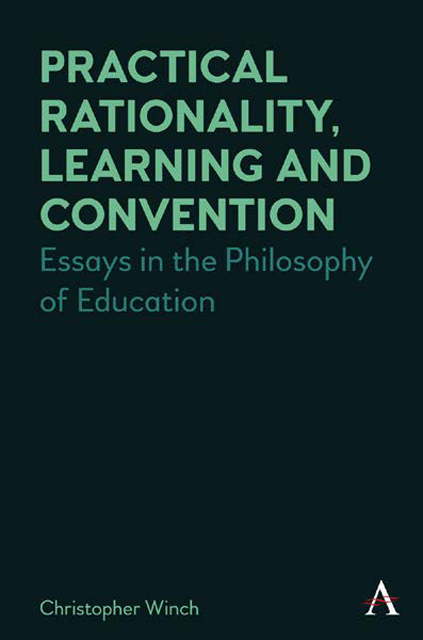
This collection of articles by one of the leading philosophers of education in the English-speaking world takes up themes in the philosophy of language, epistemology and the philosophy of learning to shed light on philosophical puzzles concerning learning, concept formation, knowing how, the following of norms and whether there is a single concept of rationality that can be applied universally. Winch writes from a Wittgensteinian perspective, seeking dissolution rather than solution to philosophical problems. The collection also has a strong practical emphasis; the topics chosen are nearly all related to practical problems of educational policy and practice as well as have intrinsic philosophical interest.
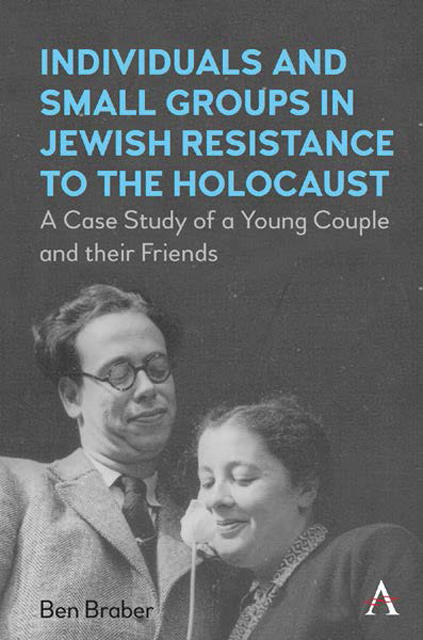
This book aims to increase our knowledge and deepen the understanding of Jewish resistance to the Holocaust by examining personal circumstances and characteristics of Jewish resistance members and the formation of small Jewish resistance groups. It is a carefully researched case study, which examines primary and secondary sources, including evidence from interviews with resistance members and documentary evidence previously unavailable in English. It uses a qualitative analysis to investigate individual and small group manifestations of Jewish resistance during the German occupation of the Netherlands between 1940 and 1945. This study contributes to historiography, but its focus enables a different interpretation and displays a new view of history. It is a scholarly work but also accessible for the general reader interested in this subject.
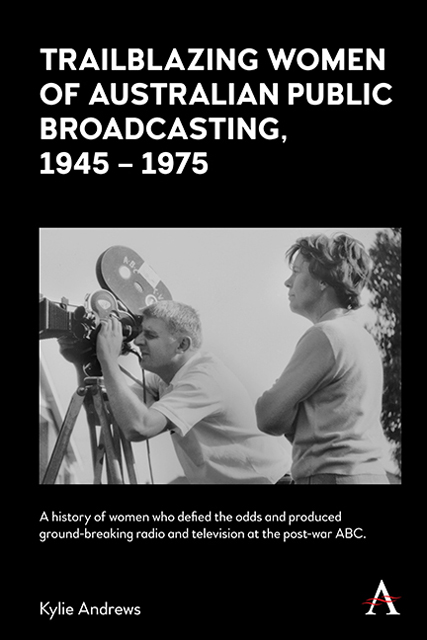
Trailblazing Women of Australian Public Broadcasting, 1945-1975 offers a compelling new perspective of Australian radio and television history. It chronicles how a group of female producers defied the odds and forged remarkable careers in the traditionally male domain of public-affairs production at the ABC in the post-war decades. Kay Kinane, Catherine King, Therése Denny and Joyce Belfrage were ambitious and resourceful producers, part of the vanguard of Australian broadcasters who used mass media as a vehicle for their social and political activism. Fiercely dedicated to their audiences, they wrote, directed and produced ground-breaking documentaries and current affairs programs that celebrated Australian life, while also challenging its cultural complacency, its racism and sexism. They immersed themselves in the ABC’s many networks of collaboration and initiated a range of strategies to expand their agency and authority. With vivid descriptions of life at the ABC, this book traces their careers as they crossed borders and crossed mediums, following them as they worked on location shoots and in production offices, in television studios, control rooms and radio booths. In doing so it highlights the barriers, both official and unofficial, that confronted so many women working in broadcasting after World War II.
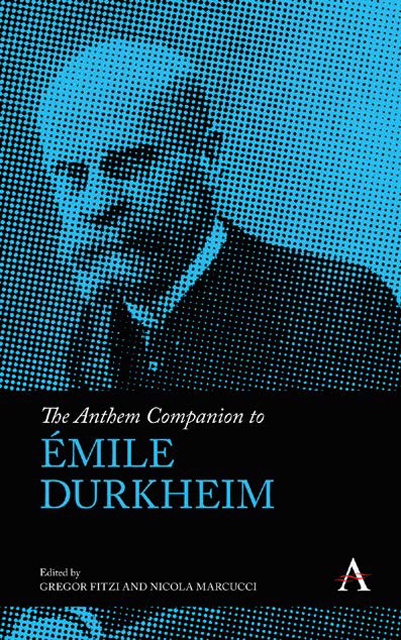
The Anthem Companion to Émile Durkheim intends to offer different practical attempts to build on Durkheim's legacy and investigate the issues and controversies that characterise contemporary societies and thus contribute to develop further this path of critical enquiry into 'classical sociology'.
The contributions to this volume provide new insights into Durkheim's classical texts and juxtapose them with the reconstruction of his lectures and lesser known writings to offer a wider understanding of his oeuvre.
Iconomy: Towards a Political Economy of Images argues that imagery of all kinds has become a definitive force in the shaping of contemporary life. While immersed in public politics and private imaginaries, such imagery also operates according to its own logic, potentialities, and limitations. This book explores viral imagery-the iconopolitics-of the pandemic, US Presidents Trump and Biden, Black Lives Matter, as well as the rise of a 'black aesthetic' in white artworlds. Having arrived at the term 'iconomy' in the years just prior to 9/11, and tracking its growing relevance since then, Smith argues that its study does not require a discipline serving nation states and globalizing capitalism but, instead, a deconstructive interdiscipline that contributes to the politics of planetary world-making.
This book explores how literary reading can enable people considering suicide to stay alive. Written by an academic general practitioner with longstanding expertise in mental health, the book is grounded in the lived experience of patients, intertwined with perspectives from social psychology and moral philosophy. At its heart are reflective descriptions of the author's encounters with Tolstoy's Anna Karenina, and the Terrible Sonnets of Gerard Manley Hopkins, illuminating the therapeutic potential of recursive interactions between literature and experience.
The double codes of law composed by R. Joseph Karo during the late sixteenth and early seventeenth centuries mark a watershed in the history of Jewish Halakhah (law). No further legal project was suggested in later generations. The books suggest a new reading beyond the aspects of positive law. R. Joseph Karo continued centuries-long traditions of Jewish erudition, in tandem with responding to global changes in history of law and legality both in Europe, and mainly in the Ottoman Empire. It is a global reading of Jewish Halakhah and modernization of Jewish culture in general.
Poetics of Race constitutes a critically and theoretically innovative analysis of racial and ethnic dynamics in Latin America, and their symbolic - artistic, ideological - representation. The book illustrates the relevance of cultural and racial minorities in different national contexts (particularly in Mexico, Brazil, the Andean region and the Caribbean) through the study of literary, filmic and visual productions that depict otherness, marginalization and popular resistance. The book focuses on negritude, indigenous cultures, andinismo, performance and cinematic discourses in which racial issues are displayed, elaborated and symbolized. The various critical approaches utilized in this volume also contribute to expand methodological horizons in the field while contributing to widening the corpus of literary texts and cultural practices in this area of studies.
This volume's relevance may be explained, first and foremost, during a time of unprecedented loss of life around the world each day. The data, which is oftentimes incomplete and misleading, nonetheless reveals the state as deficient as well as negligent in its response to social healthcare needs. This volume attests to the fact that pressing global public health concerns are ever present as subjects of societal discourse and debate in developed and developing states. Moreover, the COVID-19 pandemic makes the omission of the ethics of personal data collection analysis in the international relations literature even more salient given the rise of contact tracing and increased uses of mobile phone Apps to track citizens by states and firms across the globe, as this volume's chapters analyzing the responses to COVID-19 in Iran and Taiwan explain.
Hinge Epistemology is rapidly becoming one of the most exciting areas of epistemology and Wittgenstein studies. In connecting these two fields it brings a revived energy to both, opening them up to fresh developments. The essays in this volume extend the subject in terms of both depth and breadth. They present new voices and challenges within hinge epistemology. They explore new applications and directions of hinge epistemology, particularly as it relates to the philosophy of mind, society, ethics, and the history of ideas.
The book is a short introduction to comparative law and economics, a growing field in the interaction between law, economics and comparative political science. It is a guide to economists, lawyers and political scientists looking for a brief overview. It includes both strands of the traditional literature, namely the role of legal families and microeconomic analysis of legal rules in a comparative perspective. The study of courts at the global level is complemented by comparative judicial politics.
This book offers a psychological account of thrills (goosebumps and tears), of the epiphanic experience of seeing ordinary things in a profoundly new way, and of the experience of the sublime. The unifying characteristic of these 'strong experiences' is that they all begin with surprise. They are important in literature: literature is about these experiences, and literature can cause these experiences. This book offers an overview of theories of these kinds of experience, and of what might cause them to happen. In the final chapter, various literary strategies are explored as possible causes. The book draws on psychological accounts of surprise, and of emotion, and cognitive approaches to what knowledge is, why it is possible to have feelings of profound knowledge, and why what we know can sometimes not be put into words.