To save content items to your account,
please confirm that you agree to abide by our usage policies.
If this is the first time you use this feature, you will be asked to authorise Cambridge Core to connect with your account.
Find out more about saving content to .
To save content items to your Kindle, first ensure no-reply@cambridge.org
is added to your Approved Personal Document E-mail List under your Personal Document Settings
on the Manage Your Content and Devices page of your Amazon account. Then enter the ‘name’ part
of your Kindle email address below.
Find out more about saving to your Kindle.
Note you can select to save to either the @free.kindle.com or @kindle.com variations.
‘@free.kindle.com’ emails are free but can only be saved to your device when it is connected to wi-fi.
‘@kindle.com’ emails can be delivered even when you are not connected to wi-fi, but note that service fees apply.
In this part, three chapters introduce the theoretical and historical foundations for analyzing humanness, and the role of the atypical body in determining membership, meaning, and worth.
Marx in the Field is a unique edited collection illustrating the relevance of the Marxian method to study contemporary capitalism and the global development process. Essays in the collection bring Marx ‘to the field’ in three ways. They illustrate how Marxian categories can be concretely deployed for field research in the global economy, they analyse how these categories may be adapted during fieldwork and they discuss data collection methods supporting Marxian analysis. Crucially, many of the contributions expand the scope of Marxian analysis by combining its insights with those of other intellectual traditions, including radical feminisms, critical realism and postcolonial studies. The book defines the possibilities and challenges of fieldwork guided by Marxian analysis, including those emerging from the COVID-19 pandemic.
The collection takes a global approach to the study of development and of contemporary capitalism. While some essays focus on themes and geographical areas of long-term concern for international development – like informal or rural poverty and work across South Asia, Southern and West Africa, or South America – others focus instead on actors benefitting from the development process - like regional exporters, larger farmers, and traders – or on unequal socio-economic outcomes across richer and emerging economies and regions – including Gulf countries, North America, Southern Europe, or Post-Soviet Central and Eastern Europe. Some essays explore global processes cutting across the world economy, connecting multiple regions, actors and inequalities.
Overall, through the analysis of an extremely varied set of concrete settings and cases, this book illustrates the extraordinary insights we can gain by bringing Marx in the field.
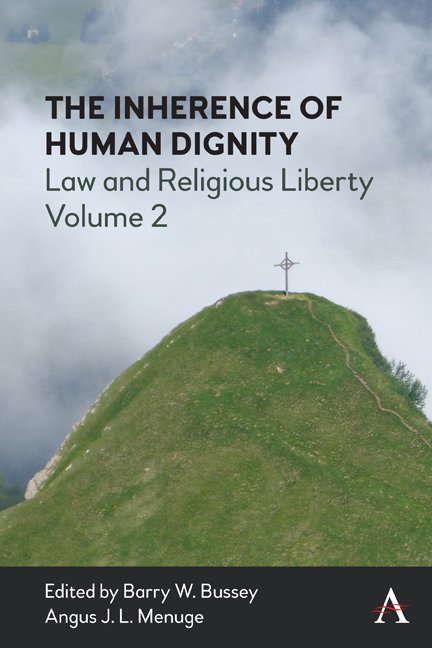
For the 2019 IVR World Congress of Philosophy of Law meeting in Lucerne, Switzerland, Drs Barry W. Bussey and Angus J. L. Menuge organized a special workshop on the inherence of human dignity, featuring participation from philosophers, legal scholars, and legal practitioners from around the world. Many of the chapters in these volumes are the result of that invigorating two-day workshop. In addition, several new papers were solicited to round out each volume so that it offers broad coverage of the issues it addresses.
The second volume, Law and Religious Liberty, explores the value of dignity as a foundation for law. It addresses the following questions. What context is necessary to create an understanding of the need to protect human dignity? Is dignity a useful legal concept or not? If it is, what difference does it make if dignity is recognized in a state's constitution? Can we discover dignity by its de facto role in legal decisions? Should dignity be extended to groups? What are the practical, legal implications of various understandings of human dignity for international law, religious freedom cases and the permissibility of legal determination of religious doctrine?
In the twelve studies collected in this book, the collaborators take their points of departure from the thesis that the initial exchanges of post-war letters between exiles from Nazi Germany and former colleagues and friends who remained in Germany provide unique insights into the aspirations, hopes, and fears of both sets of writers, as well as the costs of both types of experiences, varied as they are. The best-known of such exchanges, subjected to two quite distinct studies in the book, is the public correspondence between Thomas Mann and Walter von Molo, in the course of which Mann sets forth his bitter reasons for failing to return to Germany at the end of the war. Another familiar correspondence examined anew in the book is of a radically different kind, consisting mainly of letters by Hannah Arendt to Martin Heidegger, where the confluence of personal, emotional currents with questions of academic weight define a distinctive, troubling connection, indicative of quite distinct costs of exile. Included in the collection are also fresh studies of figures who may be less well-known but whose distinctive responses to the challenges posed by first letters provide matter for fresh insights into exile and its liquidation. The first essay in the book and the last focus on questions of method and interpretation in studies of this valuable kind of evidence. Apart from the rewarding historiographical findings of these inquiries, they also offer a demanding contrast in methods and theoretical claims.
As countless alterations have taken place in medicine in the twenty-first century, so too have literary artists addressed new understanding of disease and pathology. Dis/ability studies, fat studies, mad studies, end-of-life studies, and critical race studies among other fields have sought to better understand what social factors lead to pathologizing certain conditions while other variations remain 'normalized.' This collection of essays is open to all critical engagements with narratives of health in order to facilitate the messiness of cross-disciplinary collaboration and interdisciplinarity. As scientific advances provide insight into a wide range of well-being issues and help extend life, it is vital that we come to question the very categories of healthy and unhealthy. This collection brings together analyses of cultural productions which probe those categorizations and suggest new psychological and philosophical understandings which will help better apply and guide the knowledge being rapidly developed within the life sciences. The contributors share an interest in addressing who controls answers to the questions of 'how do we define a healthy body and a healthy life?' and 'what are the political forces that influence our definitions of health?'
The globalization of healthcare protocols has brought many advances but also challenges to traditional understanding of health within many cultures. This collection includes papers that examine narratives of health from all countries, cultures, and communities and is not limited to a North American or Western locus. Further, just as Edward Said problematized 'travelling theory' this book hopes to bring together scholars who look at how literary works also show that medical interventions from a Western perspective need to be challenged when applied to communities whose voices are often not heard or deliberately undermined when those 'treatments' are developed.
The demographic dividend is the name given by Harvard economists David Bloom and David Canning to the boost in economic growth that can result from changes in a country’s population age structure. As fertility rates decrease, a country’s working-age population grows larger relative to the young dependent population. With more people in the labor force and fewer children to support, a country has a window of opportunity for rapid economic growth if the right social and economic investments and policies are made in health, education, governance, and the economy. Conversely, research shows that resource requirements to support a large population of children and youth can depress the pace of economic growth and prevent needed investments in human capital. The discourse on responding to this population growth frequently excludes the youth. The result can be an apathetic community of young people who withdraw from participation in political and democratic processes.
These articles address the issue and highlight solutions from different parts of the world, from members of the Global Diplomacy Lab to external contributors: how they see their work promoting, enhancing and contributing to harvesting the demographic dividend.
What stories can they tell that can educate and inspire readers? The essays in the book are couched in language that is accessible, engaging, informative, entertaining, illuminating and inspiring. The book highlights, in particular, exceptional and inspiring stories that share unique perspectives on how work in one’s field seeks to, can or has promoted, provided and preserved human dignity.
Tennessee Williams, T-shirt Modernism and the Refashionings of Theater refocuses the work of Tennessee Williams against the larger fabric of cultural change in the post-World War II era in which he came to prominence, an era in which the rate of cultural change accelerated unprecedentedly as the late 40s became the 50s, the 50s the 60s, the 60s the 70s, etc. into periods of fragmentation and dislocation, a cultural unmooring we now generally (if too loosely) call postmodern, or, more accurately, perhaps, late modern. The study engages the Williams we thought we knew, as he grew, developed, reconfigured himself into a playwright we didn’t, in his attempts to refashion himself amid the vortices of changing sexual mores, including the performance of masculinities and the queering of theater, the struggle for a literate, literary theater, and the place of the theatrical experience in his contemporary culture.
Bringing together the ideas of many philosophers, this book aims to give a coherent synthesis of ideas about change and aims to see how one can take a process view of various features of humanity, such as knowledge, relations between people, language and morality, and how, vice versa, that might contribute to process philosophy. Beginning with evolution and moving on to consider knowledge in its dynamic aspect of learning, the book takes a process view of the individual and society.
Generalised Darwinism is discussed not only in terms of biology but also in economics, organisation, language and science in terms of interactors and replicators. The key processes of variety generation, selection and transmission are fundamentally different from those in biology. Therefore, a theory of knowledge and its change is presented that in some ways is similar to evolution but also different in important ways. The discussion explains and applies the notions of entropy and organisational focus. Recognising that absolute, objective truth is problematic, it discusses the notion of warranted assertion. The notions of sense and reference are discussed in an explanation of meaning, and the notions of order and variety in terms of langue and parole, and the role of parole in poetry. The change of meaning is further developed in terms of the hermeneutic circle to deal with order and change of meaning.
Ethics and morality are explored by how the individual constructs their identity and develops in their tension between authenticity and conformity in society. Aristotle’s multiple causality of action is employed to discuss power and sources of dependence and ways to deal with them. Networks as a source of identity and the decentralisation of governance to communities are discussed along with the notion of restorative justice.
For the 2019 IVR World Congress of Philosophy of Law meeting in Lucerne, Switzerland, Drs Barry W. Bussey and Angus J. L. Menuge organized a special workshop on the inherence of human dignity, featuring participation from philosophers, legal scholars, and legal practitioners from around the world. Many of the chapters in these volumes are the result of that invigorating two-day workshop. In addition, several new papers were solicited to round out each volume so that it offers broad coverage of the issues it addresses.
The first volume, Foundations of Human Dignity, focuses on the foundational questions concerning the meaning, nature, and scope of human dignity, and our ability to know it. It addresses the following questions: It addresses the following questions. How was dignity understood by the drafters of the Universal Declaration of Human Rights? Can human dignity be grounded in natural characteristics of human beings accessible by reason, or must it be grounded in God? How can we recognize and promote dignity? What is the connection between dignity and religious liberty? Should dignity be understood in terms of autonomy or well-being? What is the origin of the new dignity jurisprudence, and is it defensible? Can dignity be understood as social characteristic? Can it be extended to artificially intelligent systems?
This study examines the significant roles of five women poets, in order of chronology: Eliza Hamilton Dunlop, Mary Bailey, Caroline Leakey, Emily Manning, and Louisa Lawson. The work of these poets can outline the development of women’s poetry in Australia and internationally across the nineteenth century, and their inclusion radically alters current scholarship, rethinking the ways in which women poets, feminist politics, and the legacies of Romanticism relate to colonial poetry. Colonial poetry in Australia has generally been interpreted through a lens of oppositionality or insularity.
These poets are examined through a transnational frame, which foregrounds challenges to women’s subjugation, and oppression relating to class, and race. Since studies of colonial Australian women writers have tended to focus on those writing novels or journals, women’s poetry of the period has received less critical attention. The highly gender-conscious writing of these poets reflects knowledgeable and innovative political dialogues that consistently demonstrate the global context of colonial women’s poetry. These poets often took what may be considered a cosmopolitan approach, which extended beyond British or emergent Australian nationalisms, in which gender was recognised as a unifying category far more than nation or Empire, extending their interests across ancient cultures as well as European cultures, and sometimes incorporating discourses around slavery, indigeneity, and New- and Old-World dichotomies.
This book is concerned with the related historical relationships of women’s political writing and gender to colonialism, literary romanticism, and emerging national identities. Themes explored in this study, demonstrating these poets’ access to a political discourse of gender and class, include abolitionism, Hellenism, eroticism and spiritualism. In prioritising the contributions of women, particularly through print culture, this study seeks to recognise colonial Australian women’s poetry as a transnational literature, politicised by its engagement with imperialist and nationalist discourses at a transnational level.
The consequences of WWI sharpened the old Balkan national conflicts over territory. During the Paris Peace Conference, the United Kingdom gradually gave ground to its smaller allies’ requests and thus predefined its role in the future – to maintain the imposed peace. The failure of the initial British intentions for finding a solution to the Macedonian Question through autonomy or plebiscite only postponed its decision in time. br> What the British Foreign Office set out to achieve concerning the Macedonian Question, it did successfully. However, the achieved results were explicitly minimized by the fact that neutrality in Southeastern Europe could not be sustained and Bulgaria stood on the opponent's side.
This book of aims to analyze the British Foreign Office's policy regarding the Macedonian Question in the interwar period and its reflection on the diplomatic relations between the United Kingdom and Bulgaria, as well as with the other Balkan countries involved. The selected documents review the policy of the British Foreign Office towards the Macedonian Question. The British Foreign Office’s policy, formulated at the Paris Peace Conference, had always been aiming at weakening the issue. Gradually, the British diplomatic efforts focused on prohibiting the Internal Macedonian Revolutionary Organization (IMRO) and on its complete disbanding. The end of IMRO in 1934, however, did not bring the desired end to the Macedonian Question. WWII revived the unresolved national questions once again.
The selected documents have not been published yet and are of great use and interest for many scholars and students. The presented documents are not only part of the diplomatic correspondence between Sofia and London but also part of the correspondence between the British Foreign Office and its representatives, mainly Athens and Belgrade.
Insight and Illusion is a thoroughly comprehensive examination of the evolution of Wittgenstein's thought from the Tractatus to his later 'mature' phase. This is a reprint of the revised and corrected 1989 edition, with a new foreword by Constantine Sandis. Hacker’s book is now widely regarded as the best single volume study covering both the 'early' and the 'later' Wittgenstein. Until this third edition, the book had been out of print for twenty-five years.
The portable guide takes the reader through the major themes and concepts in Wittgenstein's works. In the name of exhaustiveness, these include: the so-called picture theory of meaning; the say/show distinction; the principle of verification; anti-metaphysics; anti-scientism; tautologies; the nature of mathematical propositions; ordinary language and nonsense; the law of the excluded middle; the Augustinian picture of language; knowledge and certainty; explanation and understanding; volition and the will; the relation of meaning to use; ostensive definition; ownership of experience; the first-person pronoun; the inner/outer; philosophical psychology; anti-solipsism; forms of life; the so-called private language argument; the autonomy of grammar; language games; and rule-following.
In so doing, Hacker gives us a picture of Wittgenstein's intellectual development: from his early conception of philosophy (influenced by thinkers as varied as the likes of Schopenhauer, Hertz, Boltzmann, Frege, and Russell), through the 'middle period', which began with his return to philosophy in 1929, to his later work.
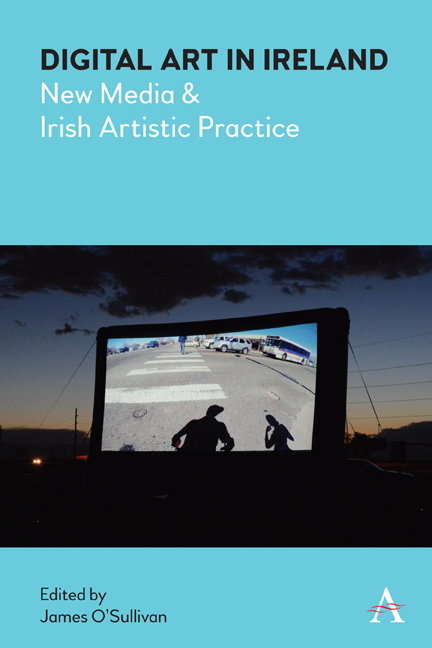
Digital art is fundamentally digital; it is art which cannot happen without some contemporary media technology, some element of computation, some bit-based machine. Digital art goes by a lot of names – net art, electronic art, computational art, multimedia art, new media art, screen-based art – but generally, this is a domain in which the objects of discussion rely absolutely on modern and contemporary electronics to achieve their artistic purpose.
This collection of essays explores digital art in Ireland, filling a major gap in the national media archaeology of Ireland by bringing together a collection of timely perspectives from scholars and practitioners engaged with screen-based expression. In no way is this book a true representative selection of forms and figures, but it is, hopefully, a small contribution to addressing what remains an intellectual void.
Wonderfully creative things are happening with computers, screens and machines right across the spectrum of artistic practice, but through disciplinary isolation – by focusing only on fine art, literature or film – we are blinding ourselves to contemporary media art as a wider cultural upheaval. The intimate connections being formed between the digital and the expressive, and how such production is mediated through national contexts, will only be fully revealed when considered through an interdisciplinary gaze. This book, comprising contributions from EL Putnam, Anne Karhio, Ken Keating, Conor McGarrigle, Kieran Nolan, Claire Fitch, Kirstie North and Chris Clarke, attempts to do just that, treating what it means for art to be both digital and Irish.
This book is an apologetic for maintaining the presumption of public benefit for the charitable category ‘advancement of religion’ in democratic countries within the English common law tradition. In response to growing academic and political pressure to reform charity law, the scholars in this volume analyse the implications of legislative and legal developments in Canada, the UK, Australia, New Zealand and South Africa. It is concerned with the place of religion – and religious institutions – in contemporary society. It represents a series of concerns about the proper role of the state in relation to the differing beliefs of citizens – some of which will quite rightly manifest in actions to benefit the wider society. This debate, then, naturally engages with broader issues related to secularism, civic engagement and liberal democratic freedoms.
Historically, we have presumed that religion is beneficial. Any suggestion that would either remove the advancement of religion, or advocate the removal of other benefits granted to religious institutions (such as tax exempt status), is predicated on the contrary assumption that religion provides no benefit, or if it does, it only benefits congregants on a Sunday morning (or other holy day). Further, our cultural moment, with its attention to diversity and equality, has put the charitable status of religious communities in jeopardy unless they conform to the normative moral commitments of secular elites in academia, media and the legal profession. This exposes a deeply flawed notion of religion, as discussed in this book. Religion is both communal and holistic in scope; as the research canvassed in this volume reveals, spiritual faith and good works are so closely intertwined in the theology, practice and lives of most religious communities that recognizing religion as charitable speaks to the reality of religion’s ongoing, positive influence in society.
Despite the great interest in and the availability of enormous literature about education in Japan, this book is a translation of the first work written in Japanese on the history of literacy in Japan. The authors are each accomplished scholars of Japanese educational history, and each provides solid empirical evidence and original analyses of literacy in their own particular specialty, from Heian aristocrats, to religious sects in the medieval period, to Christian believers in the sixteenth century, to a variety of farmers and merchants in early modern times.
The book is unique in the sense that literacy in Japan is analysed with a high degree of methodological sophistication backed by empirical evidence in the form of 'signatures' or personal marks on documents, on so many topics. The result is to show the often fallacious and easy generalizations made about literacy in Japan and to show that evidence exists to enable more robust empirical investigations to be undertaken. This book will make it possible for the Japanese case to be used more meaningfully worldwide and in comparative studies of literacy.
In 1975, after much resistance, Portugal became the last colonial power to relinquish their colonies on the African continent. The tardiness of Portuguese decolonization in Africa (Cabo Verde, Angola, Mozambique, Guinea Bissau, São Tomé and Príncipe) raises critical questions for the emergence of national literary and cultural production in the wake of national independence. Bringing together the works of poets, short story writers, and journalists, this book charts the emergence and evolution of the national literatures of Portugal’s former African colonies, from 1975 to the present. The aim of this book is to examine the ways in which writers contended with the process of decolonization, forging national, transnational, and diasporic identities through literature while grappling with the legacies and continuities of racial power structures, colonial systems of representation, and the struggles for political sovereignty and social justice. This book will be the first of its kind in English to include canonical, emerging, and previously untranslated authors of poetry and short-form fiction to a new public.
It will bring to light and to broader audiences the important artistic engagement of writers from five African nations that are largely neglected outside the field of Lusophone Studies – Angola, Cabo Verde, Guinea-Bissau, Mozambique, and São Tomé e Príncipe. The literary production emanating from these locales offers perspectives and novel forms of engagement against the forces and legacies of Empire in the nearly five decades of postcolonial independence. The collection will make available to new readerships, scholars, and students, canonical and emerging literary thought and works that are borne out of the persistent struggle against imperialism and its racial, gender, sexual, and socioeconomic tenets. In this regard, the collection will feature an array of literary voices, genres, and aesthetics including novels, poetry, science fiction, Afro-Futurism, and postcolonial feminism.
The diverse essays in this book reflect Jonathan Steinberg’s methodological pluralism and insatiable curiosity for historical questions which cross disciplinary and geographical boundaries. Animating students, colleagues, friends and wider audiences with his enthusiasm for 'thinking about the past' was his vocation, one that he pursued with unmatched enthusiasm. Through this collection of essays, the book hopes to convey something of the intellectual range, analytical purchase and moral purpose of his historical writing and teaching.
One feature of Steinberg’s inspiring and charismatic lectures was his unique ability to combine an analysis – always fresh, never pre-cooked – of big historical structures and trends with an acute awareness of the importance of individual personalities. Jonathan Steinberg also believed in contingency, the importance of chance, and was keen to reject any form of historical determinism. The third salient feature of his work was his sense of moral purpose. He understood history as a hermeneutic science and was appropriately cautious about the epistemological status of historical claims, but he nevertheless saw the correctness of historical arguments and the probity of historical claims to be moral as well as empirical questions. His ethical sensibilities, his openness to interdisciplinary work and the humane and nuanced understanding of human motivation equipped him to tackle some of the most difficult subjects of nineteenth- and twentieth-century European history.
As an ancient Indian poet-dramatist, K?lid?sa cannot be absorbed into the homogenizing tendencies of Hindu hagiography, as has often been attempted, especially in the period after independence. K?lid?sa is critiqued for a patriarchal and casteist outlook. These various readings have privileged personal theories and validated them by reading literary texts in certain ways. This book brings together scholars from both sides of the globe who offer possibilities for reviewing this text, not as an Oriental discovery or a cultural property, but as an ancient literary text that can be read in multiple philosophical contexts. Further, the translations of Abhijñ?na??kuntalam into South Asian languages like Urdu and Nepali, and a classical language like Persian, are also included for detailed study for understanding the impact of this text in the respective literary traditions of these languages, and to assess the actual cross-literary dialogue that this text made, without hyperboles and generalizations, given the fact that many of these translation happened just before and after independence when literary historiography and nation writing project went hand in hand in India.
This book aims to reclaim the mission, relevance and intellectual orientation of development studies – something that is increasingly challenged from different directions. Confronted by the status quoist enterprise of randomized control trials (RCTs) on the one hand and the radical endeavour to decolonize dominant knowledge systems (decoloniality) on the other, the study of development as an enduring societal ambition needs urgent revival.
The essays featured in this book build on the contributions of Ashwani Saith – an ardent critic of development orthodoxy and who at the same time is not ready to give up on the emancipatory potential of the development project. Written by leading scholars in the field, the essays touch upon many of the key questions of development studies centred around structural change, labour and poverty and inequality. They also highlight the continued necessity to ground the study of development processes in a critical political economy approach while interrogating the quick-fixes touted by the mainstream discourse on development.
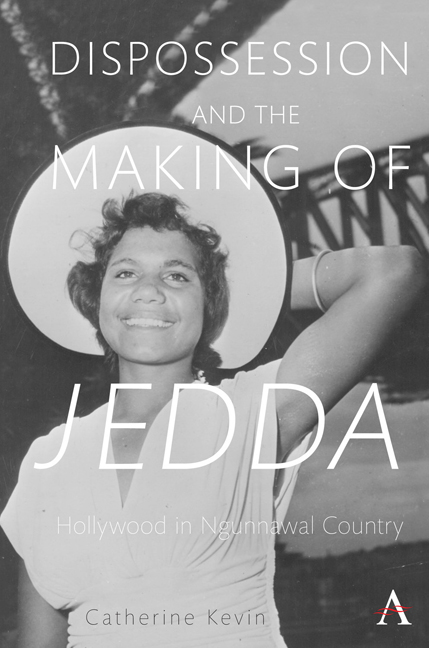
In 1955, 'Jedda' was released in Australian cinemas and the international film world, starring Indigenous actors Rosalie Kunoth and Robert Tudawali. That year, Eric Bell watched the film in the Liberty Cinema in Yass. Twelve years later he was dismayed to read a newly erected plaque in the main street of the Yass Valley village of Bowning. It plainly stated that the Ngunnawal people, on whose country Bowning stood, had been wiped out by an epidemic of influenza. The local Shire Council was responsible for the plaque; they also employed Bell’s father. The Bells were Ngunnawal people.
The central paradox of this book is the enthusiasm of a pastoral community, made wealthy by the occupation of Ngunnawal land, for a film that addressed directly the continuing legacy of settler-colonialism, a legacy that was playing out in their own relationships with the local Ngunnawal people at the time of their investment in the film. While the local council and state government agencies collaborated to minimize the visibility of Indigenous peoples, and the memory of the colonial violence at the heart of European prosperity, a number of wealthy and high-profile members of this pastoral community actively sought involvement in a film that would bring into focus the aftermath of colonial violence, the visibility of its survivors and the tensions inherent in policies of assimilation and segregation that had characterized the treatment of Ngunnawal people in their lifetimes.
Based on oral histories, documentary evidence, images and film, this book explores the themes of colonial nostalgia, national memory and family history. The book newly locates the story of the genesis of ‘Jedda’ and, in turn, ‘Jedda’ becomes a cultural context and point of reference for the history of race relations it tells.