Refine listing
Actions for selected content:
73852 results in Boydell & Brewer

The Southern French Nobility and the Albigensian Crusade
-
- Published by:
- Boydell & Brewer
- Published online:
- 23 March 2023
- Print publication:
- 01 July 2005

Anglo-Norman Studies XI
- Proceedings of the Battle Conference 1988
-
- Published by:
- Boydell & Brewer
- Published online:
- 23 March 2023
- Print publication:
- 07 September 1989
Arthurian Literature XXIII
-
- Published by:
- Boydell & Brewer
- Published online:
- 23 March 2023
- Print publication:
- 19 October 2006
Nietzsche's Anthropic Circle
- Man, Science, and Myth
-
- Published by:
- Boydell & Brewer
- Published online:
- 23 March 2023
- Print publication:
- 15 July 2005
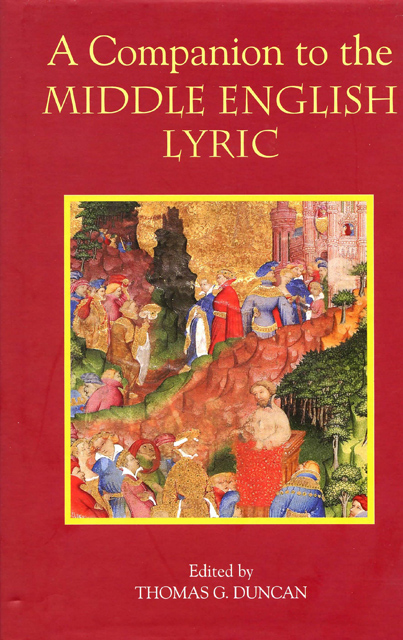
A Companion to the Middle English Lyric
-
- Published by:
- Boydell & Brewer
- Published online:
- 23 March 2023
- Print publication:
- 27 October 2005

The Battle of Yorktown, 1781
- A Reassessment
-
- Published by:
- Boydell & Brewer
- Published online:
- 23 March 2023
- Print publication:
- 15 July 2005

Lords and Communities in Early Medieval East Anglia
-
- Published by:
- Boydell & Brewer
- Published online:
- 23 March 2023
- Print publication:
- 06 October 2005

The Battle for Palestine 1917
-
- Published by:
- Boydell & Brewer
- Published online:
- 23 March 2023
- Print publication:
- 21 October 2006

Anglo-Norman Studies V
- Proceedings of the Battle Conference 1982
-
- Published by:
- Boydell & Brewer
- Published online:
- 23 March 2023
- Print publication:
- 16 June 1983

Gender and Petty Crime in Late Medieval England
- The Local Courts in Kent, 1460-1560
-
- Published by:
- Boydell & Brewer
- Published online:
- 23 March 2023
- Print publication:
- 20 July 2006

Anglo-Norman Studies VI
- Proceedings of the battle Conference 1983
-
- Published by:
- Boydell & Brewer
- Published online:
- 23 March 2023
- Print publication:
- 25 August 1984

Parzival
- With Titurel and the Love Lyrics
-
- Published by:
- Boydell & Brewer
- Published online:
- 23 March 2023
- Print publication:
- 01 October 2002
The Haskins Society Journal
- 2005. Studies in Medieval History
-
- Published by:
- Boydell & Brewer
- Published online:
- 23 March 2023
- Print publication:
- 17 August 2006

The Haskins Society Journal
- 2004. Studies in Medieval History
-
- Published by:
- Boydell & Brewer
- Published online:
- 23 March 2023
- Print publication:
- 20 April 2006

Hunting Law and Ritual in Medieval English Literature
-
- Published by:
- Boydell & Brewer
- Published online:
- 23 March 2023
- Print publication:
- 15 June 2006
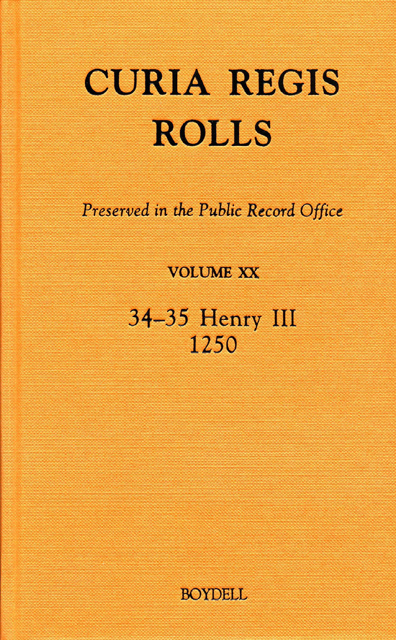
Curia Regis Rolls preserved in the Public Record Office
- 34-35 Henry III [1250]
-
- Published by:
- Boydell & Brewer
- Published online:
- 23 March 2023
- Print publication:
- 17 August 2006

The Great War, Memory and Ritual
- Commemoration in the City and East London, 1916-1939
-
- Published by:
- Boydell & Brewer
- Published online:
- 22 March 2023
- Print publication:
- 01 November 2001

Kant's Legacy
- Essays in Honor of Lewis White Beck
-
- Published by:
- Boydell & Brewer
- Published online:
- 22 March 2023
- Print publication:
- 16 April 2001

Writers in Politics
- A Re-engagement with Issues of Literature and Society
-
- Published by:
- Boydell & Brewer
- Published online:
- 22 March 2023
- Print publication:
- 01 January 1997

The Royal Doctors, 1485-1714
- Medical Personnel at the Tudor and Stuart Courts
-
- Published by:
- Boydell & Brewer
- Published online:
- 22 March 2023
- Print publication:
- 15 February 2001
