To save content items to your account,
please confirm that you agree to abide by our usage policies.
If this is the first time you use this feature, you will be asked to authorise Cambridge Core to connect with your account.
Find out more about saving content to .
To save content items to your Kindle, first ensure no-reply@cambridge.org
is added to your Approved Personal Document E-mail List under your Personal Document Settings
on the Manage Your Content and Devices page of your Amazon account. Then enter the ‘name’ part
of your Kindle email address below.
Find out more about saving to your Kindle.
Note you can select to save to either the @free.kindle.com or @kindle.com variations.
‘@free.kindle.com’ emails are free but can only be saved to your device when it is connected to wi-fi.
‘@kindle.com’ emails can be delivered even when you are not connected to wi-fi, but note that service fees apply.
‘Can you remember a time so full of death as this present one?’
Sigmund Freud
In 1918, as four years of war came to an end, there arrived another unexpected threat: the so-called ‘Spanish flu’ pandemic. Between January 1918–March 1920 there were three waves of this deadly strain of influenza, with the most devastating peak in October 1918. At this time, Katherine Mansfield was living in Hampstead, in close proximity to an epidemic which flashed through London life and affected many of her contemporaries. Although Mansfield only tangentially engaged with the pandemic in her letters and diaries, I contend that she would have been aware of the ripple effect of Spanish flu, and that this universal threat imbues her post-pandemic writing. I will examine her story ‘Revelations’ (1920) through a pandemic lens, revealing how her writing is inflected with anxiety around contagion and loss. I also suggest that Mansfield herself may have succumbed to Spanish flu, an illness which could have played a part in the worsening of her tuberculosis.
Spanish flu became the war's shadow, a terrifying ‘dark angel’, during which, as Elizabeth Outka asserts in Viral Modernism: ‘the domestic space became as deadly as the front lines’. The result of this double trauma is that the pandemic has been largely overlooked in both the political and social history of our times. Critical consensus underlines this startling absence: Susan Sontag draws attention to ‘the near-total historical amnesia about the influenza pandemic’, Laura Spinney is astonished by ‘our collective forgetting of the greatest massacre of the 20th century’, while Mark Honigsbaum notes how it is a struggle to find ‘many novels, songs or works of art from the period that refer to the 1918 pandemic’. Although this silence around Spanish flu is largely reflected in its absence in cultural works, Spinney suggests that the influenza outbreak ‘was probably responsible, at least in part, for the obsession of twentieth century artists with all the myriad ways in which the human body can fail’. The pandemic's effects on culture may not be overt, but that doesn't mean its traces can't be detected – there are ways in which the pandemic may have silently contributed to the post-war cultural fascination with death, loss and mourning.
The last chapter examined the phenomenon of prophetic speech in Paul’s letters. Prophetic speech was not always spontaneous but sometimes drew on oracles that had been delivered previously and stored up in tradition or in writing. When Paul explicitly quotes speech from a divine being, his largest source by far is the various texts that make up the Jewish sacred writings, which he says preserve the “oracles of God” (Rom 3:2; cf. 11:4). Written oracle collections were a common feature of the ancient world, where they were generally understood to be the written records of oracles previously uttered under inspiration, either by the priest at an official oracle sanctuary, such as Delphi or Dodona, or by independent inspired figures of the legendary past, such as Bacis, Musaeus, or the Sibyl.This chapter further examines Paul’s use of sacred texts both as a part of his own divinatory repertoire, and as part of the divinatory use of texts in the ancient world.
Scholars have generally resisted seeing any analogy between Paul’s use of scripture and such oracle collections of the ancient world, more often viewing “scripture” as a uniquely Jewish category, with Paul as a uniquely Christian interpreter of it.Recently, however, those who have applied the term “divination” to Paul have made “textual divination” a matter of first importance in comparing Paul with his environment. Wendt and Eyl have both recontex-tualised Paul’s textual practices within the divinatory use of texts such as Homer, Orphic literature, or the Chaldean Oracles.Eyl notes that divinatory interpretations of texts exist on a sliding scale, with bibliomancy on one end: “the practice of opening (or unrolling) a text, pointing to a random passage, and imagining that it delivers a prophetic message to or about an inquirer.”On the other end of the scale are interpretations that employ “a greater cognitive investment through intellectual concepts such as metaphor, allegory, theories about the cosmos and gods, complex textual interpretations, and even more complex reinterpretations.”Both Eyl and Wendt draw on the work of Struck to posit allegory, understood in a broad sense, as the basic hermeneutical stance underwriting all such divinatory practice in Paul and his wider context.The basic presupposition is that such texts are repositories of hidden truth, possessing deeper meaning than what is apparent on the surface.
In her 1998 ground-breaking article, Christine Darrohn persuasively argued for Katherine Mansfield's ‘The Garden Party’ (1921) to be read as a profoundly war-conscious story, among other things ‘haunted […] by the dead young soldiers’, including her brother Leslie who died in October 1915. Many other scholars have since demonstrated that this is not the only one of Mansfield's seemingly non-war stories which touch upon the ramifications of the four years of carnage that so tragically impacted her generation. Indeed, Volume 6 of Katherine Mansfield Studies was entirely dedicated to the First World War, and Alice Kelly's recent Commemorative Modernisms: Women Writers, Death and the First World War, explores in many different ways how inextricably, even if obliquely, war is woven into the fabric of a number of Mansfield's stories, including those that do not make any overt mention of it and whose temporal setting pre-dates it. Furthermore, analysing Mansfield's personal writings and correspondence, Kelly and Lawrence Mitchell respectively have disproved some past claims that Mansfield and Murry were ‘oblivious to the cataclysm’ of the war and saw it only as a personal inconvenience. Kelly documents how, from its very beginning, war permeated Mansfield's personal writing, firstly eliciting ‘creative joy in new linguistic possibilities offered by [it]’, and later becoming ‘a counter-trope to her own battle with illness, providing a framework for her depiction of her illness and a less immediate means of discussing the possibility of death’. This essay enters the discussion by examining some aspects of ‘Prelude’ (1917) and ‘At the Bay’ (1921) and proposing that both stories be approached in a similar way to Darrohn's reading of ‘The Garden Party’. I shall focus mostly on one of the most intriguing yet usually neglected characters appearing in both stories, the dog Snooker, recognising his presentation as a rather unconventional yet deeply genuine and moving tribute to Mansfield's brother Leslie and his fellow soldiers. The analysis of the presentation of Snooker will demonstrate how its complex symbolism links it to Mansfield's most acclaimed war story ‘The Fly’ (1922).
What is hidden from mortals we should try to find out from the gods by divination for to him that is in their grace the gods grant a sign. (Xenophon, Memorabilia 1.1.9)
Throughout his letters, Paul claims to convey the words and will of his God, and of that God’s Messiah, Jesus. This observation is painfully obvious, but has not generally received the attention it deserves in Pauline scholarship. For those studying his letters from a confessional perspective such an observation may be taken for granted or treated at the level of the general inspiration of scripture. For many lay readers of Paul the passages that need more explanation are those in which he claims not to be speaking directly for God (such as 1 Cor 7:12). For critical scholarship, the truth value of such claims is appropriately bracketed, and attention instead focuses on the development of his ideas within his cultural and religious milieu. Within this cultural and religious milieu, though, we may still ask the question: if Paul claims to convey the words and will of a deity, how does he believe he has received such knowledge? His letters suggest a variety of means through which he discerns the divine will: he has visions and revelations of the risen Jesus, he receives prophetic words and wisdom transmitted by holy pneuma, he interprets Jewish sacred texts and, more generally, he reads signs of divine activity in the human and natural world around him.
The aim of this study is twofold: to provide a category through which these various methods of hearing from the divine can be conceptualised in Paul’s first-century context and, second, to provide a reading of Paul’s letters that attends to how these various methods function in relation to each other in Paul’s broader worldview. Many of these aspects of Paul’s letters have been extensively studied in their own right, but Pauline scholarship has so far lacked an adequate analytical category through which to account for all of these methods of divine communication in Paul’s historical context. The most common categories that might accomplish such a task are “revelation” or “prophecy,” but both of these are limited in the evidence they allow for consideration and in the way they relate Paul to his historical and philosophical context.
On 31 December 1922, Katherine Mansfield wrote what would turn out to be her last letter to her father, Harold Beauchamp, describing her life at the Institute for the Harmonious Development of Man at Fontainebleau-Avon, France:
[T]he people here have had built a little gallery in the cowshed with a very comfortable divan and cushions. And I lie there for several hours each day to inhale the smell of the cows. It is supposed to be a sovereign remedy for the lungs […] the air is wonderfully light and sweet to breathe, and I enjoy the experience. I feel inclined to write a book called ‘The Cowiness of the Cow’ as a result of observing them at such close quarters.
As is well known and has become part of her legend, Mansfield had chosen to enter this Institute after trying, without success, numerous medical treatments for her tuberculosis. It was a move ridiculed by several of her contemporaries who thought she was misguidedly turning her back on (Western) medicine in favour of an (Eastern) charlatan, the Armenian-Greek spiritual teacher and philosopher George Gurdjieff. Wyndham Lewis, T. S. Eliot and D. H. Lawrence, for example, respectively judged Mansfield to be in the grip of a ‘psychic shark’ in a ‘retreat for maniacs’, a ‘rotten, false, self-conscious place of people playing a sickly stunt’. Even Mansfield's husband, John Middleton Murry, ‘noisily regretted’ her being taken in by ‘the spiritual quackery of Gurdjieff’. It would be easy to read Mansfield's words to her father, with their reference to the smell of cows as having healing properties, as evidence of her wrong-headed decision. In this vein, her claim that she wanted to write a book called ‘The Cowiness of the Cow’ could be dismissed either as a joke or just a silly idea.
When read in full, however, there is little in Mansfield's letter to support the notion that she had lost her senses and given up on her health, while there are also hints that her projected bovine book was more than a passing fancy. She opens with sober commentary on her ‘very tame semi-existence’ at the Institute, with emphasis not on dramatic spiritual revelation but on everyday bodily (dis)comfort: ‘My heart’, she writes, ‘under this new treatment, which is one of graduated efforts and exercise, feels decidedly stronger, and my lungs in consequence feel quieter too.
The afterlife according to Didi-Huberman is the memory that is ingrained in an image. In order to understand an image, one must take into account its specific historicity, which is conveyed through the paths and detours of time. Didi-Huberman shares this conviction with Aby Warburg, who was interested in the discontinuities and overdeterminations of history throughout his work and tried to consider the ‘powers of the image’ along the deposited material of an unconscious memory (Warburg, 1998: 172). Even more firmly than Warburg, Didi-Huberman argues for a method of historical reconstruction that deals with the presence of the past under the sign of a non-linear temporality. The afterlife in particular cannot be understood as latently persisting in concrete images, motifs and paradigms, as if it could outlast the times like a trace (Derrida, 1982). On the contrary, Didi-Huberman’s concept of afterlife emphasises a form of time that disorients past, present and future, opening them towards anachronism. Thus, the afterlife can only be adequately grasped if ‘temporal periods are no longer fashioned according to biomorphic stages, but, instead, are expressed by strata, hybrid blocks, rhizomes, specific complexities, by returns that are often unexpected and goals that are always thwarted’ (SI, 12).
The afterlife refers to a ‘psychological time’ (SI, 178) that always subverts the notion of historical time. This is one of the key theses of L’Image survivante (2002b; SI), in which Didi-Huberman examines the affective aspects of afterlife. Hence, Didi-Huberman uses the Freudian notion of the symptom (see Freud, Sigmund; psychoanalysis) as a model to not only mark an ‘entangled’ temporality, but also to address the plasticity of a body ‘agitated by conflicts, by contradictory movements: a body agitated by the eddies of time. It is a body from which there suddenly springs forth a suppressed image’ (SI, 198). The symptom thus possesses an extreme mobility: it forms configurations that are subject to repression, that is, remain latent, and yet retain a capacity to act. In this dialectic between fixation and distortion, disappearance and emergence, the entire dynamic of the afterlife is implied. Just like the symptom, the afterlife is to be endlessly interpreted (BI) and defies symbolic translation, as Didi-Huberman argued in Devant l’image (1990a; CI).
I began this study by showing how previous scholarly categories have not been able to present a full picture of Paul’s access to divine knowledge which situates him convincingly in his historical context. While Paul’s letters evince diverse means of access to divine communication, categories such as “prophecy” or “revelation” account for only portions of the evidence, and neither of those categories has been able to situate Paul’s full range of divinatory methods in the first-century culture of a Jew living in the Hellenistic Roman Empire. Under the rubric of “divination” I have analysed Paul’s various means of divine communication under the subheadings of “visions,” “speech,” “texts,” and “signs,” elucidating their role in Paul’s letters with reference to the contemporary divinatory practices of the Graeco-Roman world. I have also considered how Paul presents the mechanics of divination in conversation with contemporary philosophical reflections on the same topic.
Rather than summarise each chapter in turn, I organise my conclusions below thematically and synthetically, drawing together various strands that have emerged from the cumulative analysis of this study. Part one functions as something of a summary of Chapters 2 to 5 and focuses on the different types of knowledge each divinatory method provides. Part two considers the implications of this for how to situate the question of “revelation” in Paul’s historical context. Parts three and four take up again the question of the mechanics of divination from Chapter 1, presenting some more nuanced conclusions about divination in relation to Paul’s anthropology, cosmology, and theology that the ensuing chapters have made possible.
Methods of Divination in Paul
As ancient people turned to the gods for advice and information on a broad range of matters, so, too, Paul’s methods of divination uncover a large range of information: from smaller scale signs and revelations that direct various aspects of everyday life, to expansive insights about cosmology and eschatology. Within this range certain methods and certain types of signs lend themselves most readily to certain types of information.
Non-verbal signs are perhaps the most limited in scope as they generally only convey divine approval or disapproval.
The basic unit of divination is the sign, “something that represents something else,” which is then “taken as the basis for a process of inference.”This is most obvious for so-called artificial means of divination, in which the flight of a bird or the shape of a liver represents success in battle or something similar, but it also applies to inspired visions and prophecy. Anne Marie Kitz breaks down the process of divination in general into three defining characteristics: first, the divine manipulation of earthly material (ranging from stones used for lot-casting to animals to human mediums), second, the sign (the way the lots fall, the particular flight of the birds, the vision seen or the words uttered in prophecy), and third, the interpretation of the sign.This is a useful model with which to see the structural similarities across different methods of divination and highlights how, in all methods, there remains a sign that needs to be interpreted. This is no less true for visions or prophecy than it is for the interpretation of texts.
In each of the preceding chapters, I have shown how these various forms of divination either interact with signs in the external world, or can themselves function as signs that need interpreting. In this chapter, I turn more focused attention to signs and omens in Paul’s letters, those things in the world from which he draws inferences about divine activity and disposition. The first half of the chapter will survey the various ways signs could be interpreted in the ancient world and how Paul’s appeals to signs and omens fit within this context. The second half will be devoted to analysing the role of divine signs in Rom 1–3. These opening chapters of Romans show a sustained engagement with the question of how certain things have been revealed, and also contain what many scholars have taken to be Paul’s central and defining comments on the topic of “revelation.”
Interpreting Signs and Omens
Varieties of Signs and Interpretations
A great variety of things could be read as signs, and different signs could be interpreted with various levels of sophistication. On the one hand, certain objects acquired, through convention, specific semiotic value, such as the flight of birds, or the liver or entrails of an animal.
During the COVID-19 pandemic, sales surged of The Enchanted April, the popular 1922 novel about English tourists in Italy. So one learns from The Countess from Kirribilli, the vibrant new biography of The Enchanted April's author, Elizabeth von Arnim, Katherine Mansfield's cousin and friend. Why this novel during the pandemic? Was it because it is a book about feeling housebound and wanting to travel, or because it is a book about being ill? Because it is both, and thus apt for these times. How are its characters ill? They grieve losses, they suffer depression, they feel frustrated, they are bored. These are common illnesses, and modernist literature more often than not offers readers companionship in such states, and even guidance. It may not hurt to remind ourselves that suffering is neither a virtue nor a necessity. The books under review provide many angles on how to alleviate it: on various sorts of recuperation in Mansfield's life, work and orbit.
Elizabeth von Arnim has found the right biographer in Joyce Morgan, whose lively account of Elizabeth's peripatetic, energetic life is extremely good company. (I will follow Morgan's lead in referring to the author by her chosen first name; she was born Mary Beauchamp in Sydney, and chose for her pen name Elizabeth von Arnim, the aristocratic surname a product of her marriage to Prussian landed gentry and of her life in Pomerania.) Morgan's biography is true to her subject, who was remembered as ‘enchanting company’ by the writer Frank Swinnerton; ‘What a devil she was, but what good company!’ exclaimed the novelist Gladys B. Stern in a letter to fellow author Hugh Walpole after Elizabeth's death (p. 304). Morgan too has found her so; as she writes in her ‘Acknowledgements’, she spent two months immersed in the Huntington Library's archive of Elizabeth's papers, and found there ‘the feeling of intimacy’ as she read handwriting that became ‘as familiar as the sound of a friend's voice’ (p. 314). Morgan is a virtuoso when it comes to bringing that feeling of intimacy and friendship into her own writing of Elizabeth's story: she brings Elizabeth to life on the page, charming the reader throughout with a sharp, selective eye for detail and anecdote that refrains from overwhelming us with minutiae, biography's biggest drawback as a genre.
Born in colonial Wellington in 1888, Katherine Mansfield's first encounter with disease came early, when her younger sister Gwen died of cholera in the early days of 1891. The city's poor sanitation contributed to the proliferation of infectious disease that catalysed the family's move from the city centre to more rural Karori. During her adult life in Europe, Mansfield experienced miscarriage, peritonitis, rheumatism and tuberculosis, and would take up a peripatetic existence in search of more favourable climates. The First World War of 1914–18 and the influenza pandemic of 1918–20 informed the zeitgeist of her times. This volume of essays explores the extent to which this resonant context of disease and death shaped Mansfield's literary output and her modes of thinking.
Arthur Frank has argued that ‘[s]eriously ill people […] need to become storytellers’. Illness both stimulated and limited Mansfield's creativity – she would write to fund her medical care while simultaneously limited by her poor health, writing in 1922: ‘The real point is I shall have to make as much money as I can on my next book – my path is so dotted with doctors.’ As explored in this volume, her personal writings document the increasing influence of tubercular literary predecessors such as Anton Chekhov and John Keats, while her stories function compellingly as dialogue with loved ones who have been lost – her brother, her mother, her grandmother – and endow them with life in the process.
Although D. H. Lawrence wrote unsympathetically to Mansfield: ‘you revolt me stewing in your consumption’, her own attitude towards her illness was generally positive and practical, and she sought to mitigate against its deleterious effects through various strategies. She submitted to a variety of experimental treatments such as radiation, and wrote to her doctor, Victor Sorapure, about methods she had developed for symptom management. Her notebooks also demonstrate that, rather than shying away from her disease and its associations, she had a keen interest in the body, and what might be termed a scientific imagination. Writing of the experience of illness, Mansfield recorded in 1918: ‘Tchekhov has known just EXACTLY this […].
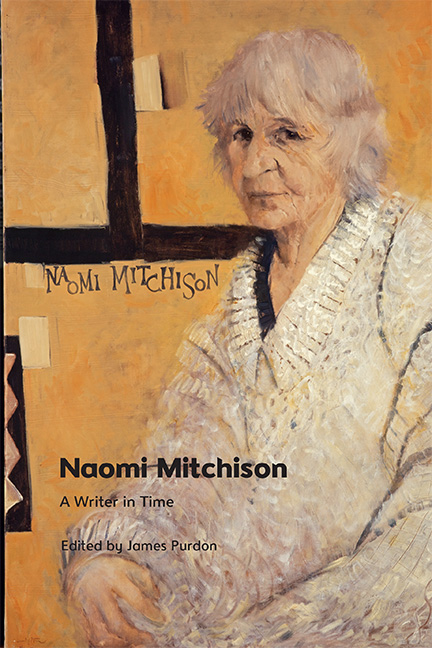
As a novelist, feminist, socialist, activist, travel-writer, and diarist, Naomi Mitchison is one of Scotland's most important yet understudied twentieth century writers. This volume showcases the first collection of scholarly essays addressing her diverse literary work, including nine critical essays by scholars from the UK and the USA dealing with aspects such as spirituality, socialism, eugenics, war, the short story, science, feminism, mothering, and decolonisation. The volume also features 'Europe': a previously unknown story by Mitchison, here published for the first time. Aimed at students, scholars, and teachers of literature from undergraduate level upwards, it is an essential resource for anyone with an interest in Mitchison's life and literary legacy.
The volume examines several screen adaptations of works written by mid- and late nineteenth-century authors, who constitute the hallmark of the Russian cultural brand, finding favour with audiences in Russia and in the West. It considers reimagining of Goncharov, Turgenev, Dostoevsky, Chekhov and Tolstoy in different contexts.
The book examines various types of adaptation, including transposition, commentary, and analogy. It focuses on established Russian and western filmmakers' dialogue with the classics taking place in the last sixty years. The book shows how the ideological and/or philosophical concerns of the day serve as a lens for a specific reading of the novel, the story, or the play. By foregrounding a synergetic literary-cinematic space, the book demonstrates how the director becomes a creative mediator between his audiences and the author, taking account of contemporary epistemological imperatives and the particularities of the reception by viewers.
As we celebrate the centennials of F. Scott Fitzgerald's works, this volume offers a timely new approach to the short stories of the Poet Laureate of the Jazz Age. Foregrounding reception, this volume is the first to bring together and reprint all of the magazine texts of the eighteen stories Fitzgerald published in American magazines between 1921 and 1924 - replicating, as closely as possible, the version of Fitzgerald's texts that were available to American audiences. Drawing attention to the nine different magazines where his stories appeared, this collection emphasises the size, scope and power of the American magazine market as the Jazz Age began, and situates Fitzgerald's works within the contexts where they were read by his largest audiences and where his reputation as a social historian was created, appreciated and solidified.