To save content items to your account,
please confirm that you agree to abide by our usage policies.
If this is the first time you use this feature, you will be asked to authorise Cambridge Core to connect with your account.
Find out more about saving content to .
To save content items to your Kindle, first ensure no-reply@cambridge.org
is added to your Approved Personal Document E-mail List under your Personal Document Settings
on the Manage Your Content and Devices page of your Amazon account. Then enter the ‘name’ part
of your Kindle email address below.
Find out more about saving to your Kindle.
Note you can select to save to either the @free.kindle.com or @kindle.com variations.
‘@free.kindle.com’ emails are free but can only be saved to your device when it is connected to wi-fi.
‘@kindle.com’ emails can be delivered even when you are not connected to wi-fi, but note that service fees apply.
… even in the long-industrialized European countries, the story has not been one of automatic growth and progress. Thus … in the Netherlands … there too the situation for women academics has deteriorated over the past two decades. Where in 1970 there were 2.7 per cent women professors, by 1980 this was down to 2.2 per cent and by 1988 to 2.1 per cent.
(Rose 1994, p. 103)
In April 2000, the European Commission (EC) organised a conference in Brussels, titled ‘Making Change Happen’. The aim was to discuss the EC's report titled Science Policies in the European Union – Promoting Excellence through Mainstreaming Gender Equality (EC, 2000) and to determine the follow-up strategies for the report's findings. With regard to the Netherlands, the report made it clear that in terms of a European (and global) comparative perspective, Dutch women in the field of science were not faring well. Although the report presented some good news about practices in the Netherlands, this was overshadowed by statistical negatives – one table in the European Commission report showed that the Netherlands came in last out of 24 nations with the lowest percentages of women in the rank of professor. Another table confirmed that the Netherlands had ‘the leakiest pipeline’ of all (EC, 2000, Table 2.1, p. 10 and Table 2.4 (the scissors diagram), p. 13; for the ‘leaky pipeline’, see p. 12).
One fundamental way in which gender is expressed in any society is through technology. Technical skills and domains of expertise are divided between and within the sexes, shaping masculinities and femininities – maybe the iconic womanly skill is basket making, whereas men should excel at hunting (MacKenzie, 1991); or boys must learn to clean their fathers' tools to get a feel for grease before they are taught to use them (Mellström, 2004); or poor women raise silkworms and sell the cocoons to rich households where the mistress organises the tasks of reeling, spinning, and weaving among her servants (Bray, 1997); or boys huddle around the computer screen, practicing hacking skills, while girls develop new communication codes using emoticons (Lægran, 2003b; Miller, 2004). In the contemporary world, or at any rate in the Western nations which pioneered industrialisation and have thus been able to dominate worldwide production of material and intellectual goods, services, and desires, for so long, technology is firmly coded male. Men are viewed as having a natural affinity with technology, whereas women supposedly fear or dislike it. Men actively engage with machines – making, using, tinkering with, and loving them. Women may have to use machines, in the workplace or in the home, but they neither love nor seek to understand them – they are considered passive beneficiaries of the inventive flame. The modernist association of technology with masculinity translates into everyday experiences of gender, historical narratives, employment practices, education, the design of new technologies, and the distribution of power across a global society in which technology is seen as the driving force of progress.
This chapter proposes to discuss the relationship between culture, gender, and science. It brings together empirical findings, associated debates, and research to offer an account of the relationship giving examples from various parts of the world. With the help of a review of extant literature on women's access and participation in science, the chapter tries to identify certain similarities and differences across cultures. Culture is an elusive concept. Culture as a way of life gives meaning to things we do, including science, and pervades all social institutions and systems of meanings. Inextricably bound with these societal systems is gender. Out of the social structure and culture, gender and its boundaries are fabricated, which always involves difference and inequality. The recent integrative approach treats gender as a socially constructed stratification system and does not stress the role of biological compulsions like the earlier ones. The feminist perspectives are of special help in changing how we understand the role of social interactions with biological sex differences in shaping feminine and masculine characteristics. Science too is one of the social and cultural realities. Science is a social construction and cultures differ in terms of social processes – thus social processes of science are assumed to differ across cultures. According to the simple syllogistic rule, the consideration of two premises – science is a social construction and cultures differ in terms of social processes – leads to the conclusion that social processes of science differ across cultures.
This chapter focuses on women in academic science and engineering and the education paths that lead to such careers in France. It situates the milestones in women's education within the context of historic-political struggles surrounding sexual equality in France. It also analyses women's place in scientific public employment using the recent data relating to universities and research institutes. The chapter examines the unique French dual university-Grande Ecole (elite higher education school distinct from university) system and explains it with a focus on the failure of co-education in the Ecoles Normales Supérieures (elite higher education schools for training teachers and researchers). The final section describes recent government actions to improve the situation for French women in science.
Historical background
Public education for women in France developed in the nineteenth and twentieth centuries (Montreynaud 1992–2000, Préfecture d'Ile-de-France 1995). The lycées (secondary public schools) created by Napoléon in 1808 were closed to women. Primary schools for girls were first established in 1836, and the first women's école normale (school to educate primary school teachers) was opened in 1838. Girls' education was not compulsory at that time and their curriculum was not comparable to that of boys. The first woman to complete her baccalauréat (examination ending secondary school and giving access to university) was Julie Daubié in 1861. She prepared herself for this exam and was allowed to sit for it only after Empress Eugenia intervened.
Physical topography and climatic conditions have always exerted an abiding influence on the ebb and flow of human civilisation. Arguably, the nature and quantum of influence would vary in different regions. It has been suggested that the ‘human living environments span a wider range of climatic variations in South Asia than anywhere else in the world at these latitudes’ and it would be worthwhile to examine the case of Assam.
The territory of Assam lies between latitudes 28'18° and 24° N and longitudes 89°46' and 97°4' E. The region has been described as being,
hemmed in between the Eastern Himalayas, southern Tibet, China, Burma and Nepal, the hills and valleys of the Brahmaputra, occupy a somewhat secluded and inaccessible portion of Asia … the upper central valley throws out on either side into the adjoining mountains hundreds of rugged glens… Then rounding the rocky promontory of the Garo hills, the valley turns at a right angle sharply southern to the delta of Bengal, extending a branch eastwards to the Cachar hills.
‘Early in the thirteenth century an event occurred at the eastern extremity of the valley which was destined to change the whole course of Assam history. This was the invasion of the Ahoms, a Shan tribe from the ancient kingdom of Mungmau or Pong, which was situated in the upper portion of the Irawaddy valley.’ The credit for the establishment of the Ahom kingdom in Assam is assigned to Sukapha, who was a prince of the Shan state of Maulung in Upper Burma.
The Ahoms were a people with a long heritage of river valley habitation. With it came the knowledge of wet paddy cultivation and the finer nuances of reclaiming swampy land for agriculture and effective methods of flood control and irrigation. There is no disputing the fact that the extensive practise of wet rice cultivation provided the economic foundation to the fledgling Ahom state. But at the same time it needs mention that in addition to agriculture, it was the knowledge and technology used in the non-agrarian sectors that gave the state its distinct characteristics. Two areas that are considered reflective of the science and technological know how of the Ahoms were in the areas of warfare and civil constructions. Thus, it is surmised that in order to gain a comprehensive picture about the developments in the Ahom state, it is essential to have a detailed look at some of their accomplishments in the fields of military technology and civil constructions.
Two small illustrations would help a casual observer gain a broad perspective of the achievements of the Ahoms. First is the fact that the kingdom endured as long as it did, for more than 600 years. Surely, this durability was no accident in history and was undoubtedly based not only on economic solvency but also effective organisational structures in managing society and state. This, in turn, would require coercive power, not only to maintain internal order but also to meet threats of external aggression.
Economies need the talent of their entire population, male and female, to create a leading edge workforce …
Asia Pacific Economic Cooperation (APEC) 1998: p. 3
Fifteen years after the ushering in of democracy in 1994, South Africa faces critical challenges for building a future economy and society which will sustain and develop its people. The decline of mining and resource-based industries over the past two decades, the challenges of global competitiveness for the manufacturing and services sectors, high unemployment and the need to address the causes of poverty have created increased demand for innovation in the private and public sectors. The increased global demand for science and technology inputs to key industries such as automotive manufacturing and pharmaceuticals, emerging sectors such as biodiversity, advanced materials, and ‘green’ industries, as well as social sciences and technology inputs to poverty reduction has created enormous and challenging opportunity for the South African research community. While increased levels of productive scientific activity can contribute to growth and development, this economic relationship requires a continuously growing scientific population, capable of creating and sustaining levels of innovation that will contribute to positive GDP per capita growth year after year. Furthermore, public policy must not simply encourage an increase in the number of women and men in the scientific population, but must aim to put the talent for scientific and technological innovation at the service of the poor.
The contention that empire building is more about consolidation of power rather than the mere expansion of territorial frontiers is exemplified in the case of the Ahoms. It is probably true that at no point of their history did they display a singular obsession with frontier expansion without commensurate attempts at consolidation and proper administration. Normally, all areas under their control were placed under a system that exercised a modicum of administrative control and uniformity that extended to the remotest regions of the kingdom. But, at the same time, incorporation of newer regions also brought with it the prospect of intercourse with different cultures and technology. It is to the credit of the Ahoms that they kept themselves open to new ideas and technology. The resilience and strength of the Ahom kingdom can be explained in terms of its ability to incorporate new ideas and technology that it came across. In addition, there were also occasions when the knowledge base of the kingdom was sought to be expanded by inviting experts from different fields. Interestingly, these specialists were drawn from different parts of the subcontinent, be it Kanauj, Bengal or Burma. In the course of time, they were assimilated into the Assamese fold and their knowledge became integral to the Ahom kingdom! In this regard, the sixteenth century probably marks a distinct stage in the evolution of the Ahom state. It was during this time that the Ahom state, after gradual consolidation, was beginning to expand and incorporate newer areas within its frontiers.
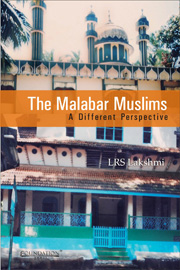
The Muslims of Kerala, primarily in the northern region of the state called Malabar, are referred to as Mappillas. This book is a study of the social and institutional changes of the Malabar Muslims during the colonial period. It presents the Mappilla community in a wider Indian context and analyses its social, economic, religious, theological, political and educational aspects in detail. Particular emphasis has been laid on their women who are socially more powerful than their counterparts in the rest of the subcontinent. The Mappilla tharavaadus, which are matrilineal joint families, and kaarnotis, the female matrilineal heads of these families, are central to the understanding of the social history of this community. The British colonial system disrupted this traditional social order. The book argues that Mappillas do not per se represent a monolithic community, but show inter- and intra-regional variations and social hierarchies. The position and status of the Mappilla community in the twenty-first century has been compared with its Muslim counterparts in the other regions of the country. The book would be of interest to academics, researchers and graduate students of South Asian History and Sociology. NGOs working on the social welfare of minorities and general readers interested in the Islamic community of the west coast of India will find this book useful.
Towards the end of the Second World War, there were only four functioning federations in the world the United States, Switzerland, Canada and Australia. Today, twenty-four countries in the world follow the federal form of government. Varieties of Federal Governance presents a global analytical survey of contemporary federations. The book highlights distinctive features and contemporary issues in the typology of major federal systems in terms of presidential federations (USA, Switzerland, Brazil, Russia, Pakistan), Commonwealth parliamentary federations (Canada, Australia, India, Malaysia, South Africa), Non-Commonwealth parliamentary federations in Afro-Asia (Ethiopia, Nepal), and European parliamentary federations (Germany, Belgium, Spain). The book also includes analyses of pre-federal devolutionary models in the UK and Sri Lanka, and supranational federative tendencies in the European Union. This book will serve as a useful reference book for graduate students and academic researchers.
India's recent reform measures have transformed the socioeconomic landscape of many states; however, it has left a few others behind. Development Disparities in Northeast India attempts to determine Northeast India 's place in the country's economic growth map. It examines whether India's liberalization has infused any hope into the Northeastern states of India. This book objectively analyses Northeast India's intra-regional variations and relates these to a pan-regional analytic grid thereby connecting it to the rest of India. The book opens a debate by examining critical issues like the colossal gap between supply steered policies of the central government and demands of the people in this region. It also addresses the issues of rampant corruption, dismal failure of governance and an insurgent economy that drives a sinister parallel economy within the region. This book will be of interest to graduate students, researchers, academicians and policymakers.
The need for Financial Inclusion is fast emerging as an international policy issue at the macro level. The Financial Inclusion Imperative and Sustainable Approaches is a comprehensive account of various components of the Financial Inclusion. It presents a blueprint to combat poverty and highlights the critical role of banks and the microfinance sector. This book is comprehensive and gives a contemporary treatment of major issues facing the Indian Economy today. It combines academic rigor and objectivity with clear presentation. In this incisive book, the author asks searching questions and offers carefully thought-out answers. This book will be a valuable source of reference on the subject for bankers, policy-makers, teachers and students of economics.
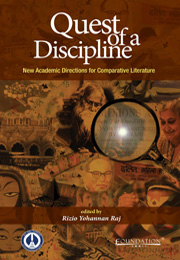
From the days of René Welleks Crisis of Comparative Literature (1959) through the beginning of the twenty-first century that saw Gayatri Spivaks provocative Death of a Discipline (2003), Comparative Literature as an academic discipline has endured like no other. This pioneering volume, Quest of a Discipline, offers challenging new directions to this field urging the readers to see the practice of Comparative Literature as a quest. It showcases the multicultural, multilingual India as the most potential site of quest today for the discipline of Comparative Literature.The deliberations are divided into sections that deal with traditions, manifestoes of survival, the latest methodologies, and perspectives that comparatists from India, China, the Near West, Europe and America have brought into the discipline. Each section is prefaced with a short introduction that locates the interdisciplinary articles within the paradoxical wholeness of Comparative Literature. Challenging and unsettling many basic premises of comparative studies, the essays explore the possibility of redefining the scope of Comparative Literature by forging meaningful interfaces between the following fields: Translation Studies Performance studies Film Studies Media Studies Dalit Studies Womens Writing Comparative Poetics Cartoon Art Folklore