To save content items to your account,
please confirm that you agree to abide by our usage policies.
If this is the first time you use this feature, you will be asked to authorise Cambridge Core to connect with your account.
Find out more about saving content to .
To save content items to your Kindle, first ensure no-reply@cambridge.org
is added to your Approved Personal Document E-mail List under your Personal Document Settings
on the Manage Your Content and Devices page of your Amazon account. Then enter the ‘name’ part
of your Kindle email address below.
Find out more about saving to your Kindle.
Note you can select to save to either the @free.kindle.com or @kindle.com variations.
‘@free.kindle.com’ emails are free but can only be saved to your device when it is connected to wi-fi.
‘@kindle.com’ emails can be delivered even when you are not connected to wi-fi, but note that service fees apply.
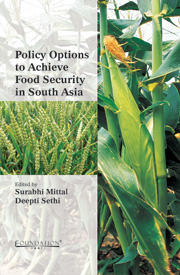
Policy Options to Achieve Food Security in South Asia pulls together all South Asian countries and identifies major issues of food security in the individual country. The chapters highlight issues such as initiatives and policies taken up in these countries to achieve the goal of food security and also critically evaluate the effectiveness of these policies. It suggests measures to overcome the identified constraints and make the policies more effective. It also talks about the SAARC food bank to ensure food security in the region. The question of food security has a number of dimensions that go beyond production, availability and demand for food. Food availability does not ensure food security, thus distribution and access of population to food is equally important for food security. Food availability through better distribution mechanisms and alternatively through imports can ensure food security.
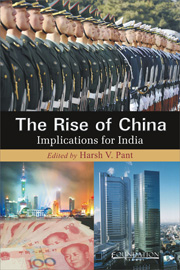
The rise of China as an emerging power and as the most likely challenger to the global preponderance of the US is already having a significant impact across the globe. This phenomenon is being debated and analysed at various levels. In India too, it is generating a lot of excitement. On the one hand, it is considered to be an opportunity and on the other, a challenge. This book is an attempt at exploring the multi-dimensional nature of the rise of China and its implications for India. The contributors in this volume have examined various aspects of Chinas rise such as domestic developments, foreign policy agenda, and its position on issues related to India from an Indian perspective. The book will appeal to undergraduate and graduate students of International Relations across the world. Foreign policy experts, and anyone interested in China-India relations should also find the book to be of interest.
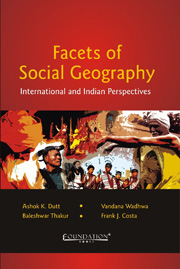
Facets of Social Geography: International and Indian Perspectives provides a breadth of information on the nature, scope, history and evolution of social geography along with a good representation of approaches and techniques used in this field. It discusses both conceptual and empirical approaches, and traditional and emergent social geography themes including art and culture, urbanism and crime, social institutions of caste, class and religion, gender, disability, activism, feminism, social planning, enterprise zones, social and economic inequities, post-colonialism, post-modernism and development of quantitative, qualitative and mixed methods. India's social structure based on centuries-old Karma principles and a four-level caste system are dealt with in this book to help unravel the country's social geography. This book is a felicitation volume in honour of Allen G. Noble, Distinguished Professor Emeritus of Geography and Planning at the University of Akron, Ohio, USA. A result of the collective effort of 40 leading national and international scholars, it is an excellent addition to the current stock of knowledge and will be of interest to geographers, sociologists, demographers, urban and regional planners and policy-makers.
In the history of mankind, armies fought at the behest of a ruler to conquer and expand territories. In due course, war crafts were devised and war logistics were developed. However, armies food remained much the same as ever for a very long time. Eventually science and technology played a crucial role in bringing army foods and nourishment to the expected level of modernity, commensurate with advancements in other features of the war craft. Armies, Wars and their Food traces the evolution of military rations and provides insights into the concept of nutrition for military from the point of a food scientist. The principal theme of the book is the historical development of armies and the supply and delivery systems prevalent at different periods of time. Providing a ready source of historical perspectives on the armies, it discusses the role of science and technology in instigating improvements in military ration. The book will appeal to students of food science and nutrition, army, navy and air force establishments, food industry laboratories and research and development organizations. General readers interested in the history of science and military history will also find this book useful.
This volume addresses the power of ideas in the making of Indian political modernity. As an intermediate history of connections between South Asia and the global arena the volume raises new issues in intellectual history. It reviews the period from the emergence of constitutional liberalism in the 1830s, through the swadeshi era to the writings of Tilak, Azad and Gandhi in the twentieth century. While several contributions reflect on the ideologies of nationalism, the volume seeks to rescue intellectual history from being simply a narration of the nation-state. It does not seek to create a 'canon' of political thought so much as to show how Indian concepts of state and society were redrawn in the context of emergent globalized debates about freedom, the constitution of the self and the good society in the late colonial era.
First Course in Metric Spaces presents a systematic and rigorous treatment of the subject of Metric Spaces which are mathematical objects equipped with the notion of distance. This book is a step towards the preparation for the study of more advanced topics in Analysis such as Topology. The contents are primarily suitable for teaching at the graduate level and serve as a treatise for undergraduate and postgraduate students. The book discusses classification of Metric Spaces using the standard classification notions such as completeness, compactness, and connectedness. The book also contains chapters on limit and continuity of mappings, fixed points and approximations, and a complete ordered field of real numbers obtained from cauchy sequences of rational numbers. Each chapter is interspersed with many examples and exercises.
Contemporary Indian Writers in English (CIWE) is a series that presents critical commentaries on some of the best-known names in the genre. With the high visibility of Indian writing in English in academic, critical, pedagogic and reader circles, there is a perceivable demand for lucid yet rigorous introductions to several of its authors and genres. Raja Rao, along with RK Narayan and Mulk Raj Anand, defined Indian writing in English in the early twentieth century. His works exhibit a deep engagement with psychology, mysticism, spiritualism and philosophy. His narratives become cultural as well as individual chronicles, and very often draw implicitly or explicitly upon various aspects the freedom movement to Gandhi to myths of an Indian ethos. Letizia Alternos detailed, incisive and eminently readable introduction is a rigourous examination of the diverse, and complex, Raja Rao canon, including some of his lesser known short-fiction.
The Rajah of Darjeeling Organic Tea is about Makaibari the first tea garden in the Himalayan Highlands. This book captures the magic of Makaibari and provides a rare glimpse of one of Darjeeling 's greatest characters the Thunderbolt Rajah. He is a champion of the organic tea movement, a social activist for tea labourers and small organic farmers, an anthropologist who works tirelessly to preserve the cultural heritage of the Himalayan region and an environmentalist who fights to conserve its rich biodiversity. The Rajah of Darjeeling Organic Tea chronicles the evolution of Makaibari, a homestead which, by merely addressing and redressing its problems on the ground and from the ground, has become an ideal, a panchavati, where the home and the forest are merged in identity.
Social Banking: Promise, Performance and Potential provides an overview of the Indian banking scenario from both a historical and a theoretical perspective. It discusses the development of Social Banking, its working and its relevance for the present and the future. The book presents the contribution of banking institutions in promoting savings and investments and extending the reach of banking services.The author argues the case for large-scale Social Banking and microfinance for the alleviation of poverty. She also provides an extensive analysis of the remarkable traits that have made Social Banking a success in India and enabled the Indian banking system to reach millions of low-income savers and borrowers. It clearly demonstrates the tremendous potential embedded in well-designed institutional interventions.
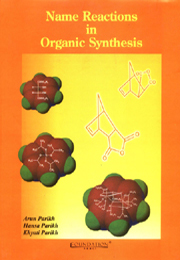
The book focuses on main aspects of chemical reaction, i.e. principle, mechanism and applications of synthetic utility. The content is explained in an easy and simple language. It will be a good source of information for fundamental knowledge of organic synthesis to students at undergraduate level as well as industrial chemist.
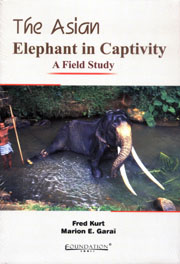
Today, one out of three Asian elephants lives in captivity. Although captive elephants have existed since 3,500 years, they have never been domesticated. During the last few decades the life of the captive elephants brought to temples, cities and tourist resorts have become more miserable than it was while they lived in jungle camps. In order to improve the situation, the living conditions of captive elephants must be changed fundamentally, i.e. they should lead a life under more natural conditions. The lack of fundamental knowledge about wild elephants induces anthropocentric actions and argumentation, but is of little help to the captive elephants.
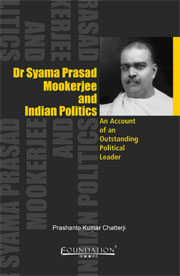
This book is a pioneering work on the multi-faceted contributions of Dr Syama Prasad Mookerjee to the country. Dr Mookerjee helped to oust the League ministry in Bengal (1941) and install the Progressive Coalition ministry of which he was the Finance Minister. He resigned in 1942 to protest against the Governors policy of repression against the Quit India movement. As the Working President of the Hindu Mahasabha, he was responsible for its ascendancy in Indian politics from 1940 to 1944. As the Central Industries and Supplies Minister (19471950), he framed free Indias industrial policy but resigned due to acute differences with Prime Minister Nehrus appeasement policy towards Pakistan. He, together with M.S.Golwalkar of the Rashtriya Swayamsevak Sangh, formed a new political party, the Bharatiya Jan Sangh. Despite Dr Mookerjees tragic death in 1953, the party drew adherents from all parts of India, and eventually was renamed the Bharatiya Janata Party.
Post nineteen eighties, what made English translation from Indian languages a culturally desirable activity? This question leads Kothari to examine the changing cultural universe of urban, English-speaking middle class in India. She examines in detail readership patterns, attitudes to English, and the course of translation studies in general. The comfort with which English is used with an Indian language as in "Yeh Dil Maange More" or "Hungry Kya" reflects a sense of familiarity that has been made with English. From this broader context of bilingualism in the first part of the book, Kothari moves on to the state of Gujarat. Taking up the case of Gujarati, she demonstartes the micro issues involved in translations and politics of language. Kothari asks new questions in translation studies and makes the production, reception and marketability of English translation her chief concern. Translating India brings amultidisciplinary perspective to literature and translation, authenticity and representation.
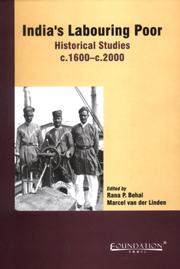
Recent years have witnessed a renewed scholarly interest in the historical studies of labour in India and other parts of the world. Apart from the study of the industrial workforce, labour history has been enriched by the scholarly attention to migratory, mobile labour, lives of artisans, women and peasant migrants to plantations within India and overseas. Earlier the major emphasis of labour history research was on the core countries such as US, Canada, Europe and Japan. Now research on the labour history of the capitalist peripheries is growing and is increasingly attracting international scholarship.
The essays in this volume collectively testify to the creative ferment of Comparative Studies today, as scholars around the world explore the possibilities – and confront the dangers – presented by a newly global world and its seductive new media. A recurrent fear felt by comparatists, and also by many specialists in individual languages, is that the growing hegemony of global English will swallow up other languages and literary cultures. As can be seen in the essay by Kanika Batra and elsewhere in this volume, the concern is that a linguistically and culturally ungrounded ‘World Literature’ based in English departments may eclipse – or may already have eclipsed – the fine-grained study of works in a variety of languages, the traditional philological strength of Comparative Literature. Yet the rise of English as a scholarly lingua franca does not in itself preclude close attention to other languages. English, indeed, is becoming an effective medium for the sharing of knowledge across many linguistic boundaries, enabling scholars around the world to communicate and to share their linguistically specialized knowledges. I have certainly found this to be the case in recent visits to Bucharest, Hanoi, Seoul, and Tehran, where in each case scholars from differing countries, often working in languages rarely if ever pursued by an older generation's comparatists, were able to share their findings together.
Even in the United States, both in English departments and all the more within programs of Comparative Literature, serious comparatist work continues to involve close attention to language and culture.
By
Zeenat Tabassum, Department of Linguistics, Gauhati University
Edited by
Gwendolyn Hyslop, Specialist in the East Bodish languages of Bhutan and Arunachal Pradesh,Stephen Morey, Associate Director of the Research Centre for Linguistic Typology at La Trobe University,Mark W. Post, Postdoctoral Research Fellow in Anthropological Linguistics at The Cairns Institute of James Cook University in Cairns, Australia
Typically in Tai languages the head precedes the modifier. As Morey says, “The noun phrase in the Tai languages is a strongly head initial structure”. He adds, “if there is more than one modifier in an NP, the most unmarked order appears to be – Noun > Adjective > Possessor > Classifier > Relative Clause > Demonstrative. Though there are no examples in the corpus of texts showing all of the possible modifiers.” (Morey 2005: 259) This order of modification is attested in the Tai Ahom language, spoken during the Ahom kingdom that ruled in Assam in the period 1228-1824. This unmarked order is found in Ahom manuscripts; however, some variant orders are also found.
We begin the paper with a brief history of Ahom which is discussed in section 2. In section 3, I provide the source of manuscripts used for the study and, in section 4, I discuss briefly about modification process in general. Following it, in section 5, I present an outline of the linguistic features of Ahom, and move on to discuss modification at a language-particular level in section 6. Section 6.1 deals with different kinds of modifiers. With this we turn in section 7 to a survey of the unmarked order of constituents and subsequently look at modification order of expressives in section 7.1. The next two sub-sections, i.e. 7.1.1 and 7.1.2 explore the functions of expressives as modifiers and as intensifiers.
Edited by
Ashok K. Dutt, Professor Emeritus in Geography, Planning and Urban Studies, University of Akron, USA,Vandana Wadhwa, Lecturer in the Department of Geography and Environment at Boston University, Massachusetts,Baleshwar Thakur, Former Head of the Department of Geography, Delhi School of Economics, University of Delhi,,Frank J. Costa, Professor Emeritus in Geography, Planning, Urban Studies and Public Administration at the University of Akron, USA.
I claim that human mind or human society is not divided into watertight compartments called social, political and religious. All act and react upon one another.
Mohandas Karamchand Gandhi
Although it may be possible to distinguish the various streams that comprise Social Geography, these fluid currents flow together to create a vast body of inter-and-intra-disciplinary study. This book attempts to capture the holistic essence of this field as well as highlight its rich thematic and areal diversity. Organized society and its institutions and characteristics over space go back to prehistoric times. It is no surprise then, that the field of social geography presents a full panoply of subjects of study.
Since its establishment as a recognized sub-field of geography in the twentieth century, Social Geography has continuously evolved to reflect the changing socioeconomic and political climate. Thus, the birth of radical geographies of feminism, the increased volume of alternate voices of transnationalism, postcolonialism and emerging geographies, the embracing of postmodernist methodologies and tools of interpretivism, the adoption of Geographic Information Systems (GIS) and remote sensing techniques to tackle social themes of study and so on. Such rapid changes necessitate the need for revisiting the state of the field every so often, while maintaining a connection with its traditional roots and themes.
Therein lies the significance of this book. The current work presents a number of contributions that provide an overview of the works that laid the foundation for Social Geography, or themselves address some of the traditional themes in Social Geography, such as art and culture, urbanism and crime, and social institutions of caste, class, and religion.
Edited by
Gwendolyn Hyslop, Specialist in the East Bodish languages of Bhutan and Arunachal Pradesh,Stephen Morey, Associate Director of the Research Centre for Linguistic Typology at La Trobe University,Mark W. Post, Postdoctoral Research Fellow in Anthropological Linguistics at The Cairns Institute of James Cook University in Cairns, Australia
The aim of this study is to provide a morphological and syntactic description of personal pronouns in Madhav Kandali's Ramayana (MKR). Prior to the main discussion on grammatical intricacies to be followed hereon, a brief background of the MKR is in order to authenticate the relevance of this study.
MKR has been attributed to the 14th century, (Sharma 1996; Neog 1985), a period of great significance in the history of the Assamese language, where the first phase of renaissance in religious, cultural and linguistic field was taking place. Around five court poets, including Madhav Kandali, produced Assamese texts during this period. Madhav Kandali translated the entire Sanskrit Ramayana composed by Valmiki into Assamese at the behest of the king Maha-Manikya of Tripura (Medhi 1936: 70). Though Kandali was an accomplished scholar of the Sanskrit language, he did not use the style of Sanskrit in his translation. He wrote it in an easy and simple, yet sublime style to cater to the needs of spiritual leaders to religious enlightenment of the mostly illiterate masses.
It is believed that over the 6th and 7th century, AD, the spoken form of the Assamese language began to develop and spread among the people. It got its written form during the 12th and 13th century, AD (Saikia Borah 1993). The specimen of this period is Carya, written by the Buddhist Siddhacharyas on palm leaves (Tāl pāt), hailing from the different parts of ancient Kamrupa.
Edited by
Ashok K. Dutt, Professor Emeritus in Geography, Planning and Urban Studies, University of Akron, USA,Vandana Wadhwa, Lecturer in the Department of Geography and Environment at Boston University, Massachusetts,Baleshwar Thakur, Former Head of the Department of Geography, Delhi School of Economics, University of Delhi,,Frank J. Costa, Professor Emeritus in Geography, Planning, Urban Studies and Public Administration at the University of Akron, USA.
Edited by
Gwendolyn Hyslop, Specialist in the East Bodish languages of Bhutan and Arunachal Pradesh,Stephen Morey, Associate Director of the Research Centre for Linguistic Typology at La Trobe University,Mark W. Post, Postdoctoral Research Fellow in Anthropological Linguistics at The Cairns Institute of James Cook University in Cairns, Australia