To save content items to your account,
please confirm that you agree to abide by our usage policies.
If this is the first time you use this feature, you will be asked to authorise Cambridge Core to connect with your account.
Find out more about saving content to .
To save content items to your Kindle, first ensure no-reply@cambridge.org
is added to your Approved Personal Document E-mail List under your Personal Document Settings
on the Manage Your Content and Devices page of your Amazon account. Then enter the ‘name’ part
of your Kindle email address below.
Find out more about saving to your Kindle.
Note you can select to save to either the @free.kindle.com or @kindle.com variations.
‘@free.kindle.com’ emails are free but can only be saved to your device when it is connected to wi-fi.
‘@kindle.com’ emails can be delivered even when you are not connected to wi-fi, but note that service fees apply.
This pioneering, course-tested text is the first to combine communications theory with the physics of optical communications. Comprehensive and rigorous, it brings together an in-depth treatment of the physical characteristics of the guided lightwave channel with the study of modern methods of algorithmic-based communication in time and space. The many different levels at which a lightwave communication signal can be described are integrated to provide a unified explanation of how a commonplace bit stream is transformed into a physical lightwave, how that lightwave travels through an optical fiber, and how it is then transformed back into the bit stream. Background fundamentals such as linear systems and electromagnetics are explained in relation to modern topics such as channel models, encoding, modulation and interference, and end-of-chapter problems are provided throughout. This is an essential text for students taking courses on optical communications, as well as researchers and professionals working in the area.
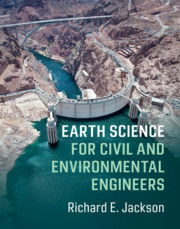
This carefully targeted and rigorous new textbook introduces engineering students to the fundamental principles of applied Earth science, highlighting how modern soil and rock mechanics, geomorphology, hydrogeology, seismology and environmental geochemistry affect geotechnical and environmental practice. Key geological topics of engineering relevance including soils and sediments, rocks, groundwater, and geologic hazards are presented in an accessible and engaging way. A broad range of international case studies add real-world context, and demonstrate practical applications in field and laboratory settings to guide site characterization. End-of-chapter problems are included for self-study and evaluation, and supplementary online materials include electronic figures, additional examples, solutions, and guidance on useful software. Featuring a detailed glossary introducing key terminology, this text requires no prior geological training and is essential reading for senior undergraduate or graduate students in civil, geological, geotechnical and geoenvironmental engineering. It is also a useful reference and bridge for Earth science graduates embarking on engineering geology courses.
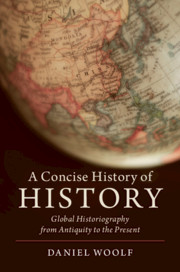
This short history of history is an ideal introduction for those studying or teaching the subject as part of courses on the historian's craft, historical theory and method, and historiography. Spanning the earliest known forms of historical writing in the ancient Near East right through to the present and covering developments in Europe, Asia, Africa and the Americas, it also touches on the latest topics and debates in the field, such as 'Big History', 'Deep History' and the impact of the electronic age. It features timelines listing major dynasties or regimes throughout the world alongside historiographical developments; guides to key thinkers and seminal historical works; further reading; a glossary of terms; and sample questions to promote further debate at the end of each chapter. This is a truly global account of the process of progressive intercultural contact that led to the hegemony of Western historiographical methods.
What is the lexicon, what does it contain, and how is it structured? What principles determine the functioning of the lexicon as a component of natural language grammar? What role does lexical information play in linguistic theory? This accessible introduction aims to answer these questions, and explores the relation of the lexicon to grammar as a whole. It includes a critical overview of major theoretical frameworks, and puts forward a unified treatment of lexical structure and design. The text can be used for introductory and advanced courses, and for courses that touch upon different aspects of the lexicon, such as lexical semantics, lexicography, syntax, general linguistics, computational lexicology and ontology design. The book provides students with a set of tools which will enable them to work with lexical data for all kinds of purposes, including an abundance of exercises and in-class activities designed to ensure that students are actively engaged with the content and effectively acquire the necessary knowledge and skills they need.
A complete resource for finance students, this textbook presents the most common empirical approaches in finance in a comprehensive and well-illustrated manner that shows how econometrics is used in practice, and includes detailed case studies to explain how the techniques are used in relevant financial contexts. Maintaining the accessible prose and clear examples of previous editions, the new edition of this best-selling textbook provides support for the main industry-standard software packages, expands the coverage of introductory mathematical and statistical techniques into two chapters for students without prior econometrics knowledge, and includes a new chapter on advanced methods. Learning outcomes, key concepts and end-of-chapter review questions (with full solutions online) highlight the main chapter takeaways and allow students to self-assess their understanding. Online resources include extensive teacher and student support materials, including EViews, Stata, R, and Python software guides.
Humanities and Social Science (HASS) education is integral in the development of active and informed citizens, and encourages learners to think critically, solve problems and adapt to change. Making Humanities and Social Sciences Come Alive: Early Years and Primary Education prepares pre-service educators to become high quality HASS educators who can unlock the potential of all students. Closely aligned with the Australian Curriculum and Early Years Learning Framework, this text is designed to enhance teaching practices in history, geography, economics and business, and civics and citizenship. The text provides readers with an in-depth understanding of the curriculum structure, the individual disciplines, pedagogical approaches to teaching HASS, inclusivity, global connections and the transition to practice. Examples are provided for early childhood and primary education, making this an inclusive, versatile and comprehensive text. This book is an invaluable resource that provides pre-service educators with the knowledge and skills to deliver this exciting curriculum.
Understanding Curriculum is a critical introduction to contemporary curriculum theory and practice. Substantially revised, the second edition includes more detailed consideration of the ideological underpinnings of curriculum development, features new chapters on assessment and reporting, and updated vignettes and extracts. These features, combined with all the elements of the previous edition, encourages readers to reflect on how curriculum theory can inform and enhance classroom practice.
The second edition of Remedies in Australian Private Law offers readers a clear and detailed introduction to remedies and their functions under Australian law. Clearly structured, with a strong black-letter law focus, the text provides a complete treatment of remedies in common law, equity and statute and develops a framework for understanding the principles of private law remedies and their practical application. This edition has been significantly revised and offers up-to-date coverage of case law and legislation, including the Australian Consumer Law. Building on the detailed treatment of remedies and their broad functions across a range of private law categories, the new edition also offers expanded coverage of vindicatory damages, debt, specific restitution and coercive remedies. With its systematic and accessible approach, this text enables students and practitioners to develop a coherent understanding of remedial law, and to analyse legal problems and identify appropriate remedial solutions.
Contemporary global challenges require practitioners to confidently analyse the dominant discourses and develop frameworks and strategies for future change. Engaging with Social Work equips students with a critical perspective and develops their understanding of social work and human services practice, with an emphasis on the principles of social justice and human rights. This fully revised second edition includes a new chapter on the emerging challenges and opportunities for social work, covering rising global inequality, re-invigorated possibilities for addressing violence against women, and threats to the planet. Aboriginal and Torres Strait Islander perspectives are integrated throughout the text to provide a more in-depth understanding. Reflective exercises, key definitions, case studies and unique practitioners' perspectives are integrated into each chapter to support learning. Engaging with Social Work provides an accessible, research-informed and rigorous introduction to complex concepts, theories and analyses, and develops a solid skill-set to prepare students for professional practice.
Item response theory (IRT) represents an alternative measurement approach to Classical test theory (CTT) that has been developed to address some of the key limitations in CTT. IRT utilizes a logistic function to jointly scale both person characteristics (e.g. ability) and task characteristics (e.g. difficulty) along a common metric, and is grounded upon the notion that different item sets should not result in different scaling solutions. This provides IRT with a number of advantages over CTT; namely that the performances of individuals who are administered different sets of tasks may still be justifiably compared. From this basis, the IRT approach has established its utility through its applications in such varied contexts as adaptive testing, cognitive diagnostic modeling, item difficulty modeling, and latent class analyses. The current chapter focuses on applied issues in measurement with IRT, with emphasis on its distinct advantages over traditional approaches.
In this chapter, the authors review concepts related to reliability and validity of measurement in the social sciences. Necessarily eschewing detailed reviews of statistical methods to examine reliability and validity of measurement, the authors focus on terse discussion on key concepts and elementary methods. In addition, given the immense literatures on topics the authors could only discuss in brief, the authors point to sources that provide helpful, focused treatments of undiscussed ideas and techniques. Authors conclude that, given reliability and validity of measurement is crucial to perform scientific research, social scientists ought to prioritize establishing evidence for reliability/validity of measurement for social scientists’ measures and experimental methods.