To save content items to your account,
please confirm that you agree to abide by our usage policies.
If this is the first time you use this feature, you will be asked to authorise Cambridge Core to connect with your account.
Find out more about saving content to .
To save content items to your Kindle, first ensure no-reply@cambridge.org
is added to your Approved Personal Document E-mail List under your Personal Document Settings
on the Manage Your Content and Devices page of your Amazon account. Then enter the ‘name’ part
of your Kindle email address below.
Find out more about saving to your Kindle.
Note you can select to save to either the @free.kindle.com or @kindle.com variations.
‘@free.kindle.com’ emails are free but can only be saved to your device when it is connected to wi-fi.
‘@kindle.com’ emails can be delivered even when you are not connected to wi-fi, but note that service fees apply.
Clear and concise, this textbook provides a non-technical introduction to the basic and central concepts of translation theory and practice, including translation briefs, parallel texts and textual functions, cohesion and coherence, and old and new information. Colina focuses on the key concepts that beginning students of translation, practising translators, language students and language professionals need to understand. Numerous exercises (discussion, group and individual) at the end of each chapter and 'Practice' activities throughout each chapter allow students to self-assess their practical understanding of chapter topics. In addition, examples, figures and text extracts from a wide variety of world languages contextualise chapter material and produce a lively and accessible narrative. Suitable for non-specialists with no prior experience of translation, it will also be of interest to practising translators, language students and language industry professionals who wish to gain a wider and up-to-date understanding of translation.
This is a fully revised edition of one of the most successful volumes in the Cambridge Texts in the History of Political Thought series. Incorporating extensive updates to the editorial apparatus, including the introduction, suggestions for further reading, and footnotes, this third edition of More's Utopia has been comprehensively re-worked to take into account scholarship published since the second edition in 2002. The vivid and engaging translation of the work itself by Robert M. Adams includes all the ancillary materials by More's fellow humanists that, added to the book at his own request, collectively constitute the first and best interpretive guide to Utopia. Unlike other teaching editions of Utopia, this edition keeps interpretive commentary - whether editorial annotations or the many pungent marginal glosses that are an especially attractive part of the humanist ancillary materials - on the page they illuminate instead of relegating them to endnotes, and provides students with a uniquely full and accessible experience of More's perennially fascinating masterpiece.
This new book is a wide-ranging, contemporary and accessible analysis of familiar and recurring myths about mass education in the United Kingdom. Looking at a variety of important issues and problems, each chapter begins by dispelling myths and assumptions about the classroom, going beyond class, race and gender, to offer analysis of topics such as discipline, youth cultures, information technology and globalisation. Utilising an interdisciplinary lens, this book offers knowledge from disciplines as diverse as sociology, philosophy, jurisprudence and cultural studies. Gordon Tait examines the strengths and weaknesses of different theoretical approaches to education, from critical theory to postmodernism, and Foucaultian governance to post-colonialism. Analysing the many assumptions about education taken for granted in British public discourse, important conclusions are drawn about which of these assumptions are fair and reasonable, and which we should challenge. This book is an essential resource for advanced undergraduate and postgraduate courses on the sociology of education, culture and education, and the philosophy of education.
Syntax is the system of rules that we subconsciously follow when we build sentences. Whereas the grammar of English (or other languages) might look like a rather chaotic set of arbitrary patterns, linguistic science has revealed that these patterns can actually be understood as the result of a small number of grammatical principles. This lively introductory textbook is designed for undergraduate students in linguistics, English and modern languages with relatively little background in the subject, offering the necessary tools for the analysis of phrases and sentences while at the same time introducing state-of-the-art syntactic theory in an accessible and engaging way. Guiding students through a variety of intriguing puzzles, striking facts and novel ideas, Introducing Syntax presents contemporary insights into syntactic theory in one clear and coherent narrative, avoiding unnecessary detail and enabling readers to understand the rationale behind technicalities. Aids to learning include highlighted key terms, suggestions for further reading and numerous exercises, placing syntax in a broader grammatical perspective.
This textbook presents an understanding of how basic physical descriptions can be translated into mathematical analogues that provide an opportunity to investigate environmental processes. Examples come from a range of hydrologic, atmospheric, and geophysical problems. The emphasis is on simple examples and calculations that add to understanding. The book provides a sense for the meaning of mathematical expressions, a physical feel for their relations to processes, and confidence in working with mathematical solutions. The goal of this book, in essence, is to present the timeless basic physical and mathematical principles and philosophy of environmental modeling, often to students who need to be taught how to think in a different way than they would for more narrowly-defined engineering or physics problems. Minimum prerequisites for the student reader include a knowledge of calculus through differential equations, but the book provides the mathematical and physical tools needed as the occasion arises.
James M. Wilce's new textbook introduces students to the study of language as a tool in anthropology. Solidly positioned in linguistic anthropology, it is the first textbook to combine clear explanations of language and linguistic structure with current anthropological theory. It features a range of study aids, including chapter summaries, learning objectives, figures, exercises, key terms and suggestions for further reading, to guide student understanding. The complete glossary includes both anthropological and linguist terminology. An Appendix features material on phonetics and phonetic representation. Accompanying online resources include a test bank with answers, useful links, an instructor's manual, and a sign language case study. Covering an extensive range of topics not found in existing textbooks, including semiotics and the evolution of animal and human communication, this book is an essential resource for introductory courses on language and culture, communication and culture, and linguistic anthropology.
This lively, compact textbook introduces readers to semantics - the study of how we construct meaning in communication. Easy to follow, and with a clear structure, it explains formal terminology in a simple and understandable way, without using formal notation or logic, and draws on dozens of examples from up-to-date empirical research findings. Offering a tight integration of classic semantic issues with cognitive science, Javier Valenzuela provides a complete and coherent overview of the main topics in this area, including a review of the empirical methods used in semantic theorizing, and discussions of both non-traditional and new topics, such as how meaning is acquired by children and how meaning is constructed cross-linguistically. Featuring illustrations, exercises, activities, suggestions for further reading, highlighted key terms, and a comprehensive glossary, this book is accessible to beginners and undergraduates, including those from non-linguistic backgrounds with no prior knowledge of linguistic analysis. It will be an essential resource for courses in English language, English studies, linguistics and the cognitive sciences.
EU Environmental Law is a critical, comprehensive and engaging account of the essential and emerging issues in European environmental law and regulation today. Suitable for advanced undergraduate and postgraduate students, the book delivers a thematic and contextual treatment of the subject for those taking courses in environmental law, environmental studies, regulation and public policy, and government and international relations. Placing the key issues in context, EU Environmental Law takes an interdisciplinary and thematic approach to help students to better understand the implementation and enforcement of environmental law and policy across Europe. It offers an accessible overview, and links theory with practical applications that will allow students to contextualise the outcomes of legal rules and their impact on public and private behaviours. It provides a definitive account of the subject, examining traditional topics such as nature conservation law, waste law and water law, alongside increasingly important fields such as the law of climate change, environmental human rights law, and regulation of GMOs and nanotechnology.
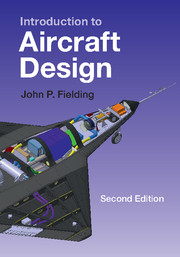
The new edition of this popular textbook provides a modern, accessible introduction to the whole process of aircraft design from requirements to conceptual design, manufacture and in-service issues. Highly illustrated descriptions of the full spectrum of aircraft types, their aerodynamics, structures and systems, allow students to appreciate good and poor design and understand how to improve their own designs. Cost data is considerably updated, many new images have been added and new sections are included on the emerging fields of Uninhabited Aerial Vehicles and environmentally-friendly airlines. Examples from real aircraft projects are presented throughout, demonstrating to students the applications of the theory. Three appendices and a bibliography provide a wealth of information, much not published elsewhere, including simple aerodynamic formulae, an introduction to airworthiness and environmental requirements, aircraft, engine and equipment data, and a case study of the conceptual design of a large airliner.
This second edition of An Introduction to Chinese Philosophy presents a comprehensive introduction to key ideas and arguments in early Chinese philosophy. Written in clear, accessible language, it explores philosophical traditions including Confucianism, Daoism, Mohism, Legalism and Chinese Buddhism, and how they have shaped Chinese thought. Drawing on the key classical texts as well as up-to-date scholarship, the discussions range across ethics, metaphysics and epistemology, while also bringing out distinctive elements in Chinese philosophy that fall between the gaps in these disciplinary divisions, hence challenging some prevailing assumptions of Western philosophy. Topics include human nature, selfhood and agency; emotions and behaviour; the place of language in the world; knowledge and action; and social and political responsibility. This second edition incorporates new ideas and approaches from some recently excavated texts that change the landscape of Chinese intellectual history.
The Metaphysics of Morals is Kant's final major work in moral philosophy. In it, he presents the basic concepts and principles of right and virtue and the system of duties of human beings as such. The work comprises two parts: the Doctrine of Right concerns outer freedom and the rights of human beings against one another; the Doctrine of Virtue concerns inner freedom and the ethical duties of human beings to themselves and others. Mary Gregor's translation, lightly revised for this edition, is the only complete translation of the entire text, and includes extensive annotation on Kant's difficult and sometimes unfamiliar vocabulary. This edition includes numerous new footnotes, some of which address controversial aspects of Gregor's translation or offer alternatives. Lara Denis's introduction sets the work in context, explains its structure and themes, and introduces important interpretive debates. The volume also provides thorough guidance on further reading including online resources.
Gravitational lensing is a consequence of general relativity, where the gravitational force due to a massive object bends the paths of light originating from distant objects lying behind it. Using very little general relativity and no higher level mathematics, this text presents the basics of gravitational lensing, focusing on the equations needed to understand the phenomena. It then applies them to a diverse set of topics, including multiply imaged objects, time delays, extrasolar planets, microlensing, cluster masses, galaxy shape measurements, cosmic shear, and lensing of the cosmic microwave background. This approach allows undergraduate students and others to get quickly up to speed on the basics and the important issues. The text will be especially relevant as large surveys such as LSST and Euclid begin to dominate the astronomical landscape. Designed for a one semester course, it is accessible to anyone with two years of undergraduate physics background.
This rigorous textbook is intended for a year-long analysis or advanced calculus course for advanced undergraduate or beginning graduate students. Starting with detailed, slow-paced proofs that allow students to acquire facility in reading and writing proofs, it clearly and concisely explains the basics of differentiation and integration of functions of one and several variables, and covers the theorems of Green, Gauss, and Stokes. Minimal prerequisites are assumed, and relevant linear algebra topics are reviewed right before they are needed, making the material accessible to students from diverse backgrounds. Abstract topics are preceded by concrete examples to facilitate understanding, for example, before introducing differential forms, the text examines low-dimensional examples. The meaning and importance of results are thoroughly discussed, and numerous exercises of varying difficulty give students ample opportunity to test and improve their knowledge of this difficult yet vital subject.
Alcman was active in Sparta. Ancient scholarship offers two floruits, second and fourth quarter of the seventh century (see testimonia 1, 10 Campbell). The earlier date is rendered very unlikely by Alcm. 5 fr. 2, which seems to have mentioned not just king Leotychidas I (usually dated to the second half of the seventh century) but also a daughter and possibly granddaughter old enough to have a role in the performance; see West 1992a. It is likely therefore that Alcman was a broad contemporary of Sappho and Alcaeus, perhaps slightly older.
Seventh-century Sparta was already a polis with considerable military power and organisation, which had annexed neighbouring Messenia in a protracted struggle, but it was not the militaristic society that we find in Classical sources, and it certainly was not culturally austere. Surviving art, including work in bronze and ivory, suggests wealth and sophistication; see the surveys of Fitzhardinge 1980 and Förtsch 2001. An impressive number of poet-musicians composed and performed in Sparta a generation or two before Alcman. Best preserved is the elegist Tyrtaeus. The Pseudo-Plutarchian De musica (ch. 9) connects several names with the establishment of Spartan musical institutions: Terpander of Lesbos, Thaletas of Gortyn, Xenodamos of Cythera, Xenokritos of Locri, Polymnestos of Colophon, Sacadas of Argos. Despite the dearth of reliable information for each of these figures, it is clear that seventh-century Sparta was a major musical and poetic centre, attracting talent from across Greece.
Much of Alcman's poetry seems to have been tied closely and explicitly to Sparta's religious and social structures. Several polis festivals, cults and deities are named in the texts, as are certain tribes and individual members of aristocratic and indeed royal families (cf. 1.53n.). We do not know whether Alcman was commissioned by the polis or by families, but he certainly composed for major public occasions. A significant portion of these compositions were maiden-songs, for which Alcman was known in antiquity (e.g. [Plut.] De mus. 17 = test. 15 Campbell), and which seem to have filled at least two of the six books of the Alexandrian edition; see Steph. Byz. ε137 (quoting Alcm. 16) and probably Alcm. 5 fr. 49 col. ii.