To save content items to your account,
please confirm that you agree to abide by our usage policies.
If this is the first time you use this feature, you will be asked to authorise Cambridge Core to connect with your account.
Find out more about saving content to .
To save content items to your Kindle, first ensure no-reply@cambridge.org
is added to your Approved Personal Document E-mail List under your Personal Document Settings
on the Manage Your Content and Devices page of your Amazon account. Then enter the ‘name’ part
of your Kindle email address below.
Find out more about saving to your Kindle.
Note you can select to save to either the @free.kindle.com or @kindle.com variations.
‘@free.kindle.com’ emails are free but can only be saved to your device when it is connected to wi-fi.
‘@kindle.com’ emails can be delivered even when you are not connected to wi-fi, but note that service fees apply.
We live our lives in conversation, building families, societies and civilisations. In over seven thousand languages across the world, the basic infrastructure by which we communicate remains the same. This is the first ever book-length linguistic introduction to conversation analysis (CA), the field that has done more than any other to illuminate the mechanics of interaction. Starting by locating CA by reference to a number of cognate disciplines investigating language in use, it provides an overview of the origins and methodology of CA. By using conversational data from a range of languages, it examines the basic apparatus of sequence organisation: turn-taking, preference, identity construction and repair. As the basis for these investigations, the book uses the twin analytic resources of action and sequence to throw new light on the origins and nature of language use.
This textbook provides students with a complete working knowledge of the properties of imperfections in crystalline solids. Readers will learn how to apply the fundamental principles of mechanics and thermodynamics to defect properties in materials science, gaining all the knowledge and tools needed to put this into practice in their own research. Beginning with an introduction to defects and a brief review of basic elasticity theory and statistical thermodynamics, the authors go on to guide the reader in a step-by-step way through point, line, and planar defects, with an emphasis on their structural, thermodynamic, and kinetic properties. Numerous end-of-chapter exercises enable students to put their knowledge into practice, and with solutions for instructors and MATLAB® programs available online, this is an essential text for advanced undergraduate and introductory graduate courses in crystal defects, as well as being ideal for self-study.
How and why do languages change? This new introduction offers a guide to the types of change at all levels of linguistic structure, as well as the mechanisms behind each type. Based on data from a variety of methods and a huge array of language families, it examines general patterns of change, bringing together recent findings on sound change, analogical change, grammaticalization, the creation and change of constructions, as well as lexical change. Emphasizing crosslinguistic patterns and going well beyond traditional methods in historical linguistics, this book sees change as grounded in cognitive processes and usage factors that are rarely mentioned in other textbooks. Complete with questions for discussion, suggested readings and a useful glossary of terms, this book helps students to gain a general understanding of language as an ever-changing system.
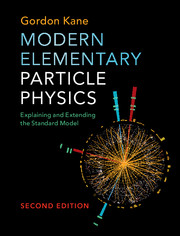
This book is written for students and scientists wanting to learn about the Standard Model of particle physics. Only an introductory course knowledge about quantum theory is needed. The text provides a pedagogical description of the theory, and incorporates the recent Higgs boson and top quark discoveries. With its clear and engaging style, this new edition retains its essential simplicity. Long and detailed calculations are replaced by simple approximate ones. It includes introductions to accelerators, colliders, and detectors, and several main experimental tests of the Standard Model are explained. Descriptions of some well-motivated extensions of the Standard Model prepare the reader for new developments. It emphasizes the concepts of gauge theories and Higgs physics, electroweak unification and symmetry breaking, and how force strengths vary with energy, providing a solid foundation for those working in the field, and for those who simply want to learn about the Standard Model.
Many companies are not single businesses but a collection of businesses with one or more levels of corporate management. Written for managers, advisors and students aspiring to these roles, this book is a guide to decision-making in the domain of corporate strategy. It arms readers with research-based tools needed to make good corporate strategy decisions and to assess the soundness of the corporate strategy decisions of others. Readers will learn how to do the analysis for answering questions such as 'Should we pursue an alliance or an acquisition to grow?', 'How much should we integrate this acquisition?' and 'Should we divest this business?'. The book draws on the authors' wealth of research and teaching experience at INSEAD, London Business School and University College London. A range of learning aids, including easy-to-comprehend examples, decision templates and FAQs, are provided in the book and on a rich companion website.
Cooperative game theory deals with situations where objectives of participants of the game are partially cooperative and partially conflicting. It is in the interest of participants to cooperate in the sense of making binding agreements to achieve the maximum possible benefit. When it comes to distribution of benefit/payoffs, participants have conflicting interests. Such situations are usually modelled as cooperative games. While the book mainly discusses transferable utility games, there is also a brief analysis of non-transferable utility games. Alternative solution concepts to cooperative game theoretic problems are presented in chapters 1-9 and the next four chapters present issues related to computations of solutions discussed in the earlier chapters. The proofs of all results presented in the book are quite explicit. Additionally the mathematical techniques employed in demonstrating the results will be helpful to those who wish to learn application of mathematics for solving problems in game theory.
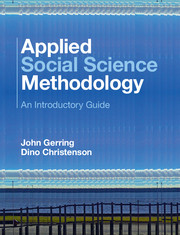
This textbook provides a clear, concise, and comprehensive introduction to methodological issues encountered by the various social science disciplines. It emphasizes applications, with detailed examples, so that readers can put these methods to work in their research. Within a unified framework, John Gerring and Dino Christenson integrate a variety of methods - descriptive and causal, observational and experimental, qualitative and quantitative. The text covers a wide range of topics including research design, data-gathering techniques, statistics, theoretical frameworks, and social science writing. It is designed both for those attempting to make sense of social science, as well as those aiming to conduct original research. The text is accompanied by online practice questions, exercises, examples, and additional resources, including related readings and websites. An essential resource for undergraduate and postgraduate programs in communications, criminal justice, economics, business, finance, management, education, environmental policy, international development, law, political science, public health, public policy, social work, sociology, and urban planning.
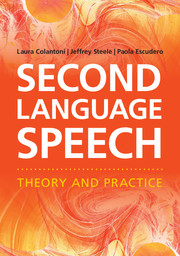
Second language acquisition has rapidly grown as a field over the past decade, as our knowledge of the ways in which children and adults learn and use a second language has become crucial for effective language teaching. In addition to this important 'applied' function, research into second language acquisition has also informed the fields of linguistics and psychology in general, as it has shed light on the differences between native and non-native models of human language and cognition. The focus of this accessible new book is second language speech - that is, how speakers perceive, process, understand and pronounce the sounds of a second language. Each chapter includes review questions, and most chapters include 'tutorial' and 'lab' sections with practical exercises based on the University of Toronto Romance Phonetics Database (available online for free). The book also has a companion website, containing illustrated answers to the exercises, scripts for running acoustic analyses and useful weblinks.
Using a systems framework, this textbook provides a clear and comprehensive introduction to the performance, analysis and design of radio systems for students and practising engineers. Presented within a consistent framework, the first part of the book describes the fundamentals of the subject: propagation, noise, antennas and modulation. The analysis and design of radios, including RF circuit design and signal processing, is covered in the second half of the book. The former is presented with minimal involvement of Smith charts, enabling students to grasp the fundamentals more readily. Both traditional and software-defined/direct sampling technology are described, with pros and cons of each strategy explained. Numerous examples within the text involve realistic analysis and design activities, and emphasize how practical experiences may differ from theory or taught procedures. End-of-chapter problems are provided, as are a password-protected solutions manual and lecture slides to complete the teaching package for instructors.
How long has Spanish been spoken in the US and how many people speak it today? Is Spanish being passed down through generations? What role does Spanish play in US Latino identity? Analysing and synthesising data from a wide variety of sources, Escobar and Potowski explore these questions and more in this up-to-date textbook for students of Spanish language, linguistics, bilingualism, sociolinguistics, culture, and history.Over 150 exercises help students engage with the linguistic characteristics of Spanish, Spanish-dialect contact, bilingualism, and Spanish communities in the USExercises and examples refer students to external, online sources so they can experience Spanish through a range of mediaConcepts are clearly defined with detailed examples for readers who may not have a background in linguisticsMisconceptions about Spanish varieties and Latino communities are addressed, ensuring readers will emerge with a clear understanding of how Latino communities vary linguistically and socioculturally.
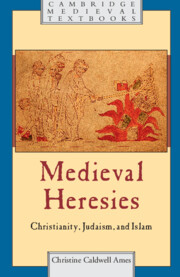
Jews, Christians, and Muslims in the Middle Ages were divided in many ways. But one thing they shared in common was the fear that God was offended by wrong belief. Medieval Heresies: Christianity, Judaism, and Islam is the first comparative survey of heresy and its response throughout the medieval world. Spanning England to Persia, it examines heresy, error, and religious dissent - and efforts to end them through correction, persuasion, or punishment - among Latin Christians, Greek Christians, Jews, and Muslims. With a lively narrative that begins in the late fourth century and ends in the early sixteenth century, Medieval Heresies is an unprecedented history of how the three great monotheistic religions of the Middle Ages resembled, differed from, and even interrelated with each other in defining heresy and orthodoxy.
Cosmology - the science of the Universe at large - has experienced a renaissance in the decades bracketing the turn of the twenty-first century. Exploring our emerging understanding of cosmology, this text takes two complementary points of view: the physical principles underlying theories of cosmology, and the observable consequences of models of Universal expansion. The book develops cosmological models based on fundamental physical principles, with mathematics limited to the minimum necessary to keep the material accessible for students of physics and astronomy at the advanced undergraduate level. A substantial review of general relativity leading up to the Einstein field equations is included, with derivations of explicit formulations connecting observable features of the Universe to models of its expansion. Self-contained and up to date in respect of modern observations, the text provides a solid theoretical grounding in modern cosmology while preparing readers for the changes that will inevitably come from future observations.
This concise yet comprehensive textbook examines political, social, and cultural developments in the Soviet Union and the post-Soviet period. It begins by identifying the social tensions and political inconsistencies that spurred radical change in Russia's government, from the turn of the century to the revolution of 1917. Peter Kenez presents this revolution as a crisis of authority that the creation of the Soviet Union resolved. The text traces the progress of the Soviet Union through the 1920s, the years of the New Economic Policies, and into the Stalinist order. It illustrates how post-Stalin Soviet leaders struggled to find ways to rule the country without using Stalin's methods - but also without openly repudiating the past - and to negotiate a peaceful but antipathetic coexistence with the capitalist West. This updated third edition includes substantial new material, discussing the challenges Russia currently faces in the era of Putin.
Horace's Odes remain among the most widely read works of classical literature. This volume constitutes the first substantial commentary for a generation on this book, and presents Horace's poems for a new cohort of modern students and scholars. The introduction focusses on the particular features of this poetic book and its place in Horace's poetic career and in the literary environment of its particular time in the 20s BCE. The text and commentary both look back to the long and distinguished tradition of Horatian scholarship and incorporate the many advances of recent research and thinking about Latin literature. The volume proposes some new solutions to established problems of text and interpretation, and in general improves modern understanding of a widely read ancient text which has a firm place in college and university courses as well as in classical research.
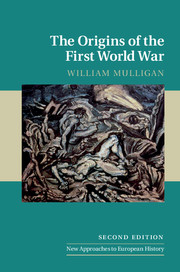
A second edition of this leading introduction to the origins of the First World War and the pre-war international system. William Mulligan shows how the war was a far from inevitable outcome of international politics in the early twentieth century and suggests instead that there were powerful forces operating in favour of the maintenance of peace. He discusses key issues ranging from the military, public opinion, economics, diplomacy and geopolitics to relations between the great powers, the role of smaller states and the disintegrating empires. In this new edition, the author assesses the extensive new literature on the war's origins and the July Crisis as well as introducing new themes such as the relationship between economic interdependence and military planning. With well-structured chapters and an extensive bibliography, this is an essential classroom text which significantly revises our understanding of diplomacy, political culture, and economic history from 1870 to 1914.
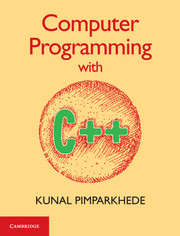
This textbook provides in-depth coverage of the fundamentals of the C and C++ programming languages and the object-oriented programming paradigm. It follows an example-driven approach to facilitate understanding of theoretical concepts. Essential concepts, including functions, arrays, pointers and inheritance, are explained, while complex topics, such as dynamic memory allocation, object slicing, vtables, and upcasting and downcasting, are examined in detail. Concepts are explained with the help of line diagrams, student-teacher conversations and flow charts, while other useful features, such as quiz questions and points to remember, are included. Solved examples, review questions and useful case studies are interspersed throughout the text, and explanations of the logic used to implement particular functionality is also provided. This book will be useful for undergraduate students of computer science and engineering, and information technology.
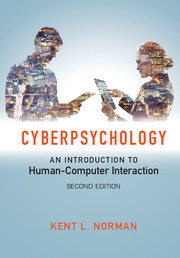
This textbook provides a comprehensive overview of the human-computer interface in clear, non-technical language, making it an ideal introduction for students of both psychology and computer science. Covering the past, present, and future developments in technology and psychology, it combines cutting-edge academic research with engaging illustrations and examples that show students how the material relates to their lives. Topics addressed include: human factors of input devices, and the basics of sensation and perception; memory and cognitive issues of users navigating their way through interfaces; communication via programming languages and natural speech interaction; cyberpathologies such as techno-stress and Internet addiction disorders; and challenges surrounding automation and artificial intelligence. This thoroughly updated second edition features new chapters on virtual reality and cybersecurity; expanded coverage of social media, mobile computing, e-learning, and video games; and end-of-chapter review questions that ensure students have mastered key objectives.
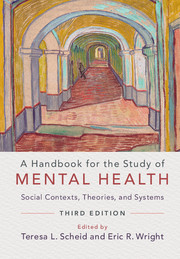
With chapters written by leading scholars and researchers, the third edition of A Handbook for the Study of Mental Health provides an updated, comprehensive review of the sociology of mental health. The volume presents an overview of the historical, social, and institutional frameworks for understanding mental health and illness. Part I examines the social factors that shape psychiatric diagnosis and the measurement of mental health and illness, the theories that explain the definition and treatment of mental disorders, and cultural variability in mental health. The section addresses the DSM-5 and its potential influence on diagnosis and research on mental health outcomes. Part II investigates the effects of social context on mental health and illness. Part III focuses on the organization, delivery, and social context of mental health treatment. The chapters in Part III address the likely impact of the Affordable Care Act on mental health care. This volume is a key resource for students, researchers, advocates, and policymakers seeking to understand mental health and mental health delivery systems.
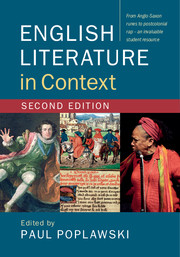
This is the second edition of English Literature in Context, a popular textbook which provides an essential resource and reference tool for all English literature students. Designed to accompany students throughout their degree course, it offers a detailed narrative survey of the diverse historical and cultural contexts that have shaped the development of English literature, from the Anglo-Saxon period to the present day. Carefully structured for undergraduate use, the eight chronological chapters are written by a team of expert contributors who are also highly experienced teachers. Each chapter includes a detailed chronology, contextual readings of selected literary texts, annotated suggestions for further reading, a rich range of illustrations and textboxes, and thorough historical and literary overviews. This second edition has been comprehensively revised, with a new chapter on postcolonial literature, a substantially expanded chapter on contemporary literature, and the addition of over two hundred new critical references. Online resources include textboxes, chapter samples, study questions, and chronologies.
This introduction applies analytic models to policymaking challenges, equipping students with tools to evaluate core policymaking dilemmas. Students are introduced to the approaches of game theory, social choice theory, research design and causal inference. Key terms, along with current research, are highlighted to build an understanding of public policy study. Exercises and thought questions enable students to develop skills to assess public policy dilemmas. The analytically rigorous style of the text is accessible and avoids lengthy descriptions. Supplementary resources for instructors include extensive notes, ancillaries and online resources, including a test bank, quizzes and editable lecture slides for all chapters that can be modified to fit particular courses. This textbook is suitable for introductory public policy and public administration courses at both undergraduate and postgraduate level.