To save content items to your account,
please confirm that you agree to abide by our usage policies.
If this is the first time you use this feature, you will be asked to authorise Cambridge Core to connect with your account.
Find out more about saving content to .
To save content items to your Kindle, first ensure no-reply@cambridge.org
is added to your Approved Personal Document E-mail List under your Personal Document Settings
on the Manage Your Content and Devices page of your Amazon account. Then enter the ‘name’ part
of your Kindle email address below.
Find out more about saving to your Kindle.
Note you can select to save to either the @free.kindle.com or @kindle.com variations.
‘@free.kindle.com’ emails are free but can only be saved to your device when it is connected to wi-fi.
‘@kindle.com’ emails can be delivered even when you are not connected to wi-fi, but note that service fees apply.
This new edition of Ivan T. Berend's leading overview of economic regimes and economic performance from the start of the twentieth century to the present is fully updated to incorporate recent events, including the causes and impacts of the 2008 financial-economic crisis. Praised for its clear prose and uncluttered analytical style as well as its use of illustrative case studies, this is an integrated, comparative account of European economic development from the evolution of capitalism to the fascist and communist regimes and their collapse, and Europe's current economic problems. The book examines both successes and failures in responding to the challenges of this crisis-ridden but highly-successful age. It introduces the main factors behind economic growth and the various economic regimes that were invented and trialled. It also shows how the vast disparity which had existed between the European regions started gradually decreasing as a result of increased integration.
This practical and accessibly written textbook provides a thoughtfully ordered introduction to a wide range of phonological phenomena. It contains many exercises combining classic datasets with newly compiled problems. These help the student learn to discover sound patterns nested in complex linguistic data, beginning with concrete introductory examples and stepping through a series of progressively more complex phonological phenomena. It covers alternation, vowel harmony, phonemic analysis, natural classes and distinctive features, abstractness and opacity, syllable structure, tone, stress, prosodic morphology, feature geometry, and optimality theory. It is essential reading for students of linguistics around the world.
There is now widespread agreement that innovation holds the key to future economic and social prosperity in developed countries. Experts studying contemporary capitalism also agree that the battle against unemployment and relocations can only be won through innovation. But what kind of innovation is required and what is the best way to manage, steer and organize it? Grounded on experiences of innovative firms and based on recent design theories, this book argues that instead of relying on traditional R&D and project management techniques, the strategic management of innovation must be based on innovative design activities. It analyses and explains new management principles and techniques that deal with these activities, including innovation fields, lineages, C-K (Concept-Knowledge) diagrams and design spaces. The book is ideal for advanced courses in innovation management in industrial design schools, business schools, engineering schools, as well as managers looking to improve their practice.
Extensively updated throughout, this new edition introduces students to a wide range of modern legal issues. Written in a clear and engaging style, the book expertly addresses the ways in which the rules and structures of law respond to and influence changes in economic and political life. It provides a clear understanding of the relationship between law and society, with particular emphasis on the importance of morality, dispute solution and business regulation. An Introduction to Law is a valuable resource for students of law, be they undergraduate law students, those studying law as part of a mixed degree, or students on business or social science courses in which legal studies are included.
This book guides readers by gradual steps through the central concepts and debates in the philosophy of science. Using concrete examples from the history of science, Kent W. Staley shows how seemingly abstract philosophical issues are relevant to important aspects of scientific practice. Structured in two parts, the book first tackles the central concepts of the philosophy of science, such as the problem of induction, falsificationism, and underdetermination, and important figures and movements, such as the logical empiricists, Thomas Kuhn, and Paul Feyerabend. The second part turns to contemporary debates in the philosophy of science, such as scientific realism, explanation, the role of values in science, the different views of scientific inference, and probability. This broad yet detailed overview will give readers a strong grounding whilst also providing opportunities for further exploration. It will be of particular interest to students of philosophy, the philosophy of science, and science.
Now in its third edition, Jet Propulsion offers a self-contained introduction to the aerodynamic and thermodynamic design of modern civil and military jet engine design. Through two-engine design projects for a large passenger and a new fighter aircraft, the text explains modern engine design. Individual sections cover aircraft requirements, aerodynamics, principles of gas turbines and jet engines, elementary compressible fluid mechanics, bypass ratio selection, scaling and dimensional analysis, turbine and compressor design and characteristics, design optimization, and off-design performance. The civil aircraft, which formed the core of Part I in the previous editions, has now been in service for several years as the Airbus A380. Attention in the aircraft industry has now shifted to two-engine aircraft with a greater emphasis on reduction of fuel burn, so the model created for Part I in this edition is the new efficient aircraft, a twin aimed at high efficiency.
Numerical analysis deals with the manipulation of numbers to solve a particular problem. This book discusses in detail the creation, analysis and implementation of algorithms to solve the problems of continuous mathematics. An input is provided in the form of numerical data or it is generated as required by the system to solve a mathematical problem. Subsequently, this input is processed through arithmetic operations together with logical operations in a systematic manner and an output is produced in the form of numbers. Covering the fundamentals of numerical analysis and its applications in one volume, this book offers detailed discussion on relevant topics including difference equations, Fourier series, discrete Fourier transforms and finite element methods. In addition, the important concepts of integral equations, Chebyshev Approximation and Eigen Values of Symmetric Matrices are elaborated upon in separate chapters. The book will serve as a suitable textbook for undergraduate students in science and engineering.
The new edition of this exciting textbook introduces students to the ways in which the theories and tools of international relations and other social science disciplines can be used to analyse and address global environmental problems. Kate O'Neill develops an innovative historical and analytical framework for understanding global environmental issues, integrating insights from different disciplines, and she identifies the main actors and their roles, thereby encouraging readers to engage with the issues and equip themselves with the knowledge they need to apply their own critical insights. Revised and updated, the new edition features new figures, examples, textboxes, and a new chapter on the emergence and politics of market mechanisms as a new mode of global environmental governance. The latest developments in the field, including the December 2015 Paris Climate Agreement, along with new perspectives and recent thinking, are incorporated throughout. This will be invaluable for students of environmental issues both from political science and environmental studies perspectives.
Now revised and updated, this introduction to decision theory is both accessible and comprehensive, covering topics including decision making under ignorance and risk, the foundations of utility theory, the debate over subjective and objective probability, Bayesianism, causal decision theory, game theory, and social choice theory. No mathematical skills are assumed, with all concepts and results explained in non-technical and intuitive as well as more formal ways. There are now over 140 exercises with solutions, along with a glossary of key terms and concepts. This second edition includes a new chapter on risk aversion as well as updated discussions of numerous central ideas, including Newcomb's problem, prisoner's dilemmas, and Arrow's impossibility theorem. The book will appeal particularly to philosophy students but also to readers in a range of disciplines, from computer science and psychology to economics and political science.
Terence's Hecyra raises social, literary and theatrical issues of great interest to modern students of Roman comedy and, indeed, of Roman culture more broadly. The play pays strikingly close attention to the domestic problems of women and experiments boldly with traditional comic forms, not only in its creation of anticipatory suspense, but through its variations on traditional situations and roles and its metatheatrical qualities. In addition, Terence's response in his prologues to the play's two putative failures is important, if tendentious, evidence for the mechanics of theatrical performance in the second century, especially the conjunction of theatrical and gladiatorial shows. This edition opens the play's many interpretive challenges to wider scrutiny while remaining attentive to the linguistic needs of students at all levels.
Thermodynamics deals with energy levels and energy transfers between states of matter, and is therefore fundamental to all branches of science. This new edition provides an accessible introduction to the subject, specifically tailored to the interests of Earth and environmental science students. Beginning at an elementary level, the first four chapters explain all necessary concepts via a simple graphical approach. Throughout the rest of the book, the author emphasizes the importance of field observations and demonstrates that, despite being derived from idealized circumstances, thermodynamics is crucial to understanding ore formation, acid mine drainage, and other real-world geochemical and geophysical problems. Exercises now follow each chapter, with answers provided at the end of the book. An associated website includes extra chapters and password-protected answers to additional problems. This textbook is ideal for undergraduate and graduate students studying geochemistry and environmental science.
In syntactic analysis, as in linguistics generally, the skills required to first identify, and then make sense of, complex patterns in linguistic data involve a certain specific kind of reasoning, where various alternatives are entertained and modified in light of progressively broader empirical coverage. Rather than focus on transmitting the details of complex theoretical superstructures, this textbook takes a practical, analytical approach, starting from a small set of powerful analytic tools, applied first to simple phenomena and then to the passive, complement and raising/control constructions. The analytic tools are then applied to unbounded dependencies, via detailed argumentation. What emerges is that syntactic structure, and intricate networks of dependencies linking different parts of those structures, are straightforward projections of lexical valence, in tandem with very general rules regulating the sharing of feature values. Featuring integrated exercises and problems throughout each chapter, this book equips students with the analytical tools for recognizing and assessing linguistic patterns.
When Ovid, already renowned for his love poetry, the Metamorphoses and other works, was exiled by Augustus to Tomis on the Black Sea in AD 8, he continued to write. After five books of Tristia, he composed a collection of verse letters, the Epistulae ex Ponto, in which he appeals to his friends and supporters in Rome, lamenting his lot and begging for their help in mitigating it. In these epistolary elegies his inventiveness flourishes no less than before and his imaginative self-fashioning is as ingenious and engaging as ever, although in a minor key. This commentary on Book I assists intermediate and advanced students in understanding Ovid's language and style, while guiding them in the appreciation of his poetic art. The introduction examines the literary background of the Epistulae ex Ponto, their relation to Ovid's earlier works, and their special interest and appeal to readers of Augustan poetry.
Why are some parts of the world poor today, while others are rich? At which point in time did they diverge, and what were the reasons? These core questions are addressed in a concise and accessible introduction to global economic development since 1500. Leading economic historians from across the globe provide overviews of major world regions together with global comparison chapters and case studies highlighting key themes, individuals, processes and events. Utilising a set of common developmental indicators, the chapters address crucial issues such as how international trade and migration, institutions and flows of physical and human capital impacted economic growth. Richly illustrated with informative figures, maps, tables and charts, A History of the Global Economy summarises the key economic findings, debates and ideas, and provides students and the interested public with an up-to-date and engaging introduction to the origins and evolution of today's global economy.
This is the textbook and reference resource that instructors, students, and researchers in biomedical optics have been waiting for. Comprehensive and up to date, it covers a broad range of areas in biomedical optics, from light interactions at the single-photon and single-biomolecule levels, to the diffusion regime of light propagation in tissue. Subjects covered include spectroscopic techniques (fluorescence, Raman, infrared, near-infrared, and elastic scattering), imaging techniques (diffuse optical tomography, photoacoustic imaging, several forms of modern microscopy, and optical coherence tomography), and laser-tissue interactions, including optical tweezers. Topics are developed from the fundamental principles of physical science, with intuitive explanations, while rigorous mathematical formalisms of theoretical treatments are also provided. For each technique, descriptions of relevant instrumentation and examples of biomedical applications are outlined, and each chapter benefits from references and suggested resources for further reading, and exercise problems with answers to selected problems.
Apollonius' epic, the Argonautica, is not just a masterpiece of Hellenistic poetry drawing on the entire tradition of previous Greek literature, but was enormously influential on Latin epic, especially Virgil's Aeneid. Book IV tells the story of the Argonauts' return to Greece with the Golden Fleece, their nightmarish trips through the uncharted rivers of central Europe and the desert wastes of North Africa, the terrible killing of Medea's brother, and the anguish of the young girl which foreshadows her bloody future. This is the first modern commentary in English. Problems of syntax and language are fully explained, and there is a sophisticated discussion of the poem as literature. It will be useful for advanced undergraduates and graduate students studying Greek poetry, as well as of interest to scholars.
The second edition of this popular book offers an accessible yet sophisticated analysis of the game-changing events and trends that are transforming the world beyond recognition. For the first time in human history, more people live in cities than in the countryside, and greater numbers suffer from obesity than from hunger. During the next few decades, India will become the biggest country in terms of population, China the largest in output, and the United States the richest among the major economies on a per capita income basis. Food and water shortages will likely become humankind's most important challenges. With four new chapters on the rise of the global middle class, the transformative power of technology, institutions and the entrepreneurial spirit, and the trials and tribulations of the financial system, this book provides a thorough introduction to the challenges facing business and society in the twenty-first century.
Applied Social Psychology combines the science of social psychology with the practical application of solving social problems that exist in the real world. This exciting textbook provides a thorough explanation of how social psychologists can contribute to the understanding and management of different social problems. A highly prestigious team of contributors from across Europe and the United States illustrate how social psychological theories, research methods and intervention techniques can be successfully applied to problems encountered in the fields of physical and mental health, immigration and integration, economic behaviour, political behaviour, environmental behaviour, organisations and the classroom. This expanded edition also features new chapters on the dynamic fields of consumer behaviour, traffic behaviour, criminal behaviour, sport and development aid. Each field studied features an overview of important problems, the role of human behaviour in these problems, the factors influencing relevant behaviour, and effective ways to change this behaviour. This is an essential volume for all undergraduate and graduate students studying applied social psychology.
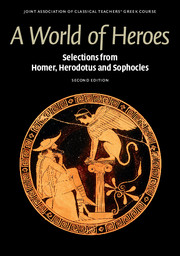
A World of Heroes is a reader designed for students who have just completed an introductory course in ancient Greek and wish to read substantial passages of ancient authors in the original language. It introduces three of ancient Greece's most important authors, Homer, Herodotus and Sophocles, and includes such gripping and influential stories as the battle of Thermopylai (from Herodotus' Histories); the death of Hektor (the Iliad) and the fall of Oedipus. Notes accompanying each passage provide extensive help with vocabulary and translation, and each section contains a brief introduction to the author and his work. The first edition of the book proved very successful with students and instructors for more than three decades. This, the second edition, includes the same texts as the first but provides much more help with translating and understanding them in order better to meet the needs of modern students.
Model Predictive Control (MPC), the dominant advanced control approach in industry over the past twenty-five years, is presented comprehensively in this unique book. With a simple, unified approach, and with attention to real-time implementation, it covers predictive control theory including the stability, feasibility, and robustness of MPC controllers. The theory of explicit MPC, where the nonlinear optimal feedback controller can be calculated efficiently, is presented in the context of linear systems with linear constraints, switched linear systems, and, more generally, linear hybrid systems. Drawing upon years of practical experience and using numerous examples and illustrative applications, the authors discuss the techniques required to design predictive control laws, including algorithms for polyhedral manipulations, mathematical and multiparametric programming and how to validate the theoretical properties and to implement predictive control policies. The most important algorithms feature in an accompanying free online MATLAB toolbox, which allows easy access to sample solutions. Predictive Control for Linear and Hybrid Systems is an ideal reference for graduate, postgraduate and advanced control practitioners interested in theory and/or implementation aspects of predictive control.