To save content items to your account,
please confirm that you agree to abide by our usage policies.
If this is the first time you use this feature, you will be asked to authorise Cambridge Core to connect with your account.
Find out more about saving content to .
To save content items to your Kindle, first ensure no-reply@cambridge.org
is added to your Approved Personal Document E-mail List under your Personal Document Settings
on the Manage Your Content and Devices page of your Amazon account. Then enter the ‘name’ part
of your Kindle email address below.
Find out more about saving to your Kindle.
Note you can select to save to either the @free.kindle.com or @kindle.com variations.
‘@free.kindle.com’ emails are free but can only be saved to your device when it is connected to wi-fi.
‘@kindle.com’ emails can be delivered even when you are not connected to wi-fi, but note that service fees apply.
The language of human rights is the most prominent 'people-centred' language of global justice today. This textbook looks at how human rights are constructed at local, national, international and transnational levels and considers commonalities and differences around the world. Through discussions of key debates in the interdisciplinary study of human rights, the book develops its themes by considering examples of human rights advocacy in international organisations, national states and local grassroots movements. Case studies relating to specific organisations and institutions illustrate how human rights are being used to address structural injustices: imperialist geopolitics, authoritarianism and corruption, inequalities created by 'freeing' markets, dangers faced by transnational migrants as a result of the securitization of borders, and violence against women.
Stylistics is the linguistic study of style in language. It aims to account for how texts project meaning, how readers construct meaning and why readers respond to texts in the way that they do. This book is an introduction to stylistics that locates it firmly within the traditions of linguistics. Organised to reflect the historical development of stylistics from its origins in Russian formalism, the book covers key principles such as foregrounding theory, as well as more recent developments in cognitive stylistics. It includes an examination of both literary and non-literary texts, and substantial coverage of methodologies for stylistic analysis. Throughout the book, the emphasis is on the practicalities of producing stylistic analyses that are objective, replicable and falsifiable. Comprehensive in its coverage and assuming no prior knowledge of the topic, Stylistics will be essential reading for undergraduate and graduate students new to this fascinating area of language study.
This richly illustrated, four-colour textbook introduces the art and archaeology of ancient Greece, from the Bronze Age through to the Roman conquest. Suitable for students with no prior knowledge of ancient art, this textbook reviews the main objects and monuments of the ancient Greek world, emphasizing the context and function of these artefacts in their particular place and time. Students are led to a rich understanding of how objects were meant to be perceived, what 'messages' they transmitted and how the surrounding environment shaped their meaning. The book contains nearly five hundred illustrations (with over four hundred in colour), including specially commissioned photographs, maps, floorplans and reconstructions. Judith M. Barringer examines a variety of media, including marble and bronze sculpture, public and domestic architecture, painted vases, coins, mosaics, terracotta figurines, reliefs, jewellery and wall paintings. Numerous text boxes, chapter summaries and timelines, complemented by a detailed glossary, support student learning.
This revised and extended edition of the leading textbook on European economic history has been updated to take account of contemporary economic developments and the latest research and debates. A concise and accessible introduction that covers the full sweep of the European history, the book focuses on the interplay between the development of institutions and the generation and diffusion of knowledge-based technologies. With simple explanations of key economic principles, the book is an ideal introduction for students in history and economics. Revised textboxes and figures, an extensive glossary, suggestions for further reading and a suite of online resources lead students to a comprehensive understanding of the subject. New material covers contemporary economic developments such as the financial crises of 2007/2008, the Eurozone crisis, new trends in inequality and the austerity debates. This remains the only textbook students need to understand Europe's unique economic development and its global context.
Specifically intended for lab-based biomedical researchers, this practical guide shows how to design experiments that are reproducible, with low bias, high precision, and widely applicable results. With specific examples from research using both cell cultures and model organisms, it explores key ideas in experimental design, assesses common designs, and shows how to plan a successful experiment. It demonstrates how to control biological and technical factors that can introduce bias or add noise, and covers rarely discussed topics such as graphical data exploration, choosing outcome variables, data quality control checks, and data pre-processing. It also shows how to use R for analysis, and is designed for those with no prior experience. An accompanying website (https://stanlazic.github.io/EDLB.html) includes all R code, data sets, and the labstats R package. This is an ideal guide for anyone conducting lab-based biological research, from students to principle investigators working in either academia or industry.
Books XVII and XVIII of the Odyssey feature, among other episodes, the disguised Odysseus' penetration of his home after an absence of twenty years and his first encounter with his wife. The commentary provides linguistic and syntactical guidance suitable for upper-level students along with detailed consideration of Homer's compositional and narrative techniques, his literary artistry and the poem's central themes. An extensive introduction considers questions of formulaic composition, the nature of the poem's audience and the context of its performance, and isolates the concerns most prominent in the poem's second half and in Books XVII and XVIII in particular. Here too are considered the roles of Penelope and Telemachus, questions of disguise and recognition, and the institution of hospitality flaunted by the suitors in Odysseus' halls. Brief sections also discuss Homeric metre and the transmission of the text.
The third edition of this successful text describes and evaluates a range of widely used numerical methods, with an emphasis on problem solving. Every method is discussed thoroughly and illustrated with problems involving both hand computation and programming. MATLAB® M-files accompany each method and are available on the book's web page. Code is made simple and easy to understand by avoiding complex book-keeping schemes, while maintaining the essential features of the method. The third edition features a new chapter on Euler's method, a number of new and improved examples and exercises, and programs which appear as function M-files. Numerical Methods in Engineering with MATLAB®, 3rd edition is a useful resource for both graduate students and practicing engineers.
This is a 1994 translation of one of the classics of the traditions of anarchism and socialism. Pierre-Joseph Proudhon was a contemporary of Marx and one of the most acute, influential and subversive critics of modern French and European society. His What is Property? (1840) produced the answer 'Property is theft'; the book itself has become a classic of political thought through its wide-ranging and deep-reaching critique of private property as at once the essential institution of Western culture and the root cause of greed, corruption, political tyranny, social division and violation of natural law. A critical and historical introduction situates Proudhon's 'diabolical work' (as he called it) in the context of nineteenth-century social and legal controversy and of the history of political thought in general.
Satire was a genre of poetry invented and developed by the Romans. When it came into Juvenal's hands, he stamped his mark upon it: indignation. His angry voice had an overwhelming influence upon later European satirists and persists in modern forms of satire. In this new commentary, Susanna Morton Braund situates Juvenal within the genre of satire and illuminates his appropriation of the 'grand style' of declamatory rhetoric and epic poetry for his indignant persona in Satires 1–5, including the notorious second Satire. The commentary on each of the Satires is followed by an essay which offers an interpretation of the poem, including a synthesis of recent critical thought. These essays, together with the overview in the Introduction, present the first integrated reading of Book I as an organic structure.
For 40 years, Kleppner and Kolenkow's classic text has introduced students to the principles of mechanics. Now brought up to date, this revised and improved second edition is ideal for classical mechanics courses for first- and second-year undergraduates with foundation skills in mathematics. The book retains all the features of the first edition, including numerous worked examples, challenging problems and extensive illustrations, and has been restructured to improve the flow of ideas. It now features new examples taken from recent developments, such as laser slowing of atoms, exoplanets and black holes; a 'Hints, Clues and Answers' section for the end-of-chapter problems to support student learning; and a solutions manual for instructors at www.cambridge.org/kandk.
Two billion years of Earth history are represented in the rocks and landscape of the Southwest USA, creating natural wonders such as the Grand Canyon, Monument Valley, and Death Valley. This region is considered a geologist's 'dream', since its rocks provide a slice through a huge range of Earth history, and provide examples of many of the geologic processes shaping the Earth. For this reason, the region attracts a large number of undergraduate field classes, and amateur geologists. Geology of the American Southwest, first published in 2004, provides a concise and accessible account of the geology of the region, and will prove invaluable to students studying here. It will also appeal to anyone interested in geology and landscape, and is a valuable guide for visitors to the National Parks of the region.
This is the market's most student-friendly textbook on EU internal market law, covering everything students need to know about the legal and regulatory framework of the internal market and eliminating the need for a full EU law text. Concise and focused, chapters explore the underlying socio-economic and historical contexts of EU law, and offer a thorough examination of the law's technical aspects, ensuring that students gain a rich understanding of the way that legal rules and structures have developed from key political and social debates. Key concepts are illustrated by excerpts, summaries and discussions of classic and modern cases. Numerous features include text boxes, illustrative cases, legal interpretations, tables, and suggestions for further reading, which support students with little background knowledge of the subject, leading them to total mastery of the material.
This up-to-date edition makes Euripides' most famous and influential play accessible to students of Greek reading their first tragedy as well as to more advanced students. The introduction analyzes Medea as a revenge-plot, evaluates the strands of motivation that lead to her tragic insistence on killing her own children, and assesses the potential sympathy of a Greek audience for a character triply marked as other (barbarian, witch, woman). A unique feature of this book is the introduction to tragic language and style. The text, revised for this edition, is accompanied by an abbreviated critical apparatus. The commentary provides morphological and syntactic help for inexperienced students and more advanced observations on vocabulary, rhetoric, dramatic techniques, stage action, and details of interpretation, from the famous debate of Medea and Jason to the 'unmotivated' entrance of Aegeus and the controversial monologue of Medea.
Combinatorics is a subject of increasing importance, owing to its links with computer science, statistics and algebra. This is a textbook aimed at second-year undergraduates to beginning graduates. It stresses common techniques (such as generating functions and recursive construction) which underlie the great variety of subject matter and also stresses the fact that a constructive or algorithmic proof is more valuable than an existence proof. The book is divided into two parts, the second at a higher level and with a wider range than the first. Historical notes are included which give a wider perspective on the subject. More advanced topics are given as projects and there are a number of exercises, some with solutions given.
This remarkable collection of almost 1,400 aphorisms was originally published in three instalments. The first (now Volume I) appeared in 1878, just before Nietzsche abandoned academic life, with a first supplement entitled The Assorted Opinions and Maxims following in 1879, and a second entitled The Wanderer and his Shadow a year later. In 1886 Nietzsche republished them together in a two-volume edition, with new prefaces to each volume. Both volumes are presented here in R. J. Hollingdale's distinguished translation (originally published in the series Cambridge Texts in German Philosophy) with a new introduction by Richard Schacht. In this wide-ranging work Nietzsche first employed his celebrated aphoristic style, so perfectly suited to his iconoclastic, penetrating and multi-faceted thought. Many themes of his later work make their initial appearance here, expressed with unforgettable liveliness and subtlety. Human, All Too Human well deserves its subtitle 'A Book for Free Spirits', and its original dedication to Voltaire, whose project of radical enlightenment here found a new champion.
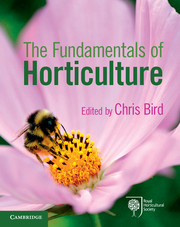
Essential reading for all studying horticulture and keen gardeners. This clear introduction to the principles underlying the practical applications of horticulture opens up the excitement of growing plants and garden development without readers wading through complex information. Written by a team of highly motivated and experienced horticultural tutors, the text supports the newly restructured RHS Level 2 qualifications with related Level 3 topics in boxes and signposting to Level 4 topics, together with other horticultural qualifications at these levels. Full colour images tied closely to the text and practical case study boxes inspire readers by making topics relevant to their own horticultural experiences. A comprehensive glossary helps build confidence in the use of classical horticulture language as well as new developing terms, and end-of-chapter questions encourage readers to apply what they have learnt. Extensive online supporting material includes mind maps showing the relationship of topics and aiding students in revision.
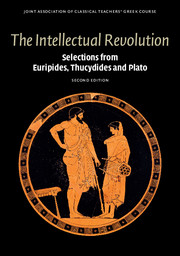
The Intellectual Revolution is a reader designed for students who have just completed an introductory course in ancient Greek and wish to read substantial passages of ancient authors in the original language. It introduces three of ancient Greece's most important authors, Euripides, Thucydides and Plato, and includes such gripping and influential stories as the revenge of Medeia (as told by Euripides); the Athenians' ill-fated Sicilian expedition (from Thucydides' Histories) and the life and death of Socrates. Notes accompanying each passage provide extensive help with vocabulary and translation, and each section contains a brief introduction to the author and his work. The first edition of the book proved very successful with students and instructors for more than three decades. This, the second edition, includes the same texts as the first but provides much more help with translating and understanding them in order better to meet the needs of modern students.
These lively narrative poems, attributed in antiquity to Homer, are works of great charm. Composed for recitation at festivals in honour of the gods, they tell of Apollo's birth on the island of Delos and his foundation of the Delphic oracle; Hermes' invention of the lyre and theft of his brother Apollo's cattle; and Aphrodite's love affair with the mortal Anchises. This edition offers a new text of these poems. The Introduction discusses among other things the nature and purpose of the poems in general, their origins, their structure and themes. The Commentary brings out the individual character of each Hymn, by analyzing in depth its language and literary qualities, and also its religious and historical aspects. The aim is to make these Hymns more accessible to students of Greek literature, and help them to appreciate the poems more fully as major works of early Greek poetry.
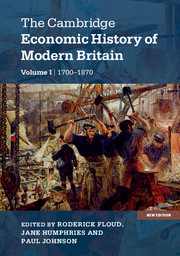
A new edition of the leading textbook on the economic history of Britain since industrialization. Combining the expertise of more than thirty leading historians and economists, Volume 1 tracks Britain's economic history in the period ranging from 1700 to 1870 from industrialisation to global trade and empire. Each chapter provides a clear guide to the major controversies in the field and students are shown how to connect historical evidence with economic theory and apply quantitative methods. New approaches are proposed to classic issues such as the causes and consequences of industrialisation, the role of institutions and the state, and the transition from an organic to an inorganic economy, as well as introducing new issues such as globalisation, convergence and divergence, the role of science, technology and invention, and the growth of consumerism. Throughout the volume, British experience is set within an international context and its performance benchmarked against its global competitors.
This book, written by a non-statistician for non-statisticians, emphasises the practical approach to those problems in statistics that arise regularly in data analysis situations in nuclear and high-energy physics experiments. Rather than concentrating on formal proofs of theorems, an abundant use of simple examples illustrates the general ideas that are presented, showing the reader how to obtain the maximum information from the data in the simplest manner. Possible difficulties with the various techniques, and pitfalls to be avoided, are also discussed. Based on a series of lectures given by the author to both students and staff at Oxford, this common-sense approach to statistics will enable nuclear physicists to understand better how to do justice to their data in both analysis and interpretation. This title is also available as open access on Cambridge Core.