To save content items to your account,
please confirm that you agree to abide by our usage policies.
If this is the first time you use this feature, you will be asked to authorise Cambridge Core to connect with your account.
Find out more about saving content to .
To save content items to your Kindle, first ensure no-reply@cambridge.org
is added to your Approved Personal Document E-mail List under your Personal Document Settings
on the Manage Your Content and Devices page of your Amazon account. Then enter the ‘name’ part
of your Kindle email address below.
Find out more about saving to your Kindle.
Note you can select to save to either the @free.kindle.com or @kindle.com variations.
‘@free.kindle.com’ emails are free but can only be saved to your device when it is connected to wi-fi.
‘@kindle.com’ emails can be delivered even when you are not connected to wi-fi, but note that service fees apply.
This up-to-date edition offers a detailed literary and cultural analysis of Euripides' Helen, a work which arguably embodies the variety and dynamism of fifth-century Athenian tragedy more than any other surviving play. The story of an exemplary wife (not an adulteress) who went to Egypt (not to Troy), Euripides' 'new Helen' skilfully transforms and supplants earlier currents of literature and myth. The Introduction elucidates Euripides' treatment of Helen and sets the play in its wider intellectual context. It also discusses questions of genre and reception, rejecting such descriptions as 'tragicomedy' or 'romantic tragedy', and showing how later artists have responded to Euripides' unorthodox heroine and her phantom double. The Commentary's notes on language and style are intended to make Helen fully accessible to readers of Greek at all levels, while the edition as a whole is designed for use by anyone with an interest in Greek tragedy.
Functional programming is a style of programming that emphasizes the use of functions (in contrast to object-oriented programming, which emphasizes the use of objects). It has become popular in recent years because of its simplicity, conciseness, and clarity. This book teaches functional programming as a way of thinking and problem solving, using Haskell, the most popular purely functional language. Rather than using the conventional (boring) mathematical examples commonly found in other programming language textbooks, the author uses examples drawn from multimedia applications, including graphics, animation, and computer music, thus rewarding the reader with working programs for inherently more interesting applications. Aimed at both beginning and advanced programmers, this tutorial begins with a gentle introduction to functional programming and moves rapidly on to more advanced topics. Details about progamming in Haskell are presented in boxes throughout the text so they can be easily found and referred to.
This important textbook is based on, though independent of, an educational TV series The Mechanical Universe broadcast on public television in the United States. Its aim is to guide students and general readers to an understanding of how the physical world works; physics is presented as a human endeavour, with historical development forming a thread throughout the text. The prerequisites are minimal, only basic algebra and trigonometry since the necessary calculus is developed in the text, with physics providing the motivation. New concepts are introduced at the natural, logical point with many historical references to place physics in a social perspective. Many topics from twentieth-century physics are included, for example energy, low temperature physics, relativity and black holes. The book is attractively and profusely illustrated and will be welcomed by students and also by general readers for whom this will be a stimulating alternative to other, less-thorough treatments.
What can computers do in principle? What are their inherent theoretical limitations? These are questions to which computer scientists must address themselves. The theoretical framework which enables such questions to be answered has been developed over the last fifty years from the idea of a computable function: intuitively a function whose values can be calculated in an effective or automatic way. This book is an introduction to computability theory (or recursion theory as it is traditionally known to mathematicians). Dr Cutland begins with a mathematical characterisation of computable functions using a simple idealised computer (a register machine); after some comparison with other characterisations, he develops the mathematical theory, including a full discussion of non-computability and undecidability, and the theory of recursive and recursively enumerable sets. The later chapters provide an introduction to more advanced topics such as Gödel's incompleteness theorem, degrees of unsolvability, the Recursion theorems and the theory of complexity of computation. Computability is thus a branch of mathematics which is of relevance also to computer scientists and philosophers. Mathematics students with no prior knowledge of the subject and computer science students who wish to supplement their practical expertise with some theoretical background will find this book of use and interest.
Those aspects of language use that are crucial to an understanding of language as a system, and especially to an understanding of meaning, are the acknowledged concern of linguistic pragmatics. This textbook provides a lucid and integrative analysis of the central topics in pragmatics - deixis, implicature, presupposition, speech acts, and conversational structure. A central concern of the book is the relation between pragmatics and semantics, and Dr Levinson shows clearly how a pragmatic approach can resolve some of the problems semantics have been confronting and simplifying semantic analyses. The exposition is always clear and supported by helpful exemplification. The detailed analyses of selected topics give the student a clear view of the empirical rigour demanded by the study of linguistic pragmatics, but Dr Levinson never loses sight of the rich diversity of the subject. An introduction and conclusion relate pragmatics to other fields in linguistics and other disciplines concerned with language usage - psychology, philosophy, anthropology and literature.
Most natural and industrial flows are turbulent. The atmosphere and oceans, automobile and aircraft engines, all provide examples of this ubiquitous phenomenon. In recent years, turbulence has become a very lively area of scientific research and application, attracting many newcomers who need a basic introduction to the subject. An Introduction to Turbulent Flow, first published in 2000, offers a solid grounding in the subject of turbulence, developing both physical insight and the mathematical framework needed to express the theory. It begins with a review of the physical nature of turbulence, statistical tools, and space and time scales of turbulence. Basic theory is presented next, illustrated by examples of simple turbulent flows and developed through classical models of jets, wakes, and boundary layers. A deeper understanding of turbulence dynamics is provided by spectral analysis and its applications. The final chapter introduces the numerical simulation of turbulent flows. This well-balanced text will interest graduate students in engineering, applied mathematics, and the physical sciences.
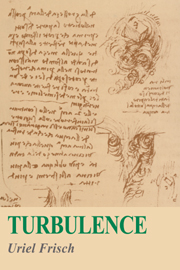
This textbook presents a modern account of turbulence, one of the greatest challenges in physics. The state-of-the-art is put into historical perspective five centuries after the first studies of Leonardo and half a century after the first attempt by A. N. Kolmogorov to predict the properties of flow at very high Reynolds numbers. Such 'fully developed turbulence' is ubiquitous in both cosmical and natural environments, in engineering applications and in everyday life. The intended readership for the book ranges from first-year graduate students in mathematics, physics, astrophysics, geosciences and engineering, to professional scientists and engineers. Elementary presentations of dynamical systems ideas, of probabilistic methods (including the theory of large deviations) and of fractal geometry make this a self-contained textbook.
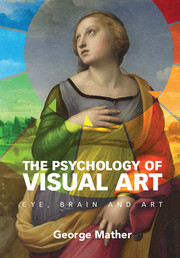
What can art tell us about how the brain works? And what can the brain tell us about how we perceive and create art? Humans have created visual art throughout history and its significance has been an endless source of fascination and debate. Visual art is a product of the human brain, but is art so complex and sophisticated that brain function and evolution are not relevant to our understanding? This book explores the links between visual art and the brain by examining a broad range of issues including: the impact of eye and brain disorders on artistic output; the relevance of Darwinian principles to aesthetics; and the constraints imposed by brain processes on the perception of space, motion and colour in art. Arguments and theories are presented in an accessible manner and general principles are illustrated with specific art examples, helping students to apply their knowledge to new artworks.
The Protagoras is one of Plato's most entertaining dialogues. It represents Socrates at a gathering of the most celebrated and highest-earning intellectuals of the day, among them the sophist Protagoras. In flamboyant displays of both rhetoric and dialectic, Socrates and Protagoras try to out-argue one another. Their arguments range widely, from political theory to literary criticism, from education to the nature of cowardice; but in view throughout this literary and philosophical masterpiece are the questions of what part knowledge plays in a successful life, and how we may acquire the knowledge that makes for success. This edition contains the first commentary in English on the Greek text for almost a hundred years. The commentary provides the assistance with linguistic, literary and philosophical detail that will enable students and scholars to savour to the full the pleasures of the Protagoras.
Ecology: Principles and Applications is a comprehensive textbook for A-level students and first-year undergraduates taking courses in biology, geography and Earth sciences, who require an introduction to ecology. Studies of human ecology are integrated into the text, and the links to related disciplines are emphasised. The text begins with the ecology of individual organisms and moves on, through communities and ecosystems, to global considerations of biogeography, co-evolution and conservation. Case histories, historical perspectives, controversial theories and extension material are highlighted throughout the book. The second edition has been brought up to date with current syllabuses by the addition of further material on the key issue of conservation, giving excellent coverage of the principles of conservation and using case studies to provide examples of conservation policies in practice. The authors are experienced teachers of ecology at sixth form and undergraduate level.
The long-awaited second edition of this well-received textbook gives a thorough introduction to observational astronomy. Starting with the basics of positional astronomy and systems of time, it continues with charts and catalogs covering both historically important publications and modern electronic databases. The book builds on a fundamental discussion of the basics of light and the effects of the atmosphere on astronomical observations. Chapters include discussions of optical telescopes, detectors, photometry, variable stars, astrometry, spectroscopy, and solar observations. This edition contains new discussions of measurements with CCDs and appendices give basic statistical methods, useful astronomical software and websites, and sources of accurate time-calibration signals. Observational Astronomy is the perfect textbook for upper level undergraduate or beginning graduate courses on astronomy. Examples based on real astronomical data are placed throughout the text. Each of the well-illustrated chapters is supported by a set of graduated problems and suggestions for further reading.
A new edition of the leading textbook on the economic history of Britain since industrialization. Combining the expertise of more than thirty leading historians and economists, Volume 2 tracks the development of the British economy from late nineteenth-century global dominance to its early twenty-first century position as a mid-sized player in an integrated European economy. Each chapter provides a clear guide to the major controversies in the field and students are shown how to connect historical evidence with economic theory and how to apply quantitative methods. The chapters re-examine issues of Britain's relative economic growth and decline over the 'long' twentieth century, setting the British experience within an international context, and benchmark its performance against that of its European and global competitors. Suggestions for further reading are also provided in each chapter, to help students engage thoroughly with the topics being discussed.
The Greek prose writer Lysias is a fascinating source for the study of Athenian law, society and history in the late fifth century BC. Six of his professional legal speeches are selected in this new edition, both for their intrinsic interest and because the language is accessible even to the comparative beginner. In his introduction Dr Carey discusses Lysias' life and place in the evolution of Greek prose style, and the development of Greek rhetoric. He approaches the speeches in terms of their function, as attempts to secure a verdict favourable to the speaker, and assesses how effectively the selection and deployment of arguments promote this end. In the commentary he addresses problems of Lysias' style and syntax, and textual issues where necessary, but the particular focus is always literary: Lysias' use of rhetorical devices, his marshalling of fact and argument and his manipulation of contemporary values and prejudices are examined in detail. These speeches are invaluable historical documents and will be of interest to students of ancient history and civilisation, as well as classicists.
This textbook offers a fresh approach to digital signal processing (DSP) that combines heuristic reasoning and physical appreciation with sound mathematical methods to illuminate DSP concepts and practices. It uses metaphors, analogies and creative explanations, along with examples and exercises to provide deep and intuitive insights into DSP concepts. Practical DSP requires hybrid systems including both discrete- and continuous-time components. This book follows a holistic approach and presents discrete-time processing as a seamless continuation of continuous-time signals and systems, beginning with a review of continuous-time signals and systems, frequency response, and filtering. The synergistic combination of continuous-time and discrete-time perspectives leads to a deeper appreciation and understanding of DSP concepts and practices. For upper-level undergraduatesIllustrates concepts with 500 high-quality figures, more than 170 fully worked examples, and hundreds of end-of-chapter problems, more than 150 drill exercises, including complete and detailed solutionsSeamlessly integrates MATLAB throughout the text to enhance learning
Analyzing Sound Patterns is a clear and concise introduction to phonological phenomena, covering a wide range of issues from segmental to suprasegmental problems and prosodic morphology. Assuming no prior knowledge of problem solving, this textbook shows students how to analyze phonological problems with a focus on practical tools, methodology and step-by-step instructions. It is aimed at undergraduate and beginning graduate students and places an instructional focus on developing students' analytical abilities. It includes extensive exercises of various types which engage students in reading and evaluating competing analyses, and involves students in a variety of analytical tasks. This textbook:is designed around related phonological problems and demonstrates how they are analyzed step by steppresents and compares competing accounts of identical problems, and discusses and evaluates the arguments that distinguish one analysis from anotherdetails how a broad array of sound patterns are identified and analyzed.
Written specifically for graduate students and practitioners beginning social science research, Statistical Modeling and Inference for Social Science covers the essential statistical tools, models and theories that make up the social scientist's toolkit. Assuming no prior knowledge of statistics, this textbook introduces students to probability theory, statistical inference and statistical modeling, and emphasizes the connection between statistical procedures and social science theory. Sean Gailmard develops core statistical theory as a set of tools to model and assess relationships between variables - the primary aim of social scientists - and demonstrates the ways in which social scientists express and test substantive theoretical arguments in various models. Chapter exercises guide students in applying concepts to data, extending their grasp of core theoretical concepts. Students will also gain the ability to create, read and critique statistical applications in their fields of interest.
In this book, a new approach is pioneered in providing a unified theory in continuum mechanics. General Continuum Mechanics is intended for the beginner, but it develops advanced material covering interdisciplinary subjects. With applications of convective, Lagrangian, and Eulerian coordinates and the first and second laws of thermodynamics, the first-year graduate student will learn solid mechanics and fluid mechanics as an integrated subject. Electromagnetic continuum and relativistic continuum are included. The conservational properties of mass, momentum, and energy on earth and in the universe constitute the ingredients of this book. They are the monumental contributions of Newton, Maxwell, and Einstein, a panorama of beauty of universal laws that evolved over the last four centuries. No boundaries are needed to separate them, but rather we integrate them in harmony and place them in perspective. This is the book for interdisciplinary studies to carry out the modern scientific projects in which engineering, physics, and applied mathematics must be combined.
The twenty-fourth book of the Iliad - the account of Priam's ransoming of Hector's body from Achilles - is one of the masterpieces of world literature, a work of interest to a far wider audience than scholars of ancient Greek. In this edition Colin Macleod tries to reach both scholars and Greekless readers alike. In his commentary he gives help to readers unfamiliar with the language of Homer and discusses problems of content and expression, never treating this book in isolation but drawing attention to Homer's artistry and thought in the context of the whole of the Iliad. In his introduction Mr Macleod examines Homer's notion of poetry, his style and language and the architecture and meaning of his work. He tries to show why Book XXIV is a proper conclusion to the Iliad. This is an edition for classical scholars, undergraduates and students in the upper forms of schools. The introduction and substantial parts of the commentary require no knowledge of Greek and should find readers among all who are interested in European literature.
A clear and up-to-date introduction to linguistics. This best-selling textbook addresses the full scope of language, from the traditional subjects of structural linguistics (relating to sound, form, meaning and language change) to the more specialised subjects of contextual linguistics (including discourse, dialect variation, language and culture, and the politics of language). There are also separate chapters on language and the brain, computational linguistics, writing, and first and second language learning. Extensively classroom-tested, this second edition has been revised to further support student learning, with numerous new examples, exercises and textboxes to model and contextualise key concepts. Updated throughout to incorporate contemporary issues and events, it includes worked examples of phonological analyses and multiple examples of a variety of World Englishes. A rich collection of online resources completes the learning package.
Focusing on deterministic models in discrete time, this concise yet rigorous textbook provides a clear and systematic introduction to the theory and application of dynamic economic models. It guides students through the most popular model structures and solution concepts, from the simplest dynamic economic models through to complex problems of optimal policy design in dynamic general equilibrium frameworks. Chapters feature theorems and practical hints, and seventy-five worked examples highlight the various methods and results that can be applied in dynamic economic models. Notation and formulation is uniform throughout, so students can easily discern the similarities and differences between various model classes. Chapters include more than sixty exercises for students to self-test their analytical skills, and password-protected solutions are available for instructors on the companion website. Assuming no prior knowledge of dynamic economic analysis or dynamic optimization, this textbook is ideal for advanced students in economics.