To save content items to your account,
please confirm that you agree to abide by our usage policies.
If this is the first time you use this feature, you will be asked to authorise Cambridge Core to connect with your account.
Find out more about saving content to .
To save content items to your Kindle, first ensure no-reply@cambridge.org
is added to your Approved Personal Document E-mail List under your Personal Document Settings
on the Manage Your Content and Devices page of your Amazon account. Then enter the ‘name’ part
of your Kindle email address below.
Find out more about saving to your Kindle.
Note you can select to save to either the @free.kindle.com or @kindle.com variations.
‘@free.kindle.com’ emails are free but can only be saved to your device when it is connected to wi-fi.
‘@kindle.com’ emails can be delivered even when you are not connected to wi-fi, but note that service fees apply.
In this updated edition of his classic account, Charles Nauert charts the rise of humanism as the distinctive culture of the social, political and intellectual elites in Renaissance Europe. He traces humanism's emergence in the unique social and cultural conditions of fourteenth-century Italy and its gradual diffusion throughout the rest of Europe. He shows how, despite its elitist origins, humanism became a major force in the popular culture and fine arts of the fifteenth and sixteenth centuries, and the powerful impact it had on both the Protestant and Catholic Reformations. He uses art and biographical sketches of key figures to illuminate the narrative and concludes with an account of the limitations of humanism at the end of the Renaissance. The revised edition includes a section dealing with the place of women in humanistic culture and an updated bibliography. It will be essential reading for all students of Renaissance Europe.
Cicero's De Oratore is one of the masterpieces of Latin prose. A literary dialogue in the Greek tradition, it was written in 55 BCE in the midst of political turmoil at Rome, but reports a discussion 'concerning the (ideal) orator' that supposedly took place in 90 BCE, just before an earlier crisis. Cicero features eminent orators and statesmen of the past as participants in this discussion, presenting competing views on many topics. This edition of Book III is the first since 1893 to provide a Latin text and full introduction and commentary in English. It is intended to help advanced students and others interested in Roman literature to comprehend the grammar and appreciate the stylistic nuances of Cicero's Latin, to trace the historical, literary, and theoretical background of the topics addressed, and to interpret Book III in relation to the rest of De Oratore and to Cicero's other works.
This book is an introduction, for mathematics students, to the theories of information and codes. They are usually treated separately but, as both address the problem of communication through noisy channels (albeit from different directions), the authors have been able to exploit the connection to give a reasonably self-contained treatment, relating the probabilistic and algebraic viewpoints. The style is discursive and, as befits the subject, plenty of examples and exercises are provided. Some examples and exercises are provided. Some examples of computer codes are given to provide concrete illustrations of abstract ideas.
This textbook provides a comprehensive review of the problems associated with the supply of drinking water in the developed world. Since the first edition of this book was published, water companies and regulators have been presented with numerous new challenges - global warming has seriously affected water supplies and water quality; advances in chemical and microbial analysis have revealed many new contaminants in water that were previously undetectable; and recent terrorist attacks have demonstrated how vulnerable water supplies are to contamination or disruption. This new edition includes an overview of the current and emerging problems, with potential solutions. It has been completely updated, and includes the WHO Revised Drinking Water Guidelines. An ideal textbook for courses in environmental science, hydrology, environmental health and environmental engineering; it also provides an authoritative reference for practitioners and professionals in the water supply industry.
This textbook connects the big ideas and key thinkers of psychology and philosophy in a clear and cohesive theoretical narrative. Students are led to understand the relations between different schools of thought, and to connect the various thinkers, theories and facts in psychology's history. Focusing on the major ideas that have reoccurred throughout history, such as the mind-body problem and the role of the mind in our experience, Martin Farrell shows how specific thinkers have explored the same ideas, but in different ways, leading to distinct schools of thought. The coherent narrative enables students to see the bigger picture, through which the historical and conceptual roots of psychology can be easily understood.
This well-established textbook gives a general but comprehensive introduction to positional astronomy. Originally based on the author's lecture courses at Cambridge University, it is intended primarily for undergraduates, but, due to its comprehensive nature, it is a very useful reference text for research workers in many branches of astronomy and space physics. The author considers the night sky as the celestial sphere and powerfully exploits the methods of spherical geometry. Most problems in which the precise determination of a heavenly body's position in the sky is important are considered in theoretical detail, and the necessary formulae are derived to a precision that is sufficient for all but the most specialist purposes. The present revision has ensured that the terminology and treatment correspond precisely to current astronomical practice. A guiding principle has been to re-establish compatibility with the Astronomical Ephemeris and, to a lesser extent, with the fuller explanations of the Explanatory Supplement to the Astronomical Ephemeris and the American Ephemeris and Nautical Almanac. Fairly frequent comments added to the text indicate the sometimes modified relevance of the subject matter to modern astronomy. A number of additional exercises help to illustrate the new material.
A focus on the interplay between medical law and medical ethics makes this refreshing new textbook the most balanced approach available to students of law and medicine. By offering a unique chapter structure which gives equal weight to both the legal and ethical issues it allows for an appreciation of all factors at play in the field of medical law. In addition, its student-friendly writing style combined with critical analysis gives students the tools to engage with key issues and form their own understanding. Accompanying online case studies convey the law in practice, and encourage students to consider their own views and arguments in terms of legal analysis and ethical consideration. Coverage of recent judicial cases and statutes, with a good balance of factual detail and critical analysis, allows students to engage with this evolving discipline.
The Carmen Saeculare was composed and published in 17 BCE as Horace was returning to the genre of lyric which he had abandoned six years earlier; the fourth book of Odes is in part a response to this poem, the only commissioned poem we know from the period. The hardening of the political situation, with the Republic a thing of the past and the Augustan succession in the air, threw the problematic issue of praise into fresh relief, and at the same time provided an impulse towards the nostalgia represented by the poet's private world. Professor Thomas provides an introduction and commentary (the first full commentary in English since the nineteenth century) to each of the poems, exploring their status as separate lyric artefacts and their place in the larger web of the book. The edition is intended primarily for upper-level undergraduates and graduate students, but is also important for scholars.
The field of matter transport is central to understanding the processing of materials and their subsequent mechanical properties. While thermodynamics determines the final state of a material system, it is the kinetics of mass transport that governs how it gets there. This book, first published in 2000, gives a solid grounding in the principles of matter transport and their application to a range of engineering problems. The author develops a unified treatment of mass transport applicable to both solids and liquids. Traditionally matter transport in fluids is considered as an extension of heat transfer and can appear to have little relationship to diffusion in solids. This unified approach clearly makes the connection between these important fields. This book is aimed at advanced undergraduate and beginning graduate students of materials science and engineering and related disciplines. It contains numerous worked examples and unsolved problems. The material can be covered in a one semester course.
The Battle of Salamis was the first great (and unexpected) victory of the Greeks over the Persian forces under Xerxes, whose defeat had important consequences for the subsequent history and self-image of Europe. This battle forms the centre-piece of book VIII of Herodotus' Histories. The book also illuminates Greek views of themselves and of peoples from the East, the problematic relationships between different Greek states in the face of the invasion, and the role of the divine in history. This introduction and commentary pays particular attention to the history and culture of Achaemenid Persia and the peoples of its empire. It offers much help with the language of the text (which has been prepared for ease of reading), and deals with major literary and historical questions. It will be of especial use to intermediate and advanced Greek students, but also provides up-to-date scholarly materials for graduate students and professional classicists.
A comprehensive guide to conducting research projects in linguistics, this book provides a complete training in state-of-the-art data collection, processing, and analysis techniques. The book follows the structure of a research project, guiding the reader through the steps involved in collecting and processing data, and providing a solid foundation for linguistic analysis. All major research methods are covered, each by a leading expert. Rather than focusing on narrow specializations, the text fosters interdisciplinarity, with many chapters focusing on shared methods such as sampling, experimental design, transcription and constructing an argument. Highly practical, the book offers helpful tips on how and where to get started, depending on the nature of the research question. The only book that covers the full range of methods used across the field, this student-friendly text is also a helpful reference source for the more experienced researcher and current practitioner.
Most functions that occur in mathematics cannot be used directly in computer calculations. Instead they are approximated by manageable functions such as polynomials and piecewise polynomials. The general theory of the subject and its application to polynomial approximation are classical, but piecewise polynomials have become far more useful during the last twenty years. Thus many important theoretical properties have been found recently and many new techniques for the automatic calculation of approximations to prescribed accuracy have been developed. This book gives a thorough and coherent introduction to the theory that is the basis of current approximation methods. Professor Powell describes and analyses the main techniques of calculation supplying sufficient motivation throughout the book to make it accessible to scientists and engineers who require approximation methods for practical needs. Because the book is based on a course of lectures to third-year undergraduates in mathematics at Cambridge University, sufficient attention is given to theory to make it highly suitable as a mathematical textbook at undergraduate or postgraduate level.
This course is designed for students who have completed a first-level course in Arabic and wish to pursue the subject to degree level. It aims to develop thoroughly the four basic language skills of reading, writing, speaking and listening, making extensive use of authentic Arabic materials. Each of the twenty chapters is based around a particular topic relating to the culture, history, politics, geography or society of the Arab Middle East, to give students an insight into important aspects of the region. This topic-based approach allows students to tackle vocabulary and structures in a coherent and concentrated manner. Each chapter contains materials for translation into and from Arabic, aural texts, précis passages, suggested oral discussion topics, and a variety of exercises including comprehension in English and Arabic. Accompanying cassettes and a teacher's handbook are available separately.
For eight centuries after his death Menander was the third most popular poet in the Greek-speaking world, and his plays, through Roman imitations and adaptations, engendered a tradition of European light drama that extends to our own day. But it is only since 1844 that some of the actual texts of Menander's plays have been rediscovered, mostly in Egyptian papyri. Two of these have given us four-fifths of the script of Samia (The Woman from Samos), a play of deception and misunderstanding in which a marriage that everyone desires almost fails to happen, two women and a baby are almost ruined, and a loving father almost loses his only son, because the people at home and the people abroad have both been doing things behind each other's backs - but somehow everything ends happily after all. This is the first full-scale edition with English commentary and is suitable for upper-level students.
Designed for students with only a basic knowledge of linguistics, this leading textbook provides a clear and practical introduction to phonology, the study of sound patterns in language. It teaches in a step-by-step fashion the logical techniques of phonological analysis and the fundamental theories that underpin it. This thoroughly revised and updated edition teaches students how to analyze phonological data, how to think critically about data, how to formulate rules and hypotheses, and how to test them.New to this edition:Improved examples, over 60 exercises and 14 new problem sets from a wide variety of languages encourage students to practise their own analysis of phonological processes and patterns A new and updated reference list of phonetic symbols and an updated transcription system, making data more accessible to students Additional online material includes pedagogical suggestions and password-protected answer keys for instructors
With the exception of a poem on the unscripted death of a lion in the Colosseum, Book II of Statius' Silvae is largely domestic in theme. It reflects the more private side of Roman culture, its pleasures, houses, gardens, friendships, and personal losses; it concludes with a provocative tribute to the poet Lucan. Despite its variety, the book is carefully constructed as a unit, and this edition, which is suitable for use with advanced students, puts the book into its context in the history of Greek and Roman poetry. The commentary takes into account the important work done on the text of the Silvae in the past two decades as well as the new perspectives brought to bear on Flavian culture by historians and archaeologists. It explores Statius' use of the short poem as a playful engagement with literary tradition that also reflects changing ideas of Roman cultural identity.
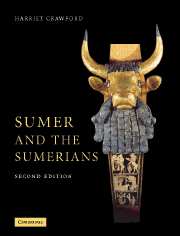
Mesopotamia produced one of the best-known ancient civilizations, with a literate, urban culture and highly-developed political institutions. In this fully revised and expanded edition of her classic text, Sumer and the Sumerians, Harriet Crawford reviews the extraordinary social and technological developments in the region from 3800 to 2000 BC. Drawing on the most up-to-date historical and archaeological sources, she provides a thematic exploration of this ancient civilization, examining its physical and historical background, changing settlement patterns, public and private architecture and cultural developments of the period. In this new edition, the chapter on Manufacturing Industries and Trade has been enlarged and divided into two chapters. In addition, a new chapter on the contemporary developments in Upper Mesopotamia is included. The final chapter reflects on the future of the heritage of Iraq in the aftermath of the second Gulf War.
This new edition of Aristotle's Nicomachean Ethics is an accurate, readable and accessible translation of one of the world's greatest ethical works. Based on lectures Aristotle gave in Athens in the fourth century BCE, Nicomachean Ethics is one of the most significant works in moral philosophy, and has profoundly influenced the whole course of subsequent philosophical endeavour. It offers seminal, practically oriented discussions of many central ethical issues, including the role of luck in human well-being, moral education, responsibility, courage, justice, moral weakness, friendship and pleasure, with an emphasis on the exercise of virtue as the key to human happiness. This second edition offers an updated editor's introduction and suggestions for further reading, and incorporates the line numbers as well as the page numbers of the Greek text. With its emphasis on accuracy and readability, it will enable readers without Greek to come as close as possible to Aristotle's work.
Presents a selection of stories from Ovid's Metamorphoses, the most famous and influential collection of Greek and Roman myths in the world. It includes well-known stories like those of Daedalus and Icarus, Pygmalion, Narcissus and King Midas. The book is designed for those who have completed an introductory course in Latin and aims to help such users to enjoy the story-telling, character-drawing and language of one of the world's most delightful and influential poets. The text is accompanied by full vocabulary and grammar notes, with assistance based on two widely used beginners' courses, Reading Latin and Wheelock's Latin. Essays at the end of each passage point up important detail and show how the logic of each story unfolds, while study sections offer questions for discussion and ways of thinking further about the passage. No other intermediate text is so carefully designed to make reading Ovid a pleasure.
Computing is revolutionizing the practice of biology. This book, which assumes no prior computing experience, provides students with the tools to write their own Python programs and to understand fundamental concepts in computational biology and bioinformatics. Each major part of the book begins with a compelling biological question, followed by the algorithmic ideas and programming tools necessary to explore it: the origins of pathogenicity are examined using gene finding, the evolutionary history of sex determination systems is studied using sequence alignment, and the origin of modern humans is addressed using phylogenetic methods. In addition to providing general programming skills, this book explores the design of efficient algorithms, simulation, NP-hardness, and the maximum likelihood method, among other key concepts and methods. Easy-to-read and designed to equip students with the skills to write programs for solving a range of biological problems, the book is accompanied by numerous programming exercises, available at www.cs.hmc.edu/CFB.