To save content items to your account,
please confirm that you agree to abide by our usage policies.
If this is the first time you use this feature, you will be asked to authorise Cambridge Core to connect with your account.
Find out more about saving content to .
To save content items to your Kindle, first ensure no-reply@cambridge.org
is added to your Approved Personal Document E-mail List under your Personal Document Settings
on the Manage Your Content and Devices page of your Amazon account. Then enter the ‘name’ part
of your Kindle email address below.
Find out more about saving to your Kindle.
Note you can select to save to either the @free.kindle.com or @kindle.com variations.
‘@free.kindle.com’ emails are free but can only be saved to your device when it is connected to wi-fi.
‘@kindle.com’ emails can be delivered even when you are not connected to wi-fi, but note that service fees apply.
In 1977, British Labour Prime Minister James Callaghan joined Commonwealth leaders by committing to the Gleneagles Agreement and thereby pledged to “combat the evil of apartheid” by “taking every practical step” to prevent sporting contacts between Britain and South Africa. Within two years of the agreement being struck, the Tories came to power under the leadership of Margaret Thatcher. Until the end of Thatcher’s time in office (1990), Britain’s application of the agreement became more controversial and divisive than it ever had during Callaghan’s administration, as critics zeroed in on the new Prime Minister’s interpretation of what “every practical step” represented or required. Although there are several studies that explore how and why Thatcher’s government chose to apply Gleneagles, none consider how the agreement was interpreted, debated, and contested from multiple perspectives. In this article, we examine what motivated such different reactions to Gleneagles in Britain and the Commonwealth and why ultimately Thatcher could not seem to please anyone.
Chapter 4 introduces the second section of the book by situating the theoretical framework of protest brokers within the South African context. Often referred to as the “protest capital of the world,” South Africa offers a rich and complex setting for studying protest dynamics and the role of intermediaries. The chapter begins by justifying the choice of South Africa as the primary case study location, highlighting its history of protest from the apartheid era through the democratic transition and into the present day. It provides a concise historical overview of protest in South Africa, emphasizing how evolving political conditions have shaped the forms, frequency, and actors involved in collective action. The chapter also outlines the empirical foundation of the book, detailing the case selection process and introducing the twelve communities at the heart of the study, as well as providing an overview of the data collected. This groundwork sets the stage for the chapters that follow. By anchoring the study in South Africa, this book demonstrates the value of contextually grounded research in developing and testing new theoretical insights.
In Tongoane v National Minister for Agriculture and Land Affairs, the Constitutional Court of South Africa ruled that the government’s attempt to regulate property in traditional communities through the Communal Land Rights Act (CLARA) was unconstitutional. It emphasised that traditional land was already governed by indigenous ‘living law’ and CLARA sought to replace this vernacular law, a system evolved over time, with legislation. This highlighted the presence of indigenous law predating colonialism, challenging colonial notions like ‘lex nullius’ (no law) and ‘terra nullius’ (empty land), which denied indigenous Africans their rights. This chapter argues that South Africa’s post-apartheid constitutional vision fails to fully recognise and integrate this vernacular law, undermining true transformation, and instead advocates for ‘Alter-Native Constitutionalism’, which would amalgamate ‘customary’, ‘common’ and vernacular law to reflect the realities and normative convictions of most South Africans. This approach aims to rectify historical injustices and create a more just legal system, rooted in indigenous values and addressing social and economic inequities. Explicating the indigenously feminist decolonising concept of Alter-Native Constitutionalism, the chapter calls for reconstitution of South Africa’s legal framework and content to give full voice to indigenous world-sense and law-sense, advocating a shift away from Eurocentric logics and norms.
As with the Left, the Conservative Party also began to look to charity for the delivery of social services. Following the enormous appeal of Band Aid and Live Aid, the Government turned to the voluntary sector to make up for the cuts to the social services budgets. However, it also hoped to embrace a compliant sector. Conservative MPs regularly complained to the Charity Commissioners about the political advocacy of the humanitarians and other poverty lobbyists. From the mid-1980s, this became a concerted campaign through neoconservative organisations such as Western Goals. The most successful was the International Freedom Foundation, an anti-communist libertarian group which triggered an investigation into Oxfam’s advocacy on apartheid. The Charity Commissioners concluded that Oxfam had overstepped its remit and publicly rebuked it in 1991, even though the end of apartheid was in sight. It later emerged that the IFF was a front organisation for the South African military. The racist politics of the region, which shaped so much humanitarian intervention, had returned to the UK to impact the regulation of all charities’ campaigning work.
Protest poetry has long been a central element within South Africa’s literary culture and was arguably the defining genre of the country’s anti-apartheid literature. This chapter traces this history from the 1950s to the present. It argues that the genre has evolved through a rolling wave of distinct literary moments deeply linked to the prevailing politics of the time. These include the Colored poetry of the 1950s, the anti-poetics of the 1970’s Black Consciousness affiliated Soweto Poets, the dramatic worker poets of the 1980s, and today’s #Fallist reincarnation of the genre. In offering this history, the chapter disputes traditional understandings of protest and, instead, proposes a new definition of a genre that is characterized by a call for change that is never achieved. Moreover, it highlights the importance of audience and demonstrates how each wave, describing an increasingly desperate need for social and political change, has been addressed to an ever-widening demographic.
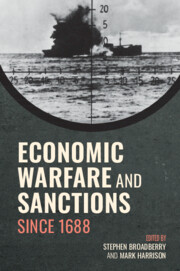
How have economic warfare and sanctions been applied in modern history, with what success and with what unintended consequences? In this book, leading economic historians provide answers through case studies ranging from the eighteenth-century rivalry of Britain and France and the American Civil War to the two world wars and the Cold War. They show how countries faced with economic measures have responded by resisting, adapting to, or seeking to pre-empt the attack so that the effects of an economic attack could be delayed or temporarily neutralised. Behind the scenes, however, economic measures shaped the course of warfare: they moulded war plans, raised the adversary's costs of mobilisation, and tipped the balance of final outcomes. This book is the first to combine the study of economic warfare and sanctions, showing the deep similarities and continuities as well as the differences, in an integrated framework.
Focusing on selected “Western” conceptions of democracy, we expose and normatively evaluate their conflictual meanings. We unpack the white democracy of prominent ordoliberal Wilhelm Röpke, which comprises an elitist bias against the demos, and we discuss different assessments of his 1964 apologia of Apartheid South Africa. Our critical-historical study of Röpke's marginalized meaning of democracy traces a neglected anti-democratic continuity in his work that is to be contextualized within wider elitist (neo)liberal discourses: from his critique of Nazism in the 1930s to the defense of Apartheid in the 1960s. We provide an alternative, marginalized meaning of democracy that draws on Marxist political science. Such a meaning of democracy helps explain why liberal democratic theory is ill-equipped to tackle anti-democratic tendencies re-emerging in liberal-democratic polities.
South Africa's post-apartheid context and a mix of African and non-mainstream Western political theory is felicitous for a positive critique of the two now predominant Western accounts of democracy. The context highlights how deliberative and aggregative accounts of democracy fall short in their attempts to make universal claims regarding democracy; and it provides the theoretical basis for an account of political democracy that better associates democracy with freedom, power, representation, and domination. The article argues that freedom is power through political representation, and freedom obtains if and only if the existing forms of representation manage power relations in order to minimize domination and enhance political judgement amongst representatives and represented. The article submit that, unless radical institutional change is carried out, South Africa will not rid itself of the legacies of these Western models and will be unable to generate the freedom and democracy its attainment of political freedom has now long promised.
Why did charity become the outlet for global compassion? Charity After Empire traces the history of humanitarian agencies such as Oxfam, Save the Children and Christian Aid. It shows how they obtained a permanent presence in the alleviation of global poverty, why they were supported by the public and how they were embraced by governments in Britain and across Africa. Through several fascinating life stories and illuminating case studies across the UK and in countries such as Botswana, Zimbabwe and Kenya, Hilton explains how the racial politics of Southern Africa shaped not only the history of international aid but also the meaning of charity and its role in the alleviation of poverty both at home and abroad. In doing so, he makes a powerful case for the importance of charity in the shaping of modern Britain over the extended decades of decolonization in the latter half of the twentieth century.
From the 1950s, the aims of economic warfare began to shift from disabling adversaries to using economic sanctions to shape the internal policies of states seen to be violating international norms. Sanctions remain important tools of geopolitics, despite fierce debates about their effectiveness. Historically, their impact has been influenced by two factors: externally by the degree of enforcement and internally by the adaptability of sanctioned economies to living under sanctions. The chapter compares the sanctions imposed on white minority regimes in South Africa and Rhodesia from the 1960s. Their impact was blunted by adaptation and the manner of enforcement. In both countries, white elites accepted economic isolation as the price of preserving minority rule. Both redirected trade and mobilised domestic resources to compensate for loss of trade. Adaptation was eased by slow and uneven enforcement. The structure of domestic economies and political institutions made it possible to displace many costs of sanctions onto African workers. When minority regimes eventually ended, the extensive government controls that had managed these adaptations remained.
Employment testing is routinely performed in South Africa today, but this was not always the case. Turning its back on its apartheid history of racial segregation and discrimination, South Africa has developed a progressive legal system to thwart bias and promote fairness in employment testing. This chapter explores employment-related testing in the public and private sectors, beginning with an overview of South Africa’s apartheid history, followed by a discussion of how the current legal system addresses fairness. A distinctive aspect of South African law is that preferential treatment, including lower cutoffs and within-group norming for protected groups, is not only mandated but also widely practised as the norm rather than the exception. Our review concludes that South Africa has enacted an extensive legal framework to promote equality and prevent unfair discrimination.
From 1967 onward, the ANC in exile recruited young non-South Africans classified as “white” to carry out clandestine solidarity missions because of their ability to travel freely around the country. Drawing on the recollections of these recruits, as documented in two books and presented in a series of webinars, this article examines how they exploited their white privilege to support the liberation struggle. By foregrounding female perspectives and focusing on the tensions caused by concealing political convictions, the article provides new insights into daily life in the underground movement and sheds light on this lesser-known dimension of international solidarity.
This chapter explores the thought of the intellectual and revolutionary activist, Zweledinga Pallo Jordan, in South Africa. It argues that a global intellectual history approach can be usefully incorporated in understanding his key writings, both archival and curated. Jordan’s writings, largely overlooked, personify a vibrant and engaged intellectual project of anticolonialism, drawing from a transnational circulation of ideas. Their style, content, and form vary considerably, incorporating discussion papers, editorials, newspaper columns, published chapters, articles, speeches, and lectures. The chapter therefore recovers the meaning of the central ideas contained in these writings, by examining Jordan’s own biography and the global context of political exile. It focuses on significant themes such as nation, race, class, and democratic constitutionalism as Jordan attempts to articulate the scope of the South African national liberation project in line with his ideological commitment to the African National Congress (ANC).
This Article explores the reach of Section 9 of South Africa’s democratic Constitution which entrenches the right to equality before the law and equal protection and benefit of the law in the light of the long legacy of apartheid geography. It argues that the equality clause has had its most profound impact in relation to areas of the law where discrimination is embedded in legal rules, perhaps most notably in the field of family law, and that it has had less impact in addressing patterns of material inequality that run along racial lines but that are not directly furthered by legislation or legal rules. It identifies some of the reasons why the equality clause is less effective at addressing patterns of racial inequality that arise from social and economic practices.
Chapter 2 situates the activism of La Fulana and Free Gender in historical contexts. The chapter draws on the theoretical framework of the previous chapter to argue that an intersectional approach illuminates the roles that race, class, and gender have played alongside sexuality in the historical process of constructing citizenship. The chapter advances this argument first with examination of the construction of the colonial state in each context, which instantiated strong norms of race, class, gender, and sexuality. The chapter then shows how these interlocking systems of power mediate organizations’ contemporary interactions with the political system, with other social movement organizations, and with opposition and oppositional discourse. The chapter discusses each of these factors for both organizations, first showing how the democratic transitions and adoption of human rights discourse affected La Fulana and Free Gender’s identity strategizing by providing new political and discursive opportunities. Next, the chapter explains how La Fulana’s and Free Gender’s interactions with the broader LGBT movement influenced their identity strategizing. Finally, the chapter explores the impact of anti-LGBT opposition and oppositional discourses on each organization’s identity strategies.
What political imaginaries have existed beyond the nation-state? What might the misfitting (queer?) materials of the past—those unamenable to inclusion in narratives of national resistance—teach us about colonial and apartheid pasts? What alternatives to the colony and its contemporary forms might we imagine now? To respond to these questions, this essay assembles an archive of twentieth-century Capetonian queenliness, placing the historical Queen Elizabeth in proximity with textual renderings of the queer queens of apartheid Cape Town. A fictional, tongue-in-cheek, book review, published in Drum magazine in 1977, figures as a paradigmatic text of a mid-century popular textual genre that is animated by the sensibility that I call “camp royalist.” The critical impetus that animates camp royalism provokes us to reconsider how we represent colonial and apartheid pasts and invites us to think about possible future, nonnational, political collectivities and critiques.
A core purpose of South Africa’s Constitution was to modify private orderings growing out of Apartheid’s legacy of racism. Hence, the South African framers, and specifically those representing the African National Congress (ANC), had strong reason to adopt some version of horizontal application. While republican elements occur in some of the ANC’s early thought on private actors’ duties, such discourses featured less when the party had to find consensus with representatives of the Nationalist Party while negotiating the Interim Constitution. A strong formalist streak in the legal culture, concerns about preserving property rights, and the incentives of institutions such as the Supreme Court of Appeal all cut against the practice of horizontal application. Ultimately, the constitutional framers provided for both direct and indirect horizontal application in the Final Constitution. The ANC’s vision was thus fixed in this feature, and subsequent cases further cemented a break from prior orderings. Republican discourses ensued in cases involving horizontal application and perhaps most clearly in issues striking at the heart of the old Apartheid regime, such as housing and education.
In this article, we demystify the South African Defence Force’s 32 Battalion and de-exceptionalize the apartheid military by connecting it to other colonial military communities, and apartheid governance more broadly. Drawing on oral history, autoethnography, and archival documents, we demonstrate the highly unequal, yet mutual, reliance of white authorities and elite Black women in the haphazard and improvised nature of apartheid military rule. Most women arrived at the unit's base, Buffalo, as Angolan refugees, where white military authorities fixated on their domestic and family lives. We examine the practical workings of military rule by considering three nodes of social surveillance and control. Elite Black women, known as “block leaders,” served as intermediaries, actively participating in the mechanics of military rule while also using their position to advocate for their community. Finally, we consider the ingrained violent patriarchal nature of life in the community by highlighting the nature of women's precariousness and labor.