Refine search
Actions for selected content:
10 results
Shifting Representations: Understanding How CEO Cognitive Flexibility Fosters Digital Product Innovation in Incumbent Firms
-
- Journal:
- Management and Organization Review , First View
- Published online by Cambridge University Press:
- 16 January 2026, pp. 1-30
-
- Article
- Export citation
Appointment-based CEOs’ Internal Alliances and Carbon Performance: International Evidence
-
- Journal:
- Management and Organization Review / Volume 22 / Issue 1 / February 2026
- Published online by Cambridge University Press:
- 05 January 2026, pp. 171-211
-
- Article
- Export citation
Superstition and Corporate Philanthropy: Evidence from Chinese Zodiac Year Belief
-
- Journal:
- Management and Organization Review / Volume 21 / Issue 5 / October 2025
- Published online by Cambridge University Press:
- 05 December 2025, pp. 915-942
-
- Article
- Export citation
Upper echelons theory: Research at the nexus of CEO psychological profiles, gender, and firm diversity
-
- Journal:
- Journal of Management & Organization , First View
- Published online by Cambridge University Press:
- 17 September 2025, pp. 1-22
-
- Article
-
- You have access
- Open access
- HTML
- Export citation
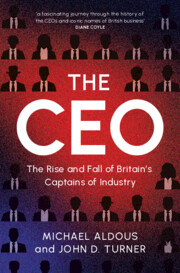
The CEO
- The Rise and Fall of Britain's Captains of Industry
-
- Published online:
- 19 June 2025
- Print publication:
- 19 June 2025
Is Identification All the Same? The Differential Effects of CEO and CFO Organizational Identification on Corporate Philanthropy
-
- Journal:
- Management and Organization Review / Volume 18 / Issue 1 / February 2022
- Published online by Cambridge University Press:
- 12 July 2021, pp. 73-107
-
- Article
- Export citation
Let's explore with a divided team! The effects of top management team demographic faultlines on technological exploration
-
- Journal:
- Journal of Management & Organization / Volume 28 / Issue 6 / November 2022
- Published online by Cambridge University Press:
- 20 December 2019, pp. 1181-1200
-
- Article
- Export citation
Strategic flexibility and change: The impact of social networks
-
- Journal:
- Journal of Management & Organization / Volume 18 / Issue 1 / January 2012
- Published online by Cambridge University Press:
- 02 February 2015, pp. 2-15
-
- Article
- Export citation
Why Saying “I’m Sorry” Isn’t Good Enough: The Ethics of Corporate Apologies
-
- Journal:
- Business Ethics Quarterly / Volume 23 / Issue 2 / April 2013
- Published online by Cambridge University Press:
- 23 January 2015, pp. 239-268
- Print publication:
- April 2013
-
- Article
-
- You have access
- Export citation
The Changing Role of the Chairman: Impact of Corporate Governance Reform in the United Kingdom 1995-2005
-
- Journal:
- European Business Organization Law Review (EBOR) / Volume 9 / Issue 2 / June 2008
- Published online by Cambridge University Press:
- 09 July 2008, pp. 187-213
- Print publication:
- June 2008
-
- Article
- Export citation
