To save content items to your account,
please confirm that you agree to abide by our usage policies.
If this is the first time you use this feature, you will be asked to authorise Cambridge Core to connect with your account.
Find out more about saving content to .
To save content items to your Kindle, first ensure no-reply@cambridge.org
is added to your Approved Personal Document E-mail List under your Personal Document Settings
on the Manage Your Content and Devices page of your Amazon account. Then enter the ‘name’ part
of your Kindle email address below.
Find out more about saving to your Kindle.
Note you can select to save to either the @free.kindle.com or @kindle.com variations.
‘@free.kindle.com’ emails are free but can only be saved to your device when it is connected to wi-fi.
‘@kindle.com’ emails can be delivered even when you are not connected to wi-fi, but note that service fees apply.
Chapter 7 starts in 2018 and builds toward the mid2020s. This was an extremely turbulent and difficult time for many. Aside from extreme situations, COVID-19 and the (re-)starting of armed conflicts, some of this turbulence has been related to the world’s inability to reduce emissions quickly enough and to rising inequalities within countries. Despite the many crises faced, key high-emissions regions, not least the EU and China, continued to dedicate capacities to governing for climate mitigation. This chapter is partly about revisiting the original compromises, set out in Chapter 4, to assess how they have changed and with what implications for how mitigation is framed and approached today. It is also partly about reflecting on what the analysis undertaken in this book offers in terms of insights for improved mitigation policymaking so that it can better support, mainly distributional, forms of justice.
Chapter 4 analyses processes of making climate mitigation into a policy area during the 1970s to mid 1990s. It explores the ideas, frames, and interests that informed United Nations climate change debates, how mitigation came to be defined as a policy area, and, ultimately, the specific compromises that were necessary to agree emissions reduction targets for Annex 1 countries. The role of political compromise in processes of reaching agreements and on governing bodies is foregrounded. Particular attention is also paid to questions of how pro-mitigation groups articulated the need for change, the role of climate science within this, how anti-mitigation coalitions narrated their contestations, and how these debates informed compromises reached. Although negotiated outcomes were unsatisfactory in many ways, there is a sense that all parties did, to greater or lesser extents, compromise to engender these first stages in the politicisation of climate mitigation.
Do politicians have to get dirty hands – and what does that mean? Is it okay to be corrupt, when corruption is systemic? When is it a good thing to make compromises in politics? These are questions about political conduct that are raised in political ethics, a somewhat underappreciated subfield of political philosophy. This Element offers a fresh, systematic introduction to political ethics. It starts with a discussion of two challenges to the discipline: One comes from political realists who reject moralism in political philosophy and the other from public choice theorists who model politicians as rational egoists. It then discusses the problem of dirty hands, political corruption, and political compromise as three core topics of political ethics.
Hostility towards parties has never ceased; revisiting Hans Kelsen’s ideas is particularly significant today when critiques of parties are meeting the revival of the myth of People as One, which Kelsen devoted much of his work as a legal scholar and political theorist to opposing. Kelsen addressed the issue of parties at two significant historical moments when the constitutional government was succumbing to the assault of autocracy (Fascism and Nazism) and revolutionary experimentations (Bolshevism) and when parties regained momentum with the Cold War. These were two very different circumstances: in the former, the issue was opposing and resisting monocratic dictatorship; in the latter, the issue was defending party pluralism within liberal democracy itself. Kelsen never resorted to ‘militant democracy’ to protect democracy. The reason was both theoretical and empirical. As a ‘formalist’, Kelsen kept substantive politics out of procedural politics, which he considered normative or ‘not metaphysical’ because its task was channelling public doing and not achieving certain specific goals; the sole purpose of the rules of the game was the exercise and reproduction over time of political freedom. Therefore, pluralism, legal equality, and individual liberties were non-negotiable norms of democracy, whose process was based on the spirit of compromise and majority rule.
Since the 1930s there have been intense debates about how far democracy can go to protect itself against its enemies. Hans Kelsen’s antagonistic relationship to militant democracy is well established in the literature and is not controversial. First, this chapter anchors Kelsen’s opposition to militant democracy more deeply and systematically in his own theory of democracy. This sheds light on the reasons why his opposition to militant democracy remained consistently immune to the defeat of democracies – as painfully observed in the 1930s – and to the conviction, shared by many of his contemporaries, that such vulnerability legitimises the prevention of anti-democratic parties from abusing the democratic process. Second, the chapter challenges the common view that Kelsen’s rejection of militant democracy would have no contemporary adherents. It discusses similarities and discontinuities between Kelsen and a new generation of thinkers who also express doubts about militant democracy. In doing so, the chapter offers a fresh look at the strengths and weaknesses of Kelsen’s perspective on militant democracy and assesses its influence on the issue in contemporary literature.
The notion of political compromise in party democracy is a cornerstone of Kelsen’s democratic theory. In the legislative, he argued, one party (or several parties) constituting a majority need(s) to somehow get along with a party (or several parties) in the minority if democratic government is to work and last. However, this vision goes against common sense understandings of what it means to have a democratically elected majority; it is also likely to raise some eyebrows among majoritarian theorists of democracy. This chapter explores whether Kelsen’s central idea can possibly be redeemed. Unlike Kelsen’s multiple critics in contemporary democratic theory, it argues that his account of compromise rests on numerous ambiguities that leave it underdetermined on both normative and institutional levels. It also argues and demonstrates that the most plausible understanding of Kelsen’s imperative to compromise rests on the notion of respecting the members of parties in the minority as co-rulers – an intuition derived from a Rousseauian conception of democracy as collective self-rule and adapted to societies characterised by persistent conflicts of interest and moral disagreements. It concludes that, despite its shortcomings, Kelsen’s valorisation of political pluralism, in the legislative and in the public arena, remains an important source of arguments for a time often characterised as a ‘crisis of democracy’ and in the face of rampant anti-partyism.
United by their realistic approach to the study of democratic politics, Hans Kelsen and Joseph Schumpeter similarly sought to de-ideologise ‘classical’ accounts of popular sovereignty. Both developed an analytical framework to explain how modern democracy, based on parties and the electoral selection of representatives, functions and realises its ideals. Both emphasised that democracy lasts only if it successfully generates a ‘compromise’ between the contingent majority and the temporary minority (in the terminology for Kelsen) or if current majorities exercise ‘self-control’ (in the language of Schumpeter). However, neither explained the mechanisms that induce democratically elected majorities to limit themselves in the practice of governmental power. The chapter first charts the innovations introduced by Kelsen and Schumpeter into our understanding of democracy; then, it teases out their views on how majorities abstain from aggrandising their power beyond some limits. For both, such limits must be self-enforcing and observing them must constitute an equilibrium. Yet, a proper understanding of how this equilibrium emerges remains one of the greatest challenges for contemporary scholars of democracy. ‘Compromise’ or ‘self-restraint’ is almost definitionally a requisite of democratic politics, but it cannot be imposed from outside, and it cannot just follow from agreements about certain rules, unless those rules are self-enforcing. As the chapter explains, it must be in the best interest of the democratic rulers to stop monopolising power given the potential reactions of the opposition, and it must be in the best interest of the opposition to participate peacefully given that the incumbent stops. Despite the significant progress in the normative and empirical study of democracy over the past several decades, the greatest challenge faced by Kelsen and Schumpeter has not been completely resolved.
Creative careers can complicate daily living. In this chapter, we talk about complications that arise in romantic and family relationships. Some people talk about the challenges of financial instability, others emphasize the need for selfishness and time to focus on creative work. Some discuss interactions between their creative work and parenting. Ultimately, compromise is key.
Represented by the same lawyer of other Protestant groups, the missionaries began using legal avenues to challenge the Italian government in court, arguing that Italy’s constitution had superseded older statutes, including Fascist-era laws being used against them. While this strategy would eventually prove successful, the mission found itself in an increasingly precarious situation. Despite its efforts and the establishment of various branches across the Italian peninsula, it managed to attract only a few hundred members. Funds began to dwindle, forcing the mission to sell some of its most prized properties. The US State Department grew increasingly critical of the mission’s aggressive tactics, viewing them as unnecessarily provocative and ultimately counterproductive. Meanwhile, the mission’s leaders continued to clash with Italian authorities, who at times fined or briefly arrested them, while using visa renewals as leverage to exert pressure on the missionaries. In the United States, the initial enthusiasm of many coreligionists for the Church’s mission in Italy gradually faded, giving way to disillusionment or a shift of focus toward other missionary activities, particularly in the Third World.
Understanding today’s conflicts and compromises requires addressing the entanglement between material processes and the viewpoints of a variety of collective actors: how they understand themselves and the economy within which they act, what objectives they perceive it affords to them, and what constraints it imposes. The structural approach to economic analysis, which builds on the traditions started by Physiocracy and classical political economy, offers a vantage point to understand material processes. The paper proposes three directions to generalise it, thus making it more suitable to address the entanglement between such processes and the emergence and viewpoints of collective actors.
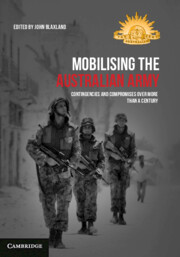
This compendium of essential works clarifies that the Australian Army’s force structure is organic and constantly changing. It provides a starting point for quickly acquiring new capabilities at short notice when required to meet emerging threats and challenges. The Army’s response to realising government direction and investment in new capabilities is being examined via a series of options under the Army Objective Force. It involves a careful and deliberate program of analysis that will provide a framework to develop the Army of the future. Readers can be assured that the Australian Army’s future is informed through understanding of its past – understanding that is provided to the Army’s planners today through contributions such as this.
Army has always been faced with the questions of what type of war it should aim to prepare for, and in what context it should prepare. Mobilising the Australian Army explores the rich history of the Australian Army, the challenges of preparing armies for war in uncertain times, and the many possibilities for their continuing strength and future success. Comprising research presented at the 2021 Chief of Army History Conference, this collection examines how contingency and compromise are crucial elements for both the historical and the modern-day Army. Key themes include the mobilisation of resources for war in the first half of the twentieth century, the employment of women in the war effort at a time of rapid force expansion, alliance and concurrency pressures in the Cold War and post–Cold War years, utilisation in crisis and war of the reserve forces, and deployment challenges in the 1990s and beyond. Written by leading Australian and international military historians and practitioners, Mobilising the Australian Army will appeal to both casual history enthusiasts and future Army.
The US-driven and NGO-mediated prosecutorial approach to address trafficking prioritizes efforts to convict the accused and foregrounds victim-witness testimony as the central piece of evidence to do so. Though training rescued women to testify against alleged traffickers is thus a key component of donor-driven NGOs’ efforts, the author’s ethnographic research revealed that this is a rare occurrence. This chapter explores the multiple and complex reasons why most rescued women don’t testify, by situating them in the broader Indian sociolegal context. In juxtaposition, it tracks the case of a trafficked woman, Sunaina Das, who testified for the prosecution in a New Delhi trial court, to also explore the constellation of factors that lead some women to testify and the challenges they face. It follows Sunaina’s encounters with the Indian criminal justice system and the support she received from both NGOs and Indian legal actors. Finally, it explores how an NGO-led training session for Indian judges impacted her case. Through these contributions, this chapter challenges prevalent assumptions in global anti-trafficking campaigns about the victimhood of Global South sex workers, about criminal justice necessarily benefiting trafficked sex workers, and about the Indian criminal justice system necessarily lacking the ability to address sex trafficking.
This article examines what happens when plural normative ideas and arrangements to address an issue reach local settings through transnational networks. Using anti-corruption reforms in East Timor as the lens, I show the diverse normative aspirations of international and local actors involved in transferring and receiving new regulatory arrangements. By proposing compromise as another possible outcome of transnational legal transfers, the study examines how compromises shape the scope and limits of adopted regulations. The anti-corruption reforms case study from East Timor allows us to identify when and how translocal compromises occur, who is part of such compromises, and how they influence the legal transfer and adoption process. Drawing on insights from comparative law, law and society, and regulation studies scholarship, the article provides a bottom-up perspective of transnational legal reforms, illustrating the entanglements of these initiatives with the local politics, conflicts, and power struggles. The findings underscore the need for more qualitative studies on legal transfers where multiple international and local actors are involved, capturing how their power struggles shape the scope and limits of regulatory arrangements that are ultimately adopted. By illustrating the interactions between local, national, and international actors, the article contributes to understanding the complexities, possibilities, and limits of transnational legal reform initiatives in specific contexts.
Finally, Chapter 6 reads the main findings about trilogues in the light of the democratic principles set out in the Treaties. In particular, the chapter argues that trilogues offer an important democratic contribution because they put compromise at the very heart of the European legislative process. Compromise, through its practice of mutual concessions, is arguably the best means to approximate two constitutional requirements: equality and representation – or, better put, the aspiration to democratic equality in a system of representative institutions. Furthermore, the chapter argues that the existence and prevalence of trilogues reveal the EU’s structural closeness to those polities that belong to the model of “negotiation democracy.” This model was developed by Gerhard Lehmbruch with special reference to Germany, Austria, and Switzerland. The chapter argues that Lehmbruch’s model provides a fruitful basis for comparative research and a solid foundation for understanding the EU.
The events of the last ten years have shaken the “permissive consensus” that kept the European integration process going for many years. 'Output democracy', as based on decisions presumably meeting the needs of the citizens, is no longer enough to obtain public support. Never before has a process-oriented approach to European democracy been more urgent. This book aims to address this urgency, by providing an account of the European legislative process that is less conventional and does justice to the democratic potential inherent in trilogues. In particular, this book provides: a comprehensive reconstruction of the workings of trilogues, relying on internal documents collected through a series of access to documents requests; gives meaning to the legal notion of informality, understood as one of the most defining, although elusive, features of trilogues; squares the practice of trilogues with the European democratic order of the Treaties, showing that such a practice is compatible with a model of 'negotiation democracy'.
This essay considers how the fact that some morally innocent person is nevertheless a threat to others can bear on the permissibility of health policies that harm some to protect others. Two types of innocent threats are distinguished. In the case of abortion, it is argued that even if the embryo/fetus were a person, abortion could be permissible to protect a woman’s life, health, or bodily autonomy. Whether there nevertheless should be time limits on abortions and what surprising form such limits might take are also considered. In the case of pandemics, it is suggested that discussions of health policies should, but often do not, distinguish morally between innocent threats and their potential victims as well as between providing benefits to people and preventing harms to them. The essay also examines discussions of pandemics by health professionals that make use of the trolley problem, the doctrine of double effect, and related philosophical distinctions.
This paper argues that what scholars call ‘the free speech principle’ is not one principle but a slew of principles, and that these principles harbour several important differences that have remained largely unremarked upon, namely: (i) extending vs. limiting principles; (ii) comparative vs. non-comparative principles; and (iii) monistic vs. pluralistic principles. The paper also critically assesses certain generalisations that people might be tempted to make about these different principles, such as that one kind of free speech principle is harder to defend than another. Finally, the paper teases out the practical as well as theoretical implications of these insights, including degrees of complexity, the logical relationship between free speech principles and free speech policy dilemmas, and the virtue of compromise over free speech principles.
Clare’s declaration that he ‘found the poems in the fields, and only wrote them down’ is, to some extent, pretence; however quickly he might compose, he corrects and revises from very early on, before he gets any guidance from others. The more he writes, the more he confronts the inevitable problem of repetition: his solutions can be seen in the concentrated echoes and references back and forth between poems. The manuscripts in all their teeming detail demonstrate his determination to get things right. Once publication arrives he has to contend with the conflicting demands of editors, publishers, and supporters; there are vexed questions of taste and politics. As he moves towards The Shepherd’s Calendar, however keen his desire for independence, increasingly the process becomes collaborative. When his life is turned upside down with the move to Northborough in 1832, his deeply personal poems of loss are worked on with extraordinary intensity.