To save content items to your account,
please confirm that you agree to abide by our usage policies.
If this is the first time you use this feature, you will be asked to authorise Cambridge Core to connect with your account.
Find out more about saving content to .
To save content items to your Kindle, first ensure no-reply@cambridge.org
is added to your Approved Personal Document E-mail List under your Personal Document Settings
on the Manage Your Content and Devices page of your Amazon account. Then enter the ‘name’ part
of your Kindle email address below.
Find out more about saving to your Kindle.
Note you can select to save to either the @free.kindle.com or @kindle.com variations.
‘@free.kindle.com’ emails are free but can only be saved to your device when it is connected to wi-fi.
‘@kindle.com’ emails can be delivered even when you are not connected to wi-fi, but note that service fees apply.
This chapter surveys the wide range of definitions of belief in recent scholarship and explores the potential of the cognitive science of religion for generating new approaches. It rejects the assumption that it is possible to talk about the presence or absence of ‘belief’ in Greek religion in a monolithic way, such that the Greeks either believed wholly in their gods or they did not, and challenges the related assumption that beliefs combine to form stable, internally consistent systems. It draws on a range of concepts from cognitive science to explore how contradictions between beliefs and between beliefs and experience might be managed and argues for a dynamic, contextual and plural understanding of Greek religious belief.
This chapter argues that ‘belief’ is neither the only, nor the most appropriate, concept for understanding the mental and experiential dimensions of Greek religion. It argues that the dichotomy between ritualistic and belief-centred conceptions of religion that has long shaped the debate over Greek religion reflects an underlying dualism of mind and body. Under the influence of this dualism, the domain of religion has been divided into categories of ritual, which belongs to the body, and belief, which belongs to the mind. This chapter draws on recent work in anthropology that seeks to collapse this mind–body dualism to propose a concept of skilled perception as the basis of an alternative approach to religion in the lived experience of the Greeks. This approach is developed through a series of studies of normative and divergent acts of religious perceiving, via a close reading of Theophrastus’ ‘Superstitious Man’ (Characters 16) and a selection of episodes of divination and omen-perception in Herodotus and Xenophon. These studies suggest that we might view Greek religion less as a body of beliefs and rituals and more as a skill for living in a dynamic world.
Edited by
Rosa Andújar, Barnard College, Columbia University,Elena Giusti, University of Cambridge,Jackie Murray, State University of New York, Buffalo
In 1988, Congolese philosopher Valentin-Yves Mudimbe called for a study of the influence of Graeco-Roman literature on the European invention of Africa. Whether or not Graeco-Roman literature presents a coherent picture of Africa as a geography and ethnography of alterity, early modern European writings made use of these descriptions to justify European superiority and colonial expansion into African territories. While the aims and contexts of the ancient texts differed widely from their later instrumentalisations, this chapter asks whether Roman representations of African territories and people already show traces of dehumanisation and cultural hierarchies that can be productively analysed with the tools of race and critical race theories.
The exiles in the so-called ‘Themistocles Decree’ from Troezen are universally identified with the ostracized who, according to the Athenaion Politeia, were recalled due to Xerxes’ invasion. This identification should be questioned. If the document is a forgery (as is now widely believed), it need not correspond with all available information. The decree’s language suggests instead that, in its author’s mind, the exiles had collectively been in exile for ten years when he thought they returned. Some speculation is offered about their possible identification within the context of fourth-century historiography.
Hannah Arendt did not live to complete her anticipated work on judgment, a faculty she considered essential for resuscitating political life against the threat of totalitarianism. Scholars have attempted to reconstitute it, primarily through her Lectures on Kant’s Political Philosophy. Yet when discussing her turn to judgment, Arendt cites the ancient Greek historian Herodotus as a model, claiming that recovering the ancient sense of histor (judge) is crucial to reclaiming human dignity. Herodotus is in fact central to her depiction of the Greeks throughout her work. Excavating his influence not only helps clarify her theory of judgment; it also reveals how she both distances herself from Heidegger and yet retains certain core agreements. Her reading of Herodotus thus helps delineate the intellectual relationship between two of the twentieth century’s foremost thinkers, while inviting us to reflect on how and why to read the Greeks today.
Herodotus’ Historiesare filled with instances of personal engagement with the supernatural. If we consider that phenomenon in the specific terms of ‘personal religion’, new patterns and questions emerge. This chapter demonstrates not only that personal religion in Herodotus tends to resolve itself in the political, but that this reinforces the point that there was no strict boundary between personal and polis religion. Most of the people whose experiences Herodotus relates remain ‘public figures’, and Herodotus’ historical narrative, by its nature, devotes significant attention to political affairs. Many episodes from the Histories involve atypical individuals. But their experiences with the divine nevertheless fit into common categories, and the concerns which lead these individuals to approach the divine are mostly nothing out of the ordinary. Herodotus’ stories reveal elements of personal religious practice which might otherwise be difficult to find in surviving sources. By considering both personal and civic aspects of Greek religious thought and practice in Herodotus’ work, we see the continuous presence of the gods in the lived experience of individuals.
Aristotle defines hybris as a way of mistreating (dishonouring) others. But he also emphasises its psychology, in ways that chime very well with the understanding of the concept in earlier literary sources. As well as indicating a failure to show other people the respect they deserve, hybris is a way of thinking too much of oneself. This affects one’s estimation of the role that luck plays in all human endeavour: the classic Aristotelian case is that of the rich, ‘lucky fools’ who think that their material good fortune is a sign that they excel in all respects; but ancient hybristai in general tend to develop the belief that they are invulnerable to the vagaries of fortune. In this way, hybris regularly entails a failure to deal adequately with risk. At the same time, it bears a relation to the myth of meritocracy, by which the fortunate convince themselves that their success is deserved.
This paper investigates Herodotus’ allusions to democratic tenets dear to fifth-century Athens in Books 7 and 8 and how democracy is there suggested as an actionable possibility for all peoples. The paper also explores what Herodotus might have thought about democracy and how reflecting on it was a means for him to examine his own writing (section II). A discussion of Herodotus’ broad meditations on democracy in 7.10, 7.101–3, and 8.140–3 considers their historiographic and practical implications, showing that the Athenian democratic tenets Herodotus may have had as references formed a nucleus from which he elaborated a complex view of democracy, i.e., as a peaceful counterpart to imperialism (section III). Section IV examines some trade-offs and implications one may derive from the intertwining of allusions to democracy and the writing of history. The paper’s chief conclusions are summarized in section V: that the use of allusions allows Herodotus to discuss constituent parts of a democracy, not only those specific to the Athenian democracy, but also those appropriate to all possible forms of democracy.
Chapter 6 examines Iranian cult and myth as evidenced in the Nart sagas of Transcaucasia, but also among Scythians as well as in Zoroastrian tradition, including the psychotropic cult substances Haoma (Iranian) and Soma (Indic). The Greek polis of Dioscurias in the Caucasus is explored as a place where Hellenic and Indo-Iranian divine-twin myth and cult affiliation meet, as indeed they do in the Pontic polis of Sinope. Aeolian connections are conspicuous at both locales.
Chapter 7 examines the sheep’s fleece filter used in the preparation of Soma. A cult ideology in which such an implement played an important role was preserved for some time in Iranian tradition in the Caucuses, ultimately giving expression to Greek ideas about the presence of fleecy filters impinged with gold in the vicinity of Dioscurias – rationalizing accounts of the Golden Fleece of Aeolian Argonautic tradition. Particular elements of the Golden Fleece myth find parallels in Indic poetic accounts of the performance of Soma cult. The common Hellenic and Indic elements constitute a shared nexus of ideas that earliest took shape in Bronze-Age communities of admixed Mycenaean and Luvian populations into which Mitanni Soma ideas had spread via Kizzuwatna. The Golden Fleece mythic tradition, with its geographic localization in Transcaucasia, is a Mycenaean Asianism that took shape in Asia Minor under Indic and Iranian influences and that continued to evolve among the Iron-Age Asian Greeks.
Chapter 1 examines Pylos tablet Tn 316 in depth, giving particular attention to the Linear B forms spelled po-re-na, po-re-si, and po-re-no-, and related Sanskrit forms, and to the especial closeness of post-Mycenaean Aeolic to ancestral Helleno-Indo-Iranian in regard to this matter.
Chapter 3 examines the Mycenaean wanaks and lāwāgetās, figures responsible for leading Mycenaean society in specific ways and who correspond notionally to figures implicit in Indic and Iranian social structures – figures who descend from still more ancient Indo-European antecedents charged with the task of leading society through the spaces of the Eurasian Steppes and in migrations southward out of the Steppes.
Herodotus’ depiction of Miltiades’ transgression in the sanctuary of Demeter Thesmophoros on Paros is marked by the intriguing phrase κινήσοντά τι τῶν ἀκινήτων (6.134.2). We examine this proverbial phrase, whose implications for Herodotus’ portrayal of Miltiades’ downfall have not yet been fully acknowledged. The article draws attention to the widespread concept of sacred immovables (ἀκίνητα) that were protected by imprecations, and suggests that Miltiades triggered a contingent curse protecting divine property. Herodotus configures the episode of Miltiades on Paros as a narrative of entrapment and steers his readers to view Miltiades’ fate as the consequence of a curse at work.
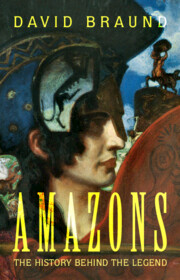
The idea of the Amazons is one of the most romantic and resonant in all antiquity. Greeks were fascinated by images and tales of these fierce female fighters. At Troy, Achilles' duel with Penthesilea was a clash of superman and superwoman. Achilles won the fight, but the queen's dying beauty had torn into his soul. This vibrant new book offers the first complete picture of the reality behind the legends. It shows there was much more to the Amazons than a race of implacable warrior women. David Braund casts the Amazons in a new light: as figures of potent agency, founders of cities, guileful and clever as well as physically impressive and sexually alluring to men. Black Sea mythologies become key to unlocking the Amazons' mystery. Investigating legend through history, literature, and archaeology, the author uncovers a truth as surprising and evocative as any fiction told through story or myth.
Most of the ancient historians give some indication to their audience why they embarked upon writing their history. These remarks sometimes concern themselves with the unique nature of the historian’s subject matter; in addition to the greatness of the deeds, historians will frequently explain other circumstances that led them to the composition of their histories. There is, in general, a tendency as time goes on for authors, while not abandoning the magnification of their theme, to present a more ’personal’ call to history, that is, to say something of themselves and the personal experiences that underlay their writing of history.
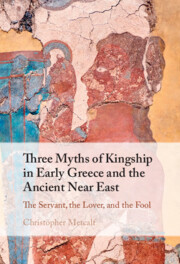
On the basis of recently discovered sources and original research, this book identifies and analyses three story-patterns associated with human kingship in early Greek and ancient Near Eastern myth. The first of these, the 'Myth of the Servant', was used to explain how an individual of non-royal lineage rose to power from obscure origins. The second myth, on the 'Goddess and the Herdsman', made the fundamental claim that the ruler engaged in a sexual relationship with a powerful female deity. Third, although kings are often central to the ancient literary evidence, the texts themselves were usually authored by others, such as poets, priests, prophets or scholars; like kings, these characters similarly tended to base their authority on their ability to articulate and enact the divine will. The stage was thus set for narratives of conflict between kings and other intermediaries of the gods.
This article offers a critical evaluation of Bernard Williams’s influential account of ancient Greek historiography and the place of ancient Greek thought in the early history of ideas in his last book Truth and Truthfulness: An Essay in Genealogy (Princeton, 2002). It argues that such an evaluation is warranted now not only because Williams’s stance continues to influence how Herodotus and Thucydides are viewed by scholars outside of classical studies; more importantly, it also opens up the field of classical studies itself to a much needed engagement with those ideas from Williams’s influential study that can be productively applied to the study of Herodotus and Thucydides.
The first part consists of a critical appraisal of Williams’s views in light of current classical scholarship on early Greek historiography. The second part makes the case for why Herodotus rather than Thucydides would have served as the better example for Williams to explore the historical conditions and intellectual milieu that led to the emergence of truth and truthfulness as a problem in the Western historiographic tradition. Drawing on recent classical scholarship, the article shows that it was Herodotus, rather than Thucydides, who first conceived of the truth as a problem; that it was him rather than Thucydides who first grappled with sincerity and accuracy as the values that Williams identifies as fundamental to the truth-claims embedded in the historiographic tradition.
The article thus suggests that the history of truthfulness as a relational concept that binds together author and audience in a mutual contract of trust should start with him rather than Thucydides. It shows how Williams’s account of truth as a social value that binds author and audience together in a mutual contract of trust can be productively applied to the study of Herodotus’ Histories. A conclusion focuses on the role that has typically been attributed to the ancient world in genealogical accounts of the history of ideas.
This article investigates honour and recognition dynamics involving babies. By drawing on modern theories and experimental studies of infants’ psychology, selected case studies from Classical Greek literature and philosophical accounts will be interpreted in terms of basic intersubjective mechanisms. Case studies from Herodotus and Menander show that babies were intuitively perceived as agents capable of putting forth implicit demands to recognition and respect. Passages from Plato reveal that babies were regarded as possessing embryonic forms of a sense of dignity and entitlement. The article thus demonstrates that babies were involved in basic dynamics of honour and recognition. Overall, these mechanisms can be seen as the psychological and social foundation of the fully fledged version of timê, the Greek notion that captures the range of bidirectional dynamics of honour, recognition and respect which stand at the basis of human interaction and sociality.
This chapter explores how early prose writers made use of intertextuality, from the emergence of prose until the classical age. First, it considers the earliest writers, especially early Greek mythographers and philosophers, who faced the challenge of dealing with the authoritative world of epic poetry. To inherit this credibility, they could either acknowledge its importance or reject it. In many cases, they tried to improve upon the poets or kept their narratives up to a certain point before swinging in another direction. Second, the chapter studies the developments in the classical age and focuses especially on Herodotus, who cites poets, but never prose writers, favourably. Harsh attacks are reserved for those predecessors whose work was recognised as significant and thus as a direct competitor.
A synthetic, concluding discussion addressing the relationship between Ur-Aeolic and Special Mycenean and providing a historical framework for, especially, the introduction of Aeolic language and culture (pre-Thessalian/Boeotian) into European Greece following the Bronze-Age collapses and for the spread of pre-Aeolians (Iron-Age Ahhiyawans) eastward into Cilicia.