To save content items to your account,
please confirm that you agree to abide by our usage policies.
If this is the first time you use this feature, you will be asked to authorise Cambridge Core to connect with your account.
Find out more about saving content to .
To save content items to your Kindle, first ensure no-reply@cambridge.org
is added to your Approved Personal Document E-mail List under your Personal Document Settings
on the Manage Your Content and Devices page of your Amazon account. Then enter the ‘name’ part
of your Kindle email address below.
Find out more about saving to your Kindle.
Note you can select to save to either the @free.kindle.com or @kindle.com variations.
‘@free.kindle.com’ emails are free but can only be saved to your device when it is connected to wi-fi.
‘@kindle.com’ emails can be delivered even when you are not connected to wi-fi, but note that service fees apply.
In 1949 Isaiah Berlin published a notice in the Atlantic Monthly of Their Finest Hour. Berlin’s essay was subsequently reissued as a standalone publication, entitled ‘Mr Churchill in 1940’, in 1964 It is Berlin’s paean of praise to Churchill as ‘the saviour of his country’. The seventy-fifth anniversary of the publication of Berlin’s original text is an opportune time to take another look at it. With the longer perspective of hindsight, it has become clear how uncritically Berlin accepted Churchill’s version of events in Their Finest Hour and of the part he had played in them. Throughout 1940, Churchill was less ‘sure he would not fail’ than he retrospectively alleged. Nor were his relations with Roosevelt as close as he suggested. And notwithstanding his claims to the contrary, Churchill did discuss the possibility of reaching a peace deal with Hitler in the summer of 1940. There is a further point. For despite the boundless admiration that Berlin lavished on Churchill, he did not ‘really like the company of great men’, Churchill included. Yet he also admitted that ‘if there is to be public life, it cannot be conducted by such as us’.
I test my predictions about the timing of competition and peace through a medium-N analysis of the universe of great power cases since 1850. My central hypothesis is that great power relations devolve into competition shortly after an emerging power takes actions that contradict its declared principles. I otherwise expect peace following a period of hedging. This holds even when the emerging threat makes territorial demands and militarizes in support of a limited principle. The analysis supports this prediction: in 12 of 14 cases, competition emerges within two years of the emerging power’s first inconsistent action, outperforming key predictions of realism and power transition theory. Through four case vignettes—Hitler’s rise, Prussian unification, Anglo-American relations circa 1900, and Anglo-German relations circa 1900—I demonstrate how my theory applies across diverse historical and cultural contexts. This approach contributes to explaining patterns of competition and peace by providing deeper insight into cases that existing power-based theories struggle to address.
After the shallow stabilities of the mid 1920s, marked by Locarno and modest economic recovery, the Great Depression returned Europe to crisis. The Versailles order crumbled, from Stresemann’s western conciliation to national minority protections. Then, presaged by his predecessors’ burial of reparations and plans for rearmament, Hitler’s aggressively distinctive program unfolded: accelerated German restoration; economic autarky; racially defined Lebensraum in the east; heedless antisemitism. In response, Britain and France wavered. French policy oscillated among cynicism, fatalism, and confusion. Prioritizing imperial security, Britain decisively rearmed, aiming to counter Japan and Italy, while containing Hitler in western Europe. By 1937, under new Prime Minister Chamberlain, that approach solidified into “appeasement”: satisfying Hitler in eastern Europe would reduce Britain’s European obligations; free its ability to protect the Empire; create time to rearm. With the naivety of imperial arrogance, Chamberlain expected Hitler to be lastingly bought off. During the intensifying brinkmanship of 1937––1938, culminating in the Munich Conference, he followed that course to its end.
Gaining resonance from 1918, pacifism joined socialist internationalism and Communists’ novel militancy. The League of Nations drew much of that sentiment, from refugees and humanitarian relief through public health and the ILO to nutritional science and development economics, claiming economic planning, scientific and technological transfer, and humanitarian cooperation for new networked expertise. Self-consciously “Europeanist” initiatives formed, including fascist ideas of a united European “great space” under Mussolini and Hitler. By 1936–1939, imperialist visions of a New Europe made population politics key to international revisionism, exchanging self-determination and minority protections for greater-national expansion and population removal. Brutally radicalized by the Nazis’ Kristallnacht (November 1938), antisemitism became a violent driver. In 1937–1941, anti-Jewish laws reversed earlier emancipation – from Poland and Romania, through Italy and Hungary, to Czecho-Slovakia, Croatia, and Vichy France. That was the ugly backcloth to Hitler’s drive for war. In September 1939, vitally enabled by Franco-British appeasement and the Nazi–Soviet Pact, Hitler invaded Poland.
After 1917–1923, Europe’s polities varied across democracy and dictatorship. The agrarian east and south passed under dictatorship: Iberia, Hungary, Italy, Poland, Lithuania, Yugoslavia, then Bulgaria, Estonia, Latvia, and Greece. Liberal constitutionalism lasted in France, Britain, the Low Countries, Switzerland, and Scandinavia. In Austria, Germany, and Czechoslovakia democratic republics faced polarized political cultures. Italy was fascist; the USSR socialist. Corporatism – government-brokered convergence of organized interests – shaped constitutional states, above all in Scandinavia, with its strong labor movements. Corporatism in Germany, Austria, and Czechoslovakia was inflected by social democracy, but in societies riven by liberal-conservative enmities and religious, regional or ethno-cultural cleavage. Fascism beckoned as an extreme remedy for chronic parliamentary instability, where leftist defense impeded capitalist stabilization. Nazism and its state mapped onto this topography. Via the Belgian Plan de Man, the French Popular Front, and the Spanish Civil War, the polarizing fallout from rightwing radicalization cast western Europe into crisis.
This article tackles head-on a question that is often thought to defeat pacifism: ‘How then would you react against a Nazi invasion?’ That multiple wars are still recurrently justified as necessary to confront yet another ‘Hitler’ makes tackling this question critically relevant far beyond pacifist circles. On the Nazi context specifically: the question comes too late if pitched in 1939; militarism did not deter Hitler; there were actually many examples of nonviolent resistance against Nazis; even Hitler was mindful of public opinion; and the fight ‘against Nazis’ claimed many non-Nazi German victims too. More generally, and adding theoretical depth: pacifism need not entail a single absolute rejection of violence in all scenarios; nonviolent resistance has been proved to be effective; war-readiness has a corrosive constitutive impact; the Nazi question tends to assume that the application of retaliatory violence is controllable; and to presume that violence is the only option is absolutist and idealistic. Far from delivering a conclusive victory, the Nazi question, carefully considered and discussed, exposes cracks in conventional thinking about violence and war and provides opportunities to unpack and clarify multiple arguments advanced by pacifism.
Iosif Stalin, along with Adolf Hitler and Mao Zedong, constituted the Big Three dictators of the twentieth century who decisively swayed the course of world history. As is the case with all tyrants, hubris was the underlining feature of Stalin’s rule. As a Marxist, he firmly believed in the inevitability of the demise of capitalism and the ultimate triumph of socialism. As a Bolshevik, he emphatically advanced his mission of spreading war and revolution abroad and defeating world imperialism once and for all. By means of disinformation, subversion, and camouflage, Stalin covertly and openly challenged the liberal world order dominated by Britain, France, and the United States. His defiance found common political ground with his nemesis Adolf Hitler, as seen in the infamous Molotov-Ribbentrop Pact (Nazi-Soviet Pact of Non-Aggression) in August 1939. Ultimately, however, Stalin’s hubris blinded him to Hitler’s cunning, resulting in the humiliating and devastating betrayal of June 1941 (Operation Barbarossa). It was also Stalin’s hubris, however, that drove the country to victory over Nazi German, at unimaginable human and material costs.
On 23 August 1939, Hitler and Stalin agreed to a treaty of non-aggression, paving the way for the outbreak of war in Europe. Though this Nazi-Soviet Pact stunned contemporary observers, this chapter argues that the decision for partnership – and the military, economic, and intelligence cooperation it portended – had a long prehistory. Here, the Soviet-German relationship is traced from its inception in 1917 through Germany’s invasion of the USSR in 1941. It focuses on four distinct periods: early contacts during and immediately following the First World War, the Rapallo era of extensive cooperation between 1921 to 1933, the collapse of the Soviet-German relationship after 1933, and the resumption of partnership in 1939 with the Molotov-Ribbentrop Pact. This chapter concludes that the two periods of Soviet-German cooperation were ultimately decisive factors in the breakdown of the post-war European status quo.
This chapter recounts the major events from Operation Barbarossa, the codename for the invasion of the Soviet Union beginning on 22 June 1941. It looks briefly at the German operational planning and then the invasion itself. It considers how German operations sought to implement the strategic plan to defeat the Soviet Union in a summer campaign. Much of the discussion focuses on the panzer groups in the battles of Minsk, Smolensk, Kiev, and Moscow. It looks at the problems they encountered as well as the strategic disagreements in the German High Command. Key personalities like Franz Halder, Heinz Guderian, Hermann Hoth, Fedor von Bock, as well as Adolf Hitler are discussed. The final section discusses the Soviet winter offensive, which began in December 1941, and the subsequent German retreat from Moscow.
The Munich conference notoriously symbolizes appeasement and its failure. The issue under dispute concerns territory – specifically, the Sudetenland. This territorial dispute was initially internal to Czechoslovakia, a disagreement between the Sudetenland Germans and the central government of Czechoslovakia. Eventually, however, the nationalistic element to the dispute brought in the German government. The major powers avoided war because the French and British prime ministers – Daladier and Chamberlain, respectively – forced the Czechoslovakian president, Benes, to accept the peaceful transfer of the Sudetenland to Germany, based on the norm of nationalism (or self-determination). As this case shows, when actors widely agree on the norms through which territory can change hands, the probability of war declines. Nevertheless, this peace was short-lived. Indeed, the afterword to the chapter describes how Hitler invaded Prague shortly thereafter. The Danzig–Poland crises then followed. By that point, Britain and France had abandoned appeasement and shifted to balancing against Hitler; they allied with Poland and gave Hitler an ultimatum to try to stop his invasion. This conventional deterrence failed, and the Second World War began in Europe.
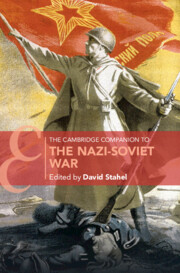
The Nazi-Soviet War was the largest and most brutal theatre of the Second World War, fought between two of the most ruthless states ever to exist. Bringing together twenty-four of the most accomplished authors in both German and Soviet history, this Cambridge Companion provides the most authoritative, and yet highly accessible, guide to the conflict. Each chapter examines a key aspect of the war from war planning, the opposing forces and the campaigns to criminality and occupation, alliances, the home fronts and postwar legacies and myth-making. The authors demonstrate that the Nazi-Soviet war was both a conventional clash of arms in which millions of soldiers fought in titanic battles, but also a non-conventional war in which soldiers and security forces murdered countless non-combatants. It was a war of resources, industry, mobilisation, administration, and popular support, with implications that still drive European security debates today.
Foreign national courts are categorically prohibited from prosecuting a head of state of another country. From the beginning of the twenty-first century until very recently, this view was nearly unanimous. A 2002 decision of the International Court of Justice, in the Arrest Warrant case, strongly supports it. According to the court, heads of state enjoy ‘full immunity’ from foreign criminal jurisdiction. Thus, the prohibition to prosecute foreign heads of state even extends to those who perpetrate aggression and other war-related crimes. That view is based on a twenty-first century myth. According to the myth, heads of state have long – ‘from time immemorial’ – enjoyed an absolute personal immunity from foreign jurisdiction. This article identifies the origin of the myth and parses through crucial historical facts that disprove it, particularly, the indictments against Hitler as the sitting head of state of Germany, their endorsement by the United Nations War Crimes Commission, and the judgment of the International Military Tribunal. A proper debunking of this myth is not only important as a matter of setting the historical record straight but is also relevant for present-day debates about the prosecution of heads of state (or heads of government) who – like Vladimir Putin, Bashar al-Assad, Min Aung Hlaing, and Benjamin Netanyahu – might be responsible for aggression, genocide, war crimes, crimes against humanity, and other crimes.
This chapter situates the emerging antifascism of Diego Rivera and other Mexican artists within the broader contexts of post-revolutionary Mexico, the rise of global fascism, and shifts of the global left. Their antifascism emerged slowly in the 1920s, subordinate to their sharp anti-capitalism and anti-imperialism, but moved to the forefront from the mid-30s with the rise of Hitler, the Spanish Civil War, and as part of Popular Front strategies across the progressive left. Rivera’s antifascism, shaped by his Communist dissidence during the 1930s, most fully emerged in his US murals. His Portrait of America (1933) denounces US capitalism and imperialism, while addressing the urgency of proletarian unity against fascism. Pan American Unity (1940) reflects Rivera’s disgust with the Nazi-Soviet Non-Aggression Pact of 1939. It proposes a cultural and political alliance between Latin America and the once-imperial US as the only way to defeat the alliance of Nazi and Soviet totalitarianisms.
The chapter opens with the challenge of connecting fascism to explanations of the Holocaust, given the many distinctive, or purportedly distinctive, elements of National Socialism, not least the radical character of its antisemitism. The chapter argues, however, that thinking about fascism in relation to the Holocaust has three main virtues. First, it prompts us to reconsider the boundaries and distinctiveness of both fascism and Holocaust. Secondly, it suggests that fascist ideology made some critical moves that helped make the Holocaust conceivable and possible. Finally, fascist taboo-breaking helped to create receptive audiences and collaborators across Europe, “catalysing, and radicalising a nexus of local eliminationist agencies.”
This chapter explores Hitler’s role in the Nazi Party, with a particular focus on Hitler’s relationship to antisemitism. It carefully examines the evidence concerning Hitler’s views towards Jews, and argues forcefully for the emergence in the 1920s of a vision that was already at least implicitly genocidal and certainly murderous. It thus makes a forceful case both for continuity in Hitler’s ideas leading to the Holocaust, and for the primacy of his vision in determining the later policy towards Jews adopted by the Nazi regime.
This chapter recaps historiography on the role of Hitler in the Nazi system in general and in the Holocaust in particular; elucidates meanings of “order/authorization/wish” in the context of decision-making; discusses the predominant depiction of Himmler and Heydrich as “architects” of genocide and the role of leaders who are generally neglected in mainstream historiography (Backe, Rosenberg); reflects on center and periphery as useful concepts for process analysis against the background of empirical/regional studies since the mid 1990s.
Following military defeat in 1918, the Emperor abdicated and a Republic was declared. The 1919 Treaty of Versailles imposed devastating terms on Germany. Social, economic, and political instability fostered the growth of radical ethno-nationalist movements. Once the great inflation of 1923 had been brought under control, and reparations and foreign relations were subjected to renegotiation, the political system began to stabilise. Berlin continued to expand as an industrial metropolis, with an improved transport network and major factories between the nineteenth-century red brick churches, schools, and municipal buildings. Immigration continued, including workers from the provinces and Jews fleeing pogroms in eastern Europe. A ferment of intellectual and artistic creativity contributed to ‘Weimar culture’, while Berlin also became noted for cabaret, night life, and challenges to traditional sexual mores. Following the Wall Street Crash of 1929, the German economy collapsed, precipitating further political instability. In a situation of near civil war, on 30 January 1933 President Hindenburg appointed the leader of the NSDAP, Adolf Hitler, as German Chancellor in a mixed cabinet.
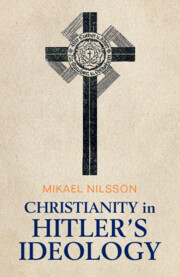
How did Hitler's personal religious beliefs help to shape the development of National Socialism? Through close analysis of primary sources, Mikael Nilsson argues that Hitler's admiration of Jesus was central in both his public and private life, playing a key role throughout his entire political career. Christianity in Hitler's Ideology reexamines the roots of National Socialism, exploring how antisemitic forms of Christian nationalism de-Judaized Jesus and rendered him as an Aryan. In turn, the study analyses how Hitler's religious and ideological teachers such as Völkisch-Christian writers Houston Stewart Chamberlain and Dietrich Eckart weaponised these ideas. Nilsson challenges the established understanding that Hitler only used religion as a tool of propaganda. Instead, it is argued that religious faith and deeply held convictions were at the core of National Socialism, its racism, the Second World War, and the Holocaust.
Here, I deal with the issue of Hitler’s belief in Jesus’ divinity and show that, in contrast to what modern scholarship has thus far claimed about this question, Hitler did indeed refer to Jesus as divine on many occasions throughout his life. He even spoke of Jesus as the Son of God. I argue that Hitler’s views cannot be explained away by claiming that his words were simply clever propaganda intended to draw Christians into the NSDAP. The particularities of Hitler’s religious views and his interpretation of Jesus were simply too odd for them to act effectively as a propaganda tool designed to gain the sympathies of mainstream Christians. This chapter builds on an article that was published in the Journal of Religious History in June 2021.
The conclusion that Hitler was genuinely inspired by Jesus in his antisemitic struggle against the Jews thus cannot be avoided. Hitler viewed Jesus as the original Aryan warrior who had begun an apocalyptic battle against the Jews, but who had been killed before he had had a chance to finish the job. Historians must start taking Hitler’s (and the other leading Nazis’) religious beliefs seriously if we wish to fully understand how Hitler and his followers could be so morally convinced that what they were doing was the right thing – indeed, the “good” thing – to do. It adds significantly to our understanding not only of how Hitler could sway so many Germans to do what he wanted, but also of how the Nazis’ ultimate crime – the Holocaust – was possible to undertake in one of Europe’s most “civilized” and culturally and economically developed nations. Hitler thought he was following in the footsteps of Jesus – an alleged Aryan warrior who had dedicated his life to fighting the Jews – and that the National Socialists had a duty to finish what he was convinced Jesus had started: the eradication of theof the Jewish people from the face of the earth.