To save content items to your account,
please confirm that you agree to abide by our usage policies.
If this is the first time you use this feature, you will be asked to authorise Cambridge Core to connect with your account.
Find out more about saving content to .
To save content items to your Kindle, first ensure no-reply@cambridge.org
is added to your Approved Personal Document E-mail List under your Personal Document Settings
on the Manage Your Content and Devices page of your Amazon account. Then enter the ‘name’ part
of your Kindle email address below.
Find out more about saving to your Kindle.
Note you can select to save to either the @free.kindle.com or @kindle.com variations.
‘@free.kindle.com’ emails are free but can only be saved to your device when it is connected to wi-fi.
‘@kindle.com’ emails can be delivered even when you are not connected to wi-fi, but note that service fees apply.
The book concludes with the practical and theoretical implications of the study. The chapter shows that ZANU PF gained from a combined HIV/AIDS and migration exit premium of 5 percent in the 2000 and 2002 elections, 2 percent in the 2005 elections, 12 percent in the 2008 elections, and 4 percent in the 2013 elections. If not for voter exit, the opposition would have had more parliamentary seats and won the presidency in the disputed 2008 elections. This chapter also demonstrates that the theory of exit and party sustainability can be generalized to other states, including but not limited to Russia, Venezuela, and Syria—countries that have also experienced a mass exodus of citizens from authoritarian regimes. This chapter provides a brief comparison of the role of migrant voters in Ghana and the Gambia, where democracy struggled but ultimately thrived. I discuss the study’s policy implications, considering ongoing debates about the global immigration crisis.
A key challenge for the party since 1949 has been to forge a new Chinese nation within the boundaries of a vast, ethnically heterogeneous former empire. The party has experimented with a variety of policies and mechanisms for securing the loyalty and obedience of non-Han groups, shifting between accommodative and assimilative approaches depending on the broader political climate at any given time. Frustrated by continued ethnic unrest, which the party sees as a threat to social stability and its political legitimacy, the party has, in recent years, sought to fortify the unity of the nationalities via increasingly coercive administrative and technological measures. This chapter examines the coercive measures implemented by the CPC to guide and control China’s minority nationalities. These include controls over religion, language, traditional practices, minority nationality regions, and minority nationalities who ventured to other parts of China. The controls are designed to prevent ethnic protest and to forge a common Chinese ethnic identity that subsumes all other ethnic identities and which is united by loyalty to the party-state.
This chapter analyzes the impact of remittances – the money migrants living abroad send to their family members in the home country – on the survival of authoritarian regimes, particularly in developing countries where poor economic and political conditions lead people to exit en masse. Immigrants have remitted over $500 billion in the last decade, with much of the money flowing from high-income to low- and middle-income countries. In 2018 alone, officially tracked remittances to low- and middle-income countries reached $529 billion. The actual amount is probably more because much money is channeled via unofficial routes. Ethnographic data from family interviews shows that senders can bargain for or against political participation with their receivers. Parents of young adults were likely to discourage them from engaging in politics, fearing for their lives. Receivers could also opt out of political engagement because they did not see the government playing an essential role in their economic lives. Remittances also cushioned the government from possible voter protests and welfare demands.
This article examines Albert Hirschman’s exit, voice and loyalty hypothesis within a supranational context. It makes use of an original 2012 data set drawn from ‘The Europeanisation of Everyday Life: Cross-border Practices and Transnational Identities among EU and Third Country Citizens’ (EUCROSS) project, which was conducted across six European Union (EU) democracies. The article finds that supranational loyalty to an entity other than one’s own nation state enhances citizen participation in national elections, while greater transnational mobility has no significant impact on national voter turnout. These findings have two important implications. First, supranational loyalties do not always discourage individuals from honouring their national political commitments. Second, member state nationals who are loyal to the EU may not show up at the supranational ballot box if national institutions are perceived to be more powerful to influence decision-making in Brussels.
The volunteer experience in organizational context has received far less scrutiny. Studies have indicated specific organizational settings, such as schedule flexibility, orientation and training, empowerment, social interaction, reflection, and rewards, and each has certain influences on their satisfaction and intention of remain. But we do not know their combined impact as organizational facilitators. This study focused on a sample of hospital volunteering, which occupies the largest service hours of volunteering work in Taiwan. We explored the experience of organizational facilitators that affect the satisfaction and loyalty of the volunteers from 868 valid questionnaires in a metropolitan hospital. The results showed that volunteers with more experiences on social interaction, reflections, and rewards, were more satisfied. In term of loyalty, volunteers with higher satisfaction showed higher willing to remain, recommend, accept services, and donate. Furthermore, because of flexible schedules and preferable rewards, the volunteers were more willing to remain; because of more training, higher social interaction, reflections, and rewards, the volunteers were more willing to recommend volunteering and accept services. Additionally, less flexible schedules, better empowerment, and more reflections as well as rewards influenced volunteers to be more motivated to donate. Implications of organizational efforts toward the hospital volunteer management are discussed.
The ‘American model’ is one of the central points of reference in the debate on the European Union's (EU's) constitutional future. However, replicating the ‘us-versus-them’ mode of thinking that made constitutional patriotism possible in the United States would paradoxically destroy what is truly unique in the EU's constitutional model. Instead of ‘patriotism’ nurtured by opposition to the ‘other’, the EU needs a ‘constitutional discipline’ founded on rational calculations and a readiness to assess critically one's own national loyalty.
Functionalism proposes that the translation process is guided by extra-linguistic factors, more specifically by the function of the translation. Chapter 2 reviews the theory of functionalism (based on Skopos theory, from the Greek skopos meaning “purpose”) and some basic notions associated with it, while also explaining how to apply them in translation practice and discussion. It addresses basic functionalist concepts: extralinguistic factors (also known as situational features) and how they shape both monolingual and translated texts; the translation brief and translation norms; changes in situational features, and how they influence and guide translation decisions; and the “lifecycle” of a commissioned translation. Examples and illustrations accompany the presentation. The chapter starts by considering the relationship between extra-linguistic factors and monolingual texts, progressing to translated texts and translation tasks.
The purpose of this article is to bring provincial and local perspectives into the research of urban space in the wartime Habsburg monarchy. Using the case of Olmütz/Olomouc, a midsize town in central Moravia, it analyzes how various social actors used public space and how they could appropriate its symbolic meaning in wartime. While local urban geography had long been contested by political, most often nationalist actors, World War I introduced fresh themes to the context of the city. Public rituals of loyalty repurposed and intensified some of the old traditions, even as organized and unorganized actors sought to “capture,” “invade,” and potentially “occupy” the same spaces to highlight their agendas in public demonstrations whose form owed much to the traditional public rituals. After October 1918, when the balance of power shifted between nationalist groups, the contest for urban space continued, along with ongoing political unrest, showing strong continuity of wartime practices into the immediate postwar era both in terms of political instability and in terms of the patterns of public ritual.
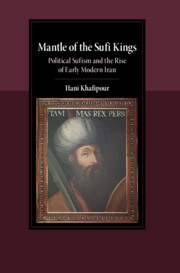
The rise and establishment of Safavid rule in Iran is a clear and momentous event in the wider history of the Middle East and Islamic world. In this study, Hani Khafipour explores how loyalty, social cohesion, and power dynamics found in Sufi thought underpinned the Safavid community's sources of social power and determination. Once in power, the Safavid state's patronage of art, literature, and architecture, turned Iran into a flourishing empire of culture, influencing neighboring empires including the Ottomans and Mughals. Examining the origin and evolution of the Safavid order, Mantle of the Sufi Kings offers fresh insights into how religious and sociopolitical forces merged to create a powerful Shi'i empire, with Iran remaining the only Shi'i nation in the world today. This study provides a bold new interpretation of Iran's early modern history, with important implications for the contemporary religio-political discourse in the Middle East.
This article presents the first study of an oath-letter (sawgand-nāma) from medieval Anatolia. It is drawn from the recently rediscovered Qiṣṣa-yi Salāṭīn, an anonymous inshāʾ work from the mid-thirteenth century. This text exemplifies a typical bottom-up oath in which the oath-taker pledges loyalty to Sultan Ghiyāth al-Dīn Kay-Khusraw II (d. 644/1246), while the oath also ensures a clear line of dynastic succession in favour of his son, ʿAlāʾ al-Dīn Kay-Qubād II (d. 655/1257). A comparison with similar texts from Iran reveals the extent to which Turkish states in Anatolia adhered to the norms established under the Great Saljuqs, although the Rum Saljuq version is noted to be more severe in ideological terms in cases of perjury, yet less demanding in practical aspects. This sawgand-nāma also highlights how the Qiṣṣa-yi Salāṭīn might have functioned as a sort of “para-archive”, potentially supporting the claims of ʿAlāʾ al-Dīn, who was sidelined after his father’s death.
The relation of subordination that characterises the contract of employment is created by the implied terms of the contract of employment such as the duty of obedience. Recently the courts have confirmed that both parties are under a duty not to destroy mutual trust and confidence and to perform the contract in good faith. The employee owes a duty of loyalty and both parties have to respect confidentiality. The chapter also examines the legal effect of breach of health and safety standards, tax law, immigration law and competition law on the enforceability of the contract of employment.
Judging an individual’s loyalty in security-sensitive roles is a high-stakes task, yet little is known about the extent and sources of variability in such judgments. This study examined how 58 participants with experience in personnel security assessment evaluated applicant profiles connected to five different countries. Each participant reviewed five protocols and judged whether the case contained information relevant to a personnel security clearance, then rated the applicant’s loyalty on a 7-point scale. Using Bayesian probit regression and an ordinal item response model with hierarchical structure, we analyzed both binary judgments and rating patterns, accounting for country of connection, applicant gender, and participant-specific variability. Results revealed substantial between-participant variability (‘noise’) in how likely judges were to flag foreign ties as relevant. Pattern noise, reflecting idiosyncratic differences in how individuals interpret the same case, was evident in loyalty ratings. Connections to Brazil and Thailand were associated with systematically lower loyalty ratings and heightened disagreement between judges, reflecting both bias and pattern noise. Contrary to policy guidance, fewer than half of foreign connections were judged as relevant, and this tendency did not vary by participant gender. The findings underscore the risk of inconsistency in high-stakes assessments and highlight the need for structured conceptual calibration in personnel vetting.
Failures of environmental law to preserve, protect and improve the environment are caused by law’s contingency and constitutional presumptions of supremacy over the self-regulatory agency of nature. Contingency problems are intrinsic to law and, therefore, invite deployment of technologies. Constitutional presumptions can be corrected through geo-constitutional reform. The latter requires the elaboration of geo-constitutional principles bestowing authority on nature’s self-regulatory agency. It is suggested that principles of autonomy, loyalty, pre-emption, supremacy and rights have potential to serve that aim and imply proactive roles for technologies in environmental governance. Geo-constitutional reform is necessary to prevent the fatal collapse of the natural regulatory infrastructure enabling life and a future of environmental governance by design. Once environmental catastrophe has materialized, however, geo-constitutionalism loses its raison d’être.
This chapter examines how the head of the Safavid order, originally a Sufi master, came to acquire the mantle of kingship. Using sociolinguistics to analyze the political language, the chapter explores how the Safavid leader maintained his ties with the Qizilbash tribal chiefs. Their power dynamic was underpinned by a set of moral codes, with the concept of shukr al-niʿma (obligation of gratitude) being central. The chiefs viewed their loyalty as a debt owed to the Safavid leader, who provided them with both material and spiritual benefits.
By the mid-fifteenth century, the Safavid order had militarized, emerging as a significant threat to regional powers like the Aqquyunlu, Qaraquyunlu, Shirvanshah, and later, the Ottomans. This provoked the deaths of key Safavid leaders – Sheikh Junayd, Haydar, and Sultan ʿAli – along with thousands of their followers, who were killed in battle or executed. Despite these devastating losses, the Safavid community’s loyalty to their cause remained steadfast.
By tracing the origin and evolution of the Safavid order, the book offers fresh insights into how religious and sociopolitical forces merged to create a powerful Shiʿi empire. Iran remains the only Shiʿi nation in the world today. Ideal for readers interested in Middle Eastern history, religious studies, and political thought, Mantle of the Sufi Kings is essential for anyone seeking to understand the complex roots of Iran’s identity.
Chapter 5 brings together a range of “voices” of Indian ayahs – ventriloquized voices, epistolary voices, and juridical voices – which provide rich first-person insights into their lives and perspectives. Indian ayahs’ care labor involved entertaining British children with fairy tales, which this chapter uses as an archive of the worldviews of ayahs. This chapter reproduces some rare unpublished handwritten letters from ayahs to their British employers, to let the voices of ayahs speak for themselves. The letters reveal how ayahs cultivated intimate epistolary relationships across imperial hierarchies of race and class. The letters also show how ayahs reiterated the British narrative of their fidelity and cannily deployed their own precarity to appeal to the sentiments of British employers, thereby securing monetary gifts during their old age. Inevitably, only voices that upheld the idealized ayah archetype were preserved by British employers in private archives. Voices of ayahs complaining about financial and sexual abuse, however, survive in the form of petitions and testimonies in official archives, which this chapter uses to provide a different side of ayahs’ experiences.
Challenging the conventional wisdom that the war was a relatively united, patriotic struggle for liberty and freedom, generations of scholars have established that the American Revolution was a destructive and violent civil war – a conflict between former friends and neighbors who inhabited the same colonies and states. Through a survey of the relevant historical literature and an examination of the nature of this civil war in both the east and west of North America and the experiences of its participants, the chapter examines the continental and transatlantic scale and implications of this internecine feud, both for the British empire and for the United States of America. Yet, in discussing the experiences of African Americans and Native Americans, the chapter argues that labeling the Revolution as a civil war is but one part of the story. If the Revolution was a civil war, then the conflict was also an imperial crisis, war of independence, enslaved revolt, war of elimination against Indigenous peoples, counterrevolution, and insurgency. As it has become widely acceptable and fashionable to call the Revolution ‘America’s first civil war,’ vast, connective histories are required to pull these frameworks together into a new narrative that illuminates America’s past, present, and, perhaps, its possible futures.
In the digital economy, quality is increasingly becoming the predominant variable of competition. Markets are expected to seek out that state of affairs in which product quality rather than efficiency is maximized. But an effective conceptual resolution of what constitutes product quality is more complex and elusive than previously thought, and there has been a widespread repudiation of the notion that dominant online platforms can be held accountable for failing to deliver something that a single descriptive standard would command them to produce. Furthermore, microeconomic theory provides little guidance for evaluating how adjustments in the level of competition in a market have a bearing on product quality. This chapter suggests that claims relating to product quality can best be resolved by underscoring loyalty. Product quality, viewed from this perspective, provides a framework for assessing the behavior of digital platforms while at the same time legitimizing the manner in which zero-price markets operate. The issue is most prominent with regard to search engine rankings, privacy, and the sale of goods in online marketplaces.
I begin by highlighting three characteristics that ancient elites imagined that enslaved persons ought to have: usefulness, loyalty, and property. I start by noting how discourses of enslavement and utility are intertwined. The Shepherd’s concern for utility is most clearly expressed in its two visions of a tower under construction, in which enslaved believers are represented as stones who will be useful (or not) for the construction of the tower before the eschaton. Second, I turn to the concept of loyalty (pistis), suggesting that the Shepherd uses such language in a way that encourages God’s enslaved persons to exhibit loyalty to God at all costs. Finally, I point to how enslaved persons in antiquity were often characterized as commodified by placing the Shepherd alongside inscriptions about enslaved people from Delphi and documentary correspondence. Not only does the Shepherd portray its protagonist Hermas as lacking bodily autonomy while being exchanged between divine actors, but the text also calls on God’s enslaved persons to purchase other enslaved people who are imagined to be their physical property (e.g., as houses, fields) when they arrive in God’s city.