To save content items to your account,
please confirm that you agree to abide by our usage policies.
If this is the first time you use this feature, you will be asked to authorise Cambridge Core to connect with your account.
Find out more about saving content to .
To save content items to your Kindle, first ensure no-reply@cambridge.org
is added to your Approved Personal Document E-mail List under your Personal Document Settings
on the Manage Your Content and Devices page of your Amazon account. Then enter the ‘name’ part
of your Kindle email address below.
Find out more about saving to your Kindle.
Note you can select to save to either the @free.kindle.com or @kindle.com variations.
‘@free.kindle.com’ emails are free but can only be saved to your device when it is connected to wi-fi.
‘@kindle.com’ emails can be delivered even when you are not connected to wi-fi, but note that service fees apply.
Nies and Scholz formalized the notion of an infinite qubitstring and referred to it as a ‘state’. They defined ‘quantum Martin-Löf randomness’ for states. We give a notion of measurement of a state in a computable basis and introduce ‘quantum measurement randomness’, a randomness notion for states. A state is quantum measurement random if measuring it in any computable basis yields a Martin-Löf random bitstring with probability one. Our main result is that quantum Martin-Löf randomness strictly implies quantum measurement randomness. This uses the construction of a quantum measurement random state which is not quantum Martin-Löf random. We prove two general results on which this construction relies: The first concerns Martin-Löf randomness relative to computable measures and extends a result of V. Vovk. The second is a combinatorial result about Kronecker products.
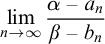
By a celebrated result of Kučera and Slaman [5], the Martin-Löf random left-c.e. reals form the highest left-c.e. Solovay degree. Barmpalias and Lewis-Pye [1] strengthened this result by showing that, for all left-c.e. reals $\alpha $ and $\beta $ such that $\beta $ is Martin-Löf random and all left-c.e. approximations $a_0,a_1,\dots $ and $b_0,b_1,\dots $ of $\alpha $ and $\beta $, respectively, the limit
exists and does not depend on the choice of the left-c.e. approximations to $\alpha $ and $\beta $.
Here we give an equivalent formulation of the result of Barmpalias and Lewis-Pye in terms of nondecreasing translation functions and generalize their result to the set of all (i.e., not necessarily left-c.e.) reals.
We present an overview of higher randomness and its recent developments. After an introduction, we provide in the second section some background on higher computability, presenting in particular $\Pi^1_1$ and $\Sigma^1_1$ sets from the viewpoint of the computability theorist. In the third section we give an overview of the different higher randomness classes: $\Delta^1_1$-randomness, $\Pi^1_1$-Martin-Löf randomness, higher weak-2 randomness, higher difference randomness, and $\Pi^1_1$-randomness. We then move on to study each of these classes, separating them and inspecting their respective lowness classes. We put more attention on $\Pi^1_1$-Martin-Löf randomness and $\Pi^1_1$-randomness: The former is the higher analogue of the most well-known and studied class in classical algorithmic randomness. We show in particular how to lift the main classical randomness theorems to the higher settings by putting continuity in higher reductions and relativisations. The latter presents, as we will see, many remarkable properties and does not have any analogue in classical randomness. Finally in the eighth section we study randomness along with a higher hierarchy of complexity of sets, motivated by the notion of higher weak-2 randomness. We show that this hierarchy collapses eventually.
Ergodic theory is concerned with dynamical systems -- collections of points together with a rule governing how the system changes over time. Much of the theory is concerned with the long term behavior of typical points-- how points behave over time, ignoring anomalous behavior from a small number of exceptional points. Computability theory has a family of precise notions of randomness: a point is "algorithmically random'' if no computable test can demonstrate that it is not random. These notions capture something essential about the informal notion of randomness: algorithmically random points are precisely the ones that have typical orbits in computable dynamical systems. For computable dynamical systems with or without assumptions of ergodicity, the measure 0 set of exceptional points for various theorems (such as Poincaré's Recurrence Theorem or the pointwise ergodic theorem) are precisely the Schnorr or Martin-Löf random points identified in algorithmic randomness.
We discuss the different contexts in which relativization occurs in randomness and the effect that the relativization chosen has on the results we can obtain. We study several characterizations of the K-trivials in terms of concepts ranging from cuppability to density, and we consider a uniform relativization for randomness that gives us more natural results for computable randomness, Schnorr randomness, and Kurtz randomness than the classical relativization does (the relativization for Martin-Löf randomness is unaffected by this change). We then evaluate the relativizations we have considered and suggest some avenues for further work.
Algorithmic randomness lies at the intersection between computability theory and probability theory. In order to fully explore this interaction, one naturally needs a computable version of measurable functions. While several such notions appear in the literature, most of them do not interact well with algorithmic randomness because they are only defined up to a null set. Therefore, we need a computable notion of measurable function which is well defined on algorithmically random points, and this is what layerwise computability precisely does. This article is a survey about this notion. We give the main definitions, the most important properties, and several applications of this notion. We prioritize motivating this framework and explaining its salient features.
We show that for each computable ordinal $\alpha> 0$ it is possible to find in each Martin-Löf random ${\rm{\Delta }}_2^0 $ degree a sequence R of Cantor-Bendixson rank α, while ensuring that the sequences that inductively witness R’s rank are all Martin-Löf random with respect to a single countably supported and computable measure. This is a strengthening for random degrees of a recent result of Downey, Wu, and Yang, and can be understood as a randomized version of it.
By the complexity of a finite sequence of 0’s and 1’s wemean the Kolmogorov complexity, that is the length of the shortest input to auniversal recursive function which returns the given sequence as output. Byinitial segment complexity of an infinite sequence of 0’s and1’s we mean the asymptotic behavior of the complexity of its finiteinitial segments. In this paper, we construct infinite sequences of0’s and 1’s with given recursive lower bounds on initialsegment complexity which do not compute any infinite sequences of 0’sand 1’s with a significantly larger recursive lower bound on initialsegment complexity. This improves several known results about randomnessextraction and separates many natural degrees in the lattice of Muchnikdegrees.
A Martin-Löf random sequence is an infinite binary sequence with the property that every initial segment σ has prefix-free Kolmogorov complexity K(σ) at least ∣σ∣ − c, for some constant c ϵ ω. Informally, initial segments of Martin-Löf randoms are highly complex in the sense that they are not compressible by more than a constant number of bits. However, all Martin-Löf randoms necessarily have contiguous substrings of arbitrarily low complexity. If we demand that all substrings of a sequence be uniformly complex, then we arrive at the notion of shift-complex sequences. In this paper, we collect some of the existing results on these sequences and contribute two new ones. Rumyantsev showed that the measure of oracles that compute shift-complex sequences is zero. We strengthen this result by proving that the Martin-Löf random sequences that do not compute shift-complex sequences are exactly the incomplete ones, in other words, the ones that do not compute the halting problem. In order to do so, we make use of the characterization by Franklin and Ng of the class of incomplete Martin-Löf randoms via a notion of randomness called difference randomness. Turning to the power of shift-complex sequences as oracles, we show that there are shift-complex sequences that do not compute Martin-Löf random (or even Kurtz random) sequences.
We prove a number of results in effective randomness, using methods in which Π10 classes play an essential role. The results proved include the fact that every PA Turing degree is the join of two random Turing degrees, and the existence of a minimal pair of LR degrees below the LR degree of the halting problem.
Recommend this
Email your librarian or administrator to recommend adding this to your organisation's collection.
