To save content items to your account,
please confirm that you agree to abide by our usage policies.
If this is the first time you use this feature, you will be asked to authorise Cambridge Core to connect with your account.
Find out more about saving content to .
To save content items to your Kindle, first ensure no-reply@cambridge.org
is added to your Approved Personal Document E-mail List under your Personal Document Settings
on the Manage Your Content and Devices page of your Amazon account. Then enter the ‘name’ part
of your Kindle email address below.
Find out more about saving to your Kindle.
Note you can select to save to either the @free.kindle.com or @kindle.com variations.
‘@free.kindle.com’ emails are free but can only be saved to your device when it is connected to wi-fi.
‘@kindle.com’ emails can be delivered even when you are not connected to wi-fi, but note that service fees apply.
This chapter reflects on ancient schooling as a foundational institution for fiction pedagogy, arguing that the classroom served not only to transmit literary knowledge but to regulate the interpretive strategies through which fiction was read, written, and critiqued. It situates the classical curriculum as both a training ground and a target for the innovations of Imperial prose fiction. Revisiting the book’s central case studies, the chapter frames the novel as a genre defined by its playful but defiant engagement with the scholastic “rules of the game.” The chapter positions educators as early arbiters of fictionality whose influence extended beyond the classroom. Yet education was not the only institution shaping ancient fiction. The conclusion gestures toward future work on fiction in relation to philosophy, religion, law, and the visual arts, as well as in later Byzantine and medieval prose narratives. It closes by reaffirming the book’s core claim: that the complex relationship between fiction and paideia structured not only the form of Imperial prose fiction, but also broader cultural debates over imagination and the authority of the classical past.
This chapter explores the challenge of teaching Homer and Vergil in the Roman Empire, focusing on the pleasures of fiction in epic poetry. Using the Phaeacian books of the Odyssey (6–13) and Carthaginian books of the Aeneid (1–4) as case studies, it shows how educators reckoned with the poetic seduction that threatened to derail heroic virtue and integrity. Drawing on philosophical critiques of these canonical poets, the chapter traces evolving responses to the nexus of “Phaeacian pleasures” in their episodes. In the second half, it analyzes how four educators – Plutarch, the anonymous author of the Essay on Homer, Tiberius Claudius Donatus, and Augustine – developed distinctive approaches to epic pleasure. While Plutarch disciplines poetic deception into a propaedeutic for philosophy, the Essay embraces Homeric fiction as a new pedagogy of pleasure. Donatus treats the Aeneid as rhetorical panegyric, while Augustine transforms the affective power of Aeneas and Dido into a new Christian grammar. Together, these authors reveal the centrality of epic pleasure to Imperial education and the divergent strategies by which students learned to navigate literary enchantment
This chapter surveys Pindar’s reception from the poet’s own lifetime until the Byzantine period. Four ‘moments’ of that reception are singled out from that very rich reception history. First, Plato, whose citations and evocations of Pindar were to prove crucial for the subsequent critical tradition; second, the Alexandrian grammarians who created a corpus of seventeen books of poems, and the poets (Callimachus, Theocritus, Apollonius) who reflected that new engagement with Pindar in their poems; thirdly, the critical treatises of Dionysius of Halicarnassus and the poetry of Horace, both produced at Rome in the Augustan period; and finally (and most briefly), Plutarch and the authors writing in Greek prose under the Roman Empire.
The middle-Platonic tendencies of Plutarch are not only pervasive in his philosophical ideas; his temperate approach to life can be appreciated in many other contexts, and the culinary world is no exception. Particularly interesting, given his moderate views, is his depiction of foods bringing opposites together to create balance. This article first considers the combination of the opposite concepts of γλυκύς (sweet) and πικρός (bitter) in Plutarch in general; then, with reference to food consumption, it studies references to honey, both in association with a bitter element and when honey itself is described as both sweet and bitter. The article surveys the appearance of honey in other sources to obtain a wider picture before drawing conclusions with regard to Plutarch’s own literary creation.
The expansion of the Roman Empire into the Mediterranean in the early second century BCE represented a gradual diminution of the independence and autonomy of the Greek cities. At the same time, processes internal to the poleis were moving them in a more elitist direction, as the “big benefactors,” ultrawealthy men who bestowed ever-greater favors on their cities, moved toward monopolizing participation in civic magistracies. The council and other political bodies became off-limits to citizens who were not among the euergetistic elite. Still, democratic institutions and ideas of the previous period persisted, especially in the popular assembly. Christianity, the centralization of administrative power in the Roman Empire under Constantine, and various crises combined to deprive the cities of the last vestiges of dēmokratia in the fourth century CE, when popular assemblies largely disappear from the poleis.
This article examines Plutarch’s reading of Plato’s Timaeus 47e3–48a7, arguing that Plutarch interprets the passage as referring to three principles rather than two, distinguishing necessity from the wandering cause as two separate principles. The article explores the exegetical and philosophical motivations behind Plutarch’s interpretation, highlighting its originality in contrast to both earlier Platonist readings and modern scholarly interpretations.
This chapter aims to qualify any defined boundaries between educated Roman women and their political or public engagement. As one moves further into the post-triumviral period, women pursuing cultural and educational endeavours appeared to gain more acceptance and admiration. This observation is particularly applicable to the case of Octavia Minor, the sister of Octavian Augustus and the fourth wife of Marcus Antonius. This chapter explores instances of Octavia’s educational pursuits, such as her involvement in creating networks of philosophers and tutors to educate her son, Marcellus (Strabo), her patronage (Vitruvius and the Porticus Octaviae) and instances of speech crafted for the Plutarchan Octavia, which blend the political and private spheres and are interpreted as a suasoria (Plutarch). Through these examples, this study positions Octavia as a prominent figure who exemplifies how female political engagement and paideia could be reconciled during the triumviral period.
Tudor translators followed Plutarch, alleged tutor and advisor to the emperor Trajan, in presenting essays from his Moralia as counsel for governors, often in response to specific events. They also set out to reform the commonwealth by making Plutarch’s advice widely available through vernacular translation in print. Thomas Wyatt’s The quyete of mynde (1528) responds to the impending royal divorce. Thomas Elyot’s The educacion or bringinge up of children (1530) provides guidance to his sister but also promotes wider social and political reform. John Hales’s translation of ‘Advice on Health’ (1544) offers a remedy for the Lord Chancellor as well as the metaphorical body politic. Latin manuscript translations of ‘Superstition’ by John Cheke (1545 or 1546) and of ‘Talkativeness’ by John Christopherson (reign of Edward VI) respectively advocate and oppose further religious reform. Thomas Blundeville’s Three [morall] treatises (1561) presents his circle of Protestant humanist friends as counsellors to the newly acceded Queen Elizabeth.
Chapter 3 samples some ancient conversations across language at the interface of literature and lived experience: lifestyle, in the strictest sense. The title nods at antiquity’s most famous Greco-Roman comparativist, Plutarch; but discussion quickly moves on to the Latin prose miscellanist Aulus Gellius. What can we learn if we press the micro-dramas of philological competition characteristic of Gellius’ so-titled Attic Nights for cultural insights into the ‘parallel lives’ of the Greeks and Romans encountered in them? Next comes a matter earlier raised amid the counterfactual vignettes of Chapter 1: what if we had some stories to tell, against the grain of literary history, about a Greek poet responding to something – anything – written in Latin? Virgil’s fame makes his a good case to ponder here; and the Bay of Naples, where Virgil spent much of his life, invites attention as a microclimate of poetic biculturalism. The last section considers a collection of Greek epigrams assembled by a Greek who enjoyed patronage in first-century CE Rome: in the face of most modern critical work on the Greek Anthology, what happens if the Garland of Philip is read as Roman poetry?
Plutarch considers that the texts of the classical tradition with which young people come into contact from a very young age have many flaws, in terms of the ideology, the moral issues they deal with, the standards they project, and the decision-making they demonstrate. His admission of this is also the reason that leads him to devote a large part of his treatise to investigating the nature of poetry and how readers and teachers can correct, evaluate, and make positive use of the moral phenomena found in it. For him, poetry has a purely moral–pedagogical character as it exerts a direct influence on the human soul and mind. This last statement of his is confirmed in an undeniable way in practice, as the entire educational world recognises literature as the most suitable means of education and training. In ‘How to study poetry’, the philosopher does not want to moralise or manipulate the reader’s thinking, but rather give them the opportunity to decide for themselves the actions they will take to achieve the ultimate reading pleasure and benefit. In the present article, his pedagogical concepts meet with modern literary theories in a unique way, which makes reading them an interesting process.
This chapter assesses the imperial presence of lyric in the form of the textual tradition of the nine canonical poets established by Alexandrian scholars. It reviews the evidence for the circulation of archaic and classical lyric texts among students of literature and readers from the late Hellenistic period onwards. Papyri preserving lyric texts and commentaries, treatises discussing literary and rhetorical education, as well as the diffusion of lyric quotations among Greek prose writers are all surveyed to define the place of lyric poetry in imperial paideia. Compared to mainstream classics, the genre thus emerges as a special, more niche and refined form of reading. The chapter then shows that by the imperial period, the reception of lyric subgenres followed a crystallised system of personas, where each poet activated specific thematic, local, ethical and aesthetic associations. This mental map shaped the reception of lyric poetry by imperial writers who, like Aristides, knew and chose to deploy it.
This final chapter summarises the book’s substantial contribution to our interpretation of Aristides’ works and figure, as well as to our picture of ancient lyric reception and imperial Greek culture more widely. Besides looking backwards, however, this conclusion also adds some reflections on how the approach developed and deployed in this study may be productively applied to other imperial genres and writers, both pagan and Christian, down to Late Antiquity.
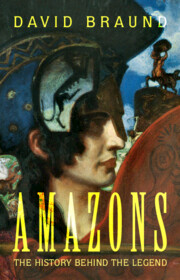
The idea of the Amazons is one of the most romantic and resonant in all antiquity. Greeks were fascinated by images and tales of these fierce female fighters. At Troy, Achilles' duel with Penthesilea was a clash of superman and superwoman. Achilles won the fight, but the queen's dying beauty had torn into his soul. This vibrant new book offers the first complete picture of the reality behind the legends. It shows there was much more to the Amazons than a race of implacable warrior women. David Braund casts the Amazons in a new light: as figures of potent agency, founders of cities, guileful and clever as well as physically impressive and sexually alluring to men. Black Sea mythologies become key to unlocking the Amazons' mystery. Investigating legend through history, literature, and archaeology, the author uncovers a truth as surprising and evocative as any fiction told through story or myth.
This paper situates Ptolemaeus Chennus’ treatment of Alexander the Great in the Kainē Historia within the miscellany tradition, and demonstrates how he engages directly in the discourse of his day concerning Alexander. The Alexander anecdotes furthermore reveal the parodic nature of the text: rather than to inform those seeking knowledge as the author claims in the preface, the Kainē Historia provides an opportunity for the already erudite reader to flaunt their own pre-existing knowledge that is necessary to unlock the jokes that sit at the heart of each anecdote. Consequently, the Alexander anecdotes should be understood as a means through which Ptolemy mocks not only the miscellany genre, but also the obstruse knowledge contained therein and the role it played in the performance of paideia.
This chapter defines paradoxes. It reviews several definitions, demonstrating the difference between contradictions and paradoxes. The essence of paradoxes is that they deliver a certain truth and a higher-level meaning. Contradictions are conflicting elements within the same system, whereas paradoxes are conflicting elements that reveal a previously unknown truth. A definition derived from the field of psychotherapy is also mentioned: Paradoxes are best characterized as unacceptable conclusions derived by apparently acceptable reasoning from apparently acceptable premises. Paradoxes are also seen as unacceptable conclusions derived from apparently acceptable reasoning based on seemingly acceptable premises. The definition proposed for this book is “a statement that is seemingly contradictory or opposed to common sense and yet is perhaps true,” including the broader notion of an “air of absurdity,” provided that this absurdity carries a higher-level meaning. Some historical examples are presented, such as Achilles never catching up with a much slower tortoise, the arrow paradox, the paradox of place, the liar paradox, identity paradox, and the paradox of the stone.
Up to this point our concern has been how the ancient historian justifies himself before his audience and attempts to portray himself as the proper person for the writing of history, that is, with his role as narrator rerum. The present chapter examines how he approaches his task when a participant in the deeds he records, and how he reconciles the dual role of actor and auctor rerum. For many historians of the ancient world had the opportunity to be both participant and rememberer. The historian’s formal method of presenting himself has received comparatively little attention, yet it is of interest not only because it tells us something of the way that men who wrote history in the ancient world approached the writing of their own deeds, but also what their concerns were in doing so. It is usually assumed that in order to give authority to his account, an historian who narrated his own deeds used the third person and maintained a show of formal impartiality. But a study of the surviving (and partially surviving) historians reveals a variety of approaches and methods, changing with time, the specific type of history written, and the individual intention of the historian himself.
This chapter explores the idea of gendered social performance through the texts of Plutarch and Sima Qian. Chandra Giroux investigates two categories of social performance in particular: friendship and authority, and death and grief. Both categories are approached from the perspective of each author’s own social performance in these scenarios as well as how they represent the social performance of women in them. Through an investigation of Plutarch’s and Sima Qian’s self-representations of their own social performances, she argues that both authors attempt to establish themselves as exemplary figures, ones that focus on the idea of the maintenance of harmony. In this way, Plutarch’s and Sima Qian’s actions are meant as a mirror for their readers’ own lives. In comparison, the chapter analyzes the examples of Timokleia and Timoxena in Plutarch’s corpus, as well as that of Nie Ying in Sima Qian’s work, to explore the authors’ notions of the ideal female reaction to friendship and authority, as well as that of death and grief. In this analysis, Giroux finds that both authors’ representations of women are based in the gender expectations of their respective societies. It is thus the differences between their cultures’ approaches to gender relations that dictate how Plutarch and Sima Qian understood the ideal female reaction to death, grief, friendship, and authority.
The drinking party at Medius’ in Babylon on 31 May 323 b.c., marking the onset of Alexander’s terminal illness, is explored from contemporary and later texts. Close reading of fragments by Nicobule and Aristobulus, set beside the reticence of the court daybooks (Ephemerides) and the studied vagueness of secondary sources, clarifies in detail the sequence of events. Justin, Plutarch and the author of the Liber de morte Alexandri cast light on the silence imposed by the King’s successors. A narrative emerges of the day itself, the spread of rumour, the two false explanations for Alexander’s death that were successively propagated, and the third explanation, most probably correct, that Aristobulus was first to publish.
Anth. Pal. 11.418 is traditionally attributed to Trajan. The distich mocks a man’s large nose and is a typical example of a scoptic epigram. Even though the attribution to Trajan looks suspicious, scholarship has been inclined to accept his authorship. However, it is possible that the poem was written about the emperor instead, which would also explain the misattribution. This hypothesis, if correct, sheds light on the surprising opening anecdote of Plutarch’s Regum et imperatorum apophthegmata (172E), which is dedicated to Trajan.
This article asks what Paul’s claims about cosmology signify in terms of his competitive position on the nature and purpose of the moon. Specifically, in an age in which discourses and demonstrations involving the moon were rife, I argue that Paul is invoking principals shared by writers like Plutarch on the “double death” of the human being (first as soma on the earth, then as psyche/nous in orbit around and on the moon) and that he envisions an afterlife among the stars in pneumatic form that, to the degree it is anthropomorphic, is ideally male. I also posit that this aspect of Paul’s thought has been overlooked, in part due to the idiosyncratic-yet-pervasive translation of doxa in Paul as “glory” rather than in terms related to typologies and judgment, as it is elsewhere in Greek philosophical literature.