To save content items to your account,
please confirm that you agree to abide by our usage policies.
If this is the first time you use this feature, you will be asked to authorise Cambridge Core to connect with your account.
Find out more about saving content to .
To save content items to your Kindle, first ensure no-reply@cambridge.org
is added to your Approved Personal Document E-mail List under your Personal Document Settings
on the Manage Your Content and Devices page of your Amazon account. Then enter the ‘name’ part
of your Kindle email address below.
Find out more about saving to your Kindle.
Note you can select to save to either the @free.kindle.com or @kindle.com variations.
‘@free.kindle.com’ emails are free but can only be saved to your device when it is connected to wi-fi.
‘@kindle.com’ emails can be delivered even when you are not connected to wi-fi, but note that service fees apply.
John William Colenso’s Commentary on Romans, written during his time as Bishop of Natal and published in 1861, remains neglected in the field of New Testament studies, as does Colenso’s work more generally, despite some notable recent attention. The commentary is, however, of considerable interest. It displays some significant similarities with the much later New Perspective on Paul, and offers an early example of a participationist reading of Paul, seen through the lens of Colenso’s inclusive and universalist theology. It also shares some of the problems of the New Perspective, particularly in terms of its critique of Judaism. The commentary is also significant and relevant to current debates about decolonisation, because of the ways in which the African context shaped Colenso’s reading of the letter and because of the powerful critique of (English) ethnic and (Christian) religious superiority that Colenso finds in Romans.
Whiteness emerged gradually through specific historical developments rather than existing as a timeless concept. Evidence shows that ancient Romans and Greeks did not have our modern concept of race, instead viewing human differences through environmental and cultural lenses. Archaeological findings reveal that darker-skinned people lived throughout medieval Britain without systematic discrimination based on skin color. Several key historical developments contributed to later white supremacy: the Crusades’ creation of a European Christian identity, Spanish and Portuguese maritime expansion, early slave trading, and English colonization of Ireland. The latter served as a testing ground for colonial practices that were later applied globally. While pre-modern societies exhibited xenophobia and religious discrimination, these differed fundamentally from modern racial concepts, were not based on immutable biological characteristics, and could change through conversion or environmental adaptation. White supremacy emerged from these and other intersecting historical strands rather than having any single cause, challenging reductionist historical explanations.
Through an analysis of his Pauline exegesis in the 390s, especially Romans 7, Chapter 2 demonstrates that Augustine develops a consistent interpretation of Paul on justification: faith justifies because it trusts God to give the grace of charity to fulfill the law by the Holy Spirit in baptism. The chapter situates this interpretation within the predominantly baptismal theology of justification in Ambrose and North Africa. This context unlocks how Augustine’s account of faith justifying by obtaining grace is intended to interpret the catechumen’s reception of the Holy Spirit in baptism; in Augustine’s own analogy, faith is the conception of grace, and baptism is its birth. Turning to ad Simplicianum (To Simplician), Augustine’s changed view on election preserves this interpretation of justification by faith. The chapter concludes by applying Augustine’s interpretation of Paul to his conversion in confessiones (Confessions), though this also reveals Augustine’s need to explain why faith sometimes fails to obtain grace.
The author’s exposition of the gospel message takes the form of a homily addressed in part to an audience located elsewhere, suggesting a comparison with early Christian letters. The author is clearly influenced by the letters of Paul, while comparison with the letters of Ignatius and the fragments of Valentinus’s letters bring to light significant contrasts that help to locate the Gospel of Truth more accurately within the early Christian literary landscape.
This chapter argues that many New Testament authors develop their Christologies through the use of quotations of Scripture. Images for figures in Jewish interpretation provide a rich resource for these authors as they describe the significance of the work of Jesus for the people of God. This chapter features four passages with a network of scriptural references to illustrate the breadth of Christology represented in the New Testament Epistles.
This article examines the theology of Katherine Parr, sixth and surviving wife of Henry VIII, through a close reading of her mature work, The Lamentation of a Sinner. In particular, I treat Parr’s theological use of the epistle to the Romans to inform and structure her doctrine of the work of Christ within The Lamentation. I argue that Parr follows the structure of Romans in her opening lament over sin, her central discussion of the cross of Christ, and her application of this theology to the Christian lives of the people of England’s church. I also posit Parr’s use of several overlapping motifs for Christ’s work within The Lamentation’s treatment of the atonement and its relationship to the Protestant understanding of justification by faith.
Great changes have taken place in the approach of historians to the topic since the publication of East of Byzantium (1980). Instead of centre-periphery or top-down models they now see the relations between Byzantium and the east in terms of connectivity, networks and horizontal ties. This is connected with the spread of late antiquity as a concept and includes a great expansion in Syriac studies. Late antiquity now embraces the emergence of Islam and looks towards Eurasia; another challenge is posed by the rise of global history. But these developments, with the new focus on the fall of the western empire, raise major problems of identity for Byzantium itself, and indeed for western Europe.
Chapter 8 looks at Samuel in the theological context of the rest of the Scriptures: the Former Prophets or Deuteronomistic History, Chronicles, Psalms, Proverbs, Qohelet, and the New Testament.
The management and mismanagement of Roman groves was a serious matter, and intentional and unintentional violations of these spaces could be severely punished. In spite of this, groves remained loosely defined by Romans and their boundaries were commonly misunderstood, a confusion that has continued into modern scholarship, where groves are understood as either a clearing in a wood or a dark space lit by artificial lighting. This article takes up this discussion, and explores the nature of an ancient grove as a well-attested space under forest management that influences later conversations on the nature of wooded spaces in more recent periods.
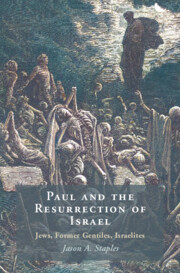
This chapter evaluates the landscape of Pauline studies, demonstrating the need for reevaluation of Paul’s understanding of the relationship between Israel, the Jews, and the non-Jewish individuals receiving the spirit through Paul’s ministry. Contrary to many modern readings, Paul’s gospel is not systematically opposed to “legalism” or “ethnocentrism,” and his treatment of (former) gentiles as descendants not only of Abraham but of Israel begs explanation. The chapter concludes with a discussion of the composition and interpretive capacity of the recipients of Paul’s letters and a discussion of key terms in the Pauline letters.
The gospel promoted by Paul has for many generations stirred passionate debate. That gospel proclaimed equal salvific access to Jews and gentiles alike. But on what basis? In making sense of such a remarkable step forward in religious history, Jason Staples reexamines texts that have proven thoroughly resistant to easy comprehension. He traces Paul's inclusive theology to a hidden strand of thinking in the earlier story of Israel. Postexilic southern Judah, he argues, did not simply appropriate the identity of the fallen northern kingdom of Israel. Instead, Judah maintained a notion of 'Israel' as referring both to the north and the ongoing reality of a broad, pan-Israelite sensibility to which the descendants of both ancient kingdoms belonged. Paul's concomitant belief was that northern Israel's exile meant assimilation among the nations – effectively a people's death – and that its restoration paradoxically required gentile inclusion to resurrect a greater 'Israel' from the dead.
Despite major investment in sanitation infrastructure, intestinal parasites spread by faecal contamination of food and water were a particular problem everywhere in the Roman world. Similarly, ectoparasites such as lice and fleas were common despite the Roman enthusiasm for washing in communal bathhouses and the use of delousing combs. However, some parasites seem to be much more regional in their distribution, likely due to climate variations. Fish and Taenia tapeworms, spread by eating raw or undercooked fish, pork, or beef were more common in northern Europe than southern Europe, possibly due to the fact that the hot climate in the south made raw fish and meat go off faster than in the cooler north. In contrast, malaria seems to have been much more common in the Mediterranean region than in northern Europe, as the warm climate of the south created breeding sites for the Anophales mosquito, which transmitted the parasite. Roman period medical texts by Galen and other physicians showed awareness of a number of parasites and tried to explain them in the context of the humoral theory. Treatment involved trying to rebalance the humours in order to return the individual to health.
In this book, Matthew Pawlak offers the first treatment of sarcasm in New Testament studies. He provides an extensive analysis of sarcastic passages across the undisputed letters of Paul, showing where Paul is sarcastic, and how his sarcasm affects our understanding of his rhetoric and relationships with the Early Christian congregations in Galatia, Rome, and Corinth. Pawlak's identification of sarcasm is supported by a dataset of 400 examples drawn from a broad range of ancient texts, including major case studies on Septuagint Job, the prophets, and Lucian of Samosata. These data enable the determination of the typical linguistic signals of sarcasm in ancient Greek, as well as its rhetorical functions. Pawlak also addresses several ongoing discussions in Pauline scholarship. His volume advances our understanding of the abrupt opening of Galatians, diatribe and Paul's hypothetical interlocutor in Romans, the 'Corinthian slogans' of First Corinthians, and the 'fool's speech' found within Second Corinthians 10-13.
The second chapter engages an area that should not exist, according to the traditional historiography. If Calvin, as a good evangelical reformer, avoided all entanglements with the tradition by maintaining his sole focus on the scriptures, a chapter that considers tradition and exegesis should be impossible. But the evidence demonstrates that is far from the case. In examinations of Calvin’s Commentaries on Romans and II Corinthians, and his Lectures on Genesis and Daniel, the readers will see an extraordinary array of considerations of the orthodox exegetical traditions. Further, evidence is presented to show moments when Calvin turned away from the plain sense of scripture in order to pursue the “fuller sense” that would allow him to provide the stronger doctrinal teaching – even at the cost of less-strict maintenance of the doctrine of the scriptures. This was carried out across his considerations of both testaments, and in both the earlier and later stages of his career.
Chapter 24 provides a history of thought on poetry translation ranging from the Roman poets translating Greek, to the experiments of Louis and Celia Zukovsky. They explore how poetic forms, for example the haiku and the sonnet, have been introduced to literary systems beyond their origins through translation, and how the poetry of the classical world has been reanimated through modernism’s shifts in practices and views of translation. They discuss the ‘translation’ of texts in a literary context by poets and versioners who may or may not read the source languages concerned. Throughout, the emphasis is on exemplification and on the connection between theoretical perspectives and paratextual reflection.
This article argues for a renewal of the discipline of New Testament studies through a focus on the question of truth. To make the argument, the article first engages a recent essay that is highly critical of mainstream NT scholarship and subsequently works with the thought of Søren Kierkegaard, Stanley Cavell, Cora Diamond and Hans-Georg Gadamer to pursue the interpreter's implications in the NT's assertions of truth. The article also briefly exegetes five passages from the NT to illustrate the way the NT makes claims that require judgements about truth. Along the way, the article also engages contemporary NT scholars who argue vociferously against ‘theological’ readings of the NT and others who argue for their inherent necessity.
This article demonstrates that Paul's use of Ps 68.10b OG in Rom 15.3 makes sense of the psalm's context, fits with the parenetic rhetoric of Paul's argument in 14.1–15.6 and necessitates Paul's justification in 15.4 of his use of Scripture. Citing Ps 68.10b because the δυνατοί (15.1) face actual reproaches for accommodating to the ἀδύνατοι's convictions, Paul grounds the call to bear these reproaches in emulating Christ's devotion to God, not his vicarious suffering. The focus on allegiance to God orients the δυνατοί towards the one who can then enable them to counter-culturally endure shame with fellow members of God's household.
This article deals with how to conceive of sin in Romans 5–8. Currently there are two main views concerning the understanding of sin in these chapters. The apocalyptic school describes sin as a power extrinsic to the person. The moral philosophical interpretation, by contrast, contends that sin is a representation of action or the passions. While these schools are usually opposed to each other, this article proposes that the major concerns of the apocalyptic school – to understand sin as a reality that is universally determinative, that precedes human action and exceeds human strength, and from which only God can deliver humanity – are compatible with the interpretation of sin as action in some passages and as the passions in others. There may therefore be space for further collaboration between two views that are often opposed.
Chapter Five: Imperial Creations (192–284 CE) investigates the outcome of these negotiations between the citizens and their imperial overlords, as the balance of Roman involvement in Antioch shifted from provincial to imperial in an increasingly unstable climate. Antioch was not yet a completely imperially governed city, as the civic administration retained a visible degree of agency and still presented itself as a distinct body. Even so, the Antiochians were forced to adjust under intensified Roman rule as the imperial government exploited the city’s resources and interrupted civic operations.
David VanDrunen ties the natural law concepts found in both the Old and New Testaments to a sense of conscience. The notion of natural law appears early in the Old Testament, in God’s covenant with Noah. God instructs Noah that, for example, the killing of an innocent must be recompensed (thereby indicating that innocent people must not be wantonly killed). While there is not one Hebrew word for conscience in the OT, it does identify the “heart” (leb) and “kidneys” (kelayot) as the mechanisms by which the wise and discerning person applies what he knows to be true about the way the world works. In the New Testament, conscience is the “subjective human faculty that recognizes right and wrong and thus bears witness to a person’s standing before the law.” The Apostle Paul’s discussion of natural law in Romans chapters 2 and 3 reveals that although not all receive God’s express law (as did God’s people on Mt. Sinai), all people everywhere have an innate sense of moral rectitude to which their consciences testify. All persons everywhere therefore are subject to God’s righteous judgment.