Refine search
Actions for selected content:
2 results
Verma modules and finite-dimensional irreducible modules of the universal Askey–Wilson algebra at roots of unity
- Part of
-
- Journal:
- Nagoya Mathematical Journal / Volume 261 / 2026
- Published online by Cambridge University Press:
- 03 February 2026, e15
-
- Article
-
- You have access
- Open access
- HTML
- Export citation
-
The Askey–Wilson algebras illustrate the bispectral property of orthogonal polynomials in the Askey scheme. The universal Askey–Wilson algebra $\triangle _q$ is a central extension of the Askey–Wilson algebras associated with the most general orthogonal polynomials in the Askey scheme. The Verma $\triangle _q$-modules are a family of infinite-dimensional $\triangle _q$-modules with marginal weights. Under the condition that q is not a root of unity, it was shown that every finite-dimensional irreducible $\triangle _q$-module has a marginal weight and is isomorphic to a quotient of a Verma $\triangle _q$-module. Assume that q is a root of unity. We prove that every finite-dimensional irreducible $\triangle _q$-module with a marginal weight is isomorphic to a quotient of a Verma $\triangle _q$-module. More precisely, two natural families of finite-dimensional quotients of Verma $\triangle _q$-modules contain all finite-dimensional irreducible $\triangle _q$-modules with marginal weights up to isomorphism. Furthermore, we classify the finite-dimensional irreducible $\triangle _q$-modules with marginal weights up to isomorphism.


Signature characters of invariant Hermitian forms on irreducible Verma modules of singular infinitesimal character and Hall–Littlewood polynomials
- Part of
-
- Journal:
- Canadian Mathematical Bulletin , First View
- Published online by Cambridge University Press:
- 09 January 2026, pp. 1-23
-
- Article
-
- You have access
- Open access
- HTML
- Export citation
-
The Unitary Dual Problem is one of the most important open problems in mathematics: classify the irreducible unitary representations of a given group. It is known for a real reductive Lie group that $A_{\mathfrak {q}}(\lambda )$ modules are unitary and that any unitarizable Harish-Chandra module of strongly regular infinitesimal character is isomorphic to an $A_{\mathfrak {q}}(\lambda )$. Thus, it is of interest to study representations of singular infinitesimal character. For a compact real form and any alcove of the form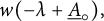 $w(-\lambda + \underline {A}_\circ ),$ where $\lambda $ is dominant (possibly singular) and $\underline {A}_\circ $ is the dominant fundamental alcove, the signature character of the canonical invariant Hermitian form on the irreducible Verma module of infinitesimal character in that alcove is the “negative” of a Hall–Littlewood polynomial summand at $q=-1$ times a version of the Weyl denominator. (Signature characters for other real forms and alcoves of other forms may also be expressed using Hall–Littlewood polynomial summands.) Such formulas give hope that the Unitary Dual Problem is tractable in the singular case.


