Refine search
Actions for selected content:
1 results
Transcendence for Pisot morphic words over an algebraic base
- Part of
-
- Journal:
- Ergodic Theory and Dynamical Systems , First View
- Published online by Cambridge University Press:
- 10 July 2026, pp. 1-22
-
- Article
-
- You have access
- Open access
- HTML
- Export citation
-
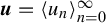
It is known that for a uniform morphic sequence $\boldsymbol u = \langle u_n\rangle _{n=0}^\infty $
 and an algebraic number $\beta $
 such that $|\beta |>1$
 , the number $[\![ \boldsymbol {u} ]\!] _\beta :=\sum _{n=0}^\infty ({u_n}/{\beta ^n})$
 either lies in $\mathbb Q(\beta )$
 or is transcendental. In this paper, we show a similar rational–transcendental dichotomy for sequences defined by irreducible Pisot morphisms on binary alphabets. Subject to the Pisot conjecture (an irreducible Pisot morphism has pure discrete spectrum), we generalise the latter result to arbitrary finite alphabets. In certain cases, we are able to show transcendence of $[\![ \boldsymbol {u}]\!] _{\beta }$
 outright. In particular, for $k\geq 2$
 , if $\boldsymbol u$
 is the k-Bonacci word, then $[\![ \boldsymbol {u}]\!] _{\beta }$
 is transcendental.


