Refine search
Actions for selected content:
6 results
Shifted convolution sum for the coefficients of symmetric square L-function
- Part of
-
- Journal:
- Proceedings of the Royal Society of Edinburgh. Section A: Mathematics , First View
- Published online by Cambridge University Press:
- 06 May 2026, pp. 1-13
-
- Article
- Export citation
-
Let $f$ be a normalized primitive holomorphic cusp form of even integral weight for the full modular group $\Gamma=SL(2,\mathbb{Z})$. Denote by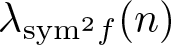 $\lambda_{\text{sym}^{2}f}(n)$ the $n$th normalized coefficient of the Dirichlet series expansion of the symmetric square $L$-function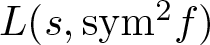 $L(s,\text{sym}^{2}f)$. In this paper, we are interested in the shifted convolution sum
 \begin{equation*}\sum_{h\leq H}\sum_{N \lt n\leq 2N}\lambda_{\textrm{sym}^{2}f}(n)\lambda_{\textrm{sym}^{2}f}(n+h).\end{equation*}
We establish a non-trivial bound for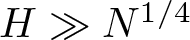 $H\gg N^{1/4}$.


GENERALISED AUTOMORPHIC SHEAVES AND THE PROPORTIONALITY PRINCIPLE OF HIRZEBRUCH-MUMFORD
- Part of
-
- Journal:
- Journal of the Institute of Mathematics of Jussieu / Volume 23 / Issue 4 / July 2024
- Published online by Cambridge University Press:
- 10 October 2023, pp. 1567-1605
- Print publication:
- July 2024
-
- Article
-
- You have access
- Open access
- HTML
- Export citation
AN APPLICATION OF BINARY QUADRATIC FORMS OF DISCRIMINANT $\boldsymbol {-31}$ TO MODULAR FORMS
- Part of
-
- Journal:
- Bulletin of the Australian Mathematical Society / Volume 106 / Issue 2 / October 2022
- Published online by Cambridge University Press:
- 08 February 2022, pp. 269-272
- Print publication:
- October 2022
-
- Article
-
- You have access
- Open access
- HTML
- Export citation
-
In this note, we use Dedekind’s eta function to prove a congruence relation between the number of representations by binary quadratic forms of discriminant $-31$ and Fourier coefficients of a weight $16$ cusp form. Our result is analogous to the classical result concerning Ramanujan’s tau function and binary quadratic forms of discriminant $-23$.


An arithmetic Hilbert–Samuel theorem for singular hermitian line bundles and cusp forms
- Part of
-
- Journal:
- Compositio Mathematica / Volume 150 / Issue 10 / October 2014
- Published online by Cambridge University Press:
- 19 August 2014, pp. 1703-1728
- Print publication:
- October 2014
-
- Article
- Export citation
Strong orthogonality between the Möbius function, additive characters and Fourier coefficients of cusp forms
- Part of
-
- Journal:
- Compositio Mathematica / Volume 150 / Issue 5 / May 2014
- Published online by Cambridge University Press:
- 24 April 2014, pp. 763-797
- Print publication:
- May 2014
-
- Article
- Export citation
-
Let $\nu _{f}(n)$ be the $n\mathrm{th}$ normalized Fourier coefficient of a Hecke–Maass cusp form $f$ for ${\rm SL }(2,\mathbb{Z})$ and let $\alpha $ be a real number. We prove strong oscillations of the argument of $\nu _{f}(n)\mu (n) \exp (2\pi i n \alpha )$ as $n$ takes consecutive integral values.


Hecke Operators and Derivatives of L-Functions
-
- Journal:
- Compositio Mathematica / Volume 125 / Issue 1 / January 2001
- Published online by Cambridge University Press:
- 04 December 2007, pp. 39-54
- Print publication:
- January 2001
-
- Article
-
- You have access
- Export citation
