To save content items to your account,
please confirm that you agree to abide by our usage policies.
If this is the first time you use this feature, you will be asked to authorise Cambridge Core to connect with your account.
Find out more about saving content to .
To save content items to your Kindle, first ensure no-reply@cambridge.org
is added to your Approved Personal Document E-mail List under your Personal Document Settings
on the Manage Your Content and Devices page of your Amazon account. Then enter the ‘name’ part
of your Kindle email address below.
Find out more about saving to your Kindle.
Note you can select to save to either the @free.kindle.com or @kindle.com variations.
‘@free.kindle.com’ emails are free but can only be saved to your device when it is connected to wi-fi.
‘@kindle.com’ emails can be delivered even when you are not connected to wi-fi, but note that service fees apply.
This concluding chapter puts land at the heart of the “China model,” linking legal, fiscal, financial, and political features of the system to explain the roots of China’s contemporary economic challenges, including the real estate crisis, land-backed debt, and abortive property tax initiative. It also extends the theory beyond the Chinese case in three ways. First, it revisits the paradigmatic case of post–Glorious Revolution England in light of China’s experience, suggesting that, in the context of technological change, property rights over land were less secure and governance less democratic in the early eighteenth century than presented in some of the development literature. Second, it examines the relationship between the ease or difficulty of using law to reassign land rights and promotion of transformative economic growth in the case of contemporary India. These comparisons point to the significance of regime type—authoritarian vs. democratic. Regime type shapes the ease with which the state can reassign land rights and how the state manages the conflict that results from the redefinition of property rights. Third, the chapter examines the redefinition of property rights over personal data as a driver of growth in the new information economy as well as a new source of conflict.
This chapter addresses the topic of legacy and its relevance in the work of Pablo Neruda. Thus, starting from the rescue of 2,000 refugees from the Spanish Civil War on the steamship Winnipeg, it explores the relationship of the Spanish language with death in poems from Residencia en la tierra, and its re-emergence in Canto general, exemplified in “Alturas de Macchu Picchu.” The essay argues that the writing of this poem implies the reconciliation of the Spanish language, which is marked by the violence of its imposition in the Americas, with its speakers. It also looks at the relationship between Nerudian poetry and César Vallejo, who, in España, aparte de mí este cáliz, saw in each letter of the imposed language the origin of punishment, thus making reconciliation impossible. Returning to the Winnipeg, the essay concludes that the legacy of Pablo Neruda’s work is immeasurable because it is a debt, that which our time has with his poetry.
Following the proclamation of constitutionalism on 23 July 1908, villagers throughout the Ottoman Empire occupied and reclaimed çiftlik (plantation) lands from which they had previously been dispossessed. This article approaches the Ottoman 1908 Revolution as part of the “global wave of constitutional revolutions” by shifting the historiographical focus of the 1908 revolution from urban to agrarian spaces. It investigates a series of land occupations that emerged across the Ottoman çiftlik geography, conceptualizing them as the “constitutionalism of the dispossessed.” I argue that this constitutionalism of the dispossessed was a response to what I call the “order of dispossession” that emerged in the late nineteenth century: a class project of çiftlik owners reacting to global economic, imperial fiscal, and local ecological crises that aimed to subordinate labor to the circuits of global capital. Furthermore, this article discusses the failure of the constitutionalism of the dispossessed in the face of a social counter-revolution by çiftlik owners, which culminated in the codification of imperial property law. It demonstrates that the post-revolutionary government—having been concerned with the credibility of the empire in European credit markets for new loans to sustain the empire in fiscal crisis—desired the restoration of the order that the çiftlik owners insisted upon, and which the circuits of global capital required. This article ultimately offers a fresh and radical history of the Ottoman 1908 revolution and counter-revolution, suggesting a novel perspective to understand the modes of protest of the dispossessed in response to the imperatives of global capital.
Governments command tax revenue to provide services. The US government’s revenue is lower than that in Western European nations. The latter provide services such as universal healthcare, paid parental leave, and free education. A large portion of the US government’s revenue supports the military, which comprises almost half of the world’s total military expenditures. The richest 400 American families pay the lowest tax rate today, in sharp contrast to their paying the highest share in the 1950s. The federal government borrows to pay for services rather than resort to taxing the rich. Americans seem more accepting of not redistributing wealth than Western Europeans. Policies not supported by the elite are unlikely to become law. Poorer people are less likely to vote in the US. Since the 1950s, US states with the most liberal policies have had better mortality trends than conservative states. Americans prefer medical care spending over public health and social spending. Neoliberalism has increased economic inequality and produced a rightward political shift. Reparations can improve racial inequalities
Machiavelli assigns a complicated role in his political theory to the concept of the beneficium (or benefizio in Machiavelli’s Italian) in order to describe the benefits that the power of the state can bring; and this chapter focuses on one philosophical language which is used throughout the Italian Renaissance to discuss this idea and which comes to shape Machiavelli’s own thinking decisively. That language is classical in origin; and it is intimately associated with one text in particular: Seneca’s On Benefits. In the first section of the chapter, Seneca’s thinking about generosity and gratitude is explicated within the wider context of his social philosophy to show how it forms part of a theory of moral obligation, informed by a firmly Stoic notion of natural human sociability. The second section shows how Seneca’s contentions are subsequently retrieved and put to work in pre-humanist and humanist political thought to discuss the moral relationships between members of civil associations and to underline the perils of the vice of ingratitude in political society. Once the place of Seneca’s theory in Renaissance discourse is elucidated, it becomes easier to see how Machiavelli manipulates its contentions into a theory of political obligation within his account of the state.
We analyse the monetary-fiscal policy mix in post-war Europe, focusing on France and Italy, to trace the historical dynamics of debt and inflation. Using a Markov-switching DSGE model, we identify distinct policy regimes: a Passive Monetary-Active Fiscal (PM/AF) regime before the late 1980s/early 1990s, an Active Monetary-Passive Fiscal (AM/PF) regime associated with central bank independence and EMU convergence, and a third regime marked by the ELB and active fiscal measures aimed at recovery. Simulations reveal that the PM/AF regime in France led to price volatility but stabilised debt, while AM/PF curbed inflation at the cost of rising debt. In contrast, Italy’s procyclical fiscal policy in downturns exacerbated imbalances, aggregate volatility, and low growth. We further assess the implications of policy credibility and uncertainty.
Chapter 2 takes up Goethe’s distinction between a higher and a lower layer of world literature (discussed in the previous chapter) and argues that in complementing the transnational distribution of cultural mediocrity through markets, Goethe envisioned a more elevated sphere organized along a decidedly non-market form of exchange, that is, gifting. I examine Goethe’s correspondence with his translator Thomas Carlyle as a circuitry of world-literary gifting marked by the to-and-fro movement of tangible (books, journals, manuscripts, jewelry, drawings, interior decoration, etc.) and intangible gifts (tribute, reward, cooperation, guidance). Their nexus, I argue, was emblematic of the transition from the ethos of generous sharing in the republic of letters to world literature as a forum interconnecting outstanding representatives of various national literatures. Contributing to the material diffusion of texts and channelling symbolic economies of prestige, their acts of gift-giving prefigured Carlyle’s conception of hero-worship, and the “significant geography” circumscribed by the movement of gifts between Weimar and Scotland morphed into an imperialistic vision of a Teutonic (British-German) world literature.
Wetland projects were a leading example of improvement in action in early modern England, offering a counterpoint to many unrealised schemes and dreams that litter the archives. But such ventures were fraught with paradoxes: property rights were transgressed to make more certain ones, while drainage created new floods. Centring the engineers, investors, landowners, settlers, and labourers who propelled improvement on the ground, this chapter examines how their ambitions were altered and restricted by the polarised environmental politics that emerged in Hatfield Level. Improvement was a risky endeavour and the costs of conflict were high. Asking how contemporaries evaluated its ambiguous results in Hatfield Level, this chapter charts the revival of wetland improvement by the network of reformers that coalesced around the ‘intelligencer’ Samuel Hartlib in the mid seventeenth century. The experience of conflict surfaced in debate about, and experiments with, technologies of improvement, which promised to marginalise social negotiation and environmental contingencies.
This article analyses the consequences of the narrative construction of the group of countries that has been grouped as ‘PIIGS’ (Portugal, Ireland, Italy, Greece and Spain) for their sovereign debt risk rating. Acronyms for groups of countries can provide a useful shorthand to capture emergent similarities in economic profile and prospects. But they can also lead to misleading narratives, since the grounds for use of these terms as heuristic devices are usually not well elaborated. This article examines the process whereby the ‘PIIGS’ group came into being, traces how Ireland became a member of this grouping, and assesses the merits of classifying these countries together. The contention is that the repetition of the acronym in public debate did indeed shape the behaviour of market actors toward these countries. It is argued that this involved a co‐constituting process: similarities in market treatment drives PIIGS usage, which in turn promotes further similarities in market treatment. Evidence is found of Granger causality, such that increased media usage of the term ‘PIIGS’ is followed by increased changes in Irish bond yields. This demonstrates the constitutive role of perceptions and discourse in interpreting the significance of economic fundamentals. The use of acronyms as heuristics has potentially far‐reaching consequences in the financial markets.
We study how competition impacts security-bid auctions by comparing Monopolistic and Competitive auctions. Sellers choose their security designs between debt and equity, and buyers select auctions based on sellers’ choices. We find that an auction’s security design has limited influence on revenue under monopoly, whereas equity substantially increases revenue under competition due to equity attracting more bidders. Despite this, sellers’ rate of choosing equity does not differ between the treatments. While theory suggests that security choice when acting as a buyer should be negatively correlated to one’s choice as a seller, we find the empirical correlation to be positive.
This article examines how the absence of physical branches and embodied oversight in fintech reconfigures financial life in Nigeria. Based on nine months of ethnographic fieldwork in Jimeta, it shows that the absence of physical infrastructures and the dominance of virtual ones is not merely technical but an active condition that reshapes moral obligation, trust, and accountability in borrowing. Branchless fintech enables users, mostly Muslims, to rationalise interest-bearing loans as private acts beyond communal or religious scrutiny – a process conceptualised as financial secularisation. Yet the same absence generates mistrust as users perceive fintech as intangible and unreliable. The article also shows how the impersonal nature of fintech borrowing encourages default, which fintech companies counter through coercive digital enforcement. These dynamics reveal a dialectic of absence and presence: physical absence weakens moral accountability while hyper-visible digital oversight reinstates coercion. The article contributes to debates on credit-debt relations and infrastructure by showing how digital finance transforms moral economies in the global south and reshapes financial subjectivities.
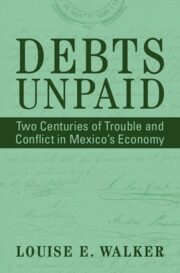
Power struggles between debtors and creditors about unpaid debts have animated the history of economic transformation from the emergence of capitalist relations to the recent global financial crashes. Illuminating how ordinary people fought for economic justice in Mexico from the eve of independence to the early 2000s, this study argues that conflicts over small-scale debts were a stress test for an emerging economic order that took shape against a backdrop of enormous political and social change. Drawing on nearly 1,500 debt conflicts unearthed from Mexican archives, Louise E. Walker explores rapidly changing ideas and practices about property rights, contract law, and economic information. This combination of richly detailed archival research, with big historical and theoretical interpretations, raises provocative new questions about the moral economy of the credit relationship and the shifting line between exploitation and opportunity in the world of everyday exchange.
This chapter focuses on the change in the law known as the equity of redemption, which took form in the late seventeenth century, and made the title to mortgaged land more secure through the provision that rents could be sequestered to pay off a loan after the due date, to avoid the title to the property reverting to the lender. This legal change led to a rapid expansion of mortgaging and associated conveyancing. It also demonstrates how interest-bearing loans, based on the security of property, became a source of both income and, more importantly, stable abstract value that could be used to increase the money supply by underpinning the creation of local notes and bills. Mortgage income could also smooth credit flows by providing capital when outgoings were greater than incomings. In the past this would have triggered the need to litigate to increase income, but now money could be borrowed. This chapter will also examine savings held in the form of bonds.
“Political economy,” in the late eighteenth century, signified the statesman’s practice of managing the resources of a political “household.” In 1776, thirteen self-declared American states took control of their political economies. Under the Articles of Confederation, these states, in carefully delimited ways, acted as a composite body with a political economy of its own, and in 1787, the revised federal Constitution became a blueprint for a unified project of economic, political, and social ordering. Thus the history of US political economy can be seen as the story of an emerging One. During the 1790s, two opposing political economies emerged, envisioned and promoted by Alexander Hamilton and Thomas Jefferson. Recent scholarship, however, has moved beyond visions of early American political economy either as a constitutionally defined One or as a partisan Two. It envisions, instead, a postconstitutional landscape composed of many political economies – competing, overlapping, and evolving.
Between 1730 and 1775, the quantity of consumer goods bought and sold and the number of people purchasing them significantly expanded in British North America. This economic activity created shared tastes and habits across regional, ethnic, and racial divisions and encouraged the development of shared experiences and identities based on the emulation of British culture. Groups often marginalized in political and cultural discourses found in consumerism new ways to assert their identities and influence. During the Anglo-American crisis, the rejection of British imports became an important means of rallying support for the Patriot cause, politicizing activities formerly considered to be domestic and private. The American Revolution disrupted the economic and cultural ties that had linked American and British markets, but by the late eighteenth century Americans had resumed many of the consumer habits in which they had indulged before independence.
This chapter moves back to institutions to deal with the general decline in litigation over failed credit that began around 1690, and argues it came about largely because of changes in credit networks. It demonstrates how attorneys’ business moved away from litigation to conveyancing, and how they profited by becoming local credit. It also looks at the increasing use of local summary justice in the Courts of Requests in London, Bristol, and Newcastle to enforce the small debts of poor consumers, as well as the growing use of arrest and imprisonment in the common law courts. While the use of paper currency provided greater liquidity in credit markets, and reduced the overall level of litigation massively, those debtors who went broke began to be treated in a much harsher fashion.
Drawing on an array of literary, penological, archival, and visual sources, this study explores the abundance of prison scenes in the eighteenth-century British novel. Revealing the four distinct prison cultures of the period, it illuminates how the narrative and ideological meanings of these institutions have been distorted by our long-held fascination with the criminal penitentiaries of the nineteenth century. Ranging from the early Accounts of the Ordinary of Newgate to the prison sackings of the Gordon Riots of 1780, what emerges are not narratives of interiority and autonomous individuation, but something like the opposite of this: tales that stress the interdependence and sociality of eighteenth-century selfhood. Contextualising the carceral scenes of writers like Defoe, Haywood, Sterne, Smollett, and the Fieldings, Prison and the Novel invites us to rethink familiar accounts of the novel as a form, and of what it means to spend time inside.
This chapter analyzes the shift towards a closer involvement of the Amsterdam authorities in the lives of citizens from all layers of society that occurred through various institutional innovations after the city turned Protestant in 1578. Credit was a unifying economic phenomenon in Amsterdam, and examining the function of credit allows us to shed light on the connections between people from various classes. Focusing on the phenomenon of insolvency, essentially a breakdown of credit, makes it possible to open up broader perspectives on the early modern economy. Guilds and their civic middle-class values shaped social and economic policies of this period in important ways, clearly displaying the integration among different social groups that also came to be reflected in contemporary legal theory and practice. Religious communities also occupied an important role in financial conflict resolution between creditors and debtors. The moral dimensions of insolvency that become manifest through the acts of various Amsterdam consistories reflect important changes in the attitudes towards insolvency that are typical of the seventeenth-century Dutch Republic.
Chapter 8 considers commerce and money management, the largest category of work in the work-task database. This provides a detailed view of petty commerce, the typically small transactions that took place every day across the country, with women and men almost equally involved. Markets remained the most common locations of commerce, but transactions took place everywhere including the home, the street, and occasionally, the specialist retail shop. Evidence of administering debts and pawning goods demonstrates the significant role played by married women in these activities.
Stories of fallen Kurdish revolutionaries who return to the living in dreams, and of Druze souls who circulate across securitized borders gesture at forms of vitality and animation that persist beyond biological death. In this article, we have put forward the concept of “insurgent immortality” to make sense of the political potency of revolutionary martyrs and past lives among Kurdish communities from Turkey and Syrian Druze communities in the Israeli-occupied Golan Heights. By insisting on the immortality of their dead, we argue, these stateless communities articulate a claim to counter-sovereignty. What makes these communities’ practices aimed at mastering and transcending death different from the sovereignty claimed by nation-states is that apparitions of dead martyrs and past lives work as expansive, boundary-crossing mechanisms, rather than the territorializing logics of enclosure and containment that mark state sovereignty. The immortality we describe in this article is insurgent because it relies on the recognition and cultivation of long-term exchange relations between the living and the dead, through which debt becomes a modality of generative expansion across both this and otherworldly times and spaces. The resulting sense of generalized indebtedness opens up spaces of liminality in which the dead come alive as both inspiring and unsettling figures. We develop insurgent immortality as a comparative concept that emerges from the specific ethnography of each case yet reaches across their contextual boundedness. In this way, we hope to inspire renewed conversation about shared trajectories of resistance, including its ambivalences, that arise in contexts of statelessness, occupation, and disenfranchisement.