To save content items to your account,
please confirm that you agree to abide by our usage policies.
If this is the first time you use this feature, you will be asked to authorise Cambridge Core to connect with your account.
Find out more about saving content to .
To save content items to your Kindle, first ensure no-reply@cambridge.org
is added to your Approved Personal Document E-mail List under your Personal Document Settings
on the Manage Your Content and Devices page of your Amazon account. Then enter the ‘name’ part
of your Kindle email address below.
Find out more about saving to your Kindle.
Note you can select to save to either the @free.kindle.com or @kindle.com variations.
‘@free.kindle.com’ emails are free but can only be saved to your device when it is connected to wi-fi.
‘@kindle.com’ emails can be delivered even when you are not connected to wi-fi, but note that service fees apply.
Chapter 6 looks at the ways in which frenzy was weaponized during the many religio-political upheavals of the period. As a figure of speech, it offered rich material for English polemicists, who knew that questioning their opponents’ sanity was more effective than simply refuting their claims. As a literal diagnosis, frenzy also had a practical use: it could silence politically inconvenient people without making a show. This chapter shows how its conferral was used to justify the incarceration of prophets, mystics, and kings. Yet the diagnosis had one serious drawback: it gave its recipients the gift of innocence. Frantic persons were incapable of crime, and could neither be convicted nor punished for their actions. If a recipient later became not just inconvenient but too dangerous to live, any previous diagnosis – no matter how spurious – had to be redacted from the record. This was a problem for the religious polemicists too: the aim was to pathologize ‘heretics’ ‘papists’, ‘puritans’, and ‘sectarians’, not to excuse them from all wrongdoing. Eventually, this chapter argues, that flaw drove Anglican polemicists to abandon frenzy for a new diagnosis: ‘melancholy enthusiasm’.
Christians faced the specific problem of reconciling capital punishment with the belief in the sanctity of human life. ‘God made man in his own image’ (Genesis). However the Church, from the time of Constantine, found it advantageous to ally itself with the State in order to forward and exploit its influence and authority. This alliance involved the Church in a cruel penal system: in fact, it introduced a new capital crime, heresy. Such disquiet as there was largely went underground. When dissent was expressed, Jesus was called up as an advocate for the cause, not as a missionary for penal reform (his Kingdom was not of this world), but because of his life, teaching, and vision of a New Age. Of our two Italian abolitionists, the devout Catholic Pelli repeatedly invoked the Christian God and the Sermon on the Mount. Earlier it was a Protestant, Sébastian Castellion, who caused a stir. Castellion campaigned fiercely against the criminalization of heresy, following the brutal execution of Michael Servetus, burned at the stake in 1553 in Calvin’s Geneva. Castellion, however, was striking a blow for freedom of belief rather than for the abolition of capital punishment as such.
Chapter 7 argues that feminine imagery is the most pervasive strategy in the fifteenth-century Lollard vernacular treatise The Lanterne of Liȝt for encouraging readers to identify affectively with Christ’s true Church while participating in the liturgical, sacramental, and charitable practices of mainstream ecclesiastical life. The chapter identifies a distinctive “ecclesial spirituality” of relating directly to Lady Church in historical circumstances that were hostile and deadly toward religious dissent.
This essay studies gender in medieval heresy by focusing on an inquisitorial trial in Milan in 1300. The inquisitors investigated a small group of devotees of a deceased penitent woman named Guglielma for venerating her as the Holy Spirit. A noble Humiliati nun, who would become Guglielma’s pope in a coming new age, and a wealthy layman cooperated as the devotees’ leaders. On the surface, the devotees seemed to have reversed gender roles, which late medieval male clergy-female mystic partnerships exemplified. Through an analysis of the surviving records, this article demonstrates that, instead of inverting gender expectations as the inquisitors assumed, the devotees’ vision of a new age – somewhat infused with Joachimism – and the co-leadership of the nun and the layman developed out of transcending the gender binary. As a result, the devotees saw Guglielma not as a co-redeemer with Christ but as the Holy Spirit who comforted them, would convert non-Christians, and had helped unite the devotees, even those of opposing political factions, into a family. Rejecting violent rupture as well as binary gender roles, their future age, which would begin with the nonviolent replacement of the Roman Church, would both preserve Milan’s social hierarchy and eschew binary gender roles.
While few martyrs made it to sainthood during the early modern period, the idea of martyrdom was nevertheless revitalized and reshaped following the Reformation and New World discoveries. This chapter analyzes how martyrdom functioned across different geographical and religious frontiers – heresy, infidelity, and paganism – whose importance shifted over time in line with Catholic imperial expansion.
This chapter addresses the profound indebtedness of the Spanish Inquisition to its medieval predecessor. Both were grounded in the procedures and priorities of ancient Roman law. The text explains the concept of “heresy” within Christianity, as well as the ways in which medieval European rulers -- popes and monarchs -- worked together in an attempt to stamp out public, persistent, and intentional religious dissent. The essay charts the structural formation of the Spanish Inquisition after 1478, and examines the processes that were eventually standardized. It addresses questions of proof and legal discretion, as well as potential defense maneuvers by suspects. It raises the frequency of torture and describes more and less typical punishments, which Spanish inquisitors called “penances” in accordance with their overarching pastoral goals. Finally, this essay addresses the pivotal question of support for the Inquisition from below, namely, from ordinary Spaniards.
Founded in 1478 and not permanently abolished until 1834, the Spanish Inquisition has always been a notorious institution in history as an engine of religious and racial persecution. Yet, Spaniards themselves did not create its legal processes or its theoretical mission, which was to reconcile heretics to the Catholic Church. In this volume, leading international scholars assess the origins, legal practices, victims, reach, and failures of Spanish inquisitors across centuries and geographies. Grounded in recent scholarship and archival research, the chapters explore the Inquisition's medieval precedents as well as its turbulent foundation and eradication. The volume examines how inquisitors changed their targets over time, and how literal physical settings could affect their investigations and prosecutions. Contributors also demonstrate how deeply Spanish inquisitors cared about social status and legal privilege, and explore the scandals that could envelop inquisitors and their employees. In doing so, this volume offers a nuanced, contextual understanding of the Spanish Inquisition as a historical phenomenon.
The author’s exposition of the gospel message takes the form of a homily addressed in part to an audience located elsewhere, suggesting a comparison with early Christian letters. The author is clearly influenced by the letters of Paul, while comparison with the letters of Ignatius and the fragments of Valentinus’s letters bring to light significant contrasts that help to locate the Gospel of Truth more accurately within the early Christian literary landscape.
Chapter 3 provides a case study in Milton’s strategic self-positioning. It argues against the hitherto prevailing view that Milton attempted to reclaim the terms “heresy” and “heretic.” It is shown here that he never did. Milton did however develop an unusual understanding of these terms, and the chapter describes how and why he did so. In so doing so it considers the role that Milton’s view of heresy played in his broader thinking about religion, and considers what this matter tells us about Milton’s sense of his own relation to his audience.
This study examines gender bias in the investigative work of medieval inquisitors, focusing on Albert of Castellario’s trial of the Waldensians in Giaveno, Italy, in 1335. Drawing upon advancements in sociological and criminological literature, we conceptualize an inquisitorial trial as a discretionary information-gathering endeavor contingent upon the inquisitor’s judgment in deciding which leads to pursue. Employing social network analysis and survival methods, we evaluate whether Albert demonstrated gender biases in his investigative decisions, particularly regarding the weight assigned to testimonies from men versus women. Our findings demonstrate that Albert was more inclined to investigate men and prioritize their testimonies, even where similar levels of incriminating evidence were present for both genders. These results highlight the influence of societal attitudes toward gender on inquisitorial practices, on the representativeness of historical records, and on prevailing understandings of heretical groups. Furthermore, this study underscores the broader utility of our methodological framework for addressing related historical inquiries, including the political motivations behind the medieval inquisition.
This chapter offers a critical narrative of the development of Arianism as a heresy from the fourth to the sixth century. It explores the changing meanings of the heresiological label, and the political and ecclesiastical contexts in which it was deployed, from the origins of controversy between Arius and Alexander in Alexandria through to the barbarian successor kingdoms of the post-imperial West.
This chapter introduces the main themes and scope of the volume, including discussing the origin of the concept of ‘heresy’, as well as outlining what aspects of it will and will not form the focus of the following chapters. It then provides a summary of the division of the volume into two parts and the particular topics and case studies contained in each.
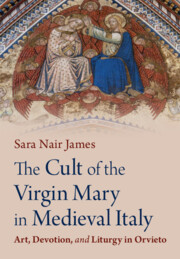
Late medieval Italy witnessed the widespread rise of the cult of the Virgin, as reflected in the profusion of paintings, sculptures, and fresco cycles created in her honor during this period. The cathedral of papal Orvieto especially reflects the strong Marian tradition through its fresco and stained-glass window narrative cycles. In this study, Sara James explores its complex narrative programs. She demonstrates how a papal plan for the cathedral to emulate the basilica of S. Maria Maggiore in Rome, together with Dominican and Franciscan texts, determined the choices and arrangement of scenes. The result is a tour de force of Marian devotion, superior artistry, and compelling story-telling. James also shows how the narratives promoted agendas tied to the city's history and principal religious feasts. Not only are these works more interesting, sophisticated, and theologically rich than previously realized, but, as James argues, each represents the acme in their respective media of their generation in central Italy.
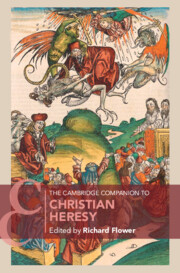
The concept of heresy has played a major role across Christian history. Traditionally, heretical sects have been regarded as distinct, real-life groups of people who had departed from the stable orthodox traditions of Christianity and who posed a threat that needed to be addressed, sometimes through violent repression. More recently, scholarship has focused on the notion of heresy as discourse, placing particular emphasis on its literary construction and the social and cultural contexts in which it was deployed. This literature has generated significant debates about the nature and historicity of many heresies. The Cambridge Companion to Christian Heresy provides a systematic and up-to-date guide to the study of this topic and its methodological challenges. The opening chapters explore different forms of written material that have played vital roles in historical disputes and in modern scholarly accounts. These are followed by case studies of thirteen notable heresies, ranging from the Gnostics through to the Hussites at the dawn of the Reformation.
This chapter suggests that the papacy dealt with Protestantism in various ways. It condemned the forty-one propositions of Martin Luther and then waited for the Council of Trent to condemn others. It used the institutions of preventive press censorship and of various inquisitions to check heresy. It sought the support of Christian rulers to prevent its spread, sending nuncios and legates to the rulers of the Holy Roman Empire, France, England, Scotland, Sweden, Denmark, and Poland–Lithuania to urge them to suppress heresy and to secure their loyalty by negotiating agreements on Church appointments and shared revenues and by offering military aid, efforts that had mixed success, or failed. Religious orders such as the Jesuits and Capuchins were also enlisted in the struggle. Leading Protestant reformers came to see the papacy as the Antichrist or foreign usurper.
This chapter examines two so-called transitional theologians who straddled the worlds of orthodox belief and learning and forward-looking scholarship and literary engagement. Johann Lorenz von Mosheim (1693–1755) and Johann Georg Walch (1693–1775) pointed the way to a new view of the Reformation, even if the results of their interventions went much farther then they intended. Mosheim’s History of Michael Servetus sought a type of transhistorical reconciliation between the eponymous Spanish heretic and John Calvin, who had him burned at the stake in Geneva. Mosheim tried to acknowledge the occasional brutality of Reformation-era Protestants while contextualizing the historical attitudes of an earlier era. Walch’s twenty-four-volume Luther edition was notable not only for rendering Luther’s language into a readable vernacular, but also for a long historical essay on Luther’s “accomplishments.” Walch sought to both acknowledge the genuine contributions of the first Reformer while also stripping away some of the mythical status that had accrued to Luther through generations of pious veneration.
The final chapter provides an examination of how the Merovingian world was shaped by opposition to paganism, heresy, Judaism, and, at the end, the new Islamic world of the Arab caliphate. The Franks (or at least some of them) had started as pagans themselves in the fifth century, and stories of conversion created important reminders of the journeys to salvation. Whether ‘real paganism’ is easily identifiable in stories or grave goods we may doubt. Similarly, the presence of heresy or Judaism can seem ambiguous when the sources are interrogated. But the creation of Frankish Christianity relied on its contrasts and those fed to it by the Byzantine Empire. Through Merovingian accounts of religious conflict we can discern how the Frankish kingdoms saw their place in the wider world.
In 1823, the first edition of William Shakespeare’s Hamlet and the manuscript of John Milton’s theological work De Doctrina Christiana (On Christian Doctrine) were both discovered after having been lost to history for centuries. These literary discoveries were subsequently published in 1825, challenging the established perspectives of them: the one as the one as the infallible magician of the stage, and the other as the juggernaut Christian poet. These two documents reshaped how scholars thought about them and their legacies. Shakespeare became a man at work, trafficking in a messy theater and printing culture. Milton became a theological outlaw, increasingly resembling to some his epic’s grand antagonist.
The book is devoted to the relationships between Nicene and Homoian Christianities in the context of broader religious and social changes in post-Roman societies from the end of the fourth to the seventh century. The main analytical and interpretative tools used in this study are religious conversion and ecclesiastical competition. It examines sources discussing Nicene–Homoian encounters in Vandal Africa, Gothic and Lombard Italy, Gaul, and Hispania – regions where the polities of the Goths, Suevi, Burgundians, and Franks emerged. It explores the extent to which these encounters were shaped by various religious policies and political decisions rooted in narratives of conversion and confessional rivalry. Through this analysis, the aim is to offer a nuanced interpretation of how Christians in the successor kingdoms handled religious dissent and how these actions manifested in social practices.
The Introduction presents the main topic of the book – the role of conversion and competition between Nicene and Homoian churches in the post-Roman West – and the methods applied. It explains terminology (Nicene, Homoian), theorises the concept of conversion as a tool of historical analysis, and presents the purpose of the cross-regional comparison that follows.