Refine search
Actions for selected content:
14 results
Habsburgs Looking East: Diplomatic Decisions and Early Modern Orientalism in the Habsburg Monarchy (1606–1683)
-
- Journal:
- Austrian History Yearbook , First View
- Published online by Cambridge University Press:
- 13 May 2026, pp. 1-17
-
- Article
- Export citation
Sir James Mackintosh and the first linguistic survey of India, 1806–1811
-
- Journal:
- Journal of the Royal Asiatic Society / Volume 35 / Issue 4 / October 2025
- Published online by Cambridge University Press:
- 21 November 2025, pp. 847-866
- Print publication:
- October 2025
-
- Article
- Export citation
Τὰ μαθήματα for Byzantinists
-
- Journal:
- Byzantine and Modern Greek Studies / Volume 49 / Issue 1 / April 2025
- Published online by Cambridge University Press:
- 27 March 2025, pp. 29-39
- Print publication:
- April 2025
-
- Article
- Export citation
Conclusion
-
- Book:
- The Limits of Erudition
- Published online:
- 05 December 2024
- Print publication:
- 12 December 2024, pp 291-302
-
- Chapter
- Export citation
Introduction
-
- Book:
- The Limits of Erudition
- Published online:
- 05 December 2024
- Print publication:
- 12 December 2024, pp 1-23
-
- Chapter
- Export citation
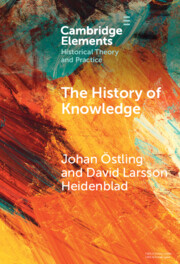
The History of Knowledge
-
- Published online:
- 14 December 2023
- Print publication:
- 18 January 2024
-
- Element
-
- You have access
- Open access
- HTML
- Export citation
Introduction
-
- Book:
- Romanticism and the Biopolitics of Modern War Writing
- Published online:
- 25 April 2023
- Print publication:
- 23 February 2023, pp 1-22
-
- Chapter
- Export citation
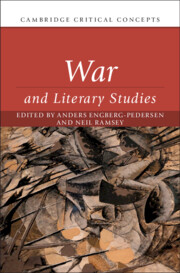
War and Literary Studies
-
- Published online:
- 15 January 2023
- Print publication:
- 05 January 2023
Introduction: War, Literature, and the History of Knowledge
-
-
- Book:
- War and Literary Studies
- Published online:
- 15 January 2023
- Print publication:
- 05 January 2023, pp 1-18
-
- Chapter
- Export citation
An Archaeology of Ancient Thought: On the Hebrew Bible and the History of Ancient Israel
-
- Journal:
- Harvard Theological Review / Volume 115 / Issue 2 / April 2022
- Published online by Cambridge University Press:
- 23 May 2022, pp. 171-196
- Print publication:
- April 2022
-
- Article
- Export citation
I - Prolegomena
- from Part I - Giving Up Philosophy
-
- Book:
- The Kingdom of Darkness
- Published online:
- 23 March 2022
- Print publication:
- 31 March 2022, pp 19-24
-
- Chapter
- Export citation
IV - Conclusion
- from Part IV - The European System of Knowledge, c.1700 and Beyond
-
- Book:
- The Kingdom of Darkness
- Published online:
- 23 March 2022
- Print publication:
- 31 March 2022, pp 819-852
-
- Chapter
- Export citation
General Prologue
-
- Book:
- The Kingdom of Darkness
- Published online:
- 23 March 2022
- Print publication:
- 31 March 2022, pp 1-16
-
- Chapter
- Export citation
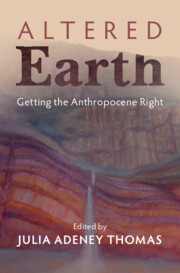
Altered Earth
- Getting the Anthropocene Right
-
- Published online:
- 24 March 2022
- Print publication:
- 31 March 2022
