To save content items to your account,
please confirm that you agree to abide by our usage policies.
If this is the first time you use this feature, you will be asked to authorise Cambridge Core to connect with your account.
Find out more about saving content to .
To save content items to your Kindle, first ensure no-reply@cambridge.org
is added to your Approved Personal Document E-mail List under your Personal Document Settings
on the Manage Your Content and Devices page of your Amazon account. Then enter the ‘name’ part
of your Kindle email address below.
Find out more about saving to your Kindle.
Note you can select to save to either the @free.kindle.com or @kindle.com variations.
‘@free.kindle.com’ emails are free but can only be saved to your device when it is connected to wi-fi.
‘@kindle.com’ emails can be delivered even when you are not connected to wi-fi, but note that service fees apply.
The concluding chapter summarizes the book’s arguments and findings and discusses their implications. Whether we seek to understand the electoral viability of illiberal forces or their behavior in power, the legacies of critical junctures of market reform remain pivotal. Crucially, as institutional developments entail the interplay between historical legacy and human agency, illiberal outcomes unfold in the probabilistic shadow of prior neoliberal deepening. The chapter closes with a discussion of (1) the study’s contributions to research in the tradition of Karl Polanyi; (2) the social bases and neoliberal adaptations of illiberal incumbents; (3) the legacies of Eastern Europe’s transition to democracy and the market; and (4) the crisis of liberalism and the Left. Although intense market reforms have failed to produce democratic stability and illiberals have kept finding ways to opportunistically exploit neoliberalism to their own advantage, the book ends on an optimistic note. Far from inevitable, the illiberal challenge can be countered – and democracies strengthened – if forward-thinking political agents learn from past experiences and progressive examples, build parties around new ethical principles, and focus on delivering economic well-being to broad social coalitions.
Chapter 1 introduces the study’s core puzzle and overall logic of inquiry. It discusses main themes, locates arguments relative to relevant scholarship, and establishes the analytical framework. Early in the chapter, the puzzle of varying illiberal electoral outcomes is presented and contextualized. Captured by two distinct yet related indicators – illiberal voting and post-neoliberal populist magnitude – illiberal electoral outcomes not only varied persistently across countries but also signaled the high salience of economic issues in postcommunist Europe. The next section establishes the rationale for explaining outcomes by drawing insights from Latin America – another semi-peripheral space that experienced consequential neoliberal junctures. Having argued, based on key economic and political parallels between the two regions, that a critical juncture approach is appropriate also for making sense of developments in Eastern Europe, I spell out the work’s central propositions and highlight theoretical, methodological, and empirical contributions. The final sections discuss matters of research design and evidence – namely, the mixed method approach, case studies, and quantitative and qualitative data, including 100 interviews – as well as the book’s organization.
Chapter 5 examines path dependencies in Slovakia and Poland, where postcommunist junctures produced powerful illiberal reactions in the 2000–20 period. It does so by unpacking political and societal dynamics and emphasizing how illiberal forces reaped considerable electoral benefits. In both countries, mainstream leftist parties embraced the neoliberal agenda and (eventually) failed, with many of their former supporters becoming available for subsequent populist mobilization. As the Left’s failures occurred amid the rising salience of economic concerns, adaptive illiberals gained at the ballot box. While it stresses key similarities in terms of the core mechanism linking postcommunist junctures and illiberal electoral outcomes, the chapter also identifies important distinctions between reactive sequences in Slovakia and Poland. Indeed, bait-and-switch tactics may have defined junctures in both cases, but political configurations featured more nuanced distinctions specifically in terms of agency, which, in turn, conditioned important differences between illiberals in the two countries. Overall, whereas the patterns of similarity substantiate the book’s core theory linking early market reform legacies and illiberal electoral outcomes, the differences suggest that the critical juncture framework can be further refined – to which I return in the book's final part.
Chapter 2 develops the book’s core theoretical framework. After discussing some relevant literature that focuses on the significance of historical legacy and political agency in Eastern Europe, I turn to political economy, sociological, and anthropological perspectives influenced by the work of Karl Polanyi and then elaborate on the Latin American parallel. Next, I define postcommunist junctures and locate fifteen Eastern European countries in three categories, depending on who led the charge for and against market reforms during relevant periods. The chapter then develops the book’s central argument, according to which distinct political configurations during junctures led to persistently varying odds of illiberal electoral viability via a two-step process. Concretely, postcommunist junctures shaped divergent path dependencies on the Left, which, in turn, conditioned subsequent antiestablishment parties’ programmatic choices and probabilities of electoral success. As in Latin America, illiberal outcomes in Eastern Europe were products of contingencies during neoliberal junctures. Unlike Latin America's key market reform periods, postcommunist junctures triggered a more specific mechanism, in which the status of the Left is a crucial intervening variable.
Chapter 3 offers an initial empirical assessment of the book’s main argument. It begins by identifying the partisan Left and Right in postcommunist Europe and analyzing patterns of their programmatic positions and ballot box results. The findings support the theoretical expectation that the long-term economic stances and electoral performance of the Left, but not of the Right, are two mutually related legacies of postcommunist junctures. Next, having developed a set of variables to compare long- and short-term electoral effects on the Left, I show that the former are the stronger predictor of illiberal electoral outcomes. The chapter closes with a discussion of why rival arguments prioritizing economic, political, and cultural demand, institutional and leadership supply, and international factors fail to adequately explain the variation identified in book’s opening chapter. This point is empirically reinforced in Appendix D, where I test the plausibility of the postcommunist juncture theory vis-à-vis rival hypotheses by using an original dataset and standard statistical methods for cross-sectional and time series data. The results show that the long-term regularities rooted in postcommunist junctures explain illiberal electoral outcomes in the most significant and consistent way.
Binio S. Binev's book offers an innovative interpretation of the relationship between economic liberalism and political illiberalism in contemporary Eastern Europe and Latin America. Focusing primarily on the former region, he emphasizes linkages between the legacies of early market reform and the adaptive strategies of subsequent populists. By integrating elements of path dependency and human agency, this book advances a distinctive explanation of illiberals' electoral viability and behavior in power. It uses both quantitative analysis of region-wide patterns and in-depth case studies informed by interviews from fieldwork in both regions to offer a comprehensive and nuanced perspective on the long-term effects of building capitalism, the political Left, and the persistent appeal of populist forces after the end of communism. It also identifies intriguing cross-regional parallels connecting early market reforms, societal reactions to neoliberalism, and illiberals' prospects of dominating politics and contesting democracy.
The study of European capitalism since 1945 has revealed three key findings. First, Europe’s governance of capitalism has been marked by four main periods: : 1) embedded liberalism (1945–73); 2) global attempts at mixed capitalism (1973–92); 3) high neoliberalism (1992–2016); and 4) the return of community capitalism since 2016. Second, Europeans have invented an original system to reach compromise between both states and the three types of capitalist governance, thereby offering choice, far from the image of a neoliberal technocratic dictatorship. The European Union is a mix between the influence of many countries, including Germany, France, and Britain, in addition to Italy and many others. Third, the trinity points to three alternatives that were – and still are – present: the neoliberal free-trade area, the socio-environmental alternative and the challenge of the return of community capitalism, between protectionist tensions, Fortress Europe and the possible hollowing out of the European Union from the pressure of growing nationalism.
The rise of community capitalism since the mid-2010s is reflected in the return of protectionism, authoritarianism, nativism, and violent conflict. European capitalism was forced to adapt by being more assertive. Europeans have embraced solutions that were previously refused as too protectionist, such as European preference, free trade contingent on adhering to social and environmental norms, subsidies to industry for strategic reasons, and competition policy decisions based on reciprocity. Some of these ideas were long defended by France. Germany previously criticised them, but has embraced some in trade since 2016, and others in foreign policy since 2022. The management of Brexit has reaffirmed the basis of European soft power, which depends on the unity of the Single Market. The Covid-19 pandemic (2020–21) forced the Union to adopt protectionist and interventionist measures. The Russo-Ukrainian War has led to very strong sanctions packages, as well as the Union’s foray into military matters. But the Europeans still remain heavily dependent on the US for defence. Donald Trump’s return to power in 2025 has forced Europe to think harder about organising community capitalism.
Throughout history, reference to the historical constitution of Hungary was used to achieve different and sometimes conflicting goals. Since 2012, it has become a constitutional concept after decades of abandonment. It appears in the Fundamental Law of Hungary (2012) and the jurisprudence of the Hungarian Constitutional Court (HCC) – linking it to the concept of constitutional identity. This chapter claims that the narrative of the Hungarian historical constitution as a constitutional concept is conducive to illiberalism. This is because political and constitutional actors have used it to oppose liberal values. Two arguments justify this claim. First, the contemporary claims on continuity and rights expansion cannot be verified when we contrast the contemporary narratives on the two most important constitutive components of the historical constitution, that is, continuity and rights expansion with legal measures introduced in the second part of the nineteenth and the first half of the twentieth centuries. Second, the relevant jurisprudence of the HCC suggests that the finality of introducing the historical constitution into the constitutional text and their subsequent linking to the concept of constitutional identity was to secure the traditional Westphalian understanding of ethnic-national sovereignty, mainly against the rule of law, that is, EU obligations and globalization.
This article is about the recent transformation of two powerful, paradoxical, and inseparable narratives of progress that developed in the postwar period: aesthetic autonomy and Holocaust remembrance. As far-right and illiberal parties have gained power across Europe, they adapted these foundational narratives of the liberal-democratic West to assert their own legitimacy and to reimagine the cultural inclinations of the European Union. This article examines how this process has taken place in the reception of Jonathan Glazer's Zone of Interest (2023) and Agnieszka Holland's Green Border (2023)—both international co-productions produced during the repressive eight-year reign of the Law and Justice Party (PiS) in Poland. A close reading of these films and their reception in different contexts, exposes a world more complicated than one-dimensional dichotomies between the liberal and the illiberal. Likewise, the reception of the two films makes apparent the entanglement of the national and transnational, as well as a process of translation and mistranslation that takes place as cultural materials move across geographical and ideological boundaries. Understanding such dynamics helps us to comprehend the options for criticism available to artists working within repressive contexts.
The conclusion of Invisible Fatherland reviews the book’s findings with a view to the rise of Nazism and the concept of militant democracy. Juxtaposing the republic’s constitutional patriotism with Nazi ideology, the author highlights the clash between two diametrically opposed “ways of life.” While Nazism was a violent political order that dehumanized marginalized groups, Weimar democracy embraced plural and hybrid identifications. Although the republic ultimately fell to the Nazi threat, the study argues that its constitutional patriotism remains a positive legacy of Western-style democracy. By reframing the narrative, Invisible Fatherland provides a forward-looking, “glass-half-full” perspective on one of history’s most misunderstood democratic experiments
The notion of constitutional identity rests on a seemingly inevitable tension: it is seen both as a source of inclusive social cohesion and as a potentially exclusionary concept invoked to justify populist claims and divergent interpretations of the rule of law and human rights. This has led legal scholars to redirect the understanding of constitutional identity towards an exclusively legal and functional definition in line with the formulation of Article 4 (2) TEU, which protects the ‘national identities’ of the European Member States: identity is assured so far as it is inherent to the ‘fundamental structures, political and constitutional’ of the Member States. This contribution criticises this approach, because it ignores the dynamic nature of a community and its attachment to its ethnocultural affinities, possibly undermining the viability of an inclusive polity. This is a concern, especially for multinational communities like the European Union. It then proposes an alternative conception of constitutional identity as narrative identity, in which preconstitutional identity emerges as the ghost in the shell of constitutional identity. A narrative conception of constitutional identity bridges the civic/ethnic divide by giving ethnocultural elements a place through narrative integration of preconstitutional identities but avoids an illiberal logic by putting them forward according to a retrospective logic as projections rather than as a robust core. Starting from that narrative conception, the relationship between preconstitutional and constitutional identity is further clarified by investigating their interplay across six binaries that often recur in the debate: continuity/change, sameness/difference, unity/plurality, sameness/difference, fact/fiction, affect/ratio.
The article investigates the intellectual foundations of the political projects led by Jarosław Kaczyński and Viktor Orbán. We demonstrate that next to homegrown populist and traditionalist ideas, the radicalisation of conservative thought in the West, particularly in the USA, facilitated the illiberal turn of these two countries during the 2010s. The state-, nation- and family-centred narratives, born out of this West–East cross-fertilisation, were then re-exported abroad with considerable financial support from the countries’ respective governments. The collaboration of politicians and intellectuals, and the tolerance within the circle of the critics of liberal democracy, appear as important factors behind their success. The regimes led by PiS and Fidesz provided Western conservatives with a “proof-of-concept”, demonstrating the viability of their ideas and emboldening them to further challenge the liberal consensus.
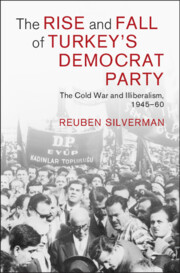
This chapter focuses on the Democrat Party’s final years in power (1958–60), which followed a debt restructuring agreement with creditors. During these years, Democrat Party leaders attempted to implement unpopular economic policies while still holding on to power. Their main tactic was to create the “Homeland Front,” a mass political organization. Though many people joined willingly, the Democrat-led government relied on high-pressure tactics and propaganda to ensure participation. It also increased pressure on its opposition through both legislation and extralegal actions such as mobilizing mobs to attack opposition leaders. These methods were, I argue, part of a more general shift toward illiberal, less democratic norms of governance among American Cold War allies in the late 1950s. By 1960, however, the Democrat Party’s authoritarian actions had alienated important domestic groups, including academics, bureaucrats, and military officers, which led to its removal from power. Rather than explaining the origins of the May 1960 coup, this chapter reveals how hollowed out the democratic political order had become by the time military officers finally launched their operation.
This chapter traces the two different movements in British imperial history that occurred post-Revolution: the geopolitical “Swing to the East” and the corresponding ideological “Swing to the Right.” Examining first India, then the Pacific, then Australia, it shows how the British empire became more assertive in each place from the 1780s, while at the same time experiencing a narrowing of imperial sentiments toward jingoism at home. It also considers colonized and Indigenous reactions to these assertions, delineating how they sometimes affected the course of empire in this period despite the overall negative effect of British incursion into their homelands. Colonized and Indigenous people certainly saw British assertions as anything but an improvement on their liberties. The chapter argues that the British empire’s survival after the American Revolution is best understood as a simultaneous refocusing on new oceanic possibilities and on a new kind of conservative imperative.
More than sixty years after Turkey's Democrat Party was removed from office by a military coup and three of its leaders hanged, it remains controversial. For some, it was the defender of a more democratic political order and founder of a dominant center-right political coalition; for others, it ushered in an era of corruption, religious reaction, and subordination to American influence. This study moves beyond such stark binaries. Reuben Silverman details the party's establishment, development, rule, and removal from power, showing how its leaders transformed themselves from champions of democracy and liberal economics to advocates of illiberal policies. To understand this change, Silverman draws on periodicals and archival documents to detail the Democrat Party's continuity with Turkey's late Ottoman and early republican past as well as the changing nature of the American-led Cold War order in which it actively participated.
Autocrats frequently appeal to socially conservative values, but little is known about how or even whether such strategies are actually paying political dividends. To address important issues of causality, this study exploits Russian president Vladimir Putin’s 2020 bid to gain a popular mandate for contravening presidential term limits in part by bundling this constitutional change with a raft of amendments that would enshrine traditional morality (including heteronormativity and anti-secularism) in Russia’s basic law. Drawing on an original experiment-bearing survey of the Russian population, it finds that Putin’s appeal to these values generated substantial new support for Putin’s reform package, primarily from social conservatives who did not support him politically. These findings expand our understanding of authoritarian practices and policy making by revealing one way in which core political values are leveraged to facilitate autocracy-enabling institutional changes and potentially other ends that autocrats might pursue.
This article examines populist challenges to democracy and liberalism in contemporary Europe through the eyes of populist opponents. It does not assume that populist parties necessarily threaten liberal democracy but shows that, for many, fear of this threat is a mobilizing force. Content analysis of data on justifications of initiatives opposing populist parties in Hungary, Poland, Germany, Spain, Italy, Sweden and Denmark examines the prevalence of opposition frames defining populism as ‘democratic illiberalism’ or as a ‘threat to liberal democracy’, and demonizing, delegitimizing ‘anti-populist’ frames. Analysis shows the Populism as Democratic Illiberalism and Anti-Populist opposition frames were more prevalent than the Populism as Threat to Liberal Democracy frame. It further shows that populist success in hybrid democracies could be an explanation for the higher prevalence of the Democratic Illiberalism frame in some cases, and that ideological illiberalism and the polarizing practice of cooperation with populist parties in government could explain the higher prevalence of the Anti-Populist frame.
This article analyses the political speeches of Hungarian Prime Minister Viktor Orbán between 2014 and 2023 by applying the ‘ideational approach’. Questioning the description of Orbán as a politician whose career represents nothing but opportunism and kleptocracy, the article argues that his politics are driven and underpinned by an illiberal political ideology. Examining how Orbán conceptualizes illiberalism in the realms of (1) Hungarian domestic politics; (2) foreign and global politics; and (3) cultural politics (understood in the Gramscian sense as a battle for fundamental values), this article offers a systematic analysis of Hungarian illiberalism and of the interrelations of its main ideological components. The article also examines how and why Orbán portrays himself not only as the authentic voice of the Hungarian people, but also simultaneously as the genuine representative of original Europeanness.
What does it mean “to tolerate” in a post-Christian and post-secular state? This chapter argues that antecedents of contemporary conflicts over diversity in Europe can be found in early modernity, specifically in early modern practices of toleration, which impacted on both the belonging and the visibility of minorities. New forms of intolerance pertain to the position of religious, ethnoreligious, and sexual minorities in public life, echoing the concerns of the public visibility of minorities inhering in historical Christendom. The political articulation of certain groups as “other” to “the nation” is increasingly mediated through constitutional repertoires, such as constitutional revision and amendments, developments in the hermeneutics of constitutional concepts, or pseudo-constitutional behaviour. This chapter introduces the main themes: tolerance and intolerance, constitutionalism, secularisation, and their significance across the liberal–illiberal divide.