To save content items to your account,
please confirm that you agree to abide by our usage policies.
If this is the first time you use this feature, you will be asked to authorise Cambridge Core to connect with your account.
Find out more about saving content to .
To save content items to your Kindle, first ensure no-reply@cambridge.org
is added to your Approved Personal Document E-mail List under your Personal Document Settings
on the Manage Your Content and Devices page of your Amazon account. Then enter the ‘name’ part
of your Kindle email address below.
Find out more about saving to your Kindle.
Note you can select to save to either the @free.kindle.com or @kindle.com variations.
‘@free.kindle.com’ emails are free but can only be saved to your device when it is connected to wi-fi.
‘@kindle.com’ emails can be delivered even when you are not connected to wi-fi, but note that service fees apply.
Focusing on the late eighteenth-century kulliyat by Lutf un-Nisa ‘Imtiyāz’ (1733?–?), arguably the first published Urdu poetess, this article seeks to explore the mobility—primarily metaphorical rather than physical—of a remarkable woman overlooked in historical accounts dominated by the male gaze. This mobility is enacted through her metaphysical, emotional, and literary navigation of time and space, rather than through geographic movement. Imtiyāz’s maṣnavī, functioning as an autobiography, employs time and space metaphors to offer a counter-archive for early women’s writing, providing a unique perspective into early modern feminine subjectivities. The examination underscores Imtiyāz’s agency in shaping her narrative, intertwining religious intercessions, canonical compositions, and literary sophistication. The metaphoric navigation through space and time illustrates the resilience and creativity of this woman, transcending her geographical and temporal constraints. At its core, Imtiyāz’s maṣnavī stands as a testament to her innovation, interwoven with convention through life-writing, crafting a rich narrative tapestry resonating within and beyond South Asian realms.
This Element traces the history of Shakespearean bibliography from its earliest days to the present. With an emphasis on how we enumerate and find scholarship about Shakespeare, this Element argues that understanding bibliographies is foundational to how we research Shakespeare. From early modern catalogs of Shakespeare plays, to early bibliographers such as Albert Cohn (1827–1905) and William Jaggard (1868–1947), to present-day digital projects such as the online World Shakespeare Bibliography, this Element underscores how the taxonomic organization, ambit, and media of enumerative Shakespearean bibliography projects directly impact how scholars value and can use these resources. Ultimately, this Element asks us to rethink our assumptions about Shakespearean bibliography by foregrounding the labor, collaboration, technological innovations, and critical decisions that go into creating and sustaining bibliographies at all stages. This title is also available as Open Access on Cambridge Core.
Why does William James matter for literary studies? And what can the practice of literary criticism bring to our reading of James? While James is widely credited as a founding figure for the fields of psychology, philosophy, religious studies, and progressive education, his equal significance for the field of literary criticism has been comparatively neglected. By modelling a variety of literary critical approaches to reading James and investigating James's equally various approaches to literature, this book demonstrates how his work historically informs and prospectively transforms the way we think about the bedrock premises of literary study – namely, style, influence, and method. The volume's diverse contributions unfold and elaborate these three facets of James's literary critical paradigm as they manifest in the rousing character of his sentences, in the impactful disseminations of his formative relationships, and in his uniquely programmatic responsiveness to the urgent issues of his time.
This introduction offers an overview of the volume’s variety of literary critical approaches to reading William James, and its account of James’s equally various approaches to literature. We draw out some of the generative through-lines among these approaches and spell out some of their broader implications for how we read, teach, and respond to literature. In outlining the three sections of the book – Style, Influence, and Method – we show how James historically informs and prospectively transforms the way we think about the bedrock premises of literary study. As we contend, the persistent richness of James’s work and the ongoing relevance of literary study itself are rooted in similar commitments: For both, any critical investigation must synchronously value expression, edification, and application. Our volume foregrounds these stakes – the aesthetic, the transmissive, the practical – because together they comprise an ideal bridge between James and literary study, a mutual paradigm that we contend is fundamentally pedagogical in nature.
This book begins by foregrounding that the material form of Kant’s 1785 essay could be analysed to critique the myth of proprietary authorship that presently prevails across copyright regimes. After reviewing four faces of Kant in authorship and copyright studies, I advance a medial rethinking of Kant by drawing on the intersecting traditions of book history, media theory and literary studies. In particular, Gérard Genette’s poetics informs my paratextual reading of Kant’s 1785 essay to uncover the historical and medial-material conditions of literary production.
This article suggests directions and approaches for amplifying and deepening the work of the humanities in communities beyond the academy, with specific attention to public readerships and scholarship in literary studies globally. It argues that in the academic humanities, scholars work with materials that resonate with broad public audiences, but the scholarship they produce in their interpretation of those materials—in the case of literary studies, literary texts—does not often enough reach or resonate with wider audiences. Drawing upon the concept of “resonance” as distinctly theorized first by literary critic Wai Chee Dimock and more recently by sociologist Hartmut Rosa, this article describes how scholarship in literary studies might open itself up to the possibility of resonant relationships with readers who are not formally trained in the field but whose thoughtful and deeply held convictions, commitments, and articulations of experience are valuable to the exchange of ideas around which intellectual life is constructed. This article details two possible answers to the methodological question of what would be necessary for the further development of a publicly engaged literary criticism, one emphasizing interpretation as a broadly shared project in the humanities sector and the other focusing on targeted publicly engaged peer review.
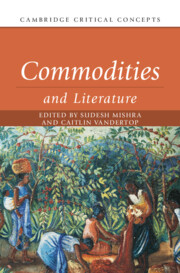
Global commodities, from tea and sugar to coal and oil, have had an enduring presence in literary texts. Commodity cultures have also shaped literary ones, from the early influence of the literary coffeehouse to the serial novels facilitated by print's own emergence as a mass commodity. This book offers an accessible overview of the many intersections between literature and commodities. Tracing the stories of goods as diverse as coffee, rum, opium, guano, oil and lithium, as they appear across a range of texts, periods, areas, and genres, the chapters bring together existing scholarship on literature and commodity culture with new perspectives from world-literary, postcolonial and Indigenous studies, Marxist and feminist criticism, the environmental and energy humanities, and book history. How, this volume asks, have commodities shaped literary forms and modes of reading? And how has literature engaged with the world-making trajectories and transformations of commodities?
This article explores the concept of transfer as it emerges in German-speaking academic discourse and considers its broader implications for the Global Public Literary Humanities. While transfer has become an established term in university policy, especially in Germany, its potential for literary studies remains under-examined. Building on both German and Francophone models, this article offers a nuanced framework that distinguishes between transfer and its synonyms—such as application, practice, communication, cooperation, and mediation—and proposes the concept of transferability as a means to sharpen theoretical and practical awareness regarding the conditions for successful transfer. This article presents a model that identifies both enabling conditions (such as relevance and resonance) and practical forms of transfer, arguing that transferability is shaped by ethical, esthetic, and anthropological considerations. Drawing on examples from current German debates (e.g., #RelevanteLiteraturwissenschaft, collaborative literary festivals, and citizen science projects), the analysis demonstrates that successful literary transfer is always co-creative and dialogical. Ultimately, this article calls for more institutional and structural efforts to enable transferability within literary studies and suggests that increased awareness of its prerequisites and possibilities for implementation can make academic work more responsive, inclusive, and socially engaged. This essay also advocates for extending the debate by incorporating concepts and practices from other linguistic and cultural traditions, thereby advancing the vision of Global Public Literary Humanities as a truly interconnected, dynamic, and transformative field. In doing so, this article hopes to encourage further critical reflection, experimentation, and the opening of new perspectives in research, teaching, and public engagement.
This article argues that a public education in method—specifically, close reading—is the only viable role for literary studies within the public humanities. Drawing on recent discussions about the uses of the public humanities—and setting itself against recent interventions that have proclaimed a different public role for public literary studies—this article takes the form of an overt but minimalist manifesto: it tries to make the minimal case for public literary studies that is sufficient to give it a public usefulness. In so doing, it breaks down previous efforts of understanding the utility of literary studies as related to literature’s utility, but also to large-scale interventionist ideals such as climate-change activism. It proposes close reading as training in public debate, as an exercise towards better public meaning-making, and thus as a signal contribution to the making of better democratic citizens in a deliberative public sphere.
This chapter brings into focus mobility as an avenue of spatial enquiry in literary and cultural studies. In recent decades the term ’mobility’ has become increasingly prominent within the spatial turn, coming to constitute a distinct area of study in literary and cultural scholarship, as well as across the humanities and social sciences more broadly. Conceptualisations of mobility have arisen from distinct yet increasingly interrelated disciplinary bases, including postcolonial scholarship, the new mobilities paradigm of social and cultural geography, and transport history. This chapter argues that mobilities scholarship and its attendant scholarship have been productive in advancing critical and theoretical understandings of space. Three key questions are addressed: what does it mean to talk about ’mobility’? How does mobility advance concepts of space? And where next for mobility? The chapter considers the emergence of mobilities scholarship across different fields of study, points of intersection and divergence between space and mobility as concepts, the role that literary and cultural studies have played in wider theoretical advances, and the current and future state of mobilities scholarship.
Colonial-era Mexican poetry presents a complex interweaving of several genres; this chapter explores two of its major forms: epic poetry and lyric poetry. The epic, often understood as a propaganda instrument for colonial interests, is also constitutive of colonial historical narrative, as is illustrated by works by Bernardo de Balbuena, Antonio de Saavedra Guzmán, Gaspar Pérez de Villagrá, Arias de Villalobos and others examined in this chapter. Lyric poetry captured the creative virtuosity of colonial Mexico. While past critique has framed this opus in relation to European sources, more contemporary readings focus instead on its interplay with the literary, political, and societal elements of its environment. This chapter explores the scope of this genre and the challenge that sixteenth- and seventeenth-century writing practices pose to twenty-first-century readers.
What might the medical humanities be capable of doing?’ asked Viney, Callard, and Woods in their 2015 call for a critical medical humanities. This chapter endeavours to answer that question by investigating how ‘the literary’ is mobilized in health-focused projects whose commitment to interdisciplinary entanglement renders them exemplary of the field’s critical turn. We interviewed seven UK-based literary studies scholars about their work in two or more such projects in order to understand how ‘the literary’ (as discipline, approach, and praxis) features within project design and delivery, the roles taken up by the literary studies scholar, and the consequent effects on shared understandings about the functions of the literary text. One of the most striking findings of this exploratory study was the interviewees’ determination for the literary text to be considered in non-representational terms and concurrent commitment to championing novel articulations of the value and ‘use’ of literary endeavour.
This chapter is an overview of the problems and uses that affect theory offers the study of African American literature. Defined as aside from the traditions of thought that made black literary fields thinkable in an institutional context, it is not difficult to surmise, in generous faith, why the turn to affect has been inhospitable to lines of inquiry that presume a racial subject. Meanwhile, questions regarding the transmission of affect have remained central to the project of African American literature since before its advent as literature. This chapter considers how the work of the critic in the field necessarily presumes the relevance of affect, arguing that consciously reading for affect wards off duller accounts of what African American literary texts signify in favor of vivacious dialogue on what they do and how.
This chapter surveys the theory and practice of “distant reading,” the computational textual analysis of large corpora of digitized texts. Exploring descriptive, generative, and predictive modeling, Houston argues that these techniques, by “changing the scale at which texts are analyzed,” serve to “transform the object of study and thereby the kinds of questions that can be explored” in literary studies.
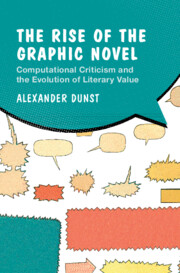
Bringing digital humanities methods to the study of comics, this monograph traces the emergence of the graphic novel at the intersection of popular and literary culture. Based on a representative corpus of over 250 graphic novels from the United States, Canada, and Great Britain, it shows how the genre has built on the visual style of comics while adopting selected features of the contemporary novel. This argument positions the graphic novel as a crucial case study for our understanding of twenty-first-century culture. More than simply a niche format, graphic novels demonstrate how contemporary literature reworks elements of genre narrative, reconfiguring rather than abolishing distinctions between high and low. The book also puts forward a new historical periodization for the graphic novel, centered on integration into the literary marketplace and leading to an explosive growth in page length and a diversification of aesthetic styles.
In her discussion of censorship in Dockside Reading: Hydrocolonialism and the Custom House, Isabel Hofmeyr homes in on a figure of reading invoked by Nadine Gordimer in a letter protesting that the censors treat literature “as a commodity to be boiled down to its components and measured like a bar of soap.”1 Hofmeyr, recognizing that such reading echoes that of the officials of colonial custom houses, asks what we might learn from those “who tried to read a book as a bar of soap”?2
This chapter alerts readers of the shortcomings of a mining approach to Pausanias’ Periegesis as a prime evidence for the study of local religion in ancient Greece. The question of where local specificities are discussed in the narrative is as critical as the actual information conveyed. The chapter speaks to the analytical challenge of interpreting a narrative that is, on the one hand, reflective of the non-linear and essentially decentralised nature of the local, yet on the other filters this nature through the linear rigours of writing. Starting from fleeting experiences of the local, highly subjective to the individual that makes them, Hawes turns to an exemplary discussion of Argos, Thebes, and Messenia that exposes the mechanics of a scripted localism, a literary approximation to place. The discussion of Pausanias’ localistic perspective extends to the narrative technique of cross references and to instances where such connections were deliberately denied: the case in point being Pausanias’ treatment of the notorious problem of the location of Homeric Pylos.
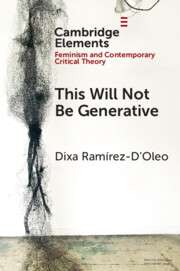
This Will Not Be Generative attends to the semiotics of ecological writings via Caribbean literary studies and black critical theory. Closely reading texts by Donna Haraway, Monique Allewaert, and Lisa Wells, it exposes how the language of tentacles and tendrils, an assumptive 'we,' and redemptive sympathy or 'care' disguises extraction from black people and blackness. This often speculative rhetoric, abetted by fantasies of white communion with indigenous groups, contrasts with the horror semiotics of the films Get Out (2017) and Midsommar (2019), which unmask the antagonistic relationship between white survival 'at the end of the world' and blackness as compost.
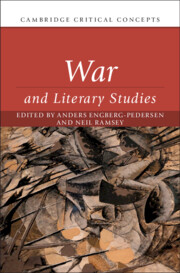
War and Literary Studies poses two main questions: First, how has war shaped the field of literary studies? And second, when scholars today study the literature of war what are the key concepts in play? Seeking to complement the extant scholarship, this volume adopts a wider and more systematic approach as it directs our attention to the relation between warfare and literary studies as a field of knowledge. What are the key characteristics of the language of war? Of gender in war? Which questions are central to the way we engage with war and trauma or war and sensation? In which ways were prominent 20th century theories such as critical theory, French postwar theory, postcolonial theory shaped by war? How might emergent concepts such as 'revolution,' 'the anthropocene' or 'capitalism' inflect the study of war and literature?