To save content items to your account,
please confirm that you agree to abide by our usage policies.
If this is the first time you use this feature, you will be asked to authorise Cambridge Core to connect with your account.
Find out more about saving content to .
To save content items to your Kindle, first ensure no-reply@cambridge.org
is added to your Approved Personal Document E-mail List under your Personal Document Settings
on the Manage Your Content and Devices page of your Amazon account. Then enter the ‘name’ part
of your Kindle email address below.
Find out more about saving to your Kindle.
Note you can select to save to either the @free.kindle.com or @kindle.com variations.
‘@free.kindle.com’ emails are free but can only be saved to your device when it is connected to wi-fi.
‘@kindle.com’ emails can be delivered even when you are not connected to wi-fi, but note that service fees apply.
The Epilogue reflects on the ways that nineteenth-century texts consistently acknowledge the post-lapsarian state of human existence. The literary works discussed in this book all, to some extent, either recreate the events of Milton’s epic in a world that is fallen or tell the story of what happens after the expulsion. Drawing on Christopher Ricks, the Epilogue identifies a single word – ‘error’ – as emblematic of Milton’s nineteenth-century legacy. ‘Error’ points to its post-lapsarian meanings even when used to describe Eden before the Fall. After opening with the 1790 disinterment of Milton’s corpse, the Epilogue turns to another disturbing anecdote to illustrate the complexity of Milton’s nineteenth-century reception: the history of a Victorian edition of Milton’s poetry, bound in tanned human skin. The skin in question belonged to George Cudmore, executed for murder in the 1830s. This instance of anthropodermic bibliopegy reveals that Milton’s works, while revered and respected by the Victorians – his body parts were treated as relics – were also open to disruption and reinterpretation.
The Introduction outlines the intermedial method of this book, which brings together Milton with nineteenth-century writers and artists who engage with each other’s work at the same time as reading Milton directly. It provides an overview of Milton’s place in the visual and material culture of the long nineteenth century. This includes the literary galleries of the late eighteenth century, the development of proto-cinematic technologies and stage spectacles, illustration on canvas and the page, and interventions in books such as extra-illustration and marginalia. The Introduction also addresses the various metaphors drawn from Milton’s writing that scholars have used to explain his influence, comparing him to a ghost, a troll, a father, even God. It then proposes the epic simile as a useful model for the way Milton is understood in this book: just as Milton’s similes describing Satan suggest, a powerful figure can be like many disparate things at the same time.
The intermedial legacy of John Milton in nineteenth-century literature and visual culture features writers not only engaging with Milton's works but also responding to each other's rich and varied interpretations. Challenging linear models of literary tradition, Laura Fox Gill proposes a method of cross-disciplinary reading that stages triangular conversations across media. Through case studies pairing Milton with Mary Shelley and John Martin, Herman Melville and J. M. W. Turner, A. C. Swinburne and William Blake, and Thomas Hardy and Biblical illustrators, she uncovers a rich network of creative exchange. While Milton's legacy was often mediated through Romantic predecessors, his texts – especially Paradise Lost – remained vital touchstones for Victorian readers and viewers. Gill sheds new light on how Milton's works were reimagined in a multimedia culture, expanding our understanding of literary influence, reception, and the visual imagination of the nineteenth century.
Disability is central to the Gothic imagination. This Element draws together disability and Gothic literature in ways that show the interplay between them. The first chapter offers a brief history of Critical Disability Studies, and the manner in which Gothic has been integral to the evolution of disability theory. It shows the increasing centrality of the Gothic to the development of Critical Disability Studies, and describes the emergence of the subfield of Gothic Disability Studies. The second chapter and third chapters offer close readings of particular texts, showing how Gothic bodies and minds articulate and shift their relationship to the aesthetic and affective frameworks of the nineteenth century. While disability sometimes represents the 'other' in Gothic literature, this positioning far from exhausts the ways in which disability is presented in this genre.
What does 'Irish romanticism' mean and when did Ireland become romantic? How does Irish romanticism differ from the literary culture of late eighteenth- and nineteenth-century Britain, and what qualities do they share? Claire Connolly proposes an understanding of romanticism as a temporally and aesthetically distinct period in Irish culture, during which literature flourished in new forms and styles, evidenced in the lives and writings of such authors as Thomas Dermody, Mary Tighe, Maria Edgeworth, Lady Morgan, Thomas Moore, Charles Maturin, John Banim, Gerald Griffin, William Carleton and James Clarence Mangan. Their books were written, sold, circulated and read in Ireland, Britain and America and as such were caught up in the shifting dramas of a changing print culture, itself shaped by asymmetries of language, power and population. Connolly meets that culture on its own terms and charts its history.
Though Michael Field most readily identified with the poetry of their male contemporaries, including Swinburne, reading their poetry volumes of 1889, 1893, 1908, 1912, and 1913 against the backdrop of nineteenth- and early twentieth-century women poets reveals multiple affinities in form, genre, theme, and symbolism. Beginning with Sappho and ending with Alice Meynell, with whom Michael Field corresponded after 1906, this chapter notes the connections of Michael Field’s poetry with Romantic poets Mary Robinson, Letitia Elizabeth Landon, and Felicia Hemans; with Victorian poets Elizabeth Barrett Browning, Christina Rossetti, Augusta Webster, Rosamund Marriott Watson, Katharine Tynan, and Mathilde Blind; and with modernist poets H.D. and Amy Lowell. Reading Michael Field ‘among’ women poets reveals another layer of complexity in their poetic career, redresses a less-studied aspect of their work, and extends their central role in studies of nineteenth- and early twentieth-century literary history and poetics.
The Introduction critiques the dominant critical-musicological picture of Romanticism as a nineteenth-century aesthetic paradigm emphasizing artistic autonomy and escape from the social, and posits an alternative. Romantic ideas of sociality in art and music differed from modern materialist accounts in highlighting the mediatory role of emotion or feeling alongside further ‘ideal’ or imaginative factors in listeners’ experience. Such ideas converge with recent contributions in sociology, music studies, anthropology and philosophy which frame affect in social, holistic terms as atmosphere, Stimmung (mood or “attunement”) and correspondence. These are summarized in the term ‘affective relationality’. In both musicology after Carl Dahlhaus and the recent history of emotions, a watershed c.1800 has separated the Romantic paradigm from its eighteenth-century predecessors, instead of paying attention to the continuity between eighteenth-century sentimentality and Romanticism. This ‘sentimental-Romantic’ continuum is exemplified by Mme de Staël, whose writings’ resonances with the book’s chapters are explored.
This 20-year prospective study examined verbal aggression and intense conflict within the family of origin and between adolescents and their close friends as predictors of future verbal aggression in adult romantic relationships. A diverse community sample of 154 individuals was assessed repeatedly from age 13 to 34 years using self-, parent, peer, and romantic partner reports. As hypothesized, verbal aggression in adult romantic relationships was best predicted by both paternal verbal aggression toward mothers and by intense conflict within adolescent close friendships, with each factor contributing unique variance to explaining adult romantic verbal aggression. These factors also interacted, such that paternal verbal aggression was predictive of future romantic verbal aggression only in the context of co-occurring intense conflict between an adolescent and their closest friend. Predictions remained robust even after accounting for levels of parental abusive behavior toward the adolescent, levels of physical violence between parents, and the overall quality of the adolescent’s close friendship. Results indicate the critical importance of exposure to aggression and conflict within key horizontal relationships in adolescence. Implications for early identification of risk as well as for potential preventive interventions are discussed.
This chapter argues that Byron is famous as a leading figure in Romantic poetry, but his own allegiance was to eighteenth-century culture. I argue that on the one hand he confirms the distinction between the two and yet he also overturns it. This is because he enters so deeply into the contradictions and character of eighteenth-century culture that he is part of their generation of something different. In this he resembles Burke’s deep relation to Whig culture and Newman’s to the Church of England, both of whom by this brought about the transformation of what they revered into something new and yet sourced in the past. I argue that is bound up with a larger historical transition between judging actions as open possibilities and accepting behaviour as an unalterable given. Byron is, as he claimed to be, an ethical poet because his attention is primarily to the former of these.
Although there have been attempts to make relationship science more diverse and inclusive, as it stands, the external sociocultural forces that impact relationships have not been at the forefront of research. We argue that romantic relationships cannot be divorced from the sociocultural context in which they exist. This chapter reviews the literature to explain the “context problem” faced by relationship science, highlighting the importance of including intersectional, context-driven research in the field. We then provide an overview of each chapter in the volume.
Called by P. B. Shelley ‘the master-theme of the epoch’, the French Revolution profoundly affected British literature, giving new energy to the nascent Romantic movement while dissolving the boundary between literature and politics. This chapter examines the polarisation of British public opinion in the aftermath of the Revolution and the contestation of its ideas in the 1790s ‘pamphlet war’. The chapter analyses eye-witness accounts of the Revolution by British expatriates such as H. M. Williams and the dilemmas faced by British radicals when war was declared and the Revolution took an increasingly violent course. Wordsworth’s autobiographical account of these conflicts in The Prelude (1805) is set against later imaginative reconstructions of the Revolution by Shelley, Carlyle and Dickens and the more indirect expression of revolutionary shock in Gothic fiction. The chapter concludes by noting the linguistic legacy of the Revolution experience, which created much of the political vocabulary by which we still discuss ideas of nationhood.
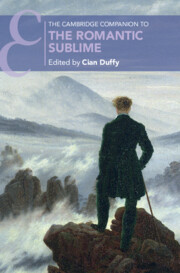
The Introduction surveys the range and diversity of engagements with the sublime across different areas of enquiry, genres of cultural productivity, and national traditions in late eighteenth- and early nineteenth-century Europe. It explores the close links between ‘the sublime’ and ‘the Romantic’ in academic discourse before outlining the history of ‘the Romantic Sublime’ as a critical construct. It argues for a potential disconnect between what scholars have called ‘the Romantic Sublime’ and how the sublime might actually have been produced, encountered, experienced, and understood during the Romantic period. A selection of key Romantic-period engagements with the sublime are discussed, as are the major scholarly histories of the topic, from the early twentieth century to the present day.
This is the only collection of its kind to focus on one of the most important aspects of the cultural history of the Romantic period, its sources, and its afterlives. Multidisciplinary in approach, the volume examines the variety of areas of enquiry and genres of cultural productivity in which the sublime played a substantial role during the late eighteenth and early nineteenth centuries. With impressive international scope, this Companion considers the Romantic sublime in both European and American contexts and features essays by leading scholars from a range of national backgrounds and subject specialisms, including state-of-the-art perspectives in digital and environmental humanities. An accessible, wide-ranging, and thorough introduction, aimed at researchers, students, and general readers alike, and including extensive suggestions for further reading, The Cambridge Companion to the Romantic Sublime is the go-to book on the subject.
Black women’s romantic and intimate relationships are explored in both heterosexual and queer unions. We discuss the strengths of Black women’s romantic unions and examine conditions that create stress and distress for Black women in marriage, cohabitation, and sexual and dating relationships. We discuss cultural, structural, and historical dynamics that drive Black women’s relationship stereotypes and challenges. We also address conditions that create unusual relational risks for Black women, including sexually transmitted infections and intimate partner violence.
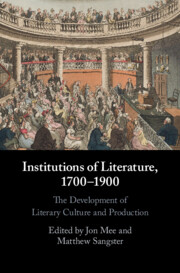
The introduction begins by addressing the uses of studying cultural institutions. It provides a working definition of ‘institution’ and a historical overview of the emergence of the infrastructure of institutions in the period 1700 to 1900. The logic of choosing the period is addressed in relation to the uneven translation from cultural institutions based on the court and church to voluntary institutions that had an arms-length relationship to the state. It also discusses the historical irony that just as a ‘romantic’ definition of the literary individualism emerged that might seem to pit literature against Institutions, there was a proliferation of institutions of literature. The purview of the collection in relation to British national and imperial culture and identities is explained and the opportunities for further work in related areas discussed in the framework of the collection’s own historical moment at a time when the university-based discipline of Literature seems to be undergoing a fundamental change in its structure and purposes.
This collection provides students and researchers with a new and lively understanding of the role of institutions in the production, reception, and meaning of literature in the period 1700–1900. The period saw a fundamental transition from a patronage system to a marketplace in which institutions played an important mediating role between writers and readers, a shift with consequences that continue to resonate today. Often producers themselves, institutions processed and claimed authority over a variety of cultural domains that never simply tessellated into any unified system. The collection's primary concerns are British and imperial environments, with a comparative German case study, but it offers encouragement for its approaches to be taken up in a variety of other cultural contexts. From the Post Office to museums, from bricks and mortar to less tangible institutions like authorship and genre, this collection opens up a new field for literary studies.
This chapter considers ethical prototypes, which give needed specificity to the very general ethical orientations defined by principles and parameters. In ethical decision and behavior, we are concerned with sequences of actions and the motivations guiding these actions. In other words, we are concerned with stories. In this chapter, I argue that the prototypes at issue in specifying our ethical orientations are, most importantly, the universal story structures that I have sought to isolate in earlier works – heroic, romantic, sacrificial, family separation, seduction, revenge, and criminal investigation. These narrative structures are inseparable from human emotion systems. Indeed, story universals are shaped by emotion–motivation systems (along with some general patterns in emotion intensification); those systems (and patterns) account for their universality. In addition, these story genres are of crucial importance for the way we think about and respond to various worldly concerns, such as politics. The third chapter extends these arguments to ethics.
Just as the second chapter provides a literary development of the relatively abstract first chapter, so too the fourth chapter provides literary developments of the cross-cultural genres treated in the third chapter. Specifically, this chapter considers literary cases of all the prominent, universal genres, examining their implications for ethical evaluation and action. In keeping with the cross-cultural range of these genres, this chapter considers works from different time periods and different regions. It includes discussions of the Bhagavad Gītā, Hamlet, and All’s Well That Ends Well, Yuan period Chinese dramas (The Zhao Orphan and Selling Rice in Chenzhou), as well as more recent fiction and nonfiction from India (Nectar in a Sieve) and Australia (Follow the Rabbit-Proof Fence). The longest section develops a particularly detailed interpretation of the sacrificial structure in F. W. Murnau’s film, Nosferatu. I undertake a more extensive development of this analysis to illustrate more clearly the impact of story structure on moral response.
Chapter 1 reveals the complexity and self-consciousness of Romantic nature writing, bringing together authors who share an interest in nonhuman nature as a dynamic process. It also addresses the porousness of Romantic nature writing as a mode of engagement across different kinds of texts. A key claim is that, while Gilbert White’s localism and close field observations were influential on later nature writing, so was the strand of confessional autobiography pioneered by Jean-Jacques Rousseau. Romantic nature writing is often represented as a self-aggrandising masculine mode. But women writers such as Dorothy Wordsworth and Charlotte Smith were significant, particularly in their portrayals of nonhuman nature as entangled with everyday human life. The chapter also addresses labouring-class writers, bringing John Clare’s natural history prose into dialogue with the work of the artist Thomas Bewick and the novelist and poet James Hogg. All three resisted and lamented the forces of modernisation, but did so through developing innovative modes of representation. Even at its most backward-looking, Romantic nature writing engaged with the contradictions and conflicts of modernity. And, while influenced by natural theology, it also dared to speculate about deep time and the transience of human species.
Like the panoramas, sets of lithographs based on officers’ drawings created new versions of the Arctic imaginary. Such products were too expensive to appeal to the average consumer, but printsellers’ practice of displaying lithographs in their windows and holding exhibitions ensured that this particular version of the Arctic reached far more people than simply those who could afford to purchase them. This chapter observes how the Arctic and the search were represented in three folios of lithographs produced from officers’ sketches (Browne, 1850; Cresswell, 1854; May, 1855). With attention to text and picture, using sketches and written sources, I offer close readings of these materials. This chapter emphasises how the lithographs, from 1850 to 1855, increasingly imply that a battle is being waged against the capricious Arctic nature in an effort to find Franklin. Significantly, the ability of these apparently factual lithographs to continually evolve and multiply, both digitally and on paper, ensures that they continue to inform ways of thinking about the nineteenth-century Arctic, and perhaps the present-day Arctic, into the future.