To save content items to your account,
please confirm that you agree to abide by our usage policies.
If this is the first time you use this feature, you will be asked to authorise Cambridge Core to connect with your account.
Find out more about saving content to .
To save content items to your Kindle, first ensure no-reply@cambridge.org
is added to your Approved Personal Document E-mail List under your Personal Document Settings
on the Manage Your Content and Devices page of your Amazon account. Then enter the ‘name’ part
of your Kindle email address below.
Find out more about saving to your Kindle.
Note you can select to save to either the @free.kindle.com or @kindle.com variations.
‘@free.kindle.com’ emails are free but can only be saved to your device when it is connected to wi-fi.
‘@kindle.com’ emails can be delivered even when you are not connected to wi-fi, but note that service fees apply.
This chapter explores the practices and economies of pilgrimage within the Byzantine cultural sphere. The development of Christian pilgrimage sites in the early Byzantine period contributed to the consolidation of Christianity by offering performative spaces for forming and asserting Christian identity. Attention in the first half is given to the origins of Christian pilgrimage, travel economies and the intersections between religious groups within the ritual spaces of pilgrimage sites, along with a brief survey of scholarly approaches to the phenomenon. The second half of the chapter offers two ‘multi-religious’ sites, the Oak of Mamre and the Baths of Ḥammat Gader, as case studies to further explore pilgrimage centres as locations that facilitated experimentation and readjustment in religious identification. Material and literary evidence suggest that pilgrimage activities at these two sites were not simply expressions of Byzantine piety but were instrumental in transforming and maintaining cultural identifications.
En este trabajo se discute sobre la práctica mesoamericana de la colocación de piedra verde en la boca de los muertos y en el techo de los templos del área maya. Además de la piedra verde, identificamos dos variantes más asociadas a la deposición de maíz y cerámica en la boca de entierros mayas y zoques del periodo Clásico en el estado de Chiapas. Finalmente, ofrecemos nuevas aproximaciones teóricas para interpretar estas prácticas culturales desde la arqueología de la personeidad.
The Chicha Soras valley on the boundary of Ayacucho with Apurimac in south-central Peru sees the introduction of intensive irrigated terraced agriculture in the Middle Horizon. The control over the water sources and the terracing systems fell to corporate lineage groups laying claim to common ancestors, viewed as being the founders of the local irrigation systems. The control over these systems and the rights of the respective lineages to land and water was expressed in the placement of ancestral tomb locations across the local landscape. This article demonstrates that ancestor-based organization of water sources was long lived across the area and survived the large-scale demographic and sociopolitical disruptions resulting from the Spanish conquest and the imposition of Christian belief systems.
This chapter addresses the evidence for the burial of moneyed laymen. The latter are, perhaps not unexpectedly, both ubiquitous and largely invisible in this collection. The necrosima includes only one hymn specifically addressing the death of a husband and father. By contrast, the majority of its forty “generic” hymns contemplate a male lay Christian subject, mourned by his children, anxious about abandoning his family, and plagued by anticipation of the harsh judgement he might receive. These hymns become a site for working out the necrosima’s theology of possessions – a topic that appears explicitly in some of the collection’s most paraenetically focused hymns, including, for example, madrāshâ 28 (“In funere principum, & Divitis cuiusque”/“On the burial of a prince or some kind of rich man”), but is a prominent theme in much of the corpus. This chapter accordingly examines anxieties about wealth and poverty, and the ethical pedagogy inherent in the necrosima, including its emphasis on charity.
This chapter investigates the material culture of saint veneration in Late Antiquity, detailing how objects, architecture and inscriptions influenced devotional practices. It draws on a range of sources to investigate how saints were honoured and how their presence was made tangible through physical artefacts. The chapter argues that material culture played a crucial role in facilitating interactions between the living and the divine. Saints’ memorials, inscriptions and relics served as focal points for devotion, strengthening communal identity and religious experience. Key examples include the engraved mensa (table) from Khirbet Oum el-Ahdam, which was used for communal feasting in honour of martyrs, and wall paintings from Wadi Sarga, which depict saints in orans postures, underscoring their role as intercessors. The evidence suggests that material artefacts did more than simply commemorate saints – they actively shaped devotional practices and evolved over time to meet the needs of different generations.
In this paper, we examine cases where radiocarbon (14C) dates are incompatible with dates produced by other established archaeological methods. We present results from nine bones that we sampled from tombs in Phoenician sites in Sicily. These bones produced radiocarbon dates conflicting with established dates of finds in the associated tombs. These discrepancies, particularly in tomb dates, pose a serious problem, as they suggest that the finds may be disconnected from the buried individuals, challenging the fundamental premise of studying excavated tombs. To put our findings in a broader context, we also present other cases of discrepancies found in recent publications and note some common observations throughout these studies. Our questions and observations arise from the significant implications that radiocarbon dating has for our research on Phoenician ancient DNA, as these conflicts impact our understanding of the potential migration and movement of Phoenician people throughout the Mediterranean.
Death constitutes a deep life crisis to the living – depending on the departed, to families, communities, and societies. In this chapter, the author discusses the eminent strategies of overcoming this crisis, that is, funeral and burial practices, and the ritual sequences that connect the two. Both the Roman and the Chinese cases have received much scholarly attention. Armin Selbitschka’s chapter distinguishes itself through its comparative perspective and the theoretical charge with which it is enriched from performance theory and sociologies of place. In the study of each culture, careful consideration is given to the historical development across time. Embarking from conceptual debates on the disruption of the social order and the innate capacity of social performances to restore it, he discusses various practices revolving around the dead, including the preparation of the departed, funerary cortèges, and orations. The subsequent section extends the analysis to the inherent meaning of tombs – their place in the urban landscape, their commemorative force, and their embodiment of social hierarchies. In so doing, it reveals a curious spatial dynamics between the funeral’s beginning in the private sphere and its transition into the public arena. Due to the different configuration of public in Rome and in China, Selbitschka in conclusion makes visible the culture-specific traits in the performances that accompanied mourners on their way to the tomb and beyond, into a future where the social crisis of death was resolved, for the time being.
This paper raises objections to the constitution of these lines in the OCT. The lines are gnomic but they generalize based on an actual sequence of events just described and should contain an allusion to the offence that will cause the Greeks to perish, the outrage against Athena's temple. This, it is argued, stood in a lacuna best marked after 95. The article has three theses: (1) sacking ‘cities, temples, and tombs’ is implausible because the latter two are parts of the first; (2) plundering tombs refers to nothing in the play, nor was this thought of as an offence against the gods; (3) 96–7 do not refer to the offence that causes the fool's death but are a description of his success, the destruction of the hated enemy population. That success stands in ironic contrast with his subsequent death.
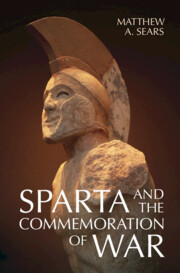
The tough Spartan soldier is one of the most enduring images from antiquity. Yet Spartans too fell in battle – so how did ancient Sparta memorialise its wars and war dead? From the poet Tyrtaeus inspiring soldiers with rousing verse in the seventh century BCE to inscriptions celebrating the 300's last stand at Thermopylae, and from Spartan imperialists posing as liberators during the Peloponnesian War to the modern reception of the Spartan as a brave warrior defending the “West”, Sparta has had an outsized role in how warfare is framed and remembered. This image has also been distorted by the Spartans themselves and their later interpreters. While debates continue to rage about the appropriateness of monuments to supposed war heroes in our civic squares, this authoritative and engaging book suggests that how the Spartans commemorated their military past, and how this shaped their military future, has perhaps never been more pertinent.
Thephysical structures within which people lived, learned, prayed, and played – the “built environment”– were both technological accomplishments and expressions of cultural and social meaning. From imperial palaces to domestic residences, from schools, temples, shrines, monasteries, and tombs to theaters and shops, buildings were placed in urban or rural landscapes following the principles of geomancy (most notably tombs) and other religious traditions (monasteries on sacred mountains, for example) or responding to commercial and social needs (shops, restaurants, and theaters in urban centers). Buildings were also products of the natural environment, constructed from materials that were either readily accessible or affordable to buy. The natural environment was more than a source of building materials or a backdrop for human activity. Rivers, lakes, forests, and mountains, along with the geological makeup of the land and its soils, were features of the natural landscape experienced by human actors who utilized and managed them with varying degrees of success. Climate also was a powerful and often unpredictable force that people were dependent upon for survival. Geographic space as imagined and represented through mapping is an equally important approach to deciphering human activity in relation to the physical environment.
In the 1950s, University of Pennsylvania archaeologists recovered over fifty pieces of wooden furniture from three royal tumulus burials and the city mound at Gordion, Turkey. Tumuli MM and P (eighth century BCE) contained thirteen tables and three serving stands with characteristic Phrygian features. The style and joinery of the tables tie them to a long trajectory of wooden tables from the ancient Near East. A variety of fine wooden objects was found in two tombs excavated in 1972 at Verucchio in northern Italy (late eighth through early seventh centuries BCE). The finds from tombs 85 and 89 include wood tables, footstools, thrones, boxes, and other organic materials. Three tables from tomb 85 had legs attached to the table top with a version of the collar-and-tenon joinery used for the Gordion tables. Rarely are ancient wooden artifacts recovered in good condition; the finds from Verucchio and Gordion provide a large and important corpus from the early first millennium BCE. This paper examines the similarities (and differences) between Gordion and Verucchio wooden furniture and investigates the possibility of interaction between Near Eastern and Italic woodworking schools in the eighth through the seventh centuries BCE.
Dogs have played a vital and varied role in the social history of early China. Whether used as a source of food, a hunting-aid, or a sacrificial victim, dogs were intimately connected with human life and death. The placement and significance of dismembered and slaughtered dogs in human tombs have been a source of scholarly interest across the twentieth and twenty-first centuries. However, less attention has been paid to sources which present us with a spectrum of concerns surrounding the treatment of dogs after their death. Should they be consumed, discarded, or buried? Which dogs were deserving of burial, and how were such burials viewed by human commentators? By analysing textual, archaeological, and material sources, this article explores the changing conceptualisation of dogs in life and in death through the medium of the tomb, showing how the transition from tomb-keeper to tomb-occupant reflects an increasingly anthropomorphic view of canine potential and moral fibre by the early medieval period.
This chapter unveils the author’s view of what was at stake in demythologization: the viewer’s attitude to chronology, to temporality, to characters defined by their residence in earlier time. For confirmation of this claim, the chapter studies archaeological evidence from Rome’s suburbium, examining the altered spatial relationships between house and tomb that came to dominate in the Late Empire. This reveals what was at stake in the third-century disappearance of mythic figures from sarcophagi: new demands among the living, manifested in multiple domains of Roman life, for greater proximity to their dead.
This chapter turns from religious and political explanations to those that frame demythologization in terms of other social and cultural shifts. Some have proposed that it reflects a rising populism, a widespread decline in education levels, or a diminution in the value Romans assigned to mythological culture. Others have seen in the rise of mythless genres a growing desire for imagery that more clearly projected social status. All are examined.
No play of the period is more preoccupied with memorial artifice than John Webster’s The Duchess of Malfi: especially striking are three episodes involving the Duchess herself. In the opening scene her wooing of Antonio is coloured by oddly disturbing references to ‘a winding sheet’ and to ‘the figure cut in alabaster / Kneels at my husband’s tomb’; while in Act 4, her murder is prefaced by a piece of macabre theatre, when Bosola enters in the guise of an old man, announcing himself a ‘tomb-maker’ whose ‘trade is to flatter the dead’. Advising the Duchess that ‘I am come to make thy tomb’, he proceeds to discourse on the iconographic niceties of ‘fashion in the grave’, before bringing her ‘By degrees to mortification’. But the tomb he promises never appears, becoming instead a conspicuous absence at the centre of the action. Focusing on the haunted graveyard of the Echo scene (5.3), the essay argues that this absence is closely bound up with the outpouring of grief that followed the death of the idolized Protestant hero, Prince Henry, and thus with the dissident politics on which Webster's great tragedy is grounded.
In Part II, the death arts cover the post-mortem period from funerals to commemoration, completing the death-cycle initiated by Part I with its emphasis on the pre-mortem period and preparation for death. England’s protracted Reformation complicated this latter set of death arts. The relationship of worshippers to the dead underwent substantial reorientation on account of Protestantism’s elimination of the doctrine of Purgatory. Modernized and annotated excerpts, taken from a diversity of genres – including chronicles, the Book of Common Prayer, and consolation – reflect the changes not only to the Church’s burial rites but also less ritualized remembrance, which increasingly manifested itself through epitaphs, funeral elegies, and funeral sermons. Similar confessional and political tensions may be seen in the excerpts on Protestant and Catholic martyrs. Excerpts also represent a range of more secular commemorative acts from remembering traitors, regicide, and the ideal courtier, to a mother’s elegies for her infant son and a pamphleteer’s mourning of the unnamed masses killed by the plague.
This analysis of the despoilation of monumental brasses and tombs in London during Edward vi’s reign is based on evidence provided by contemporary inventories of church goods and churchwardens’ accounts, supported by fieldwork and discoveries of recycled brasses during conservation. It reveals how the Reformation impacted the fortunes of the London marblers producing brasses, describes how plundered memorials were sold and provides evidence on their fate. Estimates, based on volumes of metal sold, create a potential range of 700–812 brasses lost from possibly forty-three London churches over 1548–53. After c 1550, marblers engraved 2mm thick hammered plate (cast from despoiled latten church goods, such as candlesticks and crucifixes) to sustain production when supplies of looted brasses diminished. The trade in plundered brasses ended after the accession of Edward’s Catholic half-sister, Mary, in August 1553.
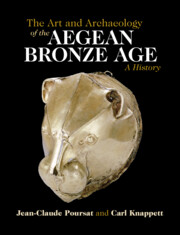
The Art and Archaeology of the Aegean Bronze Age offers a comprehensive chronological and geographical overview of one of the most important civilizations in human history. Jean-Claude Poursat's volume provides a clear path through the rich and varied art and archaeology of Aegean prehistory, from the Neolithic period down to the end of the Bronze Age. Charting the regional differences within the Aegean world, his study covers the full range of material evidence, including architecture, pottery, frescoes, metalwork, stone, and ivory, all lucidly arranged by chapter. With nearly 300 illustrations, this volume is one of the most lavishly illustrated treatments of the subject yet published. Suggestions for further reading provide an up-to-date entry point to the full richness of the subject. Originally published in French, and translated by the author's collaborator Carl Knappett, this edition makes Poursat's deep knowledge of the Aegean Bronze Age available to an English-language audience for the first time.
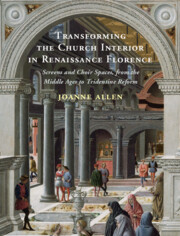
Before the late sixteenth century, the churches of Florence were internally divided by monumental screens that separated the laity in the nave from the clergy in the choir precinct. Enabling both separation and mediation, these screens were impressive artistic structures that controlled social interactions, facilitated liturgical performances, and variably framed or obscured religious ritual and imagery. In the 1560s and 70s, screens were routinely destroyed in a period of religious reforms, irreversibly transforming the function, meaning, and spatial dynamics of the church interior. In this volume, Joanne Allen explores the widespread presence of screens and their role in Florentine social and religious life prior to the Counter-Reformation. She presents unpublished documentation and new reconstructions of screens and the choir precincts which they delimited. Elucidating issues such as gender, patronage, and class, her study makes these vanished structures comprehensible and deepens our understanding of the impact of religious reform on church architecture.
Early attempts by Parthian rulers to take Babylon were short-lived, but in 141 BC they established their kingship by celebrating the New Year festival. Chronicles and astronomical diaries continued to be written. An independent ruler of Maysan in the Sealand, Hyspaosines, captured the port on the Tigris, took control of Bahrain and Failaka to control Gulf trade, and briefly claimed kingship of Babylon. He wrote in Aramaic. The Parthians regained control and rebuilt the Greek theatre. The old buildings and city plan continued to be in use, although the Summer Palace had been reroofed with terracotta tiles. New kinds of text were written on clay in cuneiform, astronomical science developed; an archive shows that temples were still active, and much older literature was still prized. Greek knowledge of the Epic of Creation was still alive in Athens from the time of Alexander until the sixth century AD. The cult of Bēl had spread west to Palmyra, to the Aegean island of Kos, and north to Edessa. In AD 116 Trajan visited the Summer Palace on a pilgrimage to the place where Alexander had died.