To save content items to your account,
please confirm that you agree to abide by our usage policies.
If this is the first time you use this feature, you will be asked to authorise Cambridge Core to connect with your account.
Find out more about saving content to .
To save content items to your Kindle, first ensure no-reply@cambridge.org
is added to your Approved Personal Document E-mail List under your Personal Document Settings
on the Manage Your Content and Devices page of your Amazon account. Then enter the ‘name’ part
of your Kindle email address below.
Find out more about saving to your Kindle.
Note you can select to save to either the @free.kindle.com or @kindle.com variations.
‘@free.kindle.com’ emails are free but can only be saved to your device when it is connected to wi-fi.
‘@kindle.com’ emails can be delivered even when you are not connected to wi-fi, but note that service fees apply.
This textbook offers a foundational overview of cognitive psychology, balancing accessible writing, practical applications, and research. By incorporating biological perspectives throughout, the authors provide a concise introduction to human cognition and its evolution over time as a means of adapting to our environment. Chapters cover key topics including cognitive neuroscience, attention and consciousness, perception, memory, knowledge representation, language, problem-solving and creativity, decision-making and reasoning, cognitive development, and intelligence. This seventh edition also introduces new content on human intelligence, consolidated into a final chapter. With its 'from lab to life' approach, the authors provide thorough coverage of theory, lab, and field research, while continually highlighting real-world applications to everyday life.
With contributions from a team of renowned scholars, this two-volume Handbook is a comprehensive guide to the Distributed Morphology (DM) framework, providing an overview of all major theoretical issues in morphology. This volume, the second, looks at morphology post-syntax within the Distributed Morphology (DM) framework, exploring its phonological and semantic aspects. It is divided into three parts; Parts I and II focus on morphology post-syntax, exploring its phonological and semantic aspects. Part III broadens the discussion to interfaces between morphology and other areas of linguistics and cognitive science, extending DM's reach well beyond core language components. Each chapter focuses on different theoretical issues, as well as empirical phenomena across a variety of languages. Filling a crucial gap in the domain of morphology, this volume is an essential resource for anyone who wants to understand the depth and scope of Distributed Morphology research.
With contributions from a team of renowned scholars, this two-volume Handbook is a comprehensive guide to the Distributed Morphology (DM) framework, providing an overview of all major theoretical issues in morphology. This volume, the first, covers the core components of DM, its historical context, and its foundational principles. It is divided into three parts; Part I introduces the basics of DM and compares it with alternative models, Part II delves into the core components of DM, and Part III addresses key issues for the syntax-morphology interface. Each chapter focuses on different theoretical issues, as well as empirical phenomena across a variety of languages. Filling a crucial gap in the domain of morphology, this volume is an essential resource for anyone who wants to understand the depth and scope of Distributed Morphology research.
Attention to the body is an exciting emerging dimension of anthropological research. A collection of diverse conversations contributed by a global team of scholars, this Handbook is a state-of-the-field survey of the anthropology of the body, revealing dialogues between anthropological traditions that inform the study of the body. A focus on the body has animated subfields such as the anthropology of religion, medical anthropology, and the anthropology of performance, and rekindled interest in kinship and materiality. Chapters are organized around six central themes – flesh, motion, formation, knowledge, management, and entanglement – giving readers a holistic sense of the diverse analytical possibilities within the anthropology of the body. Showing the unique combinations that material and metaphorical aspects of the body take across different ethnographic and epistemic contexts, this Handbook is essential reading for students and scholars of social, cultural, and medical anthropology.
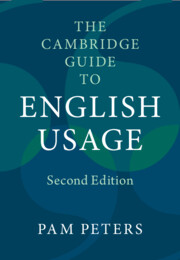
American and British English in the twenty-first century are still divided by a common language. Now in its second edition, this highly readable guide provides an authoritative reference to English usage, covering the differences, and some emerging similarities, between British, American and international English. It has been thoroughly updated and expanded to document hundreds of variable points of usage for the benefit of British and American readers, and for those seeking international forms of English for written communication, as first- or second-language users. It discusses the current status of each usage item with quantitative evidence from the NOW (News on the Web) corpus and contemporary research. Lively examples of usage are provided to capture aspects of twenty-first century culture world-wide. It also discusses issues in the use of personal names and ethnic naming practices, as well as sexist and homophobic words, and person-centred words for those living with a disability.
What is the relationship between law and capitalism - and what happens when their foundations collide with the climate crisis? In this groundbreaking work, A. Claire Cutler reveals how transnational corporations and the laws that shield them perpetuate environmental destruction while evading accountability. Developing a critical political economy analysis, Cutler traces the origins of corporate privilege in international law and shows how today's investment and value chain regimes reinforce this protected status, contrasting starkly with the precarious legal position of climate-displaced individuals. Challenging dominant theories that treat the crisis as abstract, Cutler argues for a transformative praxis of transnational law that confronts corporate responsibility head-on. In search of a utopian possibility for a better world order, this book examines the contradictions at the heart of law and capitalism and asks whether a just, sustainable future is still possible.
Taking a new look at some widely accepted analyses of such syntactic patterns as minimality, head-movement and LF, this book offers alternative theories while still working within the general Universal Grammar framework. It is the first of its kind to present an explicit and candid examination of how Motivated Reasoning (MR), the psychological tendency to substitute emotional reward for cold reasoning, affects the formulation and assessment of new ideas. Actual cases are used to illustrate the role of MR in the (subconscious) collection and interpretation of language data, and the association of such practices with theorization. It is also highlighted that the relation between MR and independent thinking is a double-edged sword, capable of either suppressing ideas not 'to one's taste' or facilitating the formulation of new ideas unique to each individual researcher. Covering a range of technical and meta-theoretical topics, this book is essential reading for theoretical syntacticians.
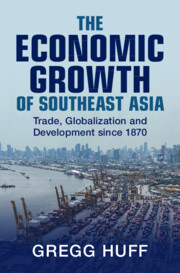
This is the first comprehensive analysis of Southeast Asian globalization and development since 1870. Interpreting over 150 years of Southeast Asian economic history, Gregg Huff traces the impact of a first period of globalisation from the 1870s to 1929, the effects of Japanese occupation during World War II and its aftermath, and a second wave of globalisation since the late 1960s. He uses vent-for-surplus, dual economy and plural society concepts and argues that the response of those in Southeast Asia to periods of transport revolutions, innovation and opportunity in the world economy translated into rapid export-led growth. Recent swift growth enabled Southeast Asia to start to 'catch up' with the world's leading countries for the first time in its history. Achievements include industrialization, genuine social progress and numerous large urban regions. Nevertheless, the book contends that Southeast Asian development in its 'miracle economies' remains incomplete.
Offering a concise yet comprehensive overview, this textbook explains the fundamental concepts and frameworks that underpin the field of public health. Chapters define key terms and cover topics such as measuring health, technology, equity, leadership, health systems and reform. Real-world health issues, including COVID-19, obesity, HIV/AIDS and climate change, are used to make abstract ideas more easily digestible. Designed for students and professionals interested in public health, it includes learning objectives, illustrative examples, summaries of key takeaways, and comprehension and discussion questions to aid navigation and learning. An instructor manual and test bank are available as supplementary resources.
Brain maldevelopment or injury in utero can cause life-long disability. Focussing on improvements in imaging methods, therapeutics, and perinatal care that can help to identify, prevent, or treat brain problems in the fetus and newborn, this new edition brings the reader fully up to date with recent advances in clinical management and outcome assessment. Updated material includes protective strategies for pre-term and term infants, ways of promoting of brain development in the neonatal intensive care unit, resuscitation, and immediate care after resuscitation (golden hour care), and parental perspectives, particularly strategies for communicating with families. An outstanding international team of highly experienced neonatologists and maternal-fetal medicine clinicians have produced a practical and authoritative clinical text offering clear management advice to all clinicians involved in the treatment of the fetus and newborn.
The Cambridge History of Irish Poetry is a one-volume, multi-authored history of the poetic traditions on the island of Ireland and their relation to the courses of poetry beyond its shores. It attends to the crucial developments in the history of Irish poetry as well as the social, political, and cultural conditions underlying those developments, including the complex position of poets in Ireland during different historical eras. Individual chapters describe the ways in which formal, aesthetic, and compositional practices were inflected by political and social structures; provide expert accounts of the institutional and textual histories that have shaped the body of Irish poetry as we have it; and highlight the tradition's major texts, writers, and formations. Unparalleled in scope and depth, this book offers the most comprehensive and authoritative critical account of the Irish poetic tradition.
Early modern England was a primarily oral culture, in which deafness and hearing loss could be particularly devastating. Yet, deaf people were a considerable minority in the early modern British Isles and deafness did not discriminate by sex, wealth, or status. By placing deaf people at the centre of the story, Silent Histories transforms our understanding of early modern England. Using newly discovered archival sources including diaries, court records, wills and personal correspondence, Rosamund Oates uncovers a world in which deaf people used sign language in court cases, in worship and in daily life. Rather than treating deafness as a medical or linguistic problem, this book offers a holistic account of deafness or disability in this period. Oates uncovers the untold stories of deaf people, often in their own words, showing how they worshipped, worked and forged relationships within their communities. Accessible and richly detailed, Silent Histories invites a fresh understanding of the past—one that is more inclusive, more surprising, and far more human.
Regime transitions often raise expectations for sweeping policy change-yet those expectations are not always realized. Focusing on the mechanisms linking regime type and policy, Policy in Transition explains how, and under which conditions, policy changes are likely to occur after a regime transition. Whether policies change depends on how the transition reshapes the space for contestation and on the visibility of the policy in question. This finding argument is supported through an in-depth comparative historical analysis of the evolution of housing and financial policies across regime types changes in Argentina and Brazil since the 1960s. Drawing on extensive archival materials, public records, historical media, and interviews with key actors, the book studies policymaking across different authoritarian and democratic regimes providing nuanced insights into the relationship between political regimes and policy change.
This book provides a comprehensive introduction to equilibrium and non-equilibrium Green's function methods in many-body physics. It begins with a derivation of second quantisation for relativistic systems based on the many-body relativistic Dirac equation and its non-relativistic limit. The properties of equilibrium Green's functions are then described, with discussion of the two-time and Matsubara function methods. The coverage of non-equilibrium Green's function methods includes the diagrammatic techniques applicable to electrons and phonons using both the perturbation and variational approaches. Specific applications to steady-state and time-dependent quantum transport are presented in the final chapters. The book's accessible explanations, detailed derivations, and systematic treatment of the underlying theory make it a valuable resource for graduate students and early-career researchers. More than 200 problems have been included to support learning, with selected solutions available at the end of each chapter. Instructors benefit from access to the full solutions manual.
This groundbreaking book delves into the origins and evolution of caring for the neurocritically ill. From the early pioneers like Galen and Charcot to the modern advancements in understanding acute brain injury, this narrative weaves together historical insights and clinical observations. Explore the unique challenges and breakthroughs that shaped acute neurology into the specialized field it is today. Through a meticulous exploration of primary sources and historical findings, this book sheds light on the trajectory of thought and the continuity of development in acute neurosciences. Aimed at neurointensivists, neurosurgeons, and clinicians across various specialties, Fixed and Dilated offers a fresh perspective on the past while connecting it to the present and future of neurocritical care. Uncover the untold stories that have shaped our understanding of acute neurological conditions.
Most people not only believe in free will but assume that if we didn't have it society would fall apart. Gregg Caruso challenges this assumption and argues that belief in free will, rather than being a good thing, actually has a dark side and we would be better off without it. His book develops an ethically defensible and practically workable account of how we can live well—indeed, live better—without belief in free will. The book discusses the moral psychology of blame and anger, the intricacies of our moral responsibility practices, and how we can preserve love, morality, creativity, friendship, and criminal and social justice without free will. He also develops an account of virtue ethics and argues not only that it is consistent with free will skepticism, but that adopting the skeptical perspective can better help us achieve the virtues most important to human flourishing and wellbeing.