

In March 1968, William S. Gaud, director of the United States Agency for International Development (USAID) proclaimed that a new revolution had taken place. In Pakistan, India, Turkey, and the Philippines, farmers brought in “record yields, harvests of unprecedented size” of wheat and rice.Footnote 1 Gaud attributed these harvests to a series of international agricultural interventions – new seeds, fertilizers, new attitudes among farmers, and new policies – that he described with the term “Green Revolution.” Gaud juxtaposed the Green Revolution with the “violent Red Revolutions like that of the Soviets,” which US leaders wished to forestall, and in his reflections likened it to the industrial revolution of the nineteenth century. To him, the Green Revolution could be just “as significant and as beneficial to mankind” as its industrial counterpart. He concluded his speech with a call to “to accelerate it, to spread it, and to make it permanent.” However, when agricultural experts and representatives from the countries and institutions that had sponsored the research and extension of the Green Revolution met the next year for the first in a series of seven conferences, they were neither unequivocal in their assessment of the Green Revolution and its aftermath nor united about the next steps to be taken.
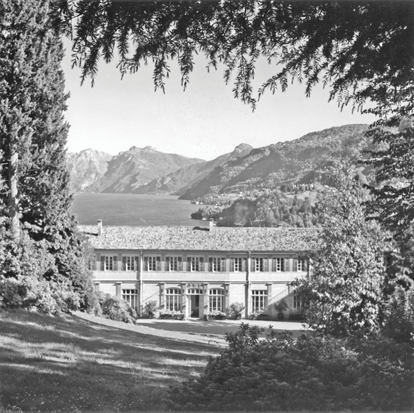
These seven conferences were convened by the Rockefeller Foundation at its estate, the Villa Serbelloni, in Bellagio on the shores of Lake Como (Figure 5.1). The discussions among donors and experts cast a different light on the aftermath of the Green Revolution. Historians have emphasized the specter of social disruption that haunted the officials, experts, and institutions behind the Green Revolution already by December 1968, when reports about civil unrest in Pakistan and India reached the United States.Footnote 2 This narrative intends to highlight a profound irony of the Green Revolution. Although agricultural interventions had the goal of containing social unrest in the developing countries by filling peasants’ hungry stomachs and thereby closing their ears to the siren song of communism in the global Cold War, their actual fallout was further unrest. In contrast to this reading, I show in this chapter that the experts of the Green Revolution were at least as excited about new opportunities for interventions arising in the social fallout of their supposed triumph as they were haunted by these same patterns. Now that the stomachs had been filled and expectations had been raised, “second-generation development problems” beckoned to be tackled.
View of Villa Serbelloni, part of the Rockefeller Foundation property in Bellagio, Italy, where administrators gathered for successive meetings that gave rise to CGIAR, undated. Rockefeller Archive Center, Rockefeller Foundation photographs, series CMNS-2.
At the conferences, which were called Bellagio I to VII, experts discussed these “second-generation” (or sometimes also “later-generation”) problems and possible solutions. One of the results was the foundation of a new research institute, the International Crop Research Institute for the Semi-Arid Tropics (ICRISAT) in 1972. Modeled on the international agricultural research institutes CIMMYT (the International Maize and Wheat Improvement Center) in Mexico and IRRI (the International Rice Research Institute) in the Philippines, at which scientists had developed the key interventions of the preceding decades, ICRISAT was one of the first institutes founded under the umbrella of the Consultative Group on International Agricultural Research (CGIAR). By analyzing the Bellagio conferences, the foundation of ICRISAT, and experts’ discussions about expanding ICRISAT’s mandate to breeding groundnuts, I show how experts reimagined agricultural development through the concept of second-generation development problems in the late 1960s and early 1970s. This reimagination was part and parcel of a more fundamental shift in international development towards a neoliberal international order. The idea of development as a great project of postcolonial states and international organizations slowly faltered, replaced by an imagination of an international order that was a space of free trade and competition between nations.Footnote 3 I argue that this reimagination entailed not a fundamental remaking of interventions but rather an expansion of existing strategies that experts imbued with new meanings to suit the changing order.
This chapter thus links the literature on the history of the Green Revolution and the emerging literature that seeks to understand the historical process of the “economization” of policy since the late 1960s. Historian Nick Cullather has argued that the concept of the Green Revolution gave “an artificial coherence to two decades of fragmented and often conflicting efforts to improve agriculture in the non-Western world” and became “a template for future action, in other words, a model.”Footnote 4 However, it was not an unambiguous model. In this period, the coordinates of policymaking began to shift. Domestically, in the United States, think tanks and industrial organizations began to adopt and promote an “economic style of reasoning.” Elizabeth Popp Berman has charted the rise of this style of reasoning in US policymaking since the late 1960s. While purporting neutrality, it carried implicit values, such as competition, choice, and efficiency, that eventually replaced others, such as equality, in US public policy.Footnote 5 For the domain of population politics, which had played a central role in agricultural policy, Michelle Murphy has shown how the introduction of “practices that differentially value and govern life in terms of their ability to foster the macroeconomy of the nation-state” shifted “racist accounts of differential human evolution into an economic rather than hereditary biological register.”Footnote 6 This shift was not limited to the United States. Discussing the United Nations, Sandrine Kott has argued that the view of the world as a space of free trade and competition between nations replaced postwar internationalists’ hopes of creating institutions that could successfully regulate the world with all its contradictions and instabilities.Footnote 7 However, the interventions and policies crafted for this new world order were not necessarily as new. Amy Offner has shown for the Americas that policymakers often repurposed mid-century strategies of the developmentalist states.Footnote 8 The successive Bellagio meetings provide an insight into the repurposing of agricultural development strategies along the lines of these broader patterns.
This chapter describes a process of reimagining development in international agricultural policy in the late 1960s and 1970s. The first part of the chapter examines the discussions of second-generation development problems and their relation to the Green Revolution among the group of international agricultural experts gathered at the Bellagio meetings. While the experts agreed in the aftermath of the Green Revolution that the job was incomplete, they were divided about what remained to be done. Was there still a problem of population growth outpacing food production? Or were there new problems that the success of the Green Revolution precipitated? While these interpretations initially implied different strategies, either scientific and technical research or socioeconomic reforms, the experts eventually converged on the former strategy – without necessarily converging on the objectives it targeted. The second part of the chapter explores that agreed-upon strategy by focusing on ICRISAT and its research program on groundnuts (also known as peanuts). Drawing on the example of ICRISAT’s groundnut research, I show how agricultural experts deployed the same scientific-technical strategy of the Green Revolution, namely, that of developing new crop varieties and agricultural technologies, to address two distinct agendas. Some considered groundnut research at ICRISAT as a means of expanding the Green Revolution to previously underserved regions and populations in the semi-arid tropics. Others considered it as expanding the Green Revolution into the next stage of development, specifically towards empowering farmers to contribute to development by selling groundnuts for export. This chapter thus traces the changes to the political meaning of the Green Revolution – and the groundnut – within the CGIAR system, which provided a powerful bridge between different modes of development.
The World’s Sorrows in Bellagio
In 1969, the Rockefeller Foundation convened all major players in agricultural development for a retreat in Italy. The directors of the Ford Foundation, the United Nations Food and Agriculture Organization (FAO), United Nations Development Programme (UNDP), World Bank, Organisation for Economic Co-operation and Development (OECD), Asian Development Bank, Inter-American Development Bank, Economic Commission for Africa, and the directors of the development agencies of France, Sweden, Japan, Canada, the United States, and the United Kingdom, as well as the Rockefeller Foundation’s expert consultants, gathered in the Villa Serbelloni at Lake Como for a meeting that would become known as Bellagio I. The meeting was opened on April 23 by Will Myers, vice president of the Rockefeller Foundation. He invited the participants to deliberate on the “needs, potentialities, and priorities of programs designed to sustain and to expand the agricultural revolution.”Footnote 9 This quotation – taken from published proceedings that were created after the end of the informal, off-the-record meeting at the request of the agency heads – reflected the participants’ confidence in the agricultural interventions of the preceding decades. Over the next three days, they discussed the programs that had generated high-yielding varieties of wheat and rice, the technologies of intensified agriculture, and the capital flows and income transfers that surrounded the celebrated agricultural revolution. However, the participants were also confronted with a new set of problems that had emerged in the wake of this revolution.
Lowell S. Hardin, one of the expert consultants who attended the meeting, introduced these “later-generation development problems.” Hardin was an agricultural economist on the faculty at Purdue University and a program officer of the Ford Foundation. He had participated in a science advisory committee to the US president, Lyndon B. Johnson, on the world food supply where, among other contributions, he had chaired a panel on “projected trends of trade in agricultural products.”Footnote 10 More specific to CGIAR, Hardin co-authored the 1966 report on food production in the global tropics that led to the establishment of the International Center for Tropical Agriculture (CIAT), one of the four founding research centers that pre-dated CGIAR.Footnote 11 Hardin was thus a key architect of CGIAR behind the scenes, and his work reflects a steady and significant place for economic assessment within CGIAR institutional planning and development. At Bellagio I, Hardin explained that second-generation development problems centered on “those public and private decisions and actions necessary to promote continued economic growth – to achieve or maintain rates of output increase that appear to be within reach once major food deficits are reduced.”Footnote 12 In other words, once food deficits were reduced – that is, the primary goal of the initial interventions of the Green Revolution had been achieved – a different set of policies would be necessary to continue agricultural and economic momentum. Hardin considered that achieving the first goal of reducing food shortages depended on developing science and technology to redefine “physical production limitations.” However, the solutions for second-generation problems were not to be found in science and technology but instead in “resource allocation, marketing, international trade, diversification, distribution, and institutional matters.”Footnote 13 In short, these were solutions that would require extensive and profound socioeconomic reforms – interventions that were the area of expertise of the (agricultural) economist.
The concept of second-generation development problems was discussed not just by Hardin and not just within the closed doors of Bellagio. One of the most prominent exponents of the Green Revolution, the plant pathologist and wheat breeder Norman Borlaug, who would be awarded the Nobel Peace Prize in 1970 “for having given a well-founded hope – the green revolution” and who was not at Bellagio I, adopted the term in a 1969 article to chide political leaders and economic planners for being ill-prepared to deal with these second-generation problems.Footnote 14 For Borlaug and his co-authors, the Green Revolution had closed the gap in food production and consumption, but it had also “injected a new rhythm of business activity into the formerly stagnant economies of these countries.”Footnote 15 In addition to spending their income on agricultural inputs necessary to grow the new crops, farmers purchased consumer items, becoming active participants in an emergent consumer economy. Borlaug warned that a potential source of unrest would emerge if people were denied participation in this economy, that is, if the Green Revolution was not maintained and expanded. (In contrast, they attributed the existing unrest of the late 1960s to students and labor leaders who were far removed from farmers.) Such a consumer economy, modeled on the contemporary United States, was seen to represent the highest stage of development in modernization theory, which guided much of postwar US development policy.Footnote 16 Hardin also shared this consumerist vision of the last stage of development, which consisted of “effectively widening the range of choice available to larger and larger numbers of people.”Footnote 17
At Bellagio I, Hardin and other participants did discuss the wider socioeconomic implications of the Green Revolution. Hardin emphasized that “technical production advances … do have differential impacts,” and that the unrest of people “left behind” could threaten political stability.Footnote 18 This prompted Hardin to ask whether “development assistance be limited essentially to the scientific-technological problems” and to propose a social-science think tank that could serve as a resource for individual sovereign nations to draw on in designing and implementing their own policies.Footnote 19 In Foreign Affairs in 1969, economist Clifton Wharton also considered the question of later-generation problems. He described how, in the wake of the Green Revolution, people migrated from rural areas to cities only to find employment opportunities in industry lacking, and observed that there were neither markets nor the infrastructure, such as storage units, to sell off excess harvests. However, Wharton saw also an opportunity in these developments, arguing “that the list of second-generation problems is a measure of what great opportunities exist for breaking the centuries-old chains of peasant poverty.”Footnote 20
Economists in Latin America, pan-African historians, and representatives from the “Third World” discussed proposals for radical reform to address persistent poverty and global inequality in the 1960s and 1970s. Economists in Chile developed different, partly conflicting versions of what would become known as dependency theory to understand the drivers of global inequality and divergent development.Footnote 21 Historian Walter Rodney built on such insights to understand “how Europe underdeveloped Africa” in his eponymous book.Footnote 22 Meanwhile, the countries of the “Third World” dominated the meetings of the United Nations Conference on Trade and Development (UNCTAD) and ultimately demanded a “New International Economic Order” that would include profound reforms of price stability and market access in international trade.Footnote 23 These were some of the issues that the participants in Bellagio I considered. However, as I will describe, their solutions were far from the radical reforms that the “Third World” proposed.
While the participants at Bellagio I discussed new, later-generation development problems, some cautioned against overemphasizing the excess production in specific local areas and thereby overlooking the vast and persistent deficiencies in available food supplies elsewhere. In fact, the specter of overpopulation had not disappeared. Myers warned that the increased harvests brought only temporary relief. By the end of the twentieth century, the world could be again “engulfed in a sea of famine,” unless massive strides in the productivity and efficiency of their agricultural sector were made.Footnote 24 This echoed Borlaug, who also warned in 1969 that “the unrelenting increase in human numbers, with no relief in sight, continues to be the greatest unsolved multifaceted problem confronting mankind in its quest for a better standard of living for the world’s masses.”Footnote 25 In his concluding summary to Bellagio I, Myers emphasized the “vastly superior technologies of production” that were a “pervasive force in disrupting traditional agriculture and paving the way to its modernization and to great increases in agricultural production.”Footnote 26
At Bellagio I and beyond, the participants wavered between embarking on grand projects of economic development through agricultural exports and keeping the focus on extending the Green Revolution to “feed the world.” Adekke Boerma, head of FAO, articulated the former spirit by stating that “in the development drama, agriculture is suddenly promoted from the neglected stepchild to the deus ex machina.”Footnote 27 Agriculture – and agricultural research in particular – was not only the solution to overcoming a hungry world: it was now also envisioned as a potential driver of economic development and growth. Elsewhere, Borlaug considered the two possibilities, the export potential of excess wheat production in Pakistan and the potential of growing additional crops during the winter season, such as oilseeds, pulses, and legumes, which could fill other nutritional needs. However, Borlaug cautioned that “little pertinent technology is available either within or outside Pakistan to increase yields of these winter pulses.”Footnote 28 These kinds of crops would inspire the imagination of both the experts who were seeking to transform the Green Revolution into a driver of economic development and the experts who wanted to expand the Green Revolution to new frontiers of the hungry world.
The Crops and Centers of Later-Generation Development Problems
In early February 1970, the foundations convened a second meeting, Bellagio II, again on the shores of Lake Como, to discuss the next steps for agricultural development more concretely. Unlike Bellagio I, the attendees of this meeting were lower-level staff of development agencies. The participants were as excited as their predecessors about the vitality of the agricultural sector in many developing countries that would now reach traditional, even subsistence farms. They tabulated agricultural research needs, producing “a rough ranking of the adequacy of the technical knowledge available upon which to found the acceleration of agricultural modernization.”Footnote 29 This exercise yielded the observation that “production technologies suited to harsher agricultural environments so that many more cultivators may participate in the harvest of development” were needed.Footnote 30 In short, the crops and areas that they considered in need of more “research-generated, superior technology” corresponded to the places where the fruits of the Green Revolution had not spread and discontent might threaten social stability. The openings that Bellagio I afforded – the discussions about agricultural development in a broader frame of global trade, prices, and markets – had already closed in Bellagio II, when participants centered on technical strategies to expand the Green Revolution to new regions and groups.
When the heads of assistance agencies met a few months later, in early April 1970, for Bellagio III, they discussed which new institutions could be founded to advance research and development along these lines. One of the proposed institutions would be a “dry-land farming institute with concentration on sorghum and millets, and certain pulses (chickpeas, pigeon peas?).”Footnote 31 This proposal combined different needs that the participants of the previous meeting ranked highly, even as it registered some uncertainty about the specifics. The institute would expand the Green Revolution to new populations in the “drylands” by researching understudied legumes that would improve protein nutrition.
Drylands, uplands, or (semi-)arid regions and the populations that inhabited these climatic zones had long been a focus of colonial and postcolonial interventions (see also Courtney Fullilove, Chapter 1, this volume).Footnote 32 The Bellagio attendees considered that a new institute for unirrigated farming in drier regions should be situated in Asia, where the population pressure had seemed most urgent over the previous decades. Aid agency heads emphasized that the foundations would have to take the lead in ensuring that any new institute was well managed, reflecting the idea that agricultural research should take place in international institutions accountable to donors and not subject to national needs and desires. However, this did not necessarily reflect the realities on the ground, as Prakash Kumar (Chapter 2, this volume) shows: a new institute ultimately described as serving “semi-arid” regions was very much shaped by India’s domestic and foreign policy priorities.
In addition to a proposal for “upland” crops, which were grown without access to wet or irrigated land, the participants of Bellagio III commissioned a report for research on food legumes. The agronomist and long-time Rockefeller Foundation employee Lewis M. Roberts wrote this report. He made the case for legumes based on the distinction between having not enough to eat, which the first period of the Green Revolution had addressed, and a lack of “vital nutritive elements,” particularly protein to “produce sound growth and reasonable good health.”Footnote 33 He wrote that “there is a growing awareness that the protein deficit problem is one of the most critical, complex aspects of the total food problem.”Footnote 34 He thus recommended the “expansion and acceleration of research to increase production of certain of these high-protein crops.” The focus on protein reflected a changing perception of malnutrition since the 1940s, when researchers in Africa found that malnourished children did not necessarily suffer only from a lack of calorie-rich food but also from a lack of protein.Footnote 35 Nutritional scientists in the United Kingdom, India, and elsewhere in academic, international, and industrial research institutes began to search for new sources of protein in plants and animals and for chemical processes that would synthesize protein. By the late 1960s, researchers and policymakers feared a full-blown global protein crisis. In 1968, the United Nations issued a report for “International Action to Avert the Impending Protein Crisis,” and in 1971, the General Assembly adopted a resolution to address the problem.Footnote 36 International organizations such as the United Nations Children’s Fund (UNICEF), FAO, and the World Health Organization (WHO) had worked hard to involve major food companies, including Unilever, Nestlé, and the Tata Group, in the research and marketing of protein rich foods.Footnote 37 This endeavor carried the promise of filling the protein gap and also creating new business opportunities in the developing world. This configuration of business and international programs around the promotion of infant formula over breastfeeding, which was part of this endeavor, would soon come under fire, ultimately giving rise to a consumer-based activism to challenge the global activities of Nestlé and other multinational companies.Footnote 38 At an international level, the protein question became a crucial arena of struggle over the moral and economic limitations of a market-based international order.
For the Bellagio meetings, Lewis Roberts considered different approaches for how international agricultural research could contribute to increasing availability of affordable protein, because animal or synthetic proteins were too pricy for poor subsistence farmers and city slum dwellers in the developing countries. Groundnuts, which were produced in West and East African countries, were one of the possible “cheap” sources of protein. Roberts proposed to assign groundnuts to the existing International Institute of Tropical Agriculture (IITA) in Nigeria, where groundnuts were the most important export crop. Roberts emphasized the importance of breeding groundnuts and other legumes for improved quality, including quantitatively and qualitatively improved protein content, different amino acids, and the absence or reduced content of anti-metabolites and toxic factors. Such a research program would require widening the “narrow genetic base” of the food legumes through the collection of germplasm from cultivated and wild variants around the globe. The idea was to find inheritable traits that could be introduced to cultivated varieties, thereby producing food crops with the desired qualities. Roberts considered the timeframe of the project to be at least fifteen years. He thus emphasized that his recommendations should be accepted “only if the potential international supporting agencies are firmly committed to provide the financial backing that will be needed for a minimum period of 15 years.”Footnote 39
Roberts’ proposal was discussed at the next meeting, Bellagio IV, this time held in New York, in December 1970.Footnote 40 At the same time, the International Bank for Reconstruction and Development (IBRD), UNDP, and FAO had initiated steps to bring together several existing and proposed agricultural research institutes under the umbrella of a new organization, CGIAR. Its constitutive meeting would take place just a month later, in mid January 1971, increasing the pressure to define the scope of CGIAR, its new institutes, and their research programs. The attendees of Bellagio IV thought that the proposed institute for upland crops would address sorghum and millet, which were considered staples for rural people in drier regions. While the institute would be established in Asia, it was to coordinate with the ongoing research on these crops in Africa.
The proposed upland crop institute would also accomplish some of the research on food legumes that Roberts had advocated. In spring 1971, a technical review panel of CGIAR, which included high-level members from the World Bank and foundations as well as lower-level participants from donor countries, met to discuss proposals on legume research, stating that “great benefits in nutrition would result from increased consumption of these crops. They are highly diverse and complex.”Footnote 41 The participants pondered which institutions should study which legumes and proposed the following scheme: dry beans at the established CIAT, cowpeas at IITA, pigeon peas at the proposed “Upland” or IITA, chickpeas at “Upland” or CIMMYT, soybeans at CIAT or IITA, and groundnuts at IITA or African research organizations. At this meeting, the panel members were in consensus that research on soybeans and groundnuts was a low priority, because so much research was already being conducted on these species worldwide and because these were used and sold as cash crops, which were primarily exported. The study of legumes for nutrition had priority.
In October 1971, the Technical Advisory Committee (TAC) of CGIAR met for the first time to advise the newly formed CGIAR on the research program for its institutes. John Crawford, an economist and public servant from Australia, was the chairman. In an opening statement, Boerma of FAO echoed the discussions of the Bellagio conferences, highlighting the need to expand the promise of the Green Revolution to other regions of the world. R. D. Demuth, an observer from IBRD, added to this the need to apply the Green Revolution model to other crops and to livestock. IBRD considered research on food legumes as high-protein food sources, as well as research on rainfed crops, high-priority areas. The UNDP representative similarly emphasized the importance of edible proteins. Demuth also foregrounded the role of the TAC in advising CGIAR on priority areas for research and appropriate methodologies. He urged TAC members to make recommendations as soon as possible for financing in 1972.Footnote 42
International research, according to the chairman, Crawford, was defined as: “research which, while located in a specific country, was of wider concern regionally and globally, independent of national interest or control, and free from political dictates of any one Government whilst retaining appropriate links with national research systems to ensure necessary testing of results and feed-back both of results and needs.”Footnote 43 However, what was of wider concern was defined by international donors and foundations. The technical review committee members also considered French, British, and US research programs, finding that the regionalization within specific nation-states had been problematic. With this meeting, discussions about the research program of the institutes shifted to the TAC.
The TAC pursued the proposal for an upland crops institute that was put forth at Bellagio II and endorsed at Bellagio IV. Ralph W. Cummings of the Ford Foundation conducted a feasibility study. Hugh Doggett from the British Overseas Development Administration, John Comeau from the Canadian International Development Research Centre (IDRC), and L. Gauger of the Centre de Recherche Agronomique du Bambey, Senegal joined Cummings on field trips to determine the scope of the new institute. Their proposal was submitted on October 19, 1971 and called for a world center, ideally located in India, for the improvement of sorghum, millet, pigeon peas, chickpeas, and possibly additional crops such as groundnuts, and for the development of cropping patterns and farming in “the low rain fall, unirrigated, semi-arid tropics.” The proposal followed the patterns and principles that had been developed with IRRI since 1960 and applied them to new areas. This included multidisciplinary research teams with links to regional programs, and an international board of “agricultural and scientific leaders” of the host country and other countries whose climatic and agricultural features fell into the domain of the institute.Footnote 44
The institute was framed as an international institute whose “senior scientific staff should be drawn from among the best scientific talent available on an international basis,” as the report stated.Footnote 45 The new institute was thus conceived as a domain with many diplomatic privileges. This included guarantees by the Indian government that people, scientific staff, and plants, especially seeds, were allowed to circulate in and out of the country as CGIAR needed. “Reasonable quarantine control” to avoid the introduction or export of pests and diseases was permitted but ideally through a quarantine unit directly associated with the institute. This legal framework would facilitate establishing an extensive germplasm collection with genetic material from around the globe in order to alleviate the problem of a narrow genetic base and breed crops with higher yields in greater quality.Footnote 46 Such collections would be pursued for groundnuts, as they were for many crops in the CGIAR system (see Marianna Fenzi, Chapter 11, this volume).
ICRISAT was established in 1972, and its funding structure was based on the new multilateral model. Rich nation-states, such as Australia, Belgium, Canada, the Federal Republic of Germany, the Netherlands, Norway, Saudi Arabia, Sweden, Switzerland, the United Kingdom, and the United States of America, contributed to ICRISAT’s budget, as did the US foundations and also such international organizations as the European Economic Community (EEC), UNDP, the Asian Development Bank, and the World Bank.Footnote 47 ICRISAT thus was initially conceived as an expansion of the Green Revolution to new regions: the semi-arid, rainfed tropics and its populations.
Peanut Politics, or “Later-Generation Development Problems” in a Nutshell
Initially, ICRISAT focused on food crops of the semi-arid tropics. In 1973, the TAC charged a taskforce to develop a proposal for research on groundnuts. Adding groundnuts to CGIAR’s research portfolio represented a departure from previous research endeavors. The peanut researchers A. H. Bunting, W. C. Gregory, J. C. Mauboussin, and J. G. Ryan were appointed to run the taskforce. Bunting, who held a faculty position in agricultural development at the University of Reading, UK, had worked on groundnuts in Tanganyika, Sudan, Nigeria, and other African colonies and countries. Mauboussin was from the Office for Overseas Scientific and Technological Research (ORSTOM), the French foreign-research organization, and had worked in Senegal, and James Ryan from Australia was an economist at ICRISAT. Walton Gregory from North Carolina State University was a peanut breeder and had collected wild forms in South America. The four men met in Hyderabad on March 20, 1974 and published their report later that year with the following conclusion:
[G]roundnut research at national stations in most countries (even in the United States) is not sufficiently extensive, penetrating, continuous or coordinated to allow progress at the rate which development programmes require. It would benefit very considerably from international cooperation, exchange of information, and training, and from the research in depth, and in new directions, which an international programme would provide. This is particularly the case in respect of genetic resources. As we explain later in this report, many thousands of cultivated varieties, and a remarkable wealth of wild species, offer prospects for genetic improvement (including the control of some of the most important diseases) which can only be realised through the resources, scale of work, concentration in depth, continuity, and world-wide linkages of an international programme.Footnote 48
Thus, they strongly recommended that groundnut research should be done at the international level. This scientific reasoning – especially the need for a collection of genetic material – justified international groundnut research, even though others considered that groundnuts were an export crop and thus outside the domain of international agricultural research. However, the authors countered this concern with the observation that “only by selling crops can farmers help to feed the nations as a whole.” As they argued,
The possible counterargument that it [groundnut] is also an industrial and export crop, so that research for it should, therefore, in the first place be conducted by industry in cooperation with national governments seems to us to fail because there is, in fact, no such research (except in those parts of West Africa associated with France) and we know of no prospect of any. Moreover, by earning foreign exchange, groundnuts can help food production indirectly.Footnote 49
Even though food production was the primary objective of CGIAR, groundnut research was still doable under this mandate, because it would indirectly lead to development through the acquisition of foreign exchange.
In their report the peanut experts also described the utility of groundnuts for nourishing developing nations. A kernel contained about 50 percent oil and 25 percent protein. The oil was used for food and cooking, as well as in the industrial production of margarine and soap. The protein could be used directly in human diets or for livestock projects that were also considered by CGIAR (see Rebekah Thompson and James Smith, Chapter 7, this volume). The protein-rich constituent of press-cake was an important component of feed for animals in Europe. Given this array of uses, including abroad and in industrial production, groundnuts were potentially “important contributions to the foreign exchange earnings of the semi-arid countries, which are so necessary to pay for the equipment and purchased inputs needed to expand food and other farm production.”Footnote 50 For example, Senegal earned 50 percent of its foreign exchange in groundnuts, Nigeria 12 percent, and Sudan 8 percent. In short, the justification for the importance of groundnuts was primarily economic exchange, rather than food to feed the nations.
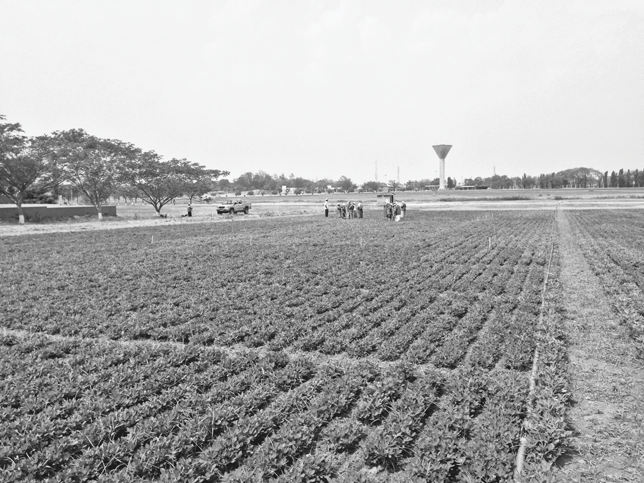
For the taskforce, the small yields in Asia and Africa in contrast to the United States were the central problem of groundnut agriculture. US farmers yielded 2,200 kilograms of groundnuts per hectare, while farmers in Asia harvested 830–840 kilograms per hectare and those in Africa 725. The United States remained the global standard for agricultural production, and its yields seemed to suggest that gains were possible elsewhere. The taskforce proposed several areas of research to close this gap, including the study of germplasm, protection against pests, viruses, fungal infections, improved production methods, and post-harvest technologies, as well as the creation of economic and social information about groundnuts. They primarily proposed to establish a world collection and register of wild and cultivated varieties and forms of Arachis – groundnuts – drawn from existing collections in India, the United States (especially the one at North Carolina State University), and elsewhere. Wild forms were considered particularly valuable for breeding varieties that were resistant to fungal diseases such as aflatoxin, and others that could only be controlled by costly and cumbersome procedures out of the reach of most small farmers. Ultimately, the proposal maintained that ICRISAT’s focus should be on genetic studies with a duplication of existing collections starting in 1974 and sowing of known varieties in 1975 or 1976. These instructions were followed, and groundnut breeding started in 1976 with a focus on high yield, stability of yield, and resistance to disease and droughtFootnote 51 (Figure 5.2).
Day laborers work in an experimental peanut field at ICRISAT’s Hyderabad campus, 2016.
ICRISAT was, however, not the only international institution concerned with groundnuts, which had gained a double importance – filling the protein gap and providing foreign exchange earnings.Footnote 52 In 1977, UNCTAD, which had been at the center of the efforts for the New International Economic Order, adopted resolution 93 (IV), an integrated program for commodities, including vegetable oils and oilseeds.Footnote 53 UNCTAD emphasized the political and economic international arrangements on vegetable oils and oilseeds, including:
improving the stability of the trade and income of individual developing countries; improving access to markets and the reliability of supplies; the diversification of production and expansion of processing in developing countries; improving the competitiveness of natural products; and improving market structures and the marketing, distribution and transport systems for exports of raw materials and commodities from developing countries.Footnote 54
This emphasis differed from ICRISAT’s focus on producing groundnut varieties with specific characteristics. The UNCTAD report described the political economy of groundnuts much more extensively: “a substantial part of the total production of oilseeds enters world trade either as seed or in the form of oil and meal, exported by a large number of developing countries and some developed countries (especially the United States) partly to other developing countries but chiefly to western Europe and Japan.”Footnote 55 The complexity of the trade, the differences between oilseeds, and the competition with synthetics and other agricultural products made it a tricky issue. Ultimately, however, the conference would only propose more research programs instead of addressing the political economic problems that were at the core of groundnut agriculture and international agricultural trade.
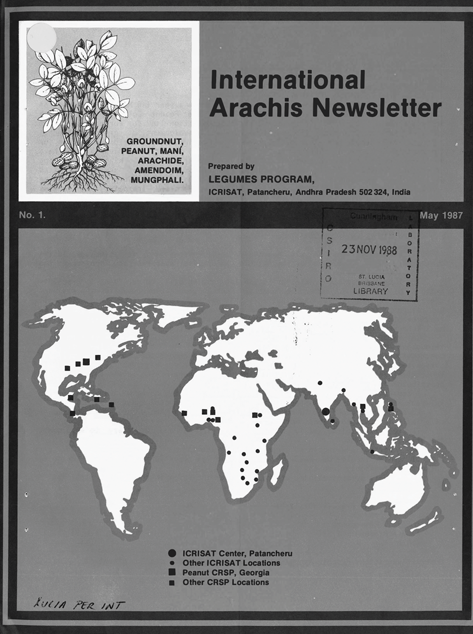
In subsequent years, groundnut research at ICRISAT continued to focus primarily on the technical dimensions of varieties. ICRISAT’s groundnut germplasm collection grew to include 11,641 accessions of cultivars and 115 in quarantine clearance, and new groundnut programs in Africa were established in the early 1980s. A decade after the beginning of its groundnut efforts, in May 1987, the legumes program at ICRISAT began to publish the International Arachis Newsletter in collaboration with the “Peanut Collaborative Research Support Program” headquartered in Georgia in the United States. The legumes program had been formed in 1986 by merging the ICRISAT pulses program (chickpea and pigeon pea) and the groundnut program. Its links with the Peanut Collaborative Research Support Program were many, showing the continued importance of the United States in this domain of international agricultural research.Footnote 56 The editors of International Arachis Newsletter introduced the key problems of groundnut research and the factors constraining yields, including diseases and pests, unreliable rainfall in the semi-arid tropics, recurring droughts, the lack of high-yielding adapted cultivars, poor agronomic practices, and the very limited use of fertilizers.Footnote 57 The biannual newsletters, whose title page signaled the global reach of ICRISAT’s groundnut research (Figure 5.3), featured content with “current-awareness value to peer scientists” and were selected for news interest as well as scientific relevance. ICRISAT thus continued its focus on technical aspects of groundnut agriculture to scientifically address the problem of expanding the Green Revolution to new regions – and of making agriculture a driver of economic development more generally.
The first issue of the International Arachis Newsletter, published in May 1987. The map on the cover identifies the main ICRISAT campus in Hyderabad and other ICRISAT locations as well as the hub of the USAID-funded Peanut Collaborative Research Program in Georgia and its international collaborators.
Conclusion
ICRISAT’s history, and by extension the early history of CGIAR, provides insight not only into the expert discussions held in the aftermath of the self-proclaimed Green Revolution but also into broader changes of international development politics in the late 1960s and early 1970s. My account of the founding of ICRISAT and its unique groundnut research program suggests that there was no clear rupture between the tools and strategies of international research for agricultural development between those of the 1960s and those of the 1980s but instead a reworking of existing approaches and meanings towards ones that not only considered nutritional needs but also economized crop production with a view towards global trade and markets. However, even as experts acknowledged the importance of markets, by continually emphasizing the need for research they precluded reforms of international agricultural markets and changes to the global economic order. They instead attempted to solve “second-generation development problems” through interventions grounded in scientific research and technical development that had become subsumed under the label of the Green Revolution.


 Open access