To save content items to your account,
please confirm that you agree to abide by our usage policies.
If this is the first time you use this feature, you will be asked to authorise Cambridge Core to connect with your account.
Find out more about saving content to .
To save content items to your Kindle, first ensure no-reply@cambridge.org
is added to your Approved Personal Document E-mail List under your Personal Document Settings
on the Manage Your Content and Devices page of your Amazon account. Then enter the ‘name’ part
of your Kindle email address below.
Find out more about saving to your Kindle.
Note you can select to save to either the @free.kindle.com or @kindle.com variations.
‘@free.kindle.com’ emails are free but can only be saved to your device when it is connected to wi-fi.
‘@kindle.com’ emails can be delivered even when you are not connected to wi-fi, but note that service fees apply.
The founder of the Hong Kong branch of the Royal Asiatic Society, John Francis Davis, published the first translation of a Chinese play into English, Laou-Seng-Urh, or ‘An Heir in Old Age’, in 1817. While significant in both literary and scholarly terms, Davis’s work is also worthy of attention for its political undercurrents. An anonymously penned introduction draws connections between Davis’s translation and theatrical performances in the context of Qing diplomacy, including Macartney’s embassy of 1793, while an accompanying ‘Advertisement’ highlights Davis’s role as interpreter on Amherst’s subsequent embassy of 1816. This article conclusively attributes these paratexts to the second secretary of the Admiralty, Sir John Barrow. Records from the East India House library, the John Murray Archive, and back-numbers of The Quarterly Review reveal how Barrow exploited Davis’s translation to promote British diplomatic engagement with China and celebrate the embassy on which he had staked his own reputation as a China expert. Though Laou-Seng-Urh achieved few of its political objectives, it nevertheless inadvertently influenced the trajectory of nineteenth-century academic sinology in Europe.
The bones of the Neandertal arm and forearm are remarkable for their robusticity and for the rugosity of their muscle entheses. In addition to having had proportions characteristic of humans adapted to cold environments, Neandertal upper limb remains bespeak a way of life that required relatively great upper body strength in the performance of subsistence tasks. It is clear that Neandertal upper limbs were built to be able to exert large forces in the context of surviving in Pleistocene Eurasia with relatively simple Mousterian technology. What is less certain is the degree to which Neandertals were using their muscular upper limbs to throw heavy Mousterian spears during hunting, and the relative importance of long-range projectile weapons in their subsistence ecology. Resolving this question, which involves careful consideration of the functional morphology of the bones of the upper limb, is important for a fuller understanding of Neandertal ecology.
The vertebral column in the genus Homo has a unique morphology compared with other primates and mammals due to the posture of the trunk (orthograd, i.e., vertical) and locomotion (obligate bipedalism). Neandertals are the best represented extinct hominin species and the studies in the last 15 years have drastically altered our view on their spine and thorax. In this chapter we provide a brief historical account of the changing ideas on the morphology of the Neandertal vertebral column and thorax and provide a comprehensive account of the most up-to-date view that we have on these anatomical regions based on the latest paleontological research. Neandertals show a distinct morphology of their vertebral column and thorax, which covaries with other anatomical regions and is a mixture of primitive and derived features. Neandertal-derived features did not appear all at once, and some of them can be found in European Middle Pleistocene populations.
The distinctiveness of Neandertals’ leg bones results from a complex set of environmental, evolutionary, and anatomical factors. Their lower limb morphology includes robust bones with hypertrophied muscle attachments and thick cortices, anteriorly curved femoral diaphyses, absence of pilaster, low femoral neck-shaft angle, large joints, and low crural indices. Although some of these features reflect their massive bodies and high activity levels, few aspects of Neandertal lower limb morphology can be considered separately from their cold-adapted body proportions. However, although cold adaptation can explain European Neandertal intralimb proportions, it fails to account for the same limb proportions in West Asian Neandertals, suggesting additional factors shaped their limb proportions. Their lower limb anatomy may represent a model of morphological integration, a balance between elevated activity levels and adaptation to the rigorous demands of an ice age climate, all superimposed on the expression of more canalized traits controlling rates of bone remodeling.
Neandertal hands are adapted primarily for forceful gripping during manipulation, yet there are no indications that Neandertals lacked precision movements. As more Pleistocene remains are analyzed, the Neandertal hand morphological pattern continues to lose its distinctiveness. Features related to the transmission of high levels of forces, the maintenance of hypertrophied musculature, and high levels of mechanical advantage are variably shared between Neandertals and the Sima de los Huesos, the H. naledi, and to a lesser extent, the H. floresiensis hand remains. The Middle Paleolithic early modern human hands, however, resemble Upper Paleolithic hands in their overall pattern. Accompanying the transition to the Upper Paleolithic are increased stabilization of the capitate-metacarpal 2/3 region, enhancement of first finger precision movements, and reductions in mechanical advantage in Upper Paleolithic hand remains that are characteristic of Holocene human hands. Thus, the Neandertal hand should be conceptualized as an archetypal tool-using archaic human hand.
Neandertals evolved in the larger environmental context of the cold climates of Middle Pleistocene western Eurasia, and therefore display specific morphological and metabolic adaptations, alongside cultural strategies, to thermoregulate and maintain body heat in the face of cold stress. These adaptations align with Bergmann’s and Allen’s rules, indicating that Neandertals had greater body masses and shorter limbs, traits conducive to minimizing heat loss. After the migration of Homo erectus into more temperate zones 1.8 million years ago, Neandertals developed cold adapted claviculo-humeral, brachial, and crural indices but also show regional variation in cold adaptation strategies among Neandertal populations across Europe and West Asia. Although evidence points toward these thermoregulatory adaptations in Neandertals, interpreting these traits as direct outcomes of climatic selection is complex due to the minimal impact of limb proportions on surface area and demonstrated influences of population history on patterns of body form.
This chapter provides a detailed review of the Neandertal facial skeleton with an emphasis on evolutionary interpretations drawn from comparisons to both extant modern humans and earlier fossil Homo. The spatial dynamics involved in the evolution of “midfacial prognathism” within the Neandertal lineage are discussed followed by comparative anatomical descriptions of the Neandertal supraorbital region, ocular orbits, nasal skeleton, infraorbital region, maxillary dental arcade/palate, and mandible. The chapter concludes with a review of unresolved debates regarding potential adaptive (e.g., biomechanical, climatic) and neutral (e.g., genetic drift) evolutionary forces that may have contributed to the appearance of Neandertal facial features.
The bones of the Neandertal shoulder are distinguished from those of most living humans by (among other things) their long and gracile clavicles and their broad scapulae with narrow glenoid fossae and dorsal sulci on their axillary borders. The adaptive and evolutionary significance of interspecific variation in shoulder morphology, however, is unclear. Some of the features that differentiate the shoulders of Neandertals and modern humans, such as the long clavicles of Neandertals, may reflect overall differences in somatic bauplan between species, in the context of morphological integration of the thorax, shoulder, and upper limb. Other features, such as the shape of the scapular glenoid fossa, may contain information about interspecific differences in habitual upper limb use. Resolving among different possible explanations of observed patterns of variation is central to efforts to understand the behavior and biology of the Neandertals.
This chapter reviews the fossil evidence for Neandertal pelvic morphology. Although the sample available is fairly small, it suggests that Neandertals share a set of features that differentiate them somewhat on average from modern humans. As noted by the first describers of the pelvis in Neandertals, this includes a long and thin superior pubic ramus, a broad overall breadth of the pelvis, and a general robusticity of the pelvis. The overall breadth of the pelvis and probably the length of the superior pubic ramus appear to reflect the primitive condition for hominins rather than derived features of Neandertals. It is likely that Neandertals gave birth with a similar degree of difficulty and a birth mechanism as is generally the case for modern humans. Obstetrics, locomotor constraints, and climatic adaptation are all important factors that need to be considered in an understanding of the pelvis in Neandertals.
The discovery and analysis of immature Neandertal remains have yielded significant insights into Neandertal growth and development, despite numerous historical challenges in the curation and study of these fossils. The relatively large number of immature Neandertal remains, attributed in part to their practice of intentional burial, has allowed for extensive ontogenetic studies. Early research focused on the timing of Neandertal trait emergence, and recent studies have expanded to include aspects such as birth, gestation, and growth rates. Notable differences between Neandertals and modern humans have been observed, particularly in craniofacial growth, brain development, and dental formation. Despite some evidence suggesting accelerated dental development in Neandertals, there is still considerable debate. Postcranial studies have highlighted distinctive features that emerge early in Neandertal growth, although discrepancies between dental and skeletal maturity remain. Future research is poised to benefit from integrated approaches that combine cranial, dental, and postcranial data and consider a wide range of comparative samples. Understanding Neandertal growth within a developmental context not only enhances our knowledge of Neandertals but also provides broader insights into human evolutionary biology.
Since the discovery of the first Neandertal fossils, the neurocranium has been of particular interest to specialists and the general public, particularly in relation to the question of what cognitive abilities can be inferred from the braincase. Here we present a detailed description and analysis of the neurocranial morphology of Neandertals and compare it with that of living humans and the fossil hominins that likely represent our last common ancestor. Our analyses show that the Neandertal neurocranium provides relatively few clues about the structural and functional characteristics of the brain it once contained. The unique morphology of the Neandertal braincase is best understood as a compromise between the spatial demands of a large brain and the biomechanical demands of a large and evolutionarily derived face.
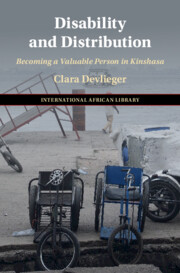
Set in the postcolonial city of Kinshasa (DR Congo), this ethnography explores how people with disabilities navigate debates about the just distribution of resources where there is little state organised welfare, and public perception of disability swings between the 'deserving' and 'undeserving'. Tracing a historic increase of disability due to polio and its long-term effects, this book examines two controversial livelihood activities that serve as informal alternatives to state support: a specialized form of international border brokerage across the Congo River, and a unique practice of bureaucratized begging that imitates state tax collection and humanitarian fundraising. Clara Devlieger examines how such activities shape ways that disabled people conceive the idea of becoming 'valuable people' in local terms: by supporting loved ones, many achieve high esteem against expectations, while adapting exclusionary models of urban personhood to include disability. Devlieger offers a new understanding of the complex dynamic between the imagined role of the state, international discourses of rights, and local experiences of disability.
What is it like to be a Muslim possessed by a jinn spirit? How do you find refuge from madness and evil spirits in a place like Denmark? As elsewhere in Europe and North America, Danish Muslims have become hypervisible through intensive state monitoring, surveillance, and media coverage. Yet their religion remains poorly understood and is frequently identified by politicians, commentators, and even healthcare specialists as the underlying invisible cause of ‘integration problems’. Over several years Christian Suhr followed Muslim patients being treated in a Danish mosque and in a psychiatric hospital. With this book and award-winning film he provides a unique account of the invisible dynamics of possession and psychosis, and an analysis of how the bodies and souls of Muslim patients are shaped by the conflicting demands of Islam and the psychiatric institutions of European nation-states. The book reveals how both psychiatric and Islamic healing work not only to produce relief from pain, but also entail an ethical transformation of the patient and the cultivation of religious and secular values through the experience of pain. Creatively exploring the analytic possibilities provided by the use of a camera, both text and film show how disruptive ritual techniques are used in healing to destabilise individual perceptions and experiences of agency, so as to allow patients to submit to the invisible powers of psychotropic medicine or God.
The second chapter discusses the methodological and personal dilemmas of conducting long-term anthropological fieldwork in a highly politicised context. The chapter begins with a discussion of recent anthropological debates about how to take the viewpoints of others seriously, even when doing so implies accepting the existence of invisible beings and phenomena such as angels, jinn, God, schizophrenia, psychosis, or depression. The chapter explores a number of critical experiences and conversations between the author and the people he worked with and introduces several of the people in the accompanying film.