To save content items to your account,
please confirm that you agree to abide by our usage policies.
If this is the first time you use this feature, you will be asked to authorise Cambridge Core to connect with your account.
Find out more about saving content to .
To save content items to your Kindle, first ensure no-reply@cambridge.org
is added to your Approved Personal Document E-mail List under your Personal Document Settings
on the Manage Your Content and Devices page of your Amazon account. Then enter the ‘name’ part
of your Kindle email address below.
Find out more about saving to your Kindle.
Note you can select to save to either the @free.kindle.com or @kindle.com variations.
‘@free.kindle.com’ emails are free but can only be saved to your device when it is connected to wi-fi.
‘@kindle.com’ emails can be delivered even when you are not connected to wi-fi, but note that service fees apply.
Archaeological fieldwork at Eversley Quarry, Fleet Hill Farm, Finchampstead, Berkshire documented evidence of Mesolithic activity, associated with paleoenvironmental deposits, on the Blackwater River floodplain, a river for which activity of this period was previously unknown. The discovery evolved from initial recognition of worked flint artefacts across a well weathered, stripped subsoil surface in part of the site. Additional material was collected subsequently from the summit of an adjacent low knoll. The findings were of sufficient extent and importance to warrant supplementary archaeological fieldwork using a gridded test pit strategy to evaluate the Mesolithic potential in remaining parts of the site. This resulted in the identification of additional clusters of worked flints, which were preserved in situ.
The clusters were predominantly of Mesolithic date but also included Neolithic and Bronze Age artefacts, indicating prolonged use of the landscape. Concentrations were consistently located on slightly elevated sand bars flanking palaeochannels of a formerly braided river system. The contemporaneity of the palaeodrainage and Mesolithic activity has been confirmed by radiocarbon dates from peat that formed during the Holocene. The collective results mark a significant contribution to knowledge of the Blackwater River valley, a major communications artery in the Mesolithic period linking the west end of the Wealden Greensand to the Rivers Thames and Kennet. These findings also highlight the importance that river valleys can make to locations that have been less well studied but nevertheless enjoyed prolonged use.
Over the course of one year (2021), we monitored the carbon isotope composition of atmospheric CO2 at three locations in Croatia: the Adriatic port city of Rijeka (Cfa climate) and at two rural sites: Gornje Jelenje (Cfb climate) in the vicinity of a main road and clean-air site Parg (Dfb climate). Carbon isotope composition at all sites shows seasonal variation, ranging from –41.3 to 25.2‰ for Δ14C and from –13.1 to –11.3‰ for δ13C. Rijeka systematically has the lowest and Parg the highest Δ14C, and δ13C at the sites are not statistically different one from another. The Δ14C of leaves of deciduous trees reflect the trend of atmospheric Δ14C. Based on the assumption that the investigated area is under the influence of two main sources of CO2: fossil and natural (sea exchange, biosphere, and undisturbed – clean air atmospheric component) the approximate share of fossil CO2 in total atmospheric CO2 has been estimated for Rijeka (2.1 ± 1.3%) and Gornje Jelenje (1.0 ± 0.9%). Comparison of our results with the data from European CO2 sampling stations indicates strong influence of CO2 from sea and biosphere. Backward trajectories indicate a possibility of Δ14CCO2 contribution from distant EU nuclear power plants, but movement of air masses should be considered in more detail to confirm this.
In 1913 a set of leg shackles was recovered among skeletal remains during excavations at the east end of the ruinous cathedral of Old Sarum, Wiltshire. A recent examination of the excavation’s photographic record indicates that two further similar examples were recovered at the same time. Since the early twentieth century a body of scholarship has refined our understanding of the arrangement of the east end of the cathedral, and a closer examination of the archive in the light of this work allows for both skeletal remains and shackles to be confidently located in an archaeological context related to the tomb of Bishop Roger. This paper explores the value this evidence has for our understanding of the so-called ‘Arrest of the Bishops’, an event of notable constitutional significance in the tumultuous reign of King Stephen. It goes on to examine the shock with which the event was recalled by contemporary writers to reflect on the power of shaming and incarceration as a device of extortion, political manipulation and the infliction of social death. The integral nature of iron bonds in these strategies lends them a socio-symbolic role and the reception of their use in this well-recorded episode may facilitate the interpretation of such items from early and high medieval contexts when, frequently, primary provenance is lacking.
The names of Athenian warships are a valuable source for cultural history, but scholars have long laboured without a sense of how these names were chosen. In a recent article, the present author has suggested that naval architects (master craftsmen elected by the Athenian Assembly) were responsible for naming each vessel they built. This explanation applies to the great majority of Athenian warship names known to us, but exceptions to the rule remain. Naval architects cannot have named vessels they did not build, and we know of several foreign-built ships (e.g., captured or donated ships) in the Athenian fleet. Vessels with the special status of ‘sacred triremes’ must also have followed their own unique naming procedure. Such exceptional cases are the subject of this paper.
Climate change is often cited in the ‘collapse’ of complex societies and linked to agricultural resilience or lack thereof. In this article, the authors consider how demand affected agricultural strategies as farmers navigated the transformations of the Late Harappan phase (c. 1900–1700 BC) of the Indus tradition. Through the modelling of monocropping/multicropping, low/high yield crops, and supply-driven versus flexible production, various economic, environmental and social demands are explored with reference to the choices of farmers and how these decisions differed regionally, and how they impacted the wider Late Harappan de-urbanisation process. The authors’ archaeobotanical perspective on the Indus contributes to wider understanding of how urban societies and their agricultural bases change over time.
This paper discusses a rare Late Ming blue and white porcelain bowl with five cartouches depicting scenes of sexual intercourse, which was found during archaeological excavations in the Santana convent, a former Franciscan nunnery located in Lisbon founded in 1562. The paper begins with a description of the bowl, the context of its recovery and its significance, highlighting its extreme rarity among Chinese export porcelains. The second section discusses Chinese sexuality and the production of erotica during the Late Ming period, namely porcelains with erotic and sexual imagery, a subject that has been overlooked by mainstream scholarship. The last section proposes an explanation for the presence of this bowl in the Santana nunnery, emphasising the gap between the ideals of Iberian Catholic monastic life and the worldly practices conducted by the members of these religious orders in the Baroque era.
This paper describes the results from a project to obtain radiocarbon determinations from Early Bronze Age log coffin burials. Log coffins have been recognised as a burial tradition since antiquarian excavations uncovered the first examples. However, comparatively few are associated with radiocarbon determinations and many old determinations are very imprecise. To address this, seven log coffin burials were identified across England, and 11 samples from these were submitted for radiocarbon dating. The dates from the project were reviewed with previously obtained reliable determinations to reconsider the origins and development of the log coffin burial by region. The resulting study indicates that the earliest log coffins were associated with Beaker burials but that regional variations involving different rites soon developed.
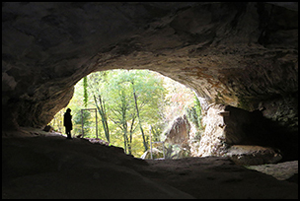
This article presents details of the recent discovery of Palaeolithic cave art in Cova Dones, Valencia. The preliminary results reveal a rich graphic assemblage with features that are unusual for Mediterranean Upper Palaeolithic art and were previously unknown for the Pleistocene in the eastern Iberian coast.
Social, political, and economic institutions covary with one another in heterogenous ways across space and time. Social Network Analysis (SNA) offers a set of analytical tools and conceptual frameworks that have allowed for formal comparisons of interactions, affiliations, and relationships in reconstructing historical trajectories of institutional change. Although archaeologists have made full use of a range of metrics that describe the structural variation of social networks, formal approaches to analyzing the covariance of networks, and the institutions that structured networks in the past, remain undertheorized. In most cases, descriptive metrics are compared between networks built from different datasets or networks separated in time. Using quadratic assignment procedure (QAP) correlations to compare matrices of archaeological data, I draw on a ceramic dataset of approximately 350,000 sherds from the Southern Appalachian region to investigate how decisions related to manufacture choice and to stylistic design covaried with one another between roughly AD 800 and 1650. I explore how material attributes may or may not vary independently of one another and what that means for our analyses of the institutions they reflect. The results contribute to broader comparative analyses of institutional change and perennial discussions of social evolution.
Ceramics play a central role in the debates around the relationship between the Viru and the Moche. A recent model considers Negative and Moche-decorated ceramics produced by potters affiliated with the elites to be the cultural markers of the Viru and Moche populations, respectively. Due to the similarity of Viru and Moche plain-wares and the presence of Castillo Decorated ceramics in Viru and Moche contexts, this model sees both types of ceramics as domestic traditions, produced by independent potters and sharing a common technique. The research we present here supports this recent model by reconsidering the social and cultural meaning associated with these ceramic types: it uses a novel approach for South America of reconstructing the chaîne opératoire by studying the traces visible on ceramics at a macroscopic and microscopic scale. The study demonstrates how these potters used their own traditions to produce decorated and undecorated ceramics. Furthermore, we found that Castillo Decorated is a type produced only by Viru potters, and we argue that its presence in Moche contexts is evidence of the numerous exchanges maintained by these two populations.
Archaeological materials from the Mediterranean world in Southeast Asia are scarce and their social context and cultural implications are rarely considered, while objects in Mediterranean style are often misinterpreted or overlooked. Concomitant to the increasing implementation of laboratory analysis, the range of new evidence, especially coming from recently excavated sites in Thailand and Myanmar, along with the reinterpretation of earlier data now brings the potential to compare different regions, and to discuss possible variations in terms both of the diversity and density of Roman materials. This study includes Mediterranean imports produced between the last centuries bce and first centuries ce, as well as Asia-produced inspired objects that integrate Mediterranean elements to varying degrees, combining new data and re-analysed materials. The paper not only contributes to building the sequence of cultural exchanges, but also interprets in cultural terms the varying Mediterranean elements present.
A long-term project to map and catalog all precontact Native American burial mounds in Iowa provides information about the number, location, form, survivorship, and rate of loss of mounds. This analysis reveals previously undocumented mound manifestations, including a large cluster of 200 linear mounds along the central Des Moines River valley. Historical records reveal that at least 7,762 mounds were identified at 1,551 sites in Iowa between 1840 and the present. About 47% of the mounds from these sites can be possibly seen in lidar, with 33% of the total clearly seen in lidar. Data show that mound loss over time is linear. Extrapolation of data suggests that at least 15,000–17,000 mounds stood in Iowa in the nineteenth century, but the actual number was likely higher.