To save content items to your account,
please confirm that you agree to abide by our usage policies.
If this is the first time you use this feature, you will be asked to authorise Cambridge Core to connect with your account.
Find out more about saving content to .
To save content items to your Kindle, first ensure no-reply@cambridge.org
is added to your Approved Personal Document E-mail List under your Personal Document Settings
on the Manage Your Content and Devices page of your Amazon account. Then enter the ‘name’ part
of your Kindle email address below.
Find out more about saving to your Kindle.
Note you can select to save to either the @free.kindle.com or @kindle.com variations.
‘@free.kindle.com’ emails are free but can only be saved to your device when it is connected to wi-fi.
‘@kindle.com’ emails can be delivered even when you are not connected to wi-fi, but note that service fees apply.
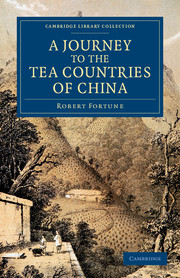
'My object is to give a peep into the Celestial Empire, to show its strange hills and romantic valleys, its rivers and canals … and its strange and interesting people.' Robert Fortune (1813–80), the author of several books on China, was a keen botanist. He first went to China for the Royal Horticultural Society, but soon returned on behalf of the East India Company in order to collect tea specimens for the British government's plantations in the Himalayas. In this entertaining account, first published in 1852, Fortune includes stories of how he disguised himself in Chinese clothes to gain access to districts barred to Europeans, of watching farmers sail in what seemed to be wash-tubs, and the bizarre dyeing process that saw large quantities of Prussian Blue and gypsum poured into green tea. Full of panoramic descriptions and engaging anecdotes, this book is ideal for historians and modern-day travellers alike.
With his Political Proceedings towards the English, Russian, and Persian Governments, Including the Victory and Disasters of the British Army in Afghanistan
In this two-volume biography of 1846, Indian diplomat and author Mohan Lal (1812–77) describes the life of Amir Dost Mohammed Khan (1793–1863), the ruler of Afghanistan. The work also includes an eye-witness account of the disastrous First Anglo-Afghan War. Lal, who was attached to the British mission to Kabul, had prepared an account in English and Persian which was lost during the chaos of the War, but he later put the story together again. In his Preface, Lal apologises to the reader for his abundant errors both in grammar and idiom and explains that anecdotes about the Amir's adventures and morals were generally communicated to him second-hand. However, the book, which contains illustrations and draws personal correspondence, is a fascinating account of the ruler himself and of his political dealings with the English, Russian and Persian governments at the time of the 'Great Game' in Central Asia.
Rapid economic growth has put India at the centre of current debates about the future of the global economy. In this fully revised and updated text, B. R. Tomlinson provides a comprehensive and wide-ranging account of the Indian economy over the last 150 years. He sets arguments about growth, development and underdevelopment, and the impact of imperialism, against a detailed history of agriculture, trade and manufacture, and the relations between business, the economy and the state. The new edition extends the coverage right up to the present day, and explains how one of the largest countries in the world has sought to achieve economic progress and lasting development, despite institutional weaknesses, rigid structures of political and social hierarchy, and the legacy of colonialism.
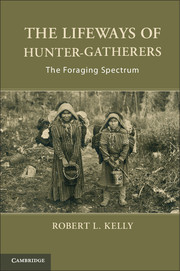
In this book, Robert L. Kelly challenges the preconceptions that hunter-gatherers were Paleolithic relics living in a raw state of nature, instead crafting a position that emphasizes their diversity, and downplays attempts to model the original foraging lifeway or to use foragers to depict human nature stripped to its core. Kelly reviews the anthropological literature for variation among living foragers in terms of diet, mobility, sharing, land tenure, technology, exchange, male-female relations, division of labor, marriage, descent and political organization. Using the paradigm of human behavioral ecology, he analyzes the diversity in these areas and seeks to explain rather than explain away variability, and argues for an approach to prehistory that uses archaeological data to test theory rather than one that uses ethnographic analogy to reconstruct the past.
George Leonard Staunton (1737–1801) arrived in China in 1792 as a member of a British delegation whose objective was to improve trade and establish better diplomatic relations with the Chinese, who, at the time, restricted economic activity with foreigners to the port of Canton (Guangzhou). Although the group managed to secure an audience with the Qianlong Emperor - to whom the British envoy Lord Macartney famously refused to kowtow - their mission failed. Staunton kept detailed notes throughout his time in China, and in 1797 this two-volume account of the visit was published, and later translated into French and German. Volume 1 begins with a historical account of China's diplomatic relations with Britain and other nations, and then discusses the extensive preparations for the delegation's voyage, and the long journey itself, which took them round the Cape of Good Hope and through South-East Asia before arriving in China nine months later.
Building on recent scholarship that highlights social change caused by the Anti-Japanese War, this paper traces the politicization of women working in the cotton mills of Chongqing, the Nationalist wartime capital. Upon joining the workforce in the late 1930s, most cotton mill hands were young, uneducated women expected to endure hard work and remain physically confined to the factories. By 1945, women workers were at the forefront of a militant labour movement, writing manifestoes and petitioning government officials. This process of politicization stemmed from their decision to work in factories, which breached societal norms, and their experience of disciplined labour regimes and brutal working conditions, which fostered an incipient class-consciousness. Moreover, Nationalist-sponsored factory education campaigns had the unintended effect of leading women to challenge class exploitation and sexual discrimination. Their participation in the labour movement, which was fuelled by their struggle for economic justice and desire for higher social status, used both legal forms— especially petitions and letters to the press couched in the wartime nationalist rhetoric of shared sacrifice—and extralegal means, namely class violence. The paper concludes that the social changes and conflict that accompanied women's wartime work helped prepare the terrain for Communist rule.
The abstract concept of “the Silk Road” linking east and west shapes manypopular narrative histories, encouraging readers to think dreamily ofdazzling silks carried as luxury trade items on the backs of camels oversun-scorched sand dunes, and conveniently skirting more complex issues suchas political, military, religious and cultural barriers. The actualmechanics of how any trading and other financial or economic transactionstook place are seldom addressed, and references to money are few and farbetween.
In January 2013 we published our third special issue ‘Perfumery and Ritualin Asia’. As I wrote in the Introduction to that group of articles, theJournal's broad remit, both in terms of historical period and geographicalboundaries, affords us the privilege of exploring those elements of humanactivity that historically ‘bind’ or ‘separate’ different Asian cultures. Bythe beginning of 2013 we had already published two other special issues, oneon a linguistic topic and the other on a politico/religious topic and so wefelt it was appropriate to devote space to the exploration of ‘material’culture, an equally powerful force in shaping a huge range of humaninteractions.
In the earliest Indian Buddhist art, the Buddha is represented without ever actually depicting the person, who is replaced by symbols referring both to his presence and to the so-called Great Miracles. In the sculpted decoration of the stūpas of Bhārhāt, Sāñcī and Bodh Gayā, the tree represents the Reawakening, the wheel the First Sermon at Benares, and the stūpa the death of the Blessed One or Parinirvāṇa, which occurred at Kuśināgarā. However, the miracle of the birth has yet to find a corresponding symbol that is unanimously accepted by scholars. James Ferguson and Alexander Cunningham, among the first to take an interest in ancient Buddhist art, failed to identify a symbol corresponding to the first moment of the Buddha's life. Towards the mid 1930s, in his essay On the Iconography of the Buddha's Nativity, Alfred Foucher identified the lotus as the symbol of the Nativity, also linking to this miracle the figurative theme of the woman aspersed by two elephants, known as abhiṣeka. The last iconography had formerly been interpreted by Cunningham and Ferguson as a depiction of the Hindu goddess Śrī-Lakṣmī, included in an aspersion scene. Ananda K. Coomaraswamy, in his Elements of Buddhist Iconography, re-proposed the latter thesis and thus identified the female figure as Lakṣmī and the lotus as the goddess' emblem.
It is commonly said that music is a preferential tool (or “the” preferential tool) for inter-cultural communication. It is a sort of commonplace that nourishes a rich and diversified amount of activities within the largest cultural contexts. Radio and tv broadcasting, press articles, internet sites, scholastic syllabi, and so on: (the supposed) efficacy of music to cross “cultural borders” is declared as if it were an apodictic fact. This topic is also at the basis of the discourse accompanying the so called “world music”, an ubiquitous phenomenon of the present day that essentially ‘participates in shaping a kind of consumer-friendly multiculturalism, one that follows the market logic of expansion and consolidation’ (Feld 2000, p. 168). Such kinds of “popular beliefs” come from an equivocal concept of music.
In actual fact, it is a very complex question: music sounds can transcend boundaries among world people but some scholarly notions are very useful to understand how music works (and maybe even to facilitate it). Firstly, the nature of what we call music. Due to its ephemerality (Leonardo da Vinci dealt with ‘the unfortunate music that dies immediately after its occurrence’) music is not a collection of objects. It is the pervasive presence of instruments for the recording/reproduction of sound, with the mass media and musical industry, that makes one think ‘of music as a thing – an identifiable art object that can owned by its creator though copyrights and purchased by consumers’ (Torino 2008, p. 24).
From the inception of its military campaign into Central Asia via the Gansucorridor, the Tang dynasty had to ensure the shipment of extensive militarysupplies to support the activities of its occupying armies north and southof the Tianshan Mountains. Since the government paid soldiers’ salaries andbought supplies using silk, the timely delivery of silk from central Chinawas critical. Most of the silk was collected in the central provinces underthe zuyongdiao 租庸調 tax system, whether as stipulatedpayments of tax textiles or cloth-paid-in-place-of-annual-corvée tax. Allthis silk had to be shipped to the Western Regions. This article examineswhere this silk was made, how it was shipped to the north-west and how thesystem changed over time.
The excavation of tombs in the Astana graveyard, Turfan, has provided awealth of evidence for studying everyday life on the Silk Road. Manuscriptsand textiles constitute two major groups of the excavated finds. Among themanuscripts are over 60 burial inventories (yiwushu),listing items that would accompany the deceased to the afterlife. Some ofthe items on the inventories were real and can be identified with objectsfound in the tombs; some were represented symbolically: for example inminiature form; and others, probably included for formulaic purposes, wereimagined. Although there have been several studies on the burial inventoriesand textiles from Turfan, the two are usually considered separately, withlittle attention to their correlation, mainly because burial inventoriestend to be studied by specialists working on documents, and textiles areusually studied by textile specialists. In 2005 we were fortunate to be ableto examine all the textiles from a mid-sixth century tomb at Astana(72TAM170), and to study the three burial inventories found in that tomb.Comparing the physical textile remains against the burial inventories fromthe same tomb offered us a rare opportunity to test the accuracy of theburial inventories, and also to identify the physical textile remains withthe textile terminology of that time. This article is arranged in four partswhich present a brief description of the tomb, details of the burialinventories, a comparison of the textile remains against the burialinventories and a closer look at the silk textiles found in the tomb.
Please don't ask us the slogan that could open worlds to You, only some syllables, dry and bent like a branch. Today only this we can tell You: what we are not, what we do not want.
Eugenio Montale, Cuttle-fish Bones
Śūnya means ‘void’, ‘bereft’, and in mathematical scientific literature, ‘zero’. It derives from śūna, being the past passive participle of root śvi, ‘to grow’, ‘to swell’, according to Pänini (7.2.14). So śūna means swelled, swollen, increased, grown. According to Ṛgvedaprātiśākhya (14.2) it indicates a fault in Vedic recital, consisting in an utterance with a swollen mouth. The term śūnya occurs within Upanisadic literature in the Maitryupaniṣad (2.4; 6.31; 7.4), together with other epithets referred to brahman, epithets that mean ‘pure’, ‘clear’, pacified’ (śuddha, pūta, śānta). Etymologically śūnya should therefore mean a void space, a hole determined by a borderless opening, by an unlimited disclosing. According to lexicographers (Amarakośa 3.1.56), its synonyms are ‘sapless’, ‘meaningless’, ‘void’, ‘vane’, ‘hollow’ (asāra, phalgu, vaśika, tuccha, riktaka). This kind of voidness is conceived first of all as a sort of deprivation, as we can see from a well-known literary ‘good saying’ (subhāsita) centred around the term śūnya: ‘Void is the house for he who is sonless, void is the time for he who is friendless, void are the four cardinal points for he who is silly, void is the whole world for he who is poor’ (Śūdraka, Mṛcchakaṭikā 1.8). The reference to the cardinal points (diś) is not at all a trivial one, because it explains why the term śūnya could be made synonym with ‘ethereal space’, ‘atmospheric space’, ‘heaven’ (ākāsa, kha, vyoman).
The kingdom of Khotan lay 2,628 kilometres to the north-west of the Tangcapital at Chang'an. Strategically located in the south-west of theTaklamakan Desert, Khotan was a meeting point of different ethnic groups,languages, cultures and traditions, and was renowned as a centre ofBuddhism. With its unique combination of influences, Khotanese society wasquite different from that of Turfan to the north of the Taklamakan. Inaddition to the indigenous practices and traditions that developed inKhotan, this kingdom was always under the influence of major externalpolitical powers: Khotan was a vassal kingdom of the Hephtalites or Turkicpeoples during the sixth century, came under increasing Chinese influence inthe seventh and eighth centuries, was under Tibetan occupation from the 790sto 840s, and thereafter under the Chinese again. The secular documentaryevidence from Khotan, written in Khotanese and Chinese, from the seventh andeighth centuries reflects everyday life there, and reveals the impact ofChinese administrative changes on traditional practices.
The present article is part of a wider project focusing on the function of absent elements and trying to answer this basic question: How can an absent element perform a function notwithstanding its absence? How come that an effect can be grasped in absence of its cause? Eventually, the question boils down to the status of absence. Is it a distinct category, as maintained by Bhāṭṭa Mīmāṃsā authors (see Freschi 2010) or nothing more than the negation of presence, as maintained by Buddhist Epistemologists?
Grammarians and linguists are familiar with the idea of a function of the “absence” of morphemes which is currently called “zero”. Western linguists beginning with de Saussure's work of 1879 (Saussure 1879 [1878], see Pontillo 2002, pp. 559 ff.) have often postulated the existence of the so-called zero-morpheme where the actual perceptible linguistic form does not match its relevant semantic and syntactic content. They resorted to this device on the basis of a significant opposition pointed out between comparable morphological structures. By contrast, as elaborated by Al-George, the Indian linguistic zero is not a mere device adopted for a descriptive purpose (see also Pontillo 1999; Pontillo 2000 [2003], pp. 159 ff., Candotti and Pontillo 2012, § 2.2).
More in general, the answer to the problem will be the elaboration of a complex net which allows an element to be applied to a specific case, even though it is not explicitly there.